

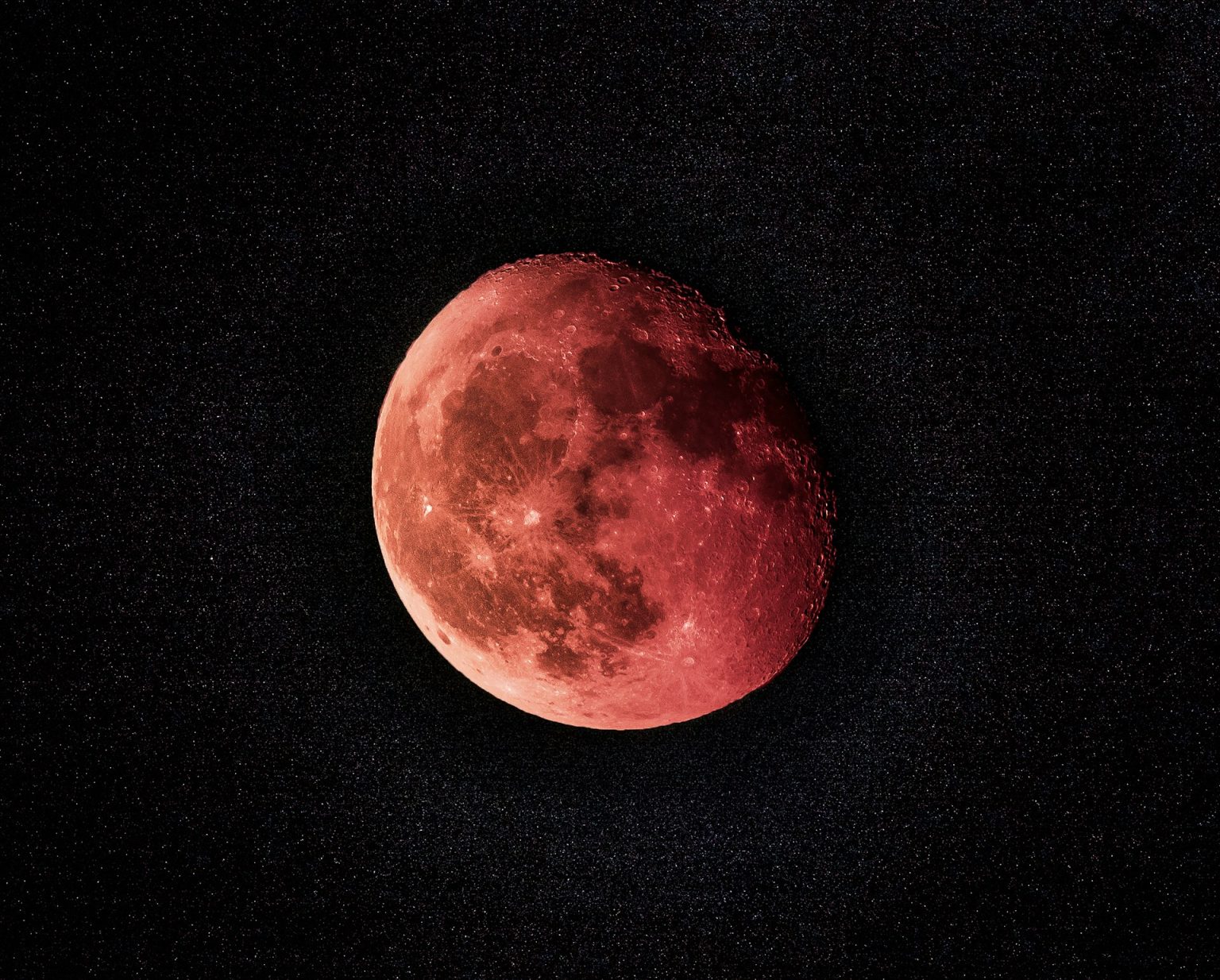
On the Moon, a world without air or water, scientists have made an incredible discovery — they have found hematite, a mineral we know as ordinary rust. This discovery posed a real mystery, because rust requires oxygen to form, which is practically non-existent on the Moon. Even stranger was the fact that this “lunar rust” was concentrated mainly at the poles. The explanation for this phenomenon was proposed by an international team of scientists led by planetary scientist Xiandi Zeng, and it is directly related to our own planet. The results of the study are published in Geophysical Research Letters.
Unexpected culprit
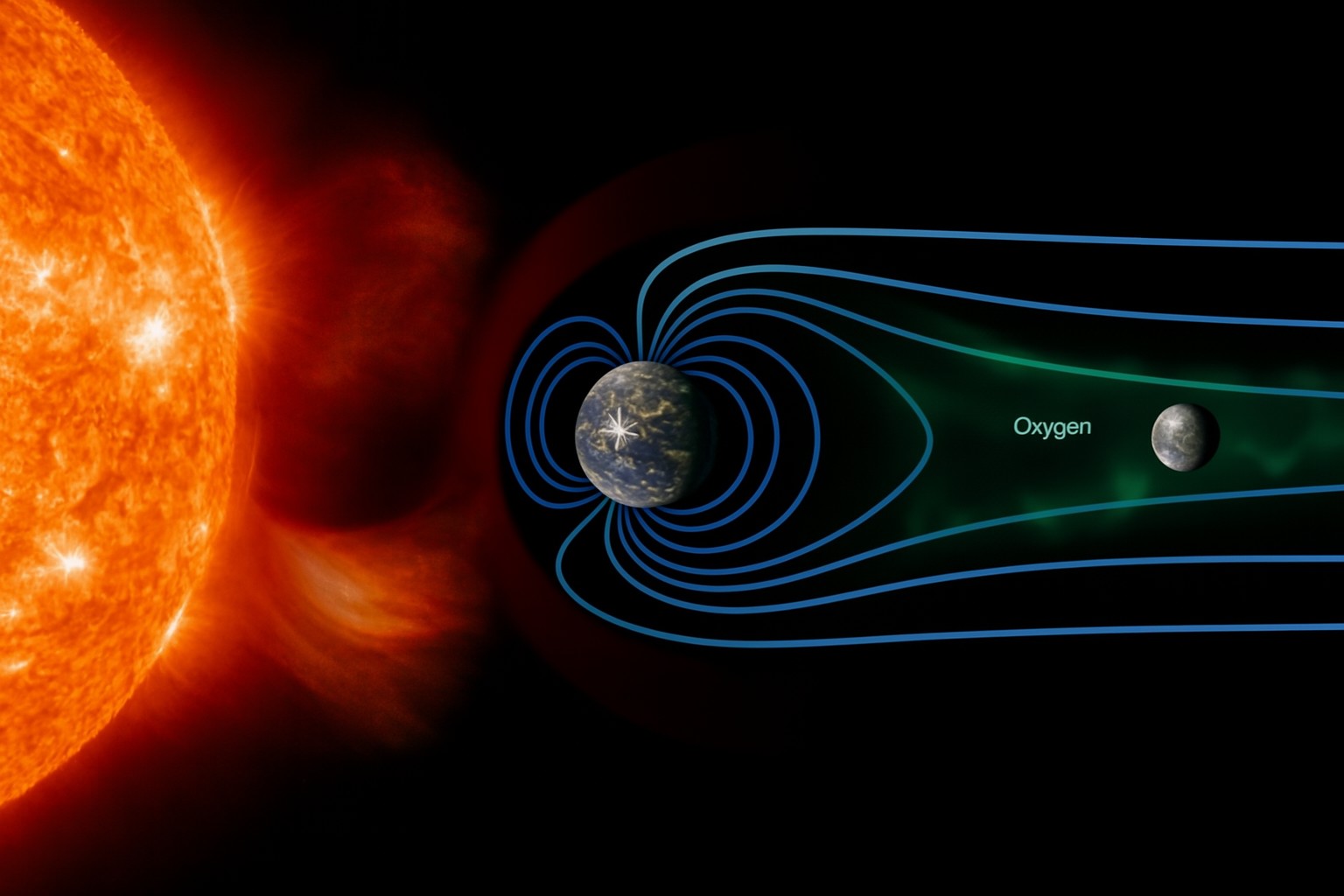
Researchers have suggested that the source of oxygen for lunar iron is the Earth. When the Moon passes through our planet’s magnetic tail, it enters a unique shadow. During this period, which lasts about five days per month, its surface is protected from solar wind — a stream of hydrogen that normally hinders oxidation processes. Instead, oxygen ions that are “blown out” of the Earth’s atmosphere crash into the Moon. This “earth wind” becomes the chief artist who “paints” rust on lunar rocks.
Experiment that changed everything
To test their theory, scientists conducted a series of laboratory experiments. They simulated the conditions of a magnetic tail by irradiating various iron-rich lunar minerals with oxygen ions. The results were impressive: oxygen actually caused iron to rust, turning it first into magnetite and then into hematite. This has been demonstrated in the laboratory for the first time. When scientists tried the “reverse” process, it turned out that low-energy solar wind cannot cancel out oxidation, which explains why rust accumulates over billions of years.
Water traces and space history
This study also sheds light on another mystery: the connection between hematite and water on the Moon. Experiments have shown that water may not be the source, but rather the result of the rusting process. When high-energy hydrogen ions do strike hematite, oxygen separates from iron and combines with hydrogen to form water. This discovery makes lunar rust even more valuable. It can serve as a kind of “time capsule” that stores information about the composition of Earth’s atmosphere billions of years ago, possibly even since the Great Oxidation Event.
Future missions, such as India’s Chandrayaan-3 and China’s Chang’e-7, which plan to land at the lunar poles, will have a unique opportunity to study this process on site. Research shows that Earth and the Moon are not just a satellite and a planet, but a single, deeply interconnected system that has been exchanging matter for more than four billion years.
Earlier, we covered how to get water on the Moon.
According to sciencealert.com

