

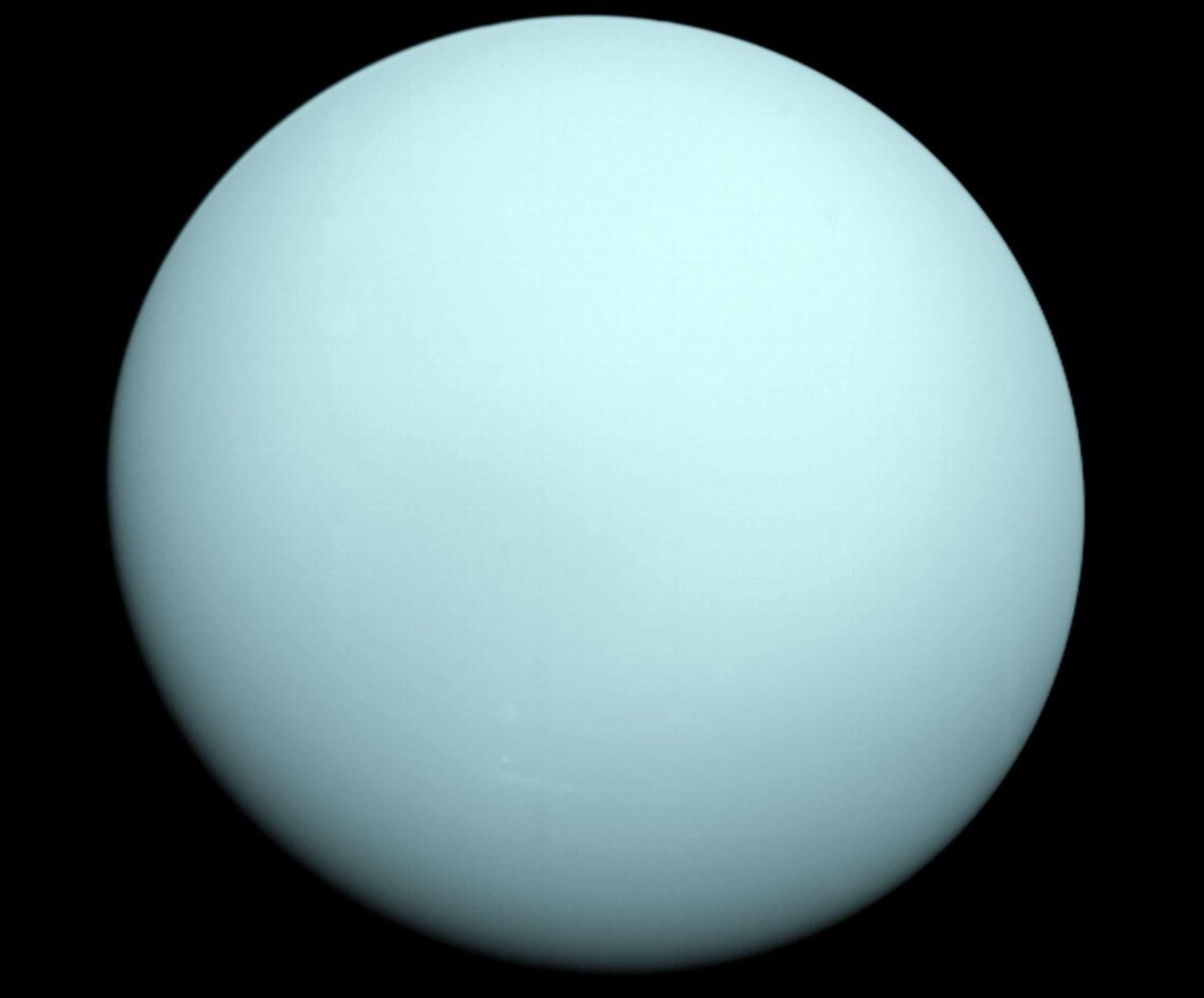
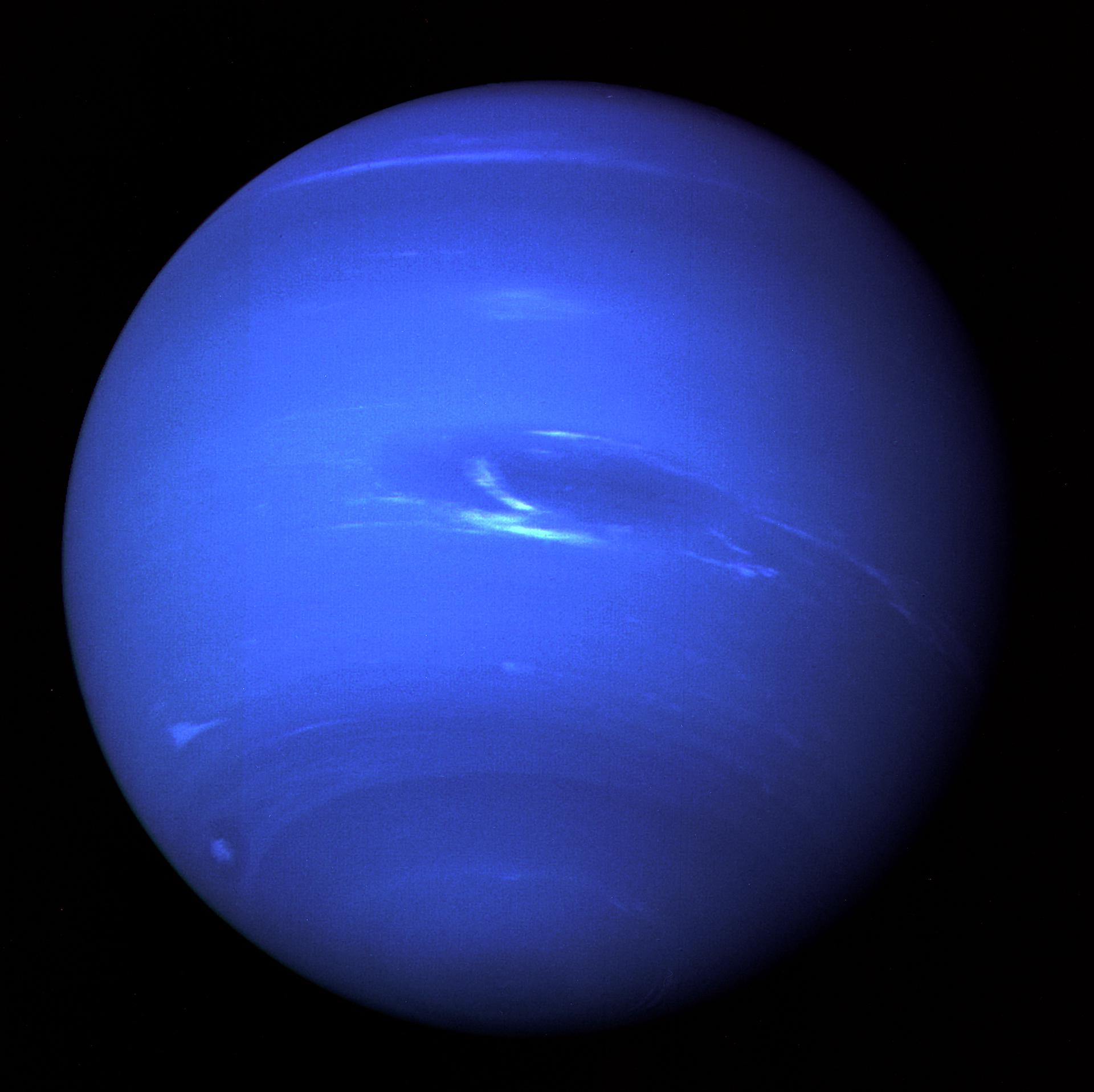
Historically, the two outermost planets in our Solar System—Uranus and Neptune—have been classified and regarded exclusively as “ice giants.” It was believed that these cold worlds, shrouded in methane fog, had a classical structure: an inner rocky core surrounded by a massive mantle of water, ammonia, and methane ice, over which lies a dense atmospheric envelope of hydrogen and helium. However, a groundbreaking new study published in the journal Astronomy & Astrophysics suggests that our current understanding of the composition of these planets may be completely wrong.
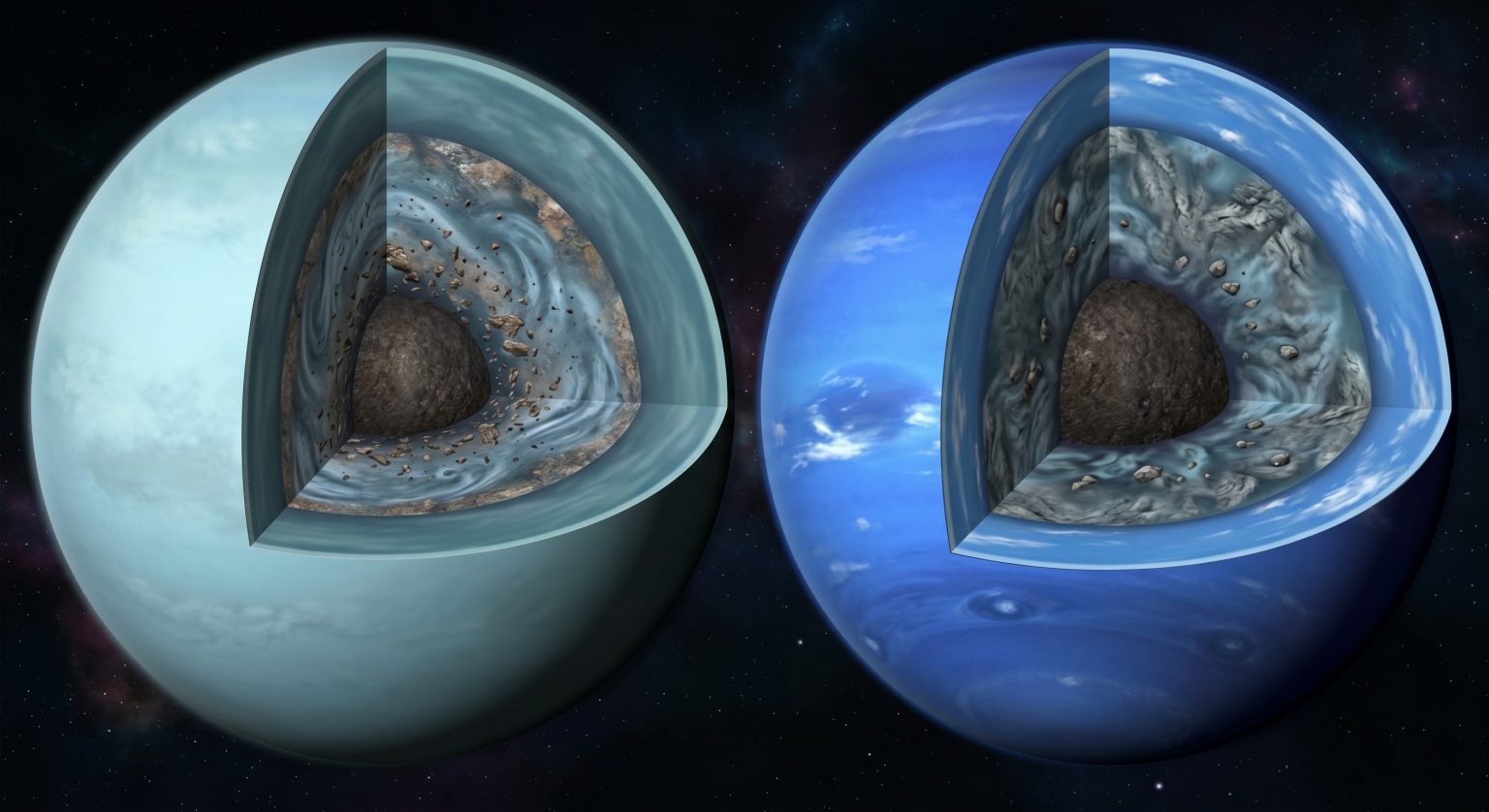
“We’ve discovered that the outer layers of both Uranus and Neptune are actually composed primarily of rock, which exists there mixed with hydrogen and helium. This discovery directly contradicts the long-held belief that they are, in fact, ice giants,” said lead author Yamila Miguel an astrophysicist at the Netherlands Institute for Space Research (SRON).
A hint from the dark corners
What led scientists to question established scientific dogmas? A team of researchers was inspired to study Uranus and Neptune in greater detail thanks to recent discoveries in the trans-Neptunian region—a vast, dark zone beyond Neptune’s orbit where the Kuiper Belt is located.
For a long time, it was believed that objects at such extreme distances from the Sun must be almost entirely composed of ice. However, modern spectroscopic observations have shown that bodies such as Pluto, numerous comets, and other objects in the Kuiper Belt are in fact predominantly rocky and have dense, stony structures.
“We asked ourselves a perfectly logical question: if these small objects, which served as ‘building blocks’ in the formation of planets, consist mainly of rock, then perhaps Uranus and Neptune absorbed the same materials and are also rocky?” explains Yamila Miguel.
Silicate clouds and extreme physics
To test this hypothesis, the researchers developed highly complex thermodynamic computer models. They simulated the conditions inside planets: pressures millions of times greater than Earth’s and the extreme temperatures found deep within their interiors. The scientists modeled the interactions between planetary cores, mantles, and outer atmospheric layers.
The results were impressive. The simulations showed that, under such extreme temperatures and pressures, the gaseous atmospheres of these giants do not simply transform into supercritical liquids. These conditions are ideal for silicate compounds (rocks) to condense into cloud-like structures and fill vast regions of the atmosphere. Thus, although Uranus and Neptune orbit at the outer reaches of the Solar System, where water freezes instantly, their chemical composition is much more similar to that of the rocky planets than one might expect from an “icy” gas giant.
Is it time to change the terminology?
The researcher argues that these findings are so fundamental that they warrant a serious discussion regarding the official reclassification of these celestial bodies in the scientific literature.
“We really need to change their classification to avoid misleading future generations of students and scientists,” the team emphasizes in their article. “Instead of terms like ‘icy’ or ‘rocky,’ we should simply call them ‘small giants’ or find another, more relevant and general term.”
We previously reported on Uranus and Neptune, the planets covered by the deepest oceans of water in the Solar System.
According to Space

