

The European Space Agency (ESA) has published images taken by the Sentinel-2 mission. They show an unusual geological formation in the Sahara Desert called Richat.
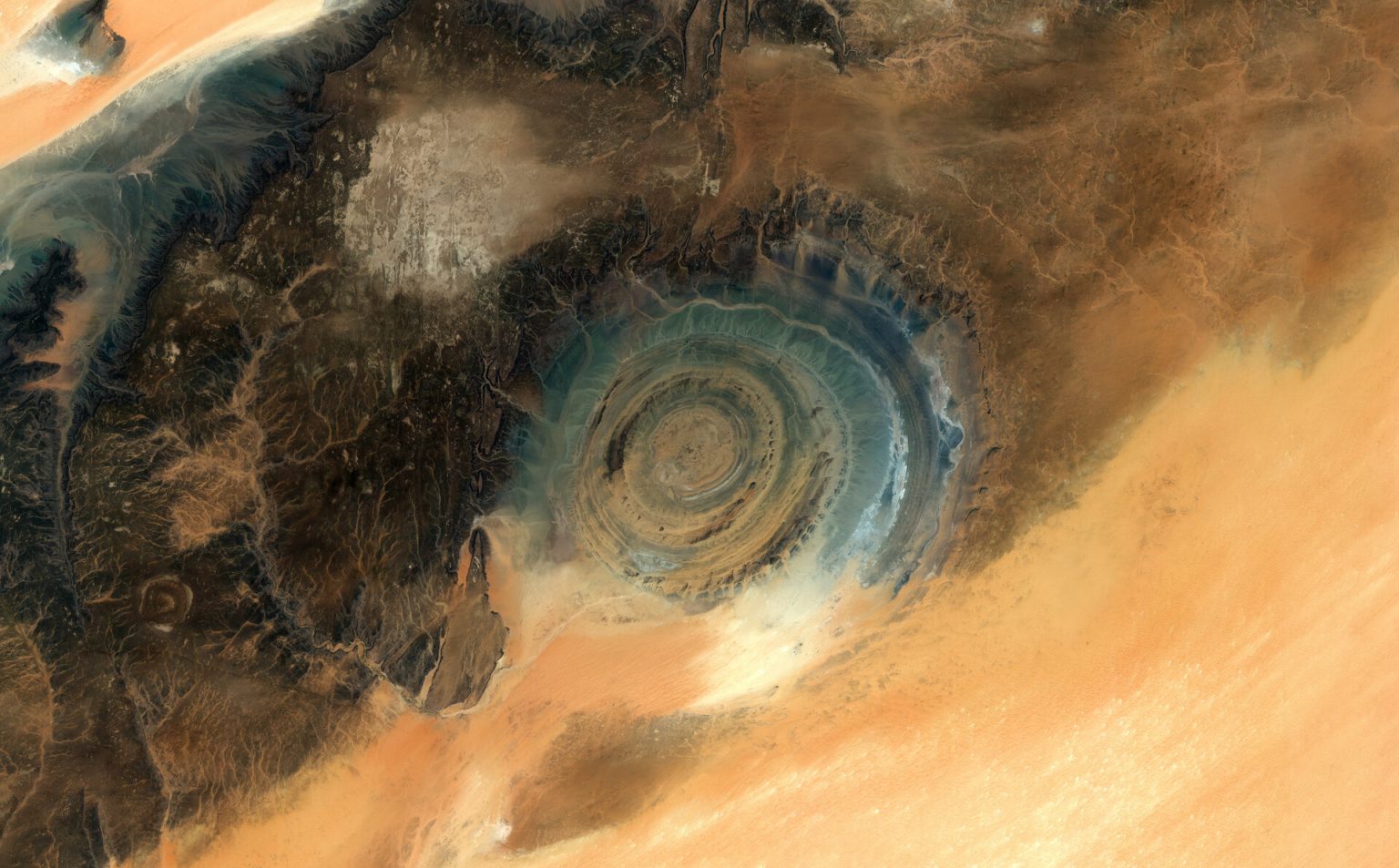
Richat rises above the sea of golden sand in the Adrar region of northern Mauritania. In the past, it was believed that this structure was formed by a meteorite impact. But now scientists believe it was created by the rise of a large dome of molten rock, which, once on the surface, acquired its current appearance through wind, sand, and water erosion. Geologists agree that the structure is at least 100 million years old.
The diameter of Richat is 50 km. The layered formation consists of a series of concentric rings and, when viewed from above, resembles a bull’s eye. Therefore, it is also called the Eye of the Sahara or the Eye of Africa. Richat is clearly visible from space. The formation was a landmark for participants in early space missions.
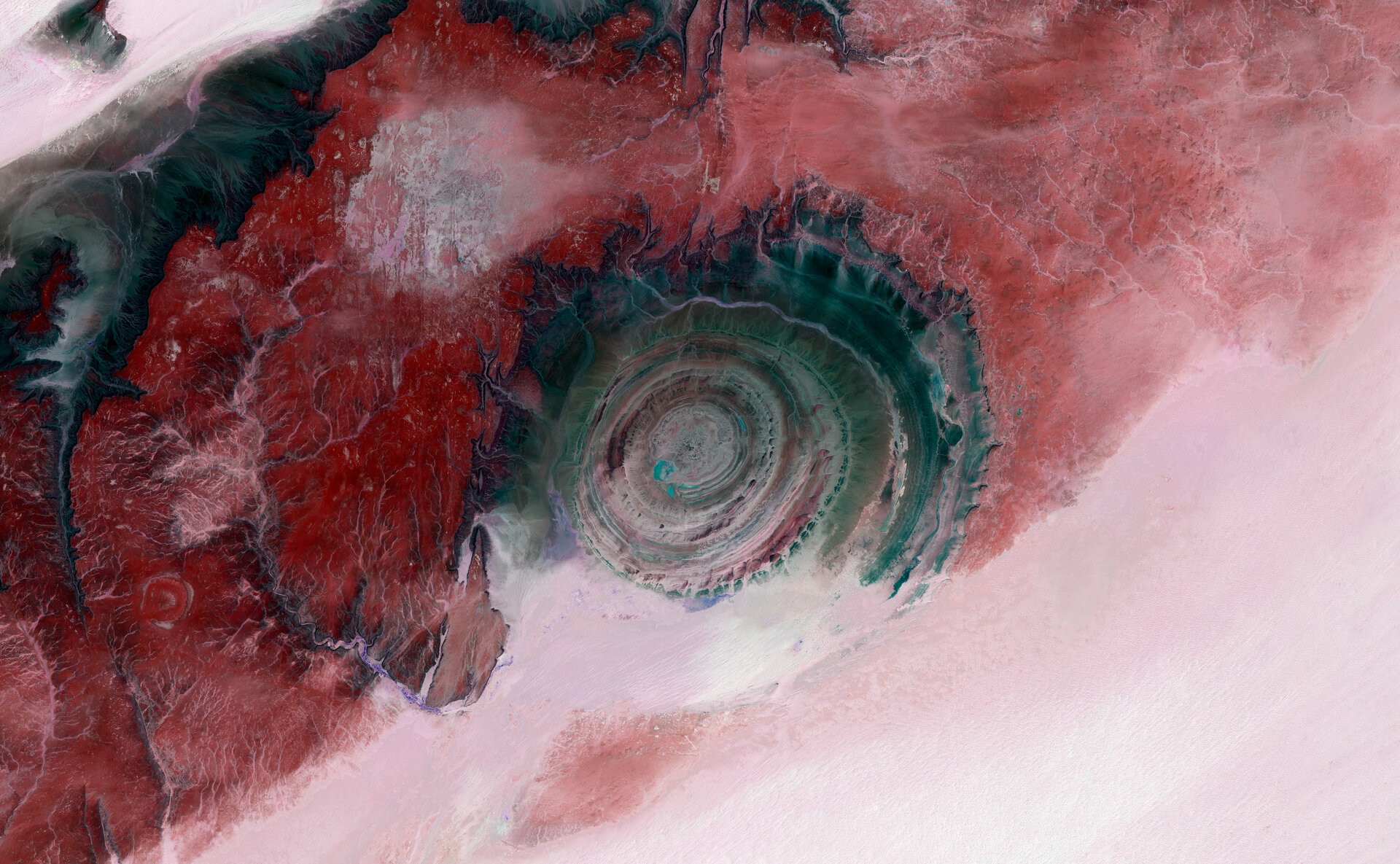
Sentinel-2 took the images of Richat in September 2025. ESA published two images of the structure in natural and artificial colors. The first shows how Richat looks to the human eye. The second allows you to highlight the distinctive features of the formation.
Richat exposes layers of sedimentary rock in different places, depending on the rate of erosion of different types of rock. This is best seen in the image in artificial colors. Quartzite sandstones, which are more resistant to erosion, are shown in shades of red and pink and form the outer rings and high ridges inside, while the valleys of less resistant rocks between them are visible as darker areas. The central rings of the “eye” are about 80 m high, and the rocks in them are older than those that form the outer rings.
In the natural color image, you can see a dark area surrounding the “eye.” It consists of sedimentary rocks and is part of the Adrar plateau, which rises 200 m above the surrounding desert sands. These, in turn, are part of Erg Ouarane, a vast sandy plain stretching hundreds of kilometers to Mali.
Sand also penetrates the southern part of the structure. In the image in artificial colors, you can see tiny purple dots located along the bed of the dried-up river. These are trees and shrubs.
Earlier, we reported on how Sentinel-2 took some really cool pictures of Greenland.
Provided by ESA

