

Last week, Blue Origin’s New Glenn rocket exploded during a test in Florida. The company’s CEO stated that, despite this, the rocket will launch again by the end of 2026. This decision came as a surprise to the entire space industry.
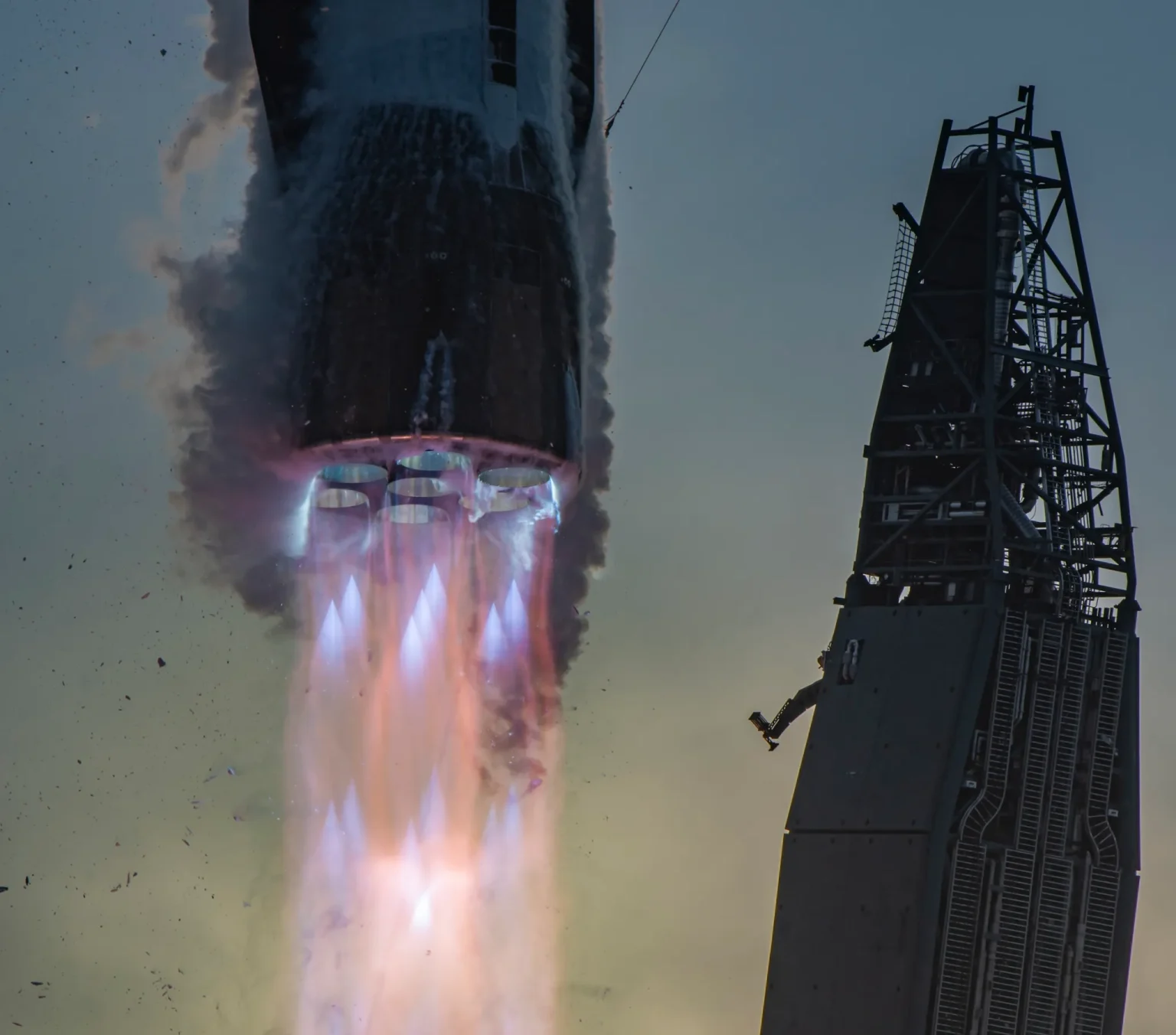
Less damage than expected
CEO Dave Limp announced on Monday that most of the launch pad infrastructure remained intact after the explosion. He also noted that the booster stage, which had already been in flight and was at the complex, and the three upper stages appeared to be in good condition.
Blue Origin has not yet determined the cause of the explosion. A return to flight in 2026 is a rather ambitious plan, as most in the industry had assumed the company would not be able to resume launches until at least 2027.
A single launch platform
The complexity of the situation lies in the fact that Blue Origin currently has only one launch pad capable of accommodating the New Glenn. Construction of a second launch pad at Cape Canaveral is still in the very early stages.
The situation differs from what happened at SpaceX in 2016, when a Falcon 9 rocket exploded on the launch pad. The company resumed flights within a few months because it had a backup launch site that was nearly ready.
The methods for transporting the rocket to the launch pad and erecting it in a vertical position will also change. Until now, the company has used a special transporter-crane that performed both functions. Dave Limp did not specify what would replace it.
Artemis is waiting
NASA is counting on New Glenn as part of its planned series of Artemis missions to the Moon. Precisely to support this program, Blue Origin announced in January that it was suspending tourist flights on the much smaller New Shepard rocket for at least two years.
The company was preparing to launch a batch of satellites for Amazon, another company owned by Jeff Bezos, on its fourth mission. These satellites were not yet on board at the time of the explosion, so they were not damaged.
Three missions in a short period of time
The first launch of New Glenn took place in January 2025 following a lengthy development process and numerous delays. The upper stage reached orbit, but the booster was lost during its return to Earth.
A second launch in November of that year sent two spacecraft bound for Mars into orbit, and the company successfully landed a booster on an ocean platform for the first time.
The third launch in April 2026 ended in failure because the upper stage malfunctioned, causing the AST SpaceMobile communications satellite to end up in the wrong orbit and be lost.
According to techcrunch.com

