

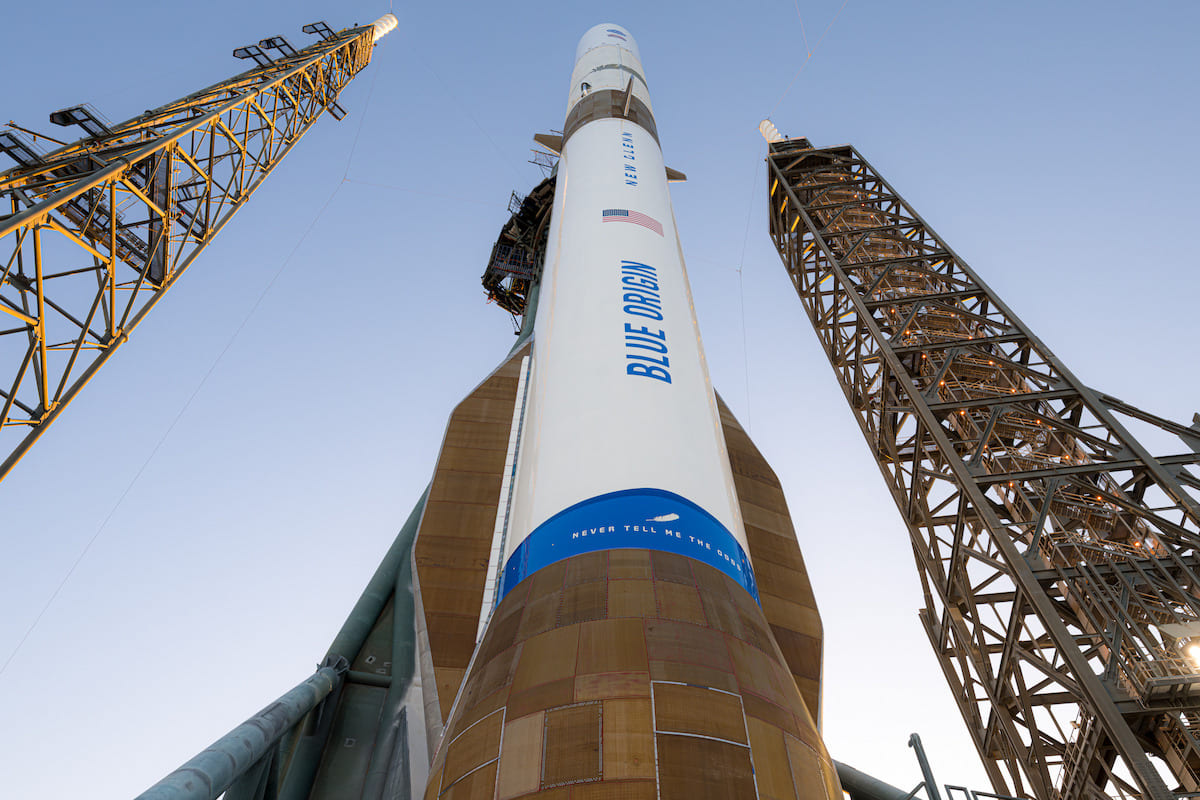
Blue Origin has received approval from the U.S. Federal Aviation Administration to resume launches of its New Glenn heavy-lift rocket. The launch vehicle had been on hold following an incident in April, when the upper stage failed to deliver a commercial satellite into orbit.
What happened in April?
During the third flight in New Glenn’s history, the upper stage experienced thermal issues. As a result, one of the three engines produced less thrust than expected.
The AST SpaceMobile satellite that the rocket was supposed to launch failed to reach orbit and burned up in Earth’s atmosphere. The loss was covered by insurance.
The successful part of the mission
Despite the issue with the upper stage, the rest of the flight went off without a hitch. The New Glenn booster completed its first re-flight, marking an important milestone for Blue Origin’s reusability program.
After completing its test flight, it successfully landed on a drone ship in the ocean for the second time. Jeff Bezos’s company is banking on reusing the first stage to reduce launch costs.
Investigation and resolution
Blue Origin filed a report with the FAA and took corrective measures, though it did not disclose the details. The company merely noted that the upper stage “experienced an abnormal thermal condition,” which caused a loss of engine thrust.
The month-long hiatus has ended, and the rocket has now been cleared for flight again. The company had previously announced ambitious plans to conduct up to 12 New Glenn launches by the end of the year. It is not yet clear how much the forced hiatus has affected this schedule.
According to TechCrunch

