

SpaceX has announced the date for the next flight of its super-heavy Starship rocket. It will take place on October 14 and will be the final flight for the V2 modification.
Successes and failures of Starship V2
Starship V2 made its first flight in early 2025. The debut was unsuccessful. The first two flights followed the same scenario, with the spacecraft disintegrating in the sky over the Caribbean Sea.

The third mission was slightly more successful — Starship managed to reach the stage of engine shutdown. However, the spacecraft was unable to deploy its cargo of eight Starlink satellite simulators and suffered a fuel leak, resulting in loss of control and subsequent destruction. Another Starship of this modification exploded during burn-in, damaging the launch pad. Because of this, SpaceX had to seriously revise its plans and make a number of changes to the spacecraft’s design.
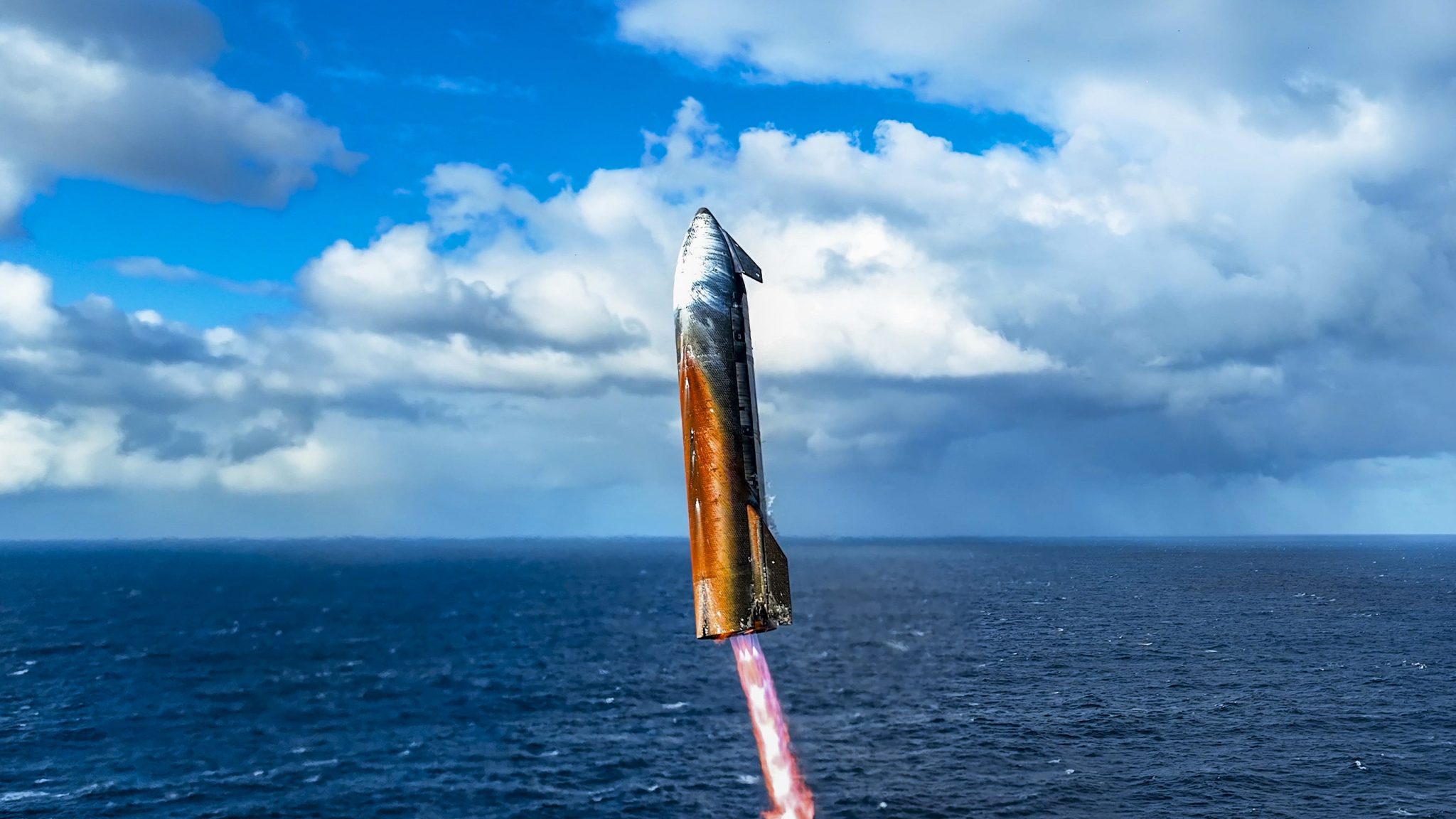
These measures have brought results. During the August flight, SpaceX managed to achieve almost all of its objectives, and Starship itself, despite damage sustained during re-entry into the atmosphere, managed to successfully splash down in the Indian Ocean.
Final flight of Starship V2
The new Starship flight program is based on the results of the previous mission. Its main tasks will be to collect experimental data and test the limits of the spacecraft’s capabilities. The Starship launch is scheduled for October 13 at at 7:15 p.m. EDT (2315 GMT; 6:15 p.m. local Texas time).
Starship’s tenth flight test took a significant step forward in developing the world’s first fully reusable launch vehicle.
— SpaceX (@SpaceX) September 29, 2025
Next up: Flight 11 of Starship is targeted to launch as early as Monday, October 13 → https://t.co/YmvmGZUsXW pic.twitter.com/bspqrP9aRj
The Super Heavy booster, which was returned during the eighth Starship mission, will be used for the launch. 24 of the 33 Raptor engines installed on it have already flown into space. Its main purpose will be to demonstrate the new engine configuration planned for use on the next generation Super Heavy. At the beginning of its landing impulse, Super Heavy will activate 13 of its engines and then switch to a five-engine mode. At the end of the landing maneuver, the booster will switch to its three central engines and hover over the ocean, then shut them down and fall into the Gulf of Mexico/Gulf of America. There is no provision for its rescue.
As for Super Heavy, it will be launched into a suborbital trajectory and, as in the previous mission, will deploy eight mock-ups of next-generation Starlink satellites. There are also plans to restart one Raptor engine in space.

Engineers deliberately removed heat shield tiles from certain areas of Starship to stress test the most vulnerable parts of the spacecraft. Some of the missing tiles are in areas where there is no backup ablation protection. To simulate the trajectory that the spacecraft will follow when returning to Starbase in future flights, the final stage of landing includes an aerodynamic maneuver and verification of subsonic guidance algorithms before landing engines are engaged and the spacecraft splashes down in the Indian Ocean.
The upcoming flight will be the final one for Starship V2. Engineers are already preparing the next, even more powerful modification of Starship V3. It is expected that SpaceX will use it to test Starship’s landing on the ground and orbital refueling of the spacecraft.

