

Firefly Aerospace has received permission from the US Federal Aviation Administration (FAA) to resume launches of its Alpha rockets. This allowed the company to begin preparations for its next space mission.
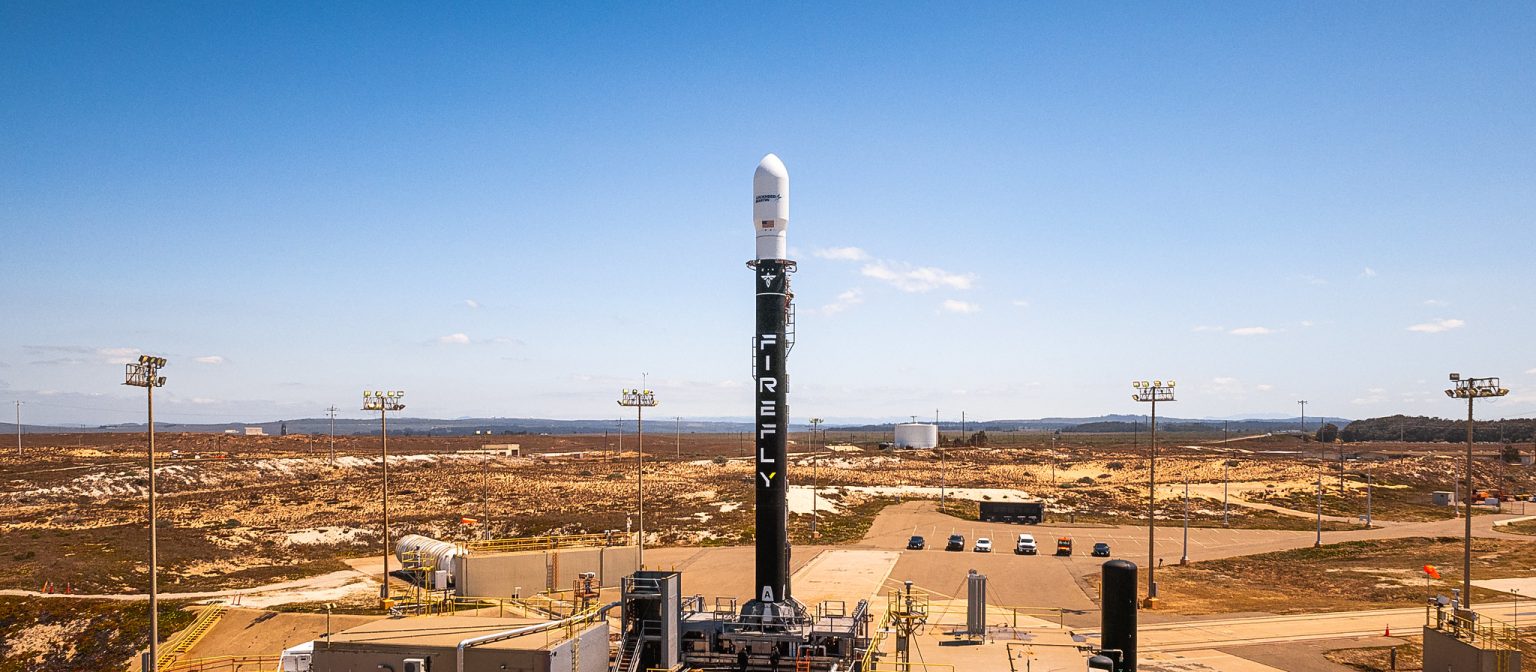
Alpha flights were suspended after an accident on April 29, 2025, during the sixth launch of the rocket. The mission’s objective was to launch Lockheed Martin’s experimental satellite into orbit. However, due to a malfunction during the second stage of the flight, the rocket and its cargo were lost.
In order to investigate the incident, Firefly cooperated with the FAA and, at the same time, formed an independent expert commission comprising representatives of several government agencies, customers, and industry experts. Investigators confirmed that Firefly’s flight safety system was operating normally during all phases of the flight. Despite the accident, the rocket did not pose a threat to public safety.
The investigation revealed that the Alpha flight proceeded normally until the separation of the stages. Then, milliseconds after the first stage separated, it ruptured. A pressure wave hit the Alpha’s second stage, causing the loss of the engine nozzle extension and a significant reduction in second-stage thrust. It was able to regain control of its orientation and continued ascent to an altitude of 320 km until it ran out of fuel. The rocket needed just three seconds to reach orbital velocity and five seconds to enter the target payload delivery orbit.
Analysis of video and onboard telemetry data, as well as post-flight tests, showed that the most likely cause of the incident was excessive heating as a result of flow separation caused by gas emissions. Alpha flew at a higher angle of attack than during previous missions. The flow separation caused by the gas emissions intensified heating on the leeward side, which reduced the structural strength reserves and led to the rupture of the booster under the load caused by the separation of the stages.
Firefly specialists have already implemented the necessary corrective measures to prevent similar incidents from happening again. These include increasing the thickness of the thermal protection system on the first stage and reducing the angle of attack at key stages of flight. The company has already begun preparations for the next Alpha launch.
“At Firefly, technical challenges aren’t roadblocks — they are catalysts,” said Jordi Paredes Garcia, chief engineer of Alpha at Firefly Aerospace. “Each mission provides us more data and enables us to continuously improve. ollowing all the lessons learned and corrective actions implemented, we were able to further increase Alpha’s reliability. We are grateful to the FAA, our customers, and the independent review board for their continued support through this process.
It should be noted that in 2017, Firefly Aerospace was rescued by Ukrainian entrepreneur and philanthropist Max Polyakov, whose financial support helped it survive bankruptcy. In August 2025, the company successfully completed its initial public offering on the NASDAQ high-tech stock exchange.
According to Firefly

