

Five years ago, a man-made machine made its first powered flight in the atmosphere of another celestial body. That machine was the Ingenuity helicopter. Its flights in the Martian atmosphere marked a true breakthrough in Earth science.

Spaceflight to other planets
On April 19, 2021, exactly five years ago, the Ingenuity helicopter made the first-ever flight on Mars. It lasted only 39 seconds, and all the craft did during that time was rise vertically 3 meters into the air, hover briefly, and land. Yet it is still compared to the Wright brothers’ first flight, which lasted about the same amount of time.
To understand why Ingenuity is so important for the advancement of global technology, we need to understand what aerodynamic flight is and why it is so important for our civilization.
In the little more than a century since the Wright brothers’ first flight, aviation has become the primary means of long-distance travel, reducing journeys between continents to a matter of days. And all because a lift, which arises on any surface with an aerodynamic profile moving through a gaseous medium, is generated relatively easily.
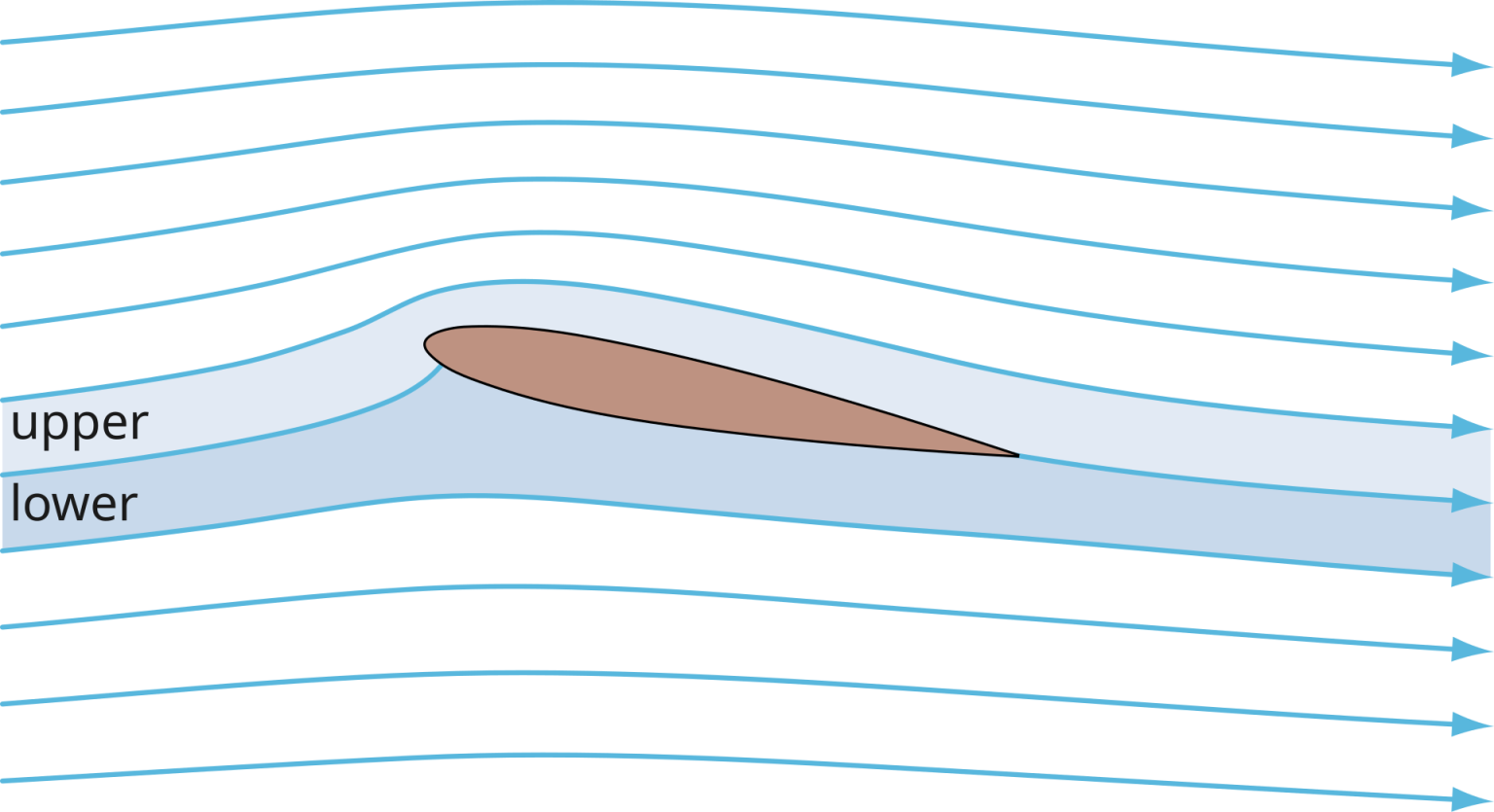
All you need to do is create a wing or blade with a flat underside and a convex upper surface, and the pressure difference between them will begin to lift the aircraft into the air. And there’s no real difference: this effect is created using either a static wing or a rotor blade.
The only problem is that it is practically impossible to use this effective method beyond Earth. In most cases, other celestial bodies either have no atmosphere at all, or their atmospheres are extremely thin, or the temperature and pressure increase extremely rapidly with depth.
Therefore, instead of wings and rotors, it has been proposed to use jet propulsion for flight on other planets. This is by no means an economical or simple solution, which is why most research vehicles continue to crawl across the surfaces of celestial bodies.

Mars and Saturn’s moon, Titan, are considered to be relatively well-suited for aerodynamic flight. And since the latter is far too distant from Earth, the Red Planet remained the leading candidate for the first flight beyond Earth for several decades.
The road to the Martian helicopter
AeroVironment has been developing Mars helicopter projects with NASA’s support since at least the early 1990s. The company is one of the leading developers of unmanned aerial vehicles and a regular supplier of drones to the U.S. military.
However, even for her, the task of building a helicopter for Mars was extremely challenging. Although at first glance, it all seemed relatively simple. All that was needed was to ensure that the rotor’s lift was 20–30 percent greater than the force of gravity. Gravity on Mars is 2.5 times weaker than on Earth, and it would seem that this greatly simplifies the task.

However, the Red Planet’s atmosphere is 100-160 times less dense than Earth’s. And this significantly alters many of the parameters taken into account in Bernoulli’s equation, which describes lift. Again, it seems that this can be compensated for by making the blades longer and increasing their rotational speed.
But this raises new problems. When the speed of a thin, long blade approaches the speed of sound in the medium in which it rotates, powerful vibrations occur that try to twist and destroy it. On Earth, experimental models have managed to partially overcome this barrier, but the solutions used in them are not suitable for Mars.
To make matters worse, the low density of the atmosphere means that the speed of sound there is about 250 m/s, compared to 340 m/s on Earth. This means that the rotors there must rotate even more slowly to avoid breaking apart.
All of this led to many at NASA doubting that a Martian helicopter made sense. However, in the early 2010s, AeroVironment did develop a concept for a craft with two rotors mounted on a single axis but rotating in opposite directions. Each rotor spins at just 2,600 RPM. According to calculations, this is sufficient to lift the aircraft above the Martian surface in most cases. However, NASA once again declined to send it to Mars, as it would have had to be transported to the Red Planet alongside the new rover, then simply called Mars 2020, and the latter was already overloaded with equipment.
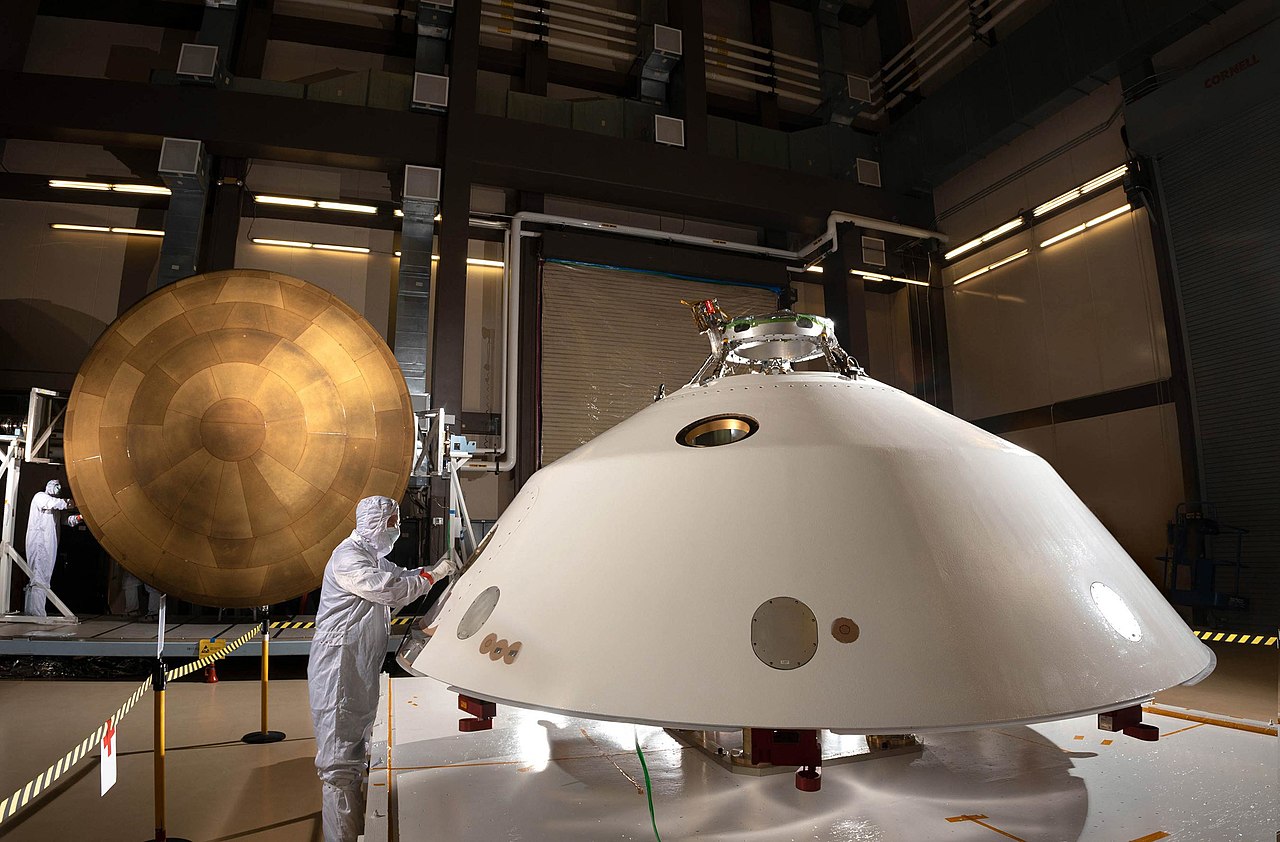
However, the initiative group built a series of models and demonstrated through field tests that the autonomous helicopter would indeed fly. NASA relented, and it was soon announced that Ingenuity, the first flying drone in space, would land on Mars in February 2021 alongside the Perseverance rover, although mission engineers later said that it was the rover that should have been named “Perseverance.”
The Ingenuity design
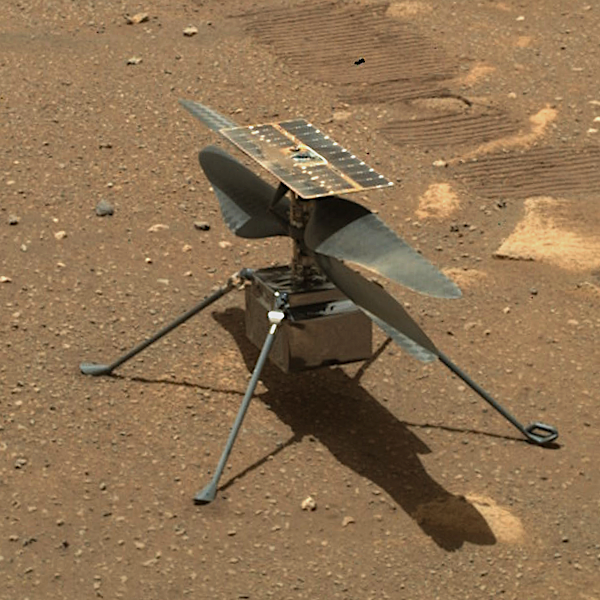
Although the name, which means “ingenuity,” is also very fitting for this device, because its design is truly something else. The fuselage – essentially a platform housing electrical equipment, four landing gear legs, and a mast – measures 195×163×136 mm. In fact, it is a toy that weighs just 1.8 kg.
The mast is equipped with two rotors, each with a blade span of 1,210 mm. Above these two rotors is a rectangular solar panel with a total area of 544 cm². This panel supplies power to the batteries, which in turn drive the rotors.
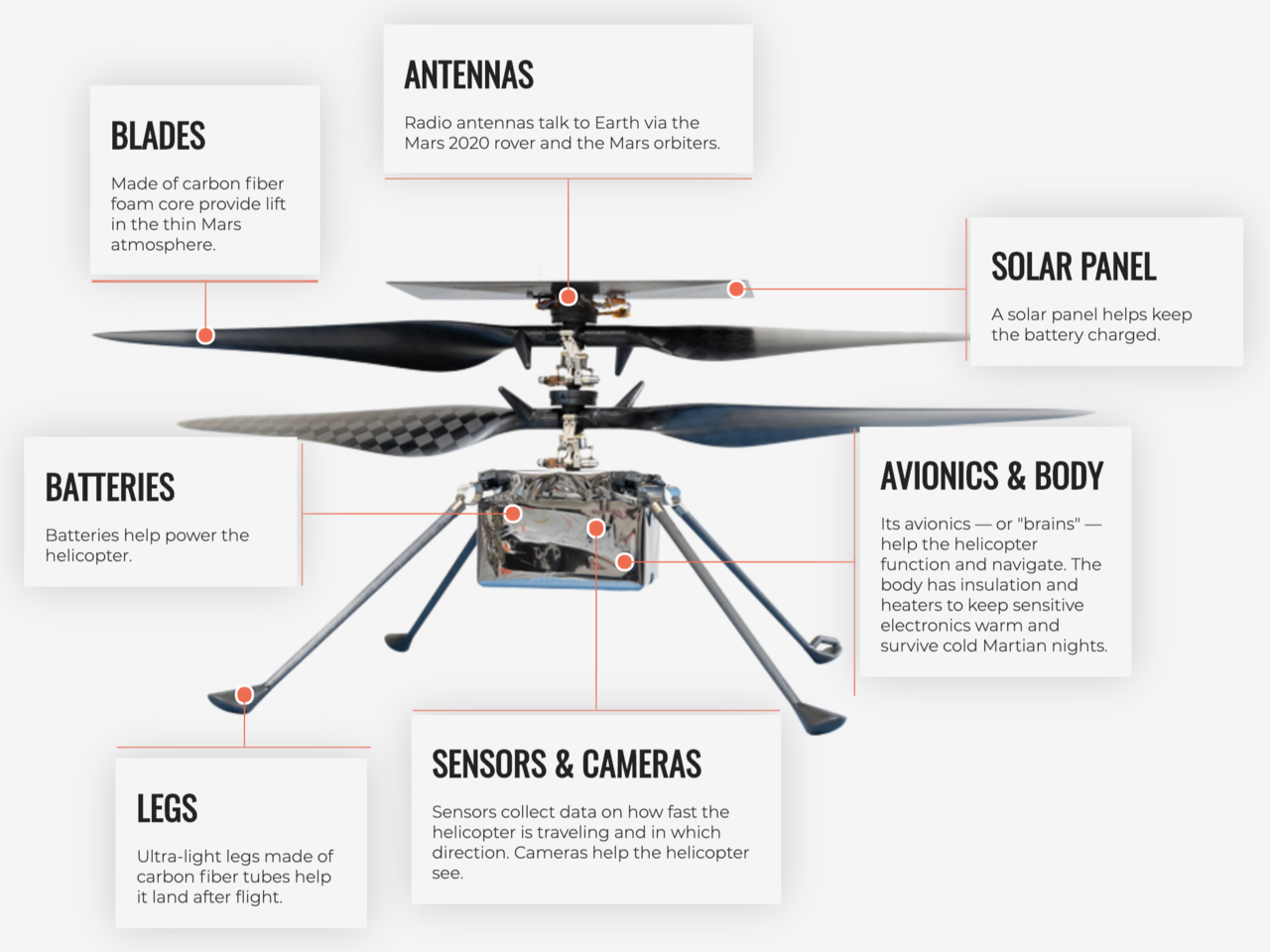
It carries no payload other than the Ingenuity camera. Its main objective is to demonstrate that the very concept of a Martian helicopter works. And this small helicopter has fully succeeded in doing so.
The fact that Ingenuity did not carry any scientific instruments does not mean that it had no sensors at all. It was equipped with accelerometers, three-axis tilt sensors, and other equipment. All of this was necessary to ensure its orientation in space.
The thing is, unlike Earth, no navigation satellites are orbiting Mars. So you cannot just turn on the GPS module. And a compass is useless on the Red Planet because of the weakness of its global magnetic field.
Therefore, an inertial navigation system was used. Simply put, the spacecraft calculated on its own how far and in which direction it had traveled from a predetermined point, and thus determined its location.
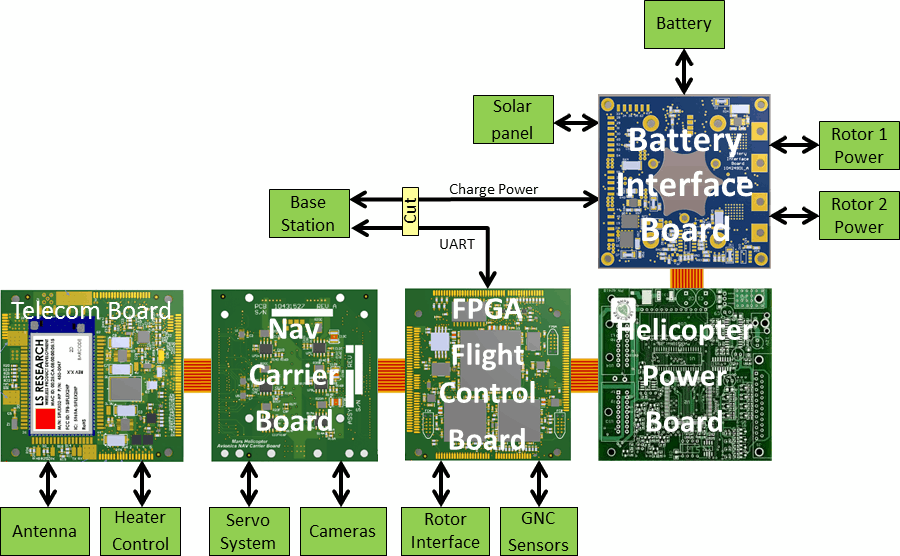
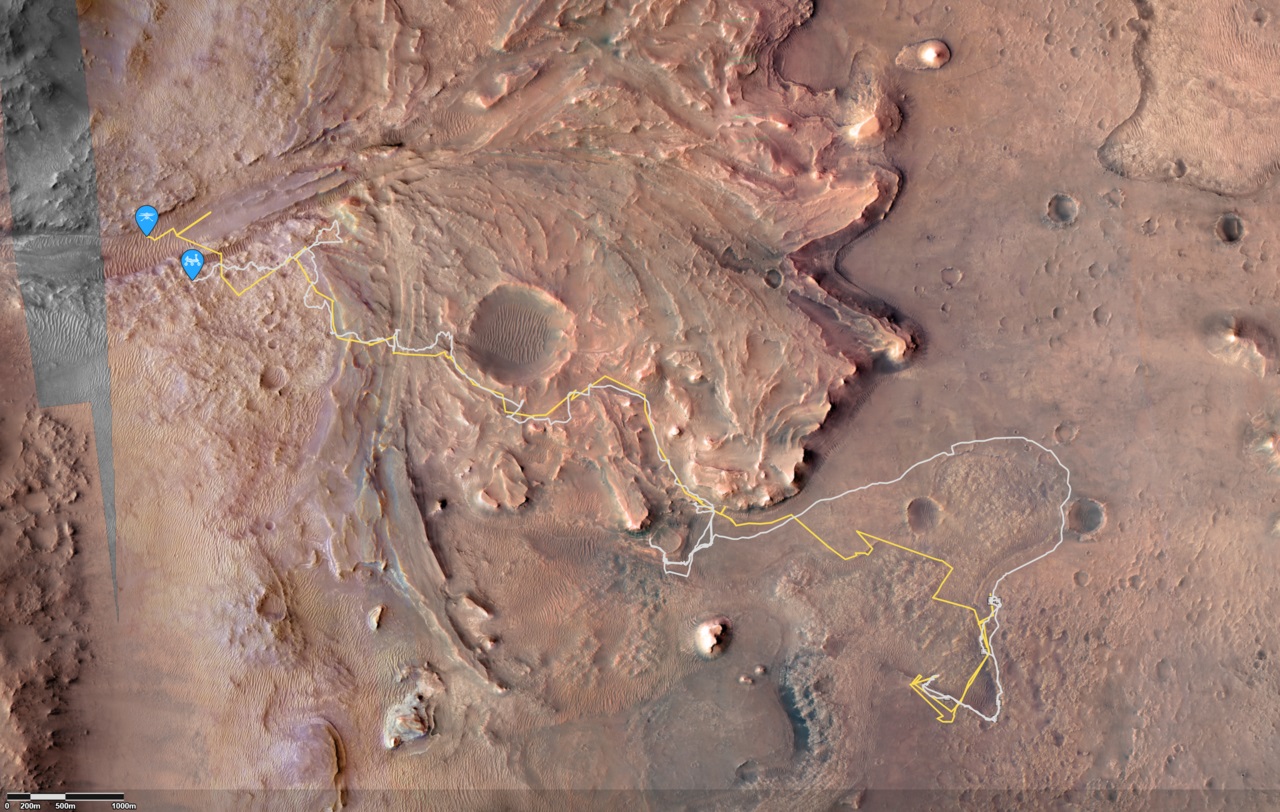
However, it did not have a traditional onboard gyroscope system. The aircraft relied on accelerometers and other sensors. This method, however, is extremely imprecise. Therefore, after each flight, mission specialists manually refined the helicopter’s position by comparing the images it captured with a high-precision map of the area.
Thanks to the Mars Reconnaissance Orbiter’s many years of operation in Martian orbit, even objects as small as 25 cm were identified. The engineers had plenty of time to do this, since the spacecraft itself flew by Mars approximately once every two weeks.
However, the duration of a single flight never exceeded 2 minutes. This was not due to battery capacity, but rather to the design of the rotor drive. Due to weight constraints, it was not equipped with any heat sinks. As a result, it heated up at a rate of approximately 1 °C per second. The thermal insulation used provided some protection for the rest of the equipment against this heat. However, Ingenuity generally could not fly for long, and in fact, its flights were more like very prolonged hops.
But the most significant feature of the Martian helicopter’s design was that it was impossible to control it directly. After all, the signal delay from Earth could be as long as 22 minutes. Therefore, instead of direct control, before each flight on Ingenuity.
Moreover, due to weight restrictions, the rover simply did not have any serious antennas. It was physically incapable of communicating with either Earth or the relay satellite in Mars orbit. All it could do was maintain communication with Perseverance, through which all commands were transmitted.
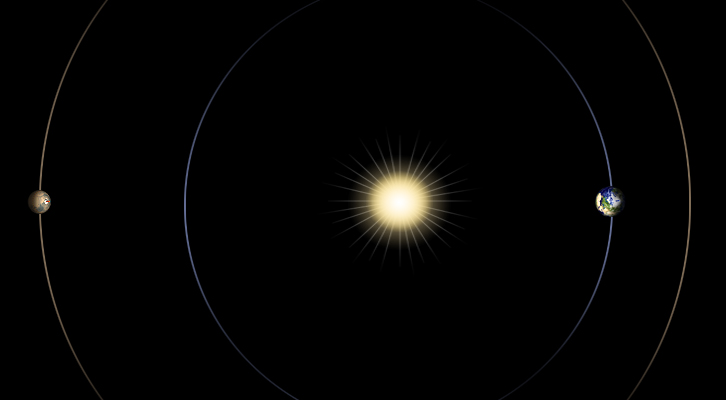
Furthermore, from time to time, the Sun would come between Earth and Mars. In such cases, commands simply could not be sent to either spacecraft for several days. The rover would automatically collect data from the helicopter and transmit it to Earth.
Mars mission
The Mars 2020 Rover Mission launched from Earth on July 30, 2020. On February 18, 2021, Perseverance landed in the Jezero Crater region. Initially, it focused on activating and testing its own systems, but on March 21, it removed the protective cover from Ingenuity. Engineers began preparing it for launch. The first attempt to spin the rotors took place on April 9, but the motors shut down on their own. The next attempt was on April 11, but the onboard computer malfunctioned. Finally, on April 19, it made its first flight.
In that flight and several that followed, it was demonstrated that rotorcraft can operate effectively on Mars, and with that, Ingenuity’s primary objective was accomplished. When it was first being prepared for the mission, engineers cautiously estimated that it would operate for only 30 days, during which time it would make several flights.
It was assumed that it would be able to continue flying. But at first, no one had given any thought to how to organize that. The thing is, as mentioned earlier, the helicopter could not stray too far from Perseverance, and the rover had its own mission – collecting samples in the bed of the ancient Neretva River. Fortunately, it was able to fly often enough and far enough to keep up with it.
The spacecraft successfully withstood seasonal changes, dust storms, and a loss of communication during the planet’s superior conjunction with the Sun. It continued to operate until January 2024 and completed a total of 72 flights. However, during the last of these flights, a failed landing destroyed one of its rotors and severely damaged the other. Shortly thereafter, NASA announced the end of the mission.
Nevertheless, it is still considered an enormous success. Ingenuity not only demonstrated that the concept of a helicopter on Mars works, but also exceeded its expected operational lifespan several times.
What’s next?
Ingenuity’s success means that scientists will continue to explore the use of helicopters in missions to other planets in the future. One of the first such missions will be the Dragonfly multirotor drone, which is set to explore Titan. The mission is scheduled to launch in July 2028, but it will not reach its destination, Saturn, until 2036.
Some other helicopter may already be operating on Mars by then. Scientists have already proposed several projects to NASA, but the agency says it has no plans to land new rovers on the Red Planet, which means it will not be transporting helicopters either. However, things could change in the future.
Aerodynamic flight is too efficient to be ruled out wherever it is feasible. It is quite possible that in the future it will be implemented not only on Mars but also on Venus, despite the harsh conditions that exist on that planet.

