

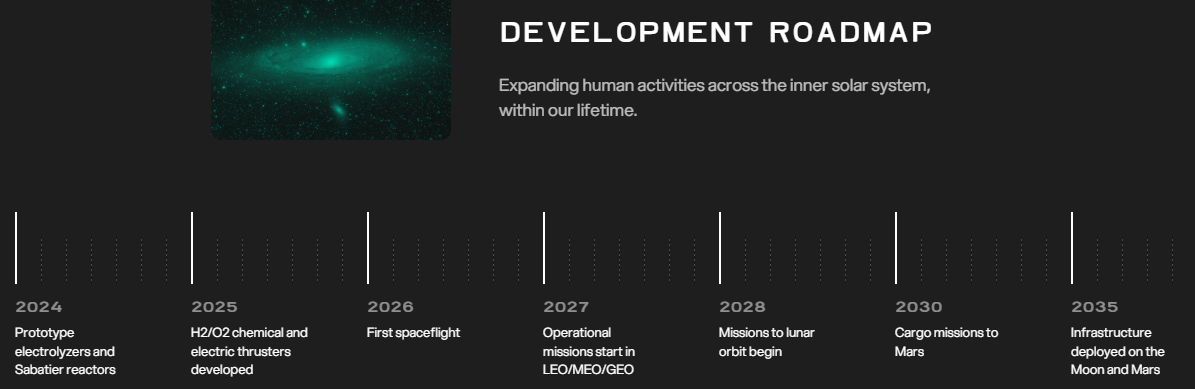
American startup General Galactic, founded by former SpaceX engineer Halen Mattison and former Varda Space engineer Luke Naise, is preparing a demonstration mission called Trinity. The company plans to launch a satellite weighing approximately 500 kg (~1,100 pounds) on a joint Falcon 9 launch in October 2026 to prove that water can be the only working fluid for maneuvers in orbit.
The main idea behind Trinity is to test two ways of water propulsion at once. For the chemical scheme, water is broken down into hydrogen and oxygen through electrolysis, and then the hydrogen is burned using oxygen as an oxidizer. For the electrical method, water is also split, and then sufficient energy is supplied to convert oxygen into plasma, which is directed from the engine by a magnetic field to produce thrust.
The developers note that water is easier and safer to use than cryogenic components such as methane — it does not need to be stored at extremely low temperatures, and there is no problem of fuel boiling away due to heating by the sun. The company also claims a potential Δv reserve 5–10 times greater than traditional systems, which is important for rapid evasions and active maneuvers in crowded orbital zones.
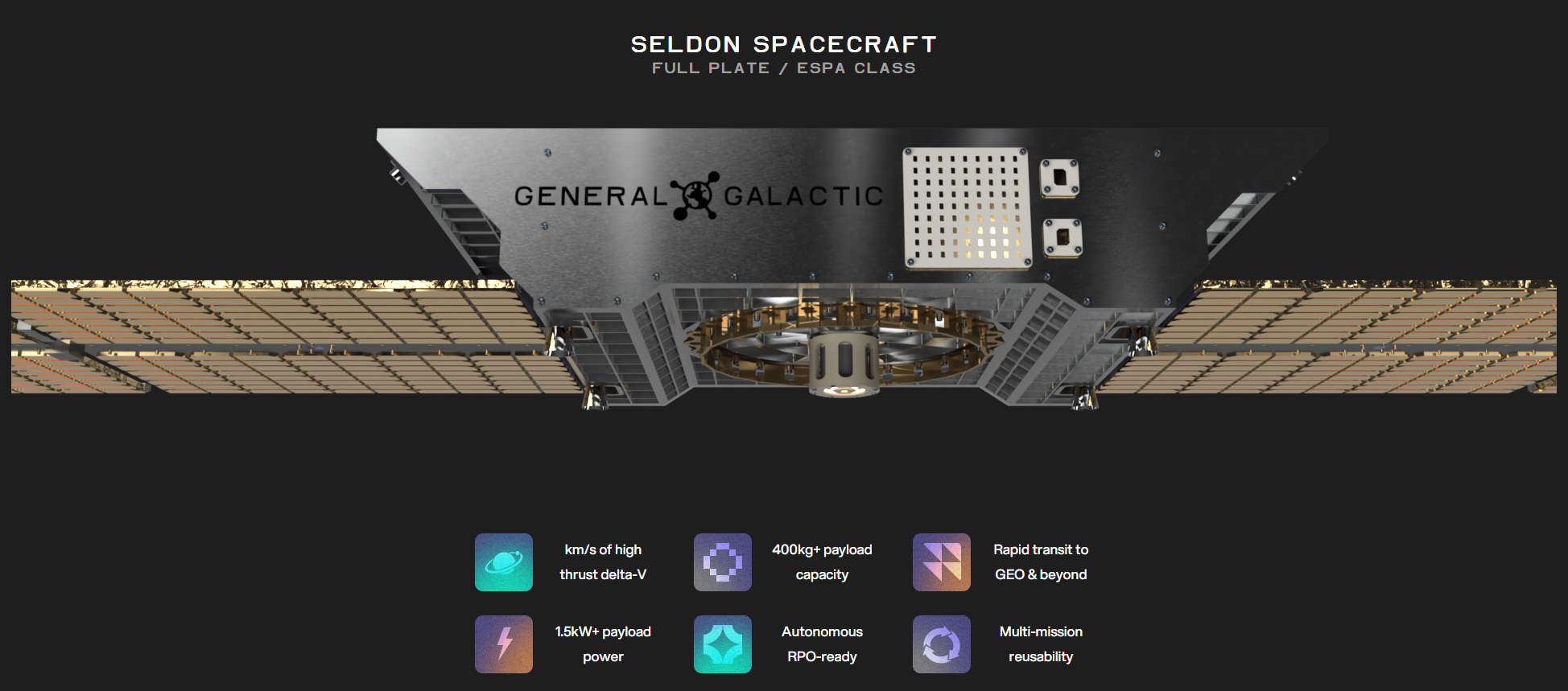
How does it work? The satellite has a tank of water on board, which serves as its only fuel. First, the water is fed into an electrolyzer and broken down into hydrogen and oxygen. Then there are two possible modes. In chemical ones, hydrogen and oxygen are fed into the combustion chamber, where they react to form hot water vapor; it flows out through the nozzle and creates thrust (like in a conventional rocket engine, but without toxic components). In the electric version, after splitting, water/oxygen is further accelerated by energy to a plasma state (ionized), and then accelerated by an electromagnetic field and ejected outward: the mass flows out at a very high speed, so the thrust is lower, but the efficiency (working fluid consumption per unit of momentum) is higher — this is convenient for long-term orbit corrections.
Why is this important? Water is one of the most promising resources for in-situ logistics: theoretically, it can be extracted from ice on the Moon or other celestial bodies and then converted into fuel components. NASA has long been considering the use of lunar ice to produce oxygen/fuel, and small water engines have already been tested in orbit (in particular, Japan’s Pale Blue). If General Galactic’s approach is confirmed on a larger spacecraft, it could reduce the cost of refueling satellites and extend the life of scientific platforms — from orbital observatories to spacecraft at Lagrange points, which require regular orbit corrections and the ability to quickly change observation configurations.
According to wired

