

Australian engineering company entX, in collaboration with Adelaide University, has announced the transition from laboratory prototype to pre-production of the GenX Betavoltaic Power Generator, a new generation battery that will be manufactured using additive technologies (3D printing). The project is supported by the Additive Manufacturing Cooperative Research Centre (AMCRC) and aims to solve one of the key problems of equipment operation in hard-to-reach environments — reliable, maintenance-free power supply.
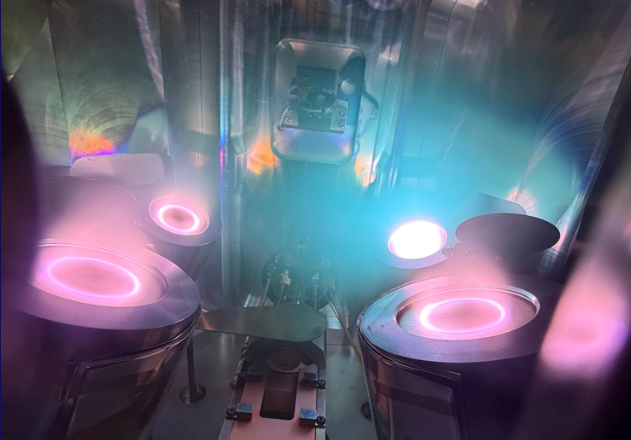
Unlike classic radioisotope thermoelectric generators (RTGs), which convert heat from decay into electricity, the betavoltaic approach uses radiation energy to generate electricity in semiconductor structures. GenX focuses on ultra-thin functional layers: the sequential application of nanolayers of metals, metal oxides, and semiconductors forms complex sandwich architectures with high specific power. Industrially, this combination of 3D printing with coating and thin-film deposition methods, in particular with the transfer of critical operations such as PVD to a scalable process at the certified entX facility in Adelaide. At the same time, the team is rapidly prototyping protective radiation shields to facilitate the safe integration of the power supply into products.
The work plan is scheduled to last approximately 14 months, with a budget of $1.8 million. The stated goal is to demonstrate a high-power betavoltaic demonstrator and prepare the technology for evaluation by customers in the space, defense, and remote systems sectors.
Why is this important? For space exploration and astronomy: a durable, maintenance-free energy source opens up possibilities where solar panels or regular recharging are not feasible — for example, rover operation during a two-week lunar night, powering autonomous sensors in the shade or remote regions, and compact scientific platforms and sensor networks. For astronomy, this potentially means longer autonomous operation of instruments in harsh conditions and greater freedom in choosing the location of observation equipment.
How does it work? Betavoltaic is a nuclear battery that works almost like a solar panel, except that instead of photons of light, it is powered by electrons (beta particles) that are naturally emitted during the decay of a radioisotope. A semiconductor with a p-n junction (almost like in solar cells) is located nearby. When beta particles pass through it, they knock out electron-hole pairs in the material (i.e., create charge carriers). The built-in electric field of the p-n junction separates these charges, and a current appears in the external circuit. This is not a thermal circuit (unlike RTG), but a direct conversion of radiation into electricity.
Key limitation: such batteries usually provide low power, but last a very long time and require no maintenance — which is why they are considered for space and other “long-distance” applications.
According to adelaideuni, interestingengineering

