

The US Space Force has commissioned Boeing to build two new Evolved Strategic Satellite Communications (ESS) vehicles worth a total of $2.8 billion, with an option for two more. The ESS program is intended to replace the current Advanced EHF (Lockheed Martin) network and provide a continuous and secure nuclear command, control, and communications (NC3) channel for the US president and the country’s strategic forces. The first spacecraft is scheduled to be launched into geostationary orbit by 2031.

Boeing has been developing ESS since 2020, when the company and its competitors received their first contracts to build prototypes. The new satellites will have enhanced cyber protection, radiation resistance, and an advanced secure radio channel. According to Boeing Space Vice President Kay Sears, the system “is guaranteed to work in the event of threats in space,” providing strategic forces with continuous global coverage.
The contract provides for the completion of the main works by 2033 and further expansion of the ESS constellation at a cost of approximately $12 billion. In addition to global coverage, Space Force separately emphasizes the need for reliable communications over the Arctic, where Chinese subarctic units are becoming increasingly active.
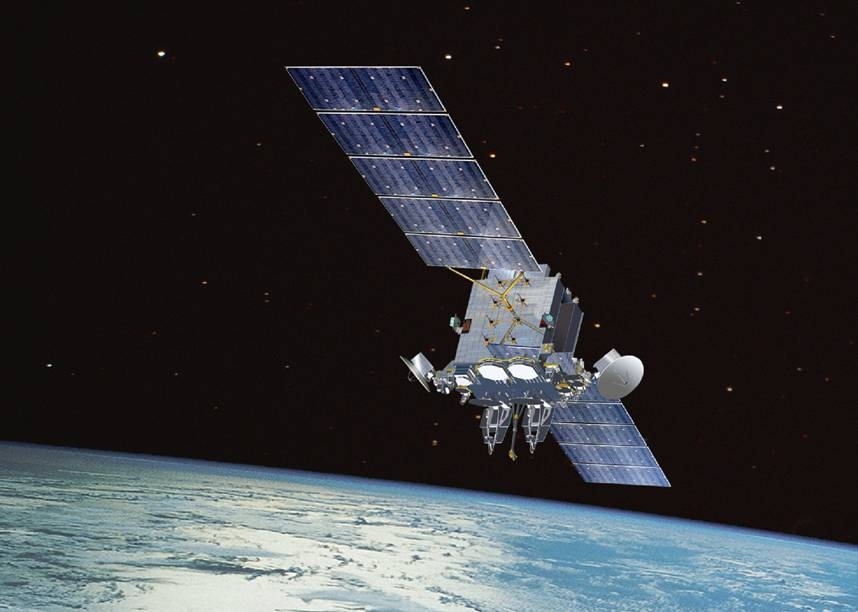
The development of ESS stimulates investment in highly resilient components — from radiation-hard microprocessors to countermeasures against space weather. Technologies that ensure reliable data exchange during solar storms can subsequently be applied in scientific missions to deep space, where reliability requirements are even more severe. In addition, large geostationary platforms often have energy reserves: installing additional research sensors — for example, for monitoring space weather or radio astronomy — allows for the expansion of scientific infrastructure without launching separate satellites. Thus, ESS indirectly opens up new opportunities for fundamental astronomical research and more accurate models of the cosmic environment.
If you enjoy following how advanced technologies are changing the game in orbit, be sure to check out our detailed comparison of the Falcon 9 from 2010 and the Falcon 9 from 2025. This article explains how fifteen years of evolution have brought SpaceX’s reusable rockets to a new level of reliability and cost-effectiveness — and shows why such breakthroughs in rocket science are as important for military and scientific satellite missions as the latest ESS system.

