

Less than a week ago, a unique discovery was made. Astronomers managed to find a comet from the Kreutz family at the greatest distance in history. The comet was given the temporary designation 6AC4721, and it is now the focus of attention for a large number of professionals and amateurs. Some comets from the Kreutz family become so spectacular that they are given the status of Great Comets. But will 6AC4721 succeed in doing so?
Unique discovery
On January 13, 2026, a new faint object with a magnitude of +17.8 was discovered using the 28-centimeter telescope at the AMACS1 observatory in San Pedro de Atacama (Chile), operating as part of the MAPS program. The object was moving against the backdrop of stars. It was added to the Minor Planet Center (MPC) database under the temporary designation 6AC4721, where it awaits confirmation by other observatories.
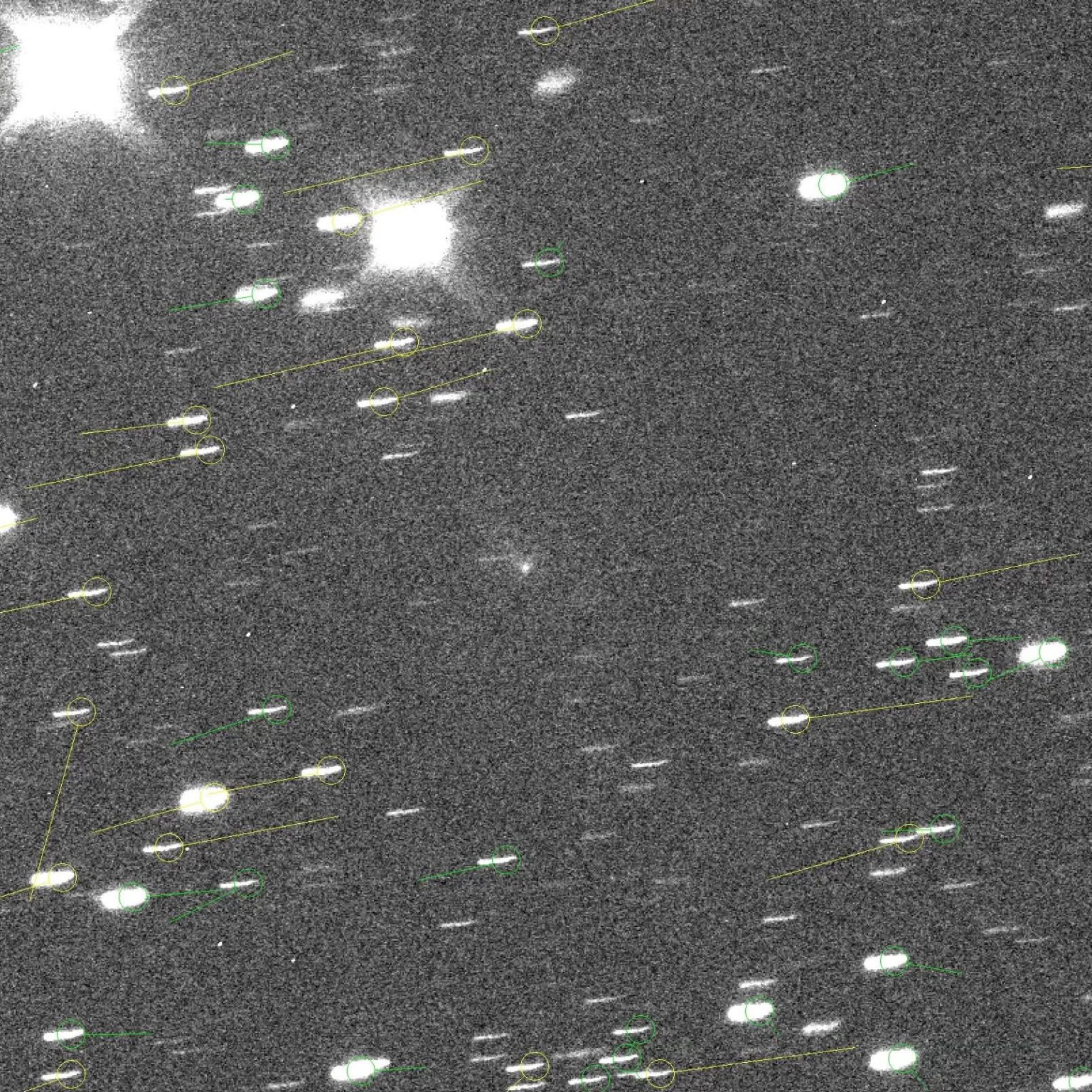
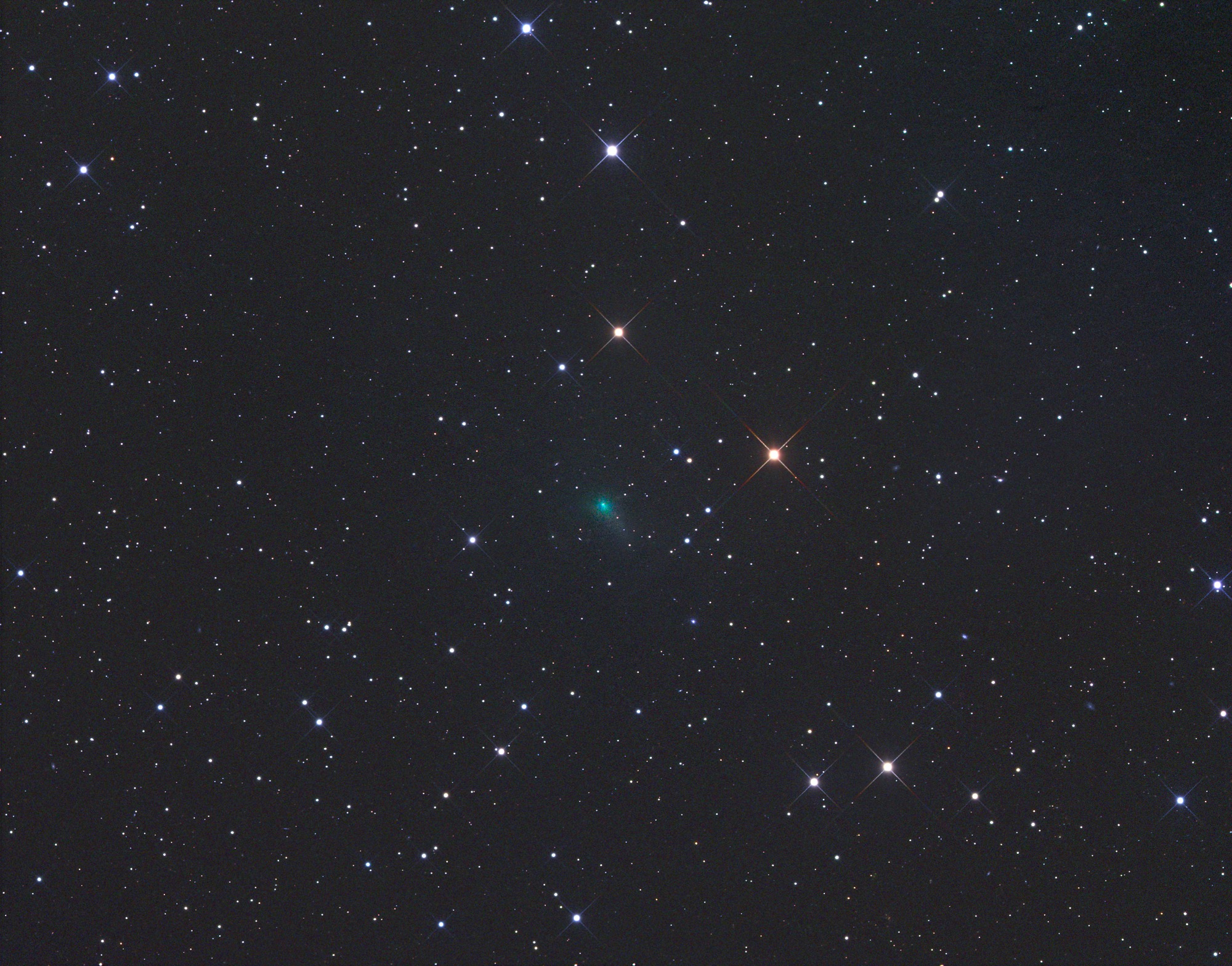
Its uniqueness became apparent quite quickly. Professionals and amateurs agree that it is a sun-grazing comet belonging to the Kreutz (or Kroyts) family, one of the families whose comets approach the Sun at an extremely close distance. In this case, it will remain approximately 760,000 kilometers from the center of the star, which is only ~64,000 km from the photosphere. So, comets from the Kreutz family are very rarely found using ground-based telescopes. Success in the case of 6AC4721 gives hope that the comet will be very bright in just a few weeks.
Usually, comets from the Kreutz family are discovered in images taken by space solar coronagraphs. In this sense, the SOHO observatory is unrivalled. Physically, such comets are often very small, literally a few dozen meters in size, and therefore impossible to see from a great distance. They only become visible when they approach the Sun, when the heated ice of the nucleus actively sublimates, and the comet grows a tail and coma.
What is even more striking is the time that will pass between the discovery of 6AC4721 and its passage through perihelion, the point in its orbit closest to the Sun. According to available data, the comet will be near our star on April 4, which means that almost three months will pass between its discovery and perihelion! Accordingly, the distance from the Sun of 2.056 astronomical units, at which the comet was first seen, is an absolute record for Kreutz comets. Previously, this record was held by the legendary comet C/1965 S1 (Ikeya–Seki), discovered 33 days before perihelion.
Surprisingly, despite more than 120 observations accumulated by January 19, the comet has not yet been given a permanent designation and is still listed on the MPC database’s page for possible new comets. Most likely, it will be the first comet registered in 2026, so it will be designated C/2026 A1.
Like a butterfly to the light
Being a sungrazing comet is very risky. These icy bodies often approach the Sun at a distance less than its radius. The intense stress from powerful gravity and heating often leads to the disintegration of the comet’s nucleus. However, at the same time, the comet puts on a real celestial show.
It is believed that comets of the Kreutz family, to which 6AC4721 belongs, originate from a single large cometary body. Their orbits are very similar to the trajectory of the Great Comet, which was observed near the Sun in the winter of 372–371 BC. It probably fragmented, and the fragments continued to move along similar trajectories.
In 1106, a true queen of comets appeared — it could be seen near the Sun even during the day. Nowadays, scientists mostly agree that the Great Comet of 1106 came from the one seen in 372–371 BC. There’s evidence that it also broke up, creating a big subgroup of cometary bodies.
Heinrich Kreutz noticed the similarity between the orbits of the Great Comets of 1843 and 1843 and the orbit of the comet of 1106, and suggested that they had a common origin. Therefore, the comet family was named after Kreutz.
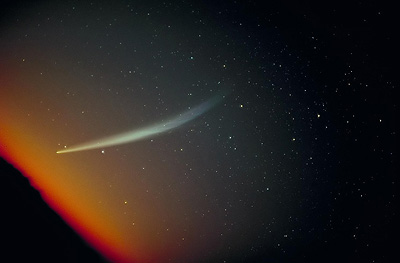
This family includes such famous comets as C/1965 S1 (Ikeya–Seki) and C/2011 W3 (Lovejoy). However, their fates were different. The first one broke up into at least three pieces before reaching perihelion. The second one managed to survive its encounter with the Sun mainly thanks to its large nucleus, which was about 500 m in size.
For now, scientists predict an unenviable fate for 6AC4721: as it approaches perihelion, the comet will most likely disintegrate. But only time will tell what will actually happen. After all, this is the first comet in the Kreutz family to be caught at such a great distance, so its behavior is difficult to predict.
Will we be able to see this comet?
Bad news for the Northern Hemisphere: the orbits of the Kreutz family comets are such that they are mainly visible from the Southern Hemisphere. However, near its perihelion, 6AC4721 may still give us a chance. The best conditions will occur around April 4, but the window of opportunity will be very short. In addition, the comet will be at a very small angular distance from the Sun, which will make observation significantly more difficult.
If the comet does not disintegrate as it approaches the Sun and survives to perihelion, it could become very bright and, in this sense, the most interesting comet of 2026. In a favorable scenario, we will see spectacular images from astrophotographers and space coronagraphs, and we will be able to admire its magnificent tail.
Based on materials from the Telegram channel “Всесвіт у кишені” (Universe in Your Pocket) which is administered by the public organization of astronomy popularizers “Шлях до Всесвіту.” (Way to the Universe).

