

Edmond Halley may not have been the first person to link the various appearances of the famous comet that now bears his name. According to Professor Simon Portegies Zwart of Leiden University, this honor belongs to the English monk Eilmer of Malmesbury Abbey.
The most famous comet in history
Halley’s Comet is the most famous comet in human history. The fact is that it is the only short-period comet known to us (comets with an orbital period of less than 200 years are called short-period comets) that is clearly visible in the sky with the naked eye. Its visits have accompanied almost the entire documented history of mankind.

In the early 18th century, English astronomer Edmund Halley discovered that comets observed in 1531, 1607, and 1682 had almost identical orbital parameters. As a result, he suggested that they were the same object and predicted that the comet would return sometime in 1758–1759. Halley himself didn’t reach that date. But the comet did come back, which was a huge deal in astronomy and proved Newton’s celestial mechanics were right. No surprise it was named after Halley.
However, according to Simon Zwart, Halley was not actually the first to link the various appearances of Halley’s Comet. That honor belongs to a monk named Eilmer, who lived in the 11th century.
What Eilmer saw
Eilmer is primarily known as one of the first people in history to attempt flight. He read and believed in the Greek myth of Daedalus. So Eilmer decided to repeat his flight. For this purpose, the monk attached mechanical wings to his arms and legs and jumped from the top of the tower of Malmesbury Abbey.
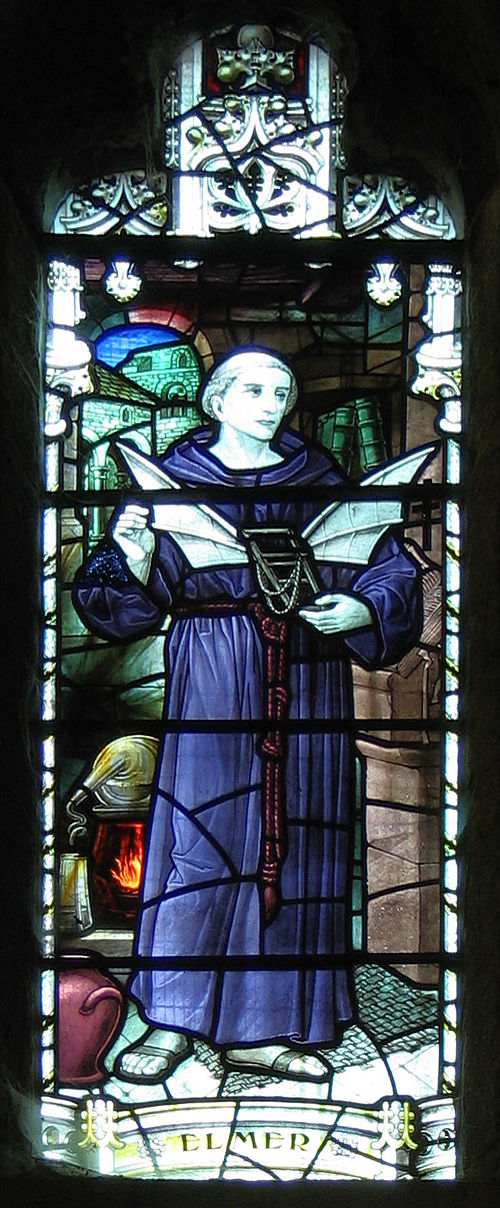
According to the abbey’s chronicle, Eilmer flew more than 200 meters before falling and breaking both legs. The monk planned to modify the design of the wings and repeat the flight, but the abbot forbade him from risking his life in any further experiments.
In addition to attempting to repeat Daedalus’ flight, Eilmer also observed Halley’s Comet. It became visible in England in April 1066. At that time, comets were considered harbingers of impending disasters such as epidemics, famine, and war. This was also the case with Halley’s Comet in 1066. Contemporaries linked it to the Battle of Hastings a few months later and the Norman conquest of England.
The chronicle “History of the English Kings,” written around 1125, contains the following quote from Eilmer about the comet of 1066.
“You’ve come, you source of tears to many mothers. It is long since I saw you; but as I see you now you are much more terrible, for I see you brandishing the downfall of my country!”
Based on this, Zwart concluded that Eilmer had also seen Halley’s Comet in 989 and correctly understood that it was the same comet. Therefore, the comet should bear his name, not Halley’s.
Why Halley’s Comet is unlikely to be renamed
However, despite the appeal of such a hypothesis, astronomers are unlikely to actually rename Halley’s Comet. First, the author of The History of the English Kings lived half a century after Eilmer, so he almost certainly did not record his quote directly, but rather from people who knew him.
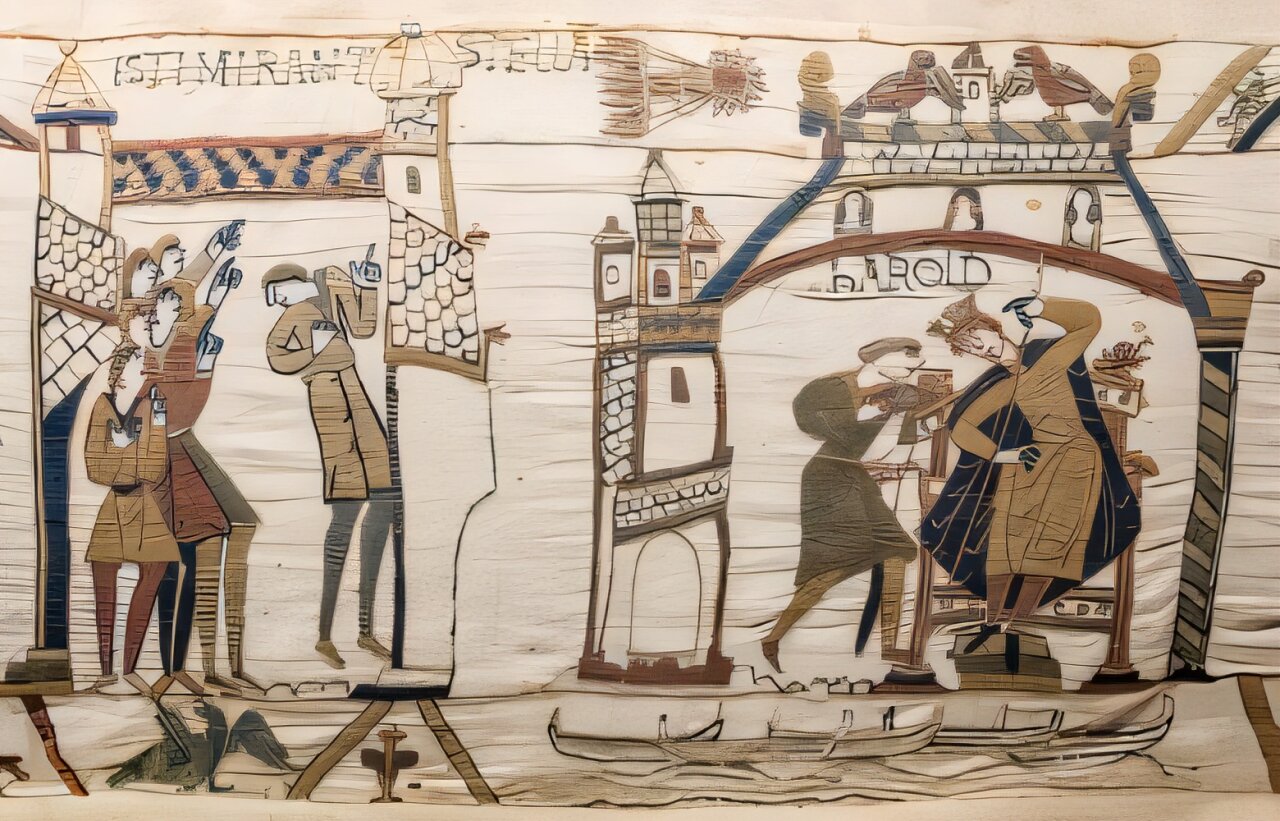
Secondly, we have no other sources of information about Eilmer. For example, historians do not know the year of his birth. So, given the scarcity of information, we cannot be sure that Eilmer really saw Halley’s Comet in his youth. His quote may well refer to some other comet. The fact of comets returning at regular intervals was also unknown at that time. Yes, it is possible that Eilmer really guessed this fact. But it is also possible that his phrase is just a beautiful metaphor designed to enhance the effect of the events of 1066.

