

Thanks to the Atacama Large Millimeter/submillimeter Array (ALMA), astronomers have been able to peer into the era of planetary systems, which has long been shrouded in mystery. They have managed to obtain the clearest images yet of 24 debris disks left over after the formation of planets.
Missing link in family albums of planets
In the past, scientists have repeatedly photographed both forming and already formed planets, but until recently, the “adolescent stage” remained the missing link. This refers to the debris disk stage — the phase of planet formation in which collisions predominate. These disks are the cosmic equivalent of adolescence for planetary systems. They are slightly more mature than the protoplanetary disk phase, but have not yet reached adulthood.
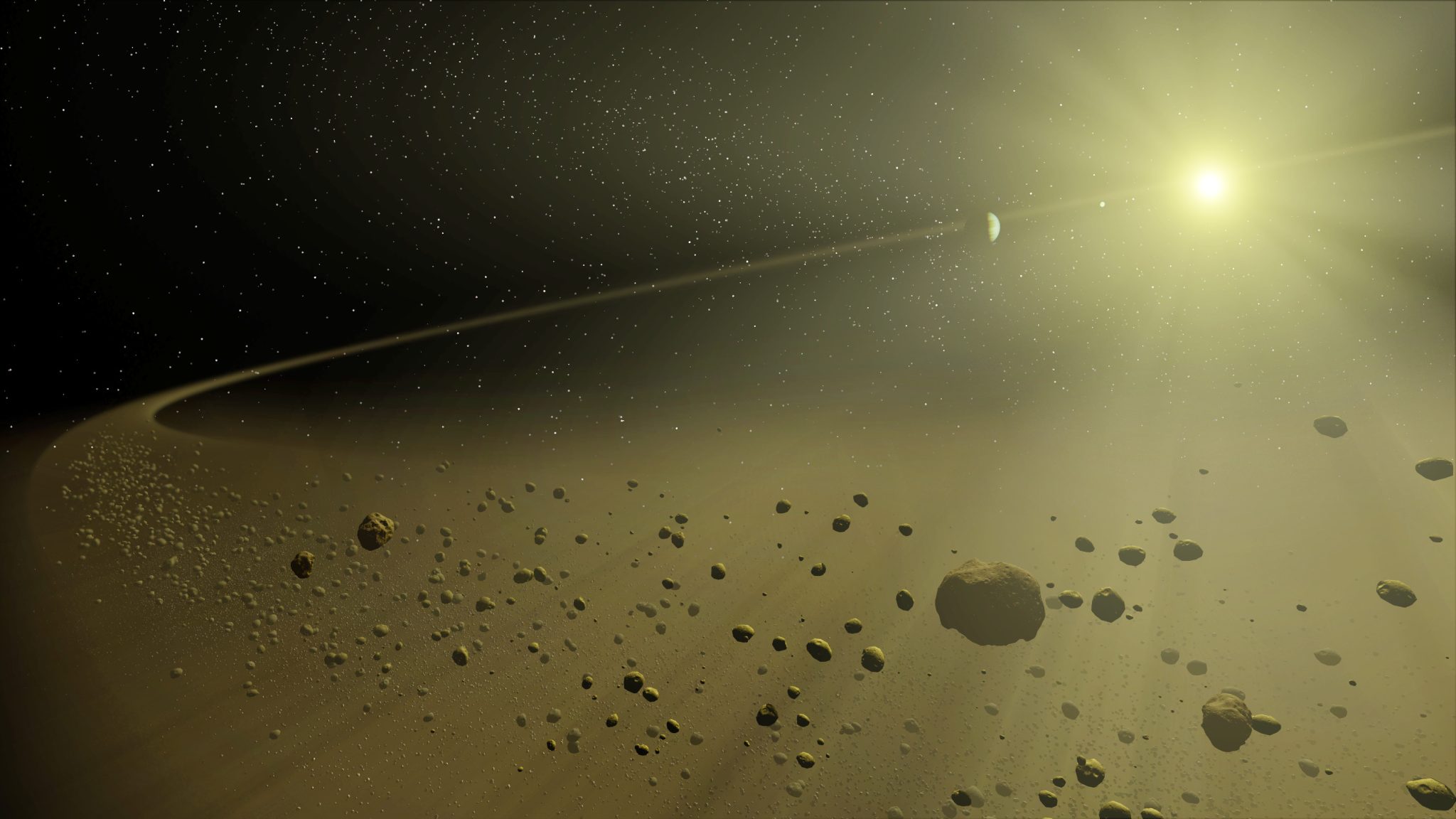
The analogue of this stage in our Solar System is the Kuiper Belt. This is the name given to the ring of icy debris beyond Neptune, which preserves traces of massive collisions and planetary migrations that occurred billions of years ago.
How to photograph a debris disc
The main problem associated with studying debris disks is their brightness. They are hundreds or even thousands of times dimmer than the bright, gas-rich disks where planets are born. Astronomers were able to solve this problem with the help of ALMA. Unlike traditional optical observatories, ALMA, with its dozens of individual radio telescopes, does not take images in the traditional sense. Instead, it collects radio signals emitted by dust particles and molecules, which are then processed and correlated. Each telescope contributes to the final image, synthesized from the stream of radio waves. This complex imaging process is also known as radio interferometry.
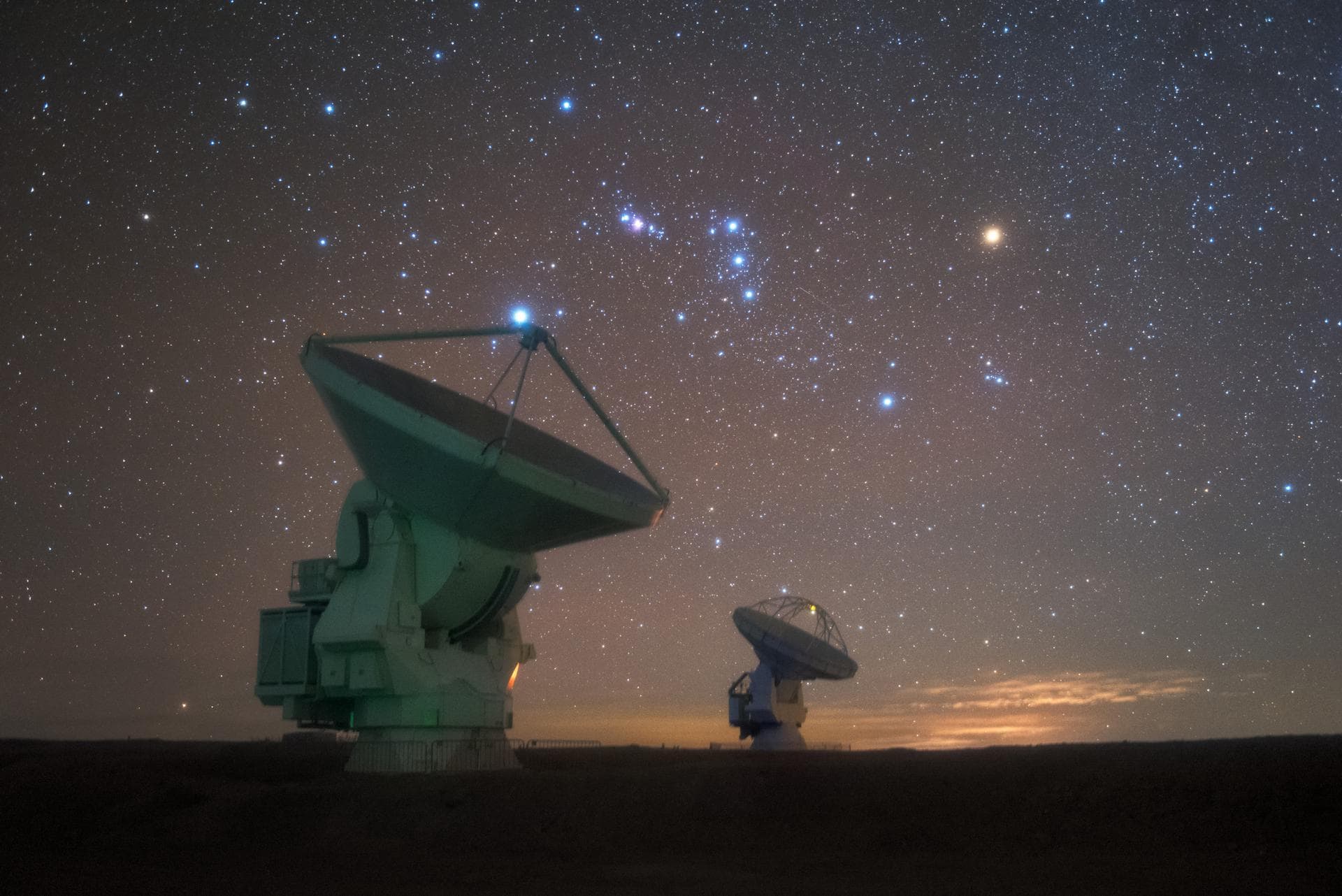
The advantage of this method is that the diameter of the network is significantly larger than that of a single telescope, which allows for higher spatial resolution. This makes it possible to visualize substructures in disks.
Turbulent youth
By studying 24 debris belts of exoplanets, astronomers have effectively opened a window into what our Solar System experienced when the Moon was forming and the planets were fighting for their final positions, sometimes even changing orbits. The results of the observations show that this adolescent phase was a time of transition and turmoil. About a third of the disks show clear substructures (several rings or distinct gaps), indicating features inherited from earlier stages of planet formation.
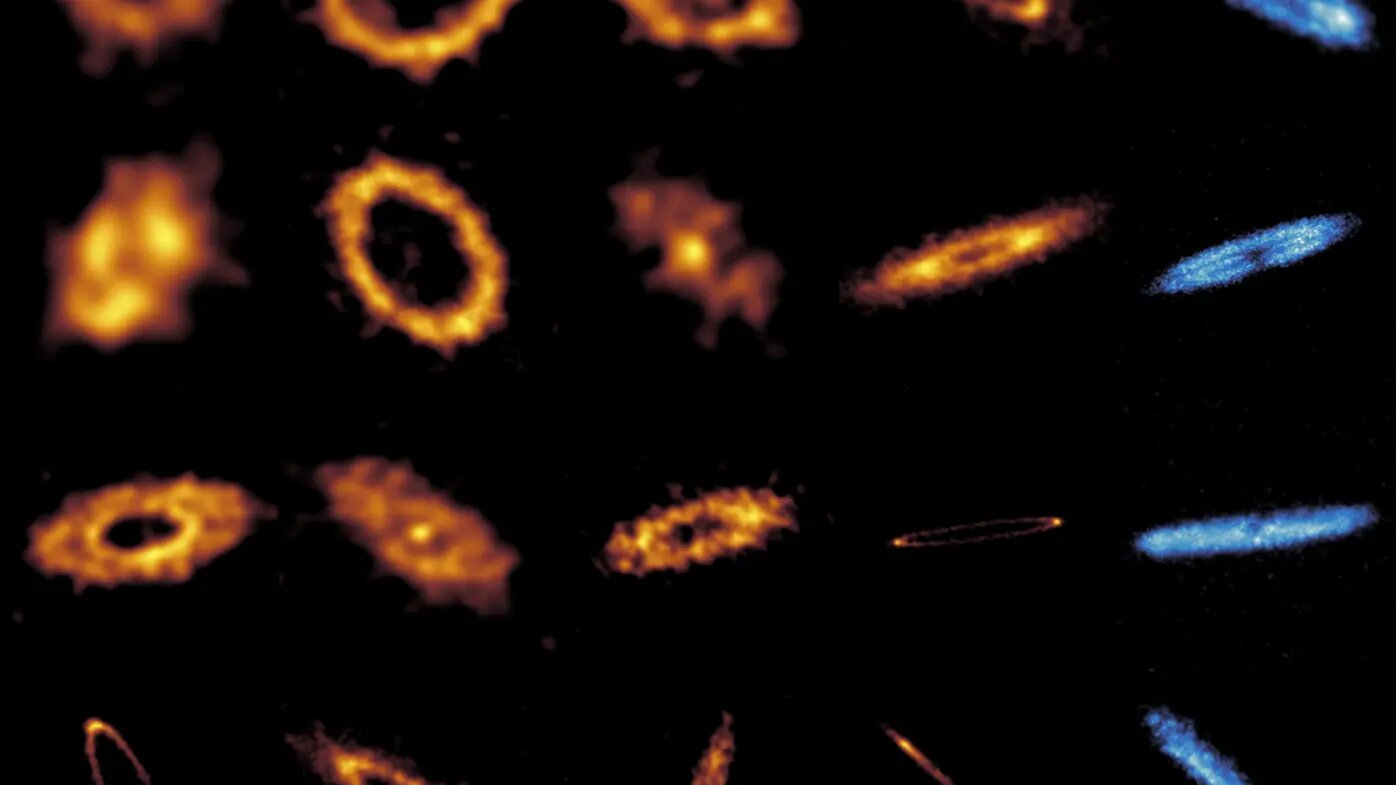
At the same time, although some disks have inherited complex structures from their early years, others are “softening” and spreading into wide belts, similar to how scientists believe the Solar System developed.
Another important feature is that many disks are asymmetrical, with bright arcs or eccentric shapes. This indicates gravitational perturbations from invisible planets, residual traces of planetary migration, or interactions between gas and dust.
All of this is evidence of a period when planetary orbits were mixed up and huge collisions, such as the one that formed the Moon, were commonplace. According to scientists, the information they have obtained provides a new perspective on the interpretation of lunar craters, the dynamics of the Kuiper belt, and how the planets grew. In their figurative comparison, it is like adding the missing pages to the family album of the Solar System.
According to Max Planck Society

