

An international team of astronomers has made a unique discovery, finding a planet in the early stages of its formation. This is only the second visually confirmed exoplanet in the history of astronomy discovered around a star that is a young analogue of our Sun. The discovery was made using the powerful VLT telescope located in Chile’s Atacama Desert.
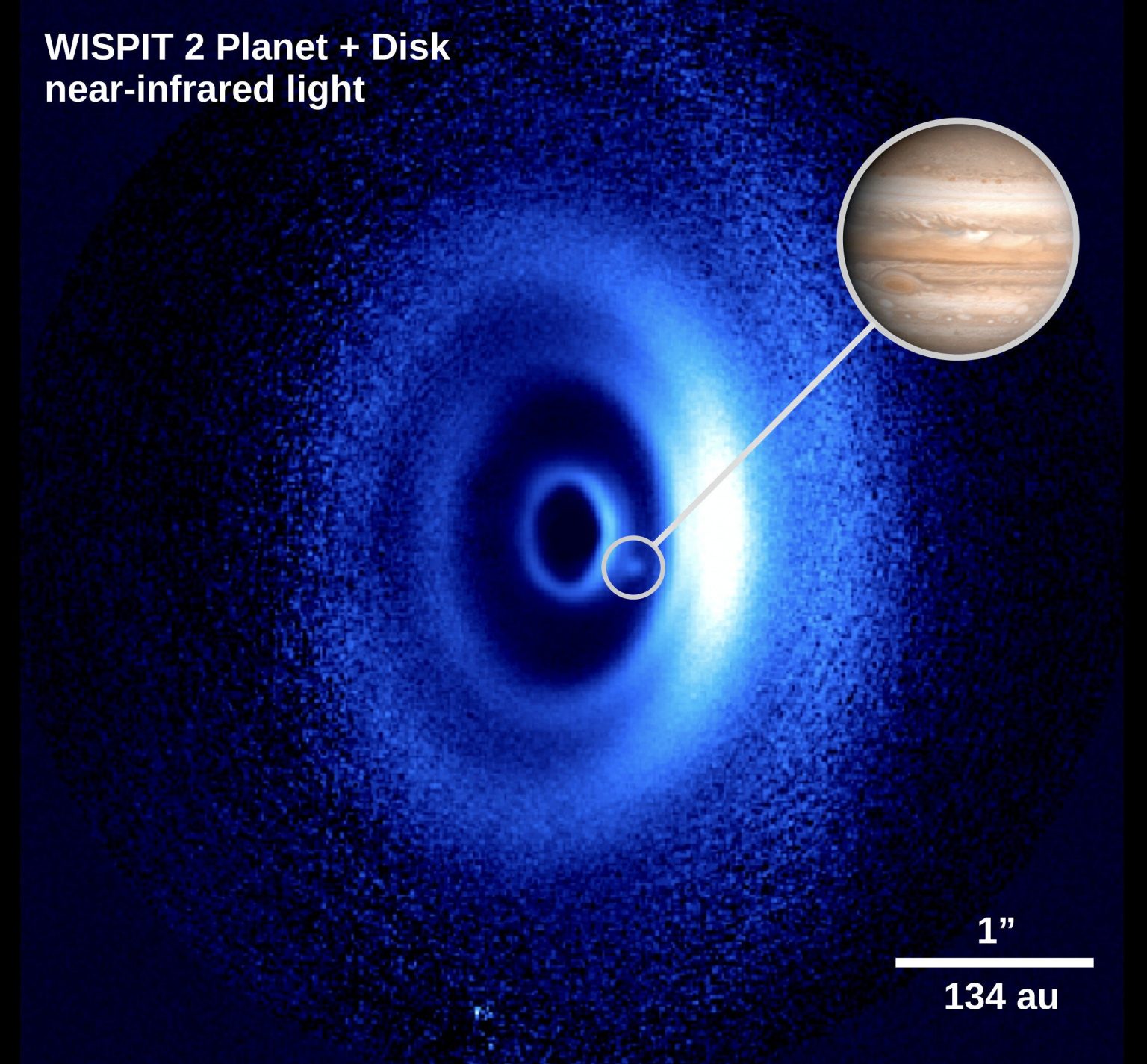
The new planet, named WISPIT 2b, is a gas giant, about the size of Jupiter. Its age is estimated to be approximately 5 million years old — by astronomical standards, this is literally “yesterday.” The planet was captured in near-infrared light, as it remains hot following its initial birth phase.
Perfect space laboratory
This discovery is particularly valuable because WISPIT 2b is the first planet to be definitively detected within a multi-ring dust disk. This unique feature makes it an ideal natural laboratory for studying how newborn planets interact with their environment and how future planetary systems form.
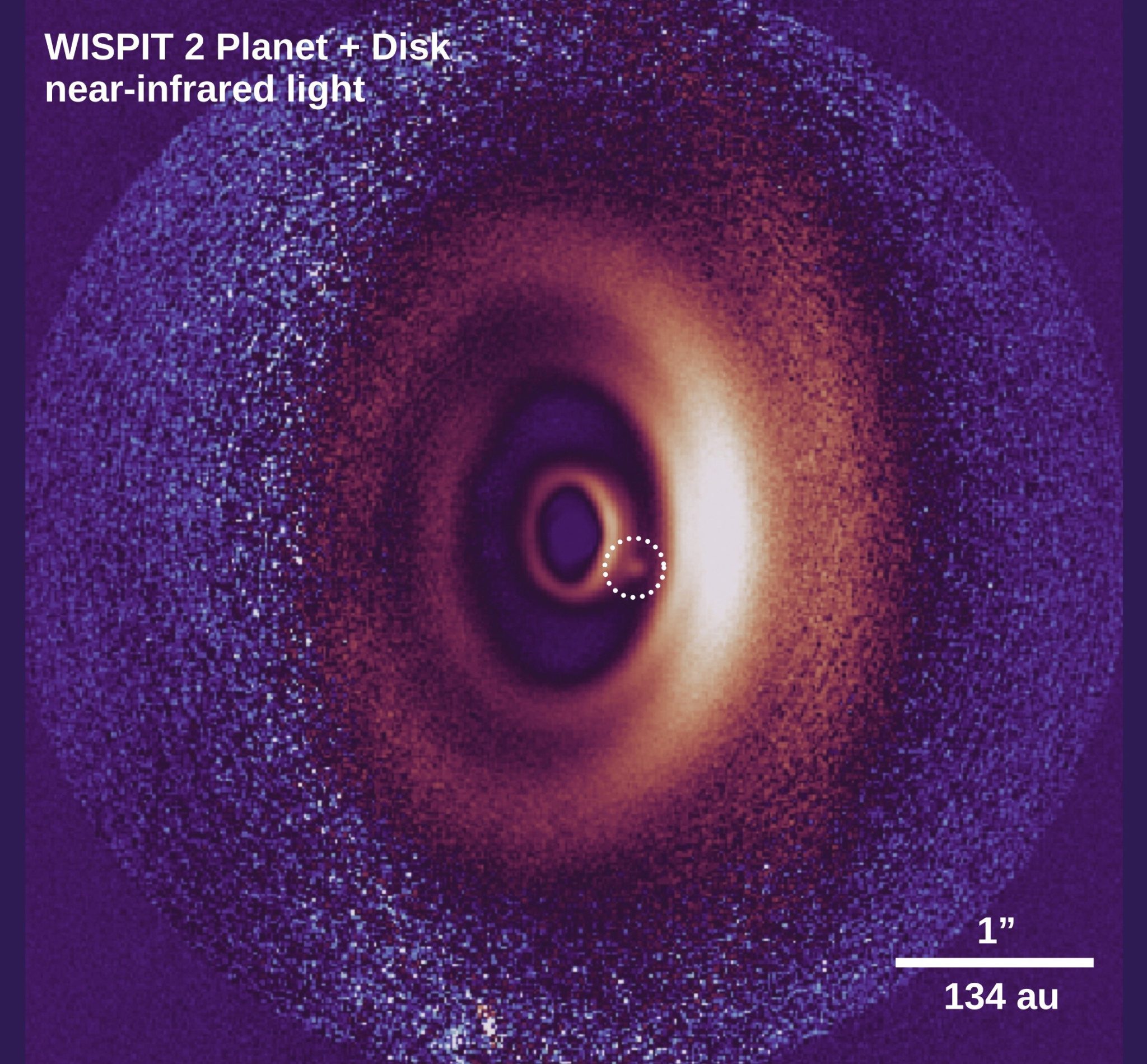
Dust and gas disks around young stars are the cradles where planets are born. The disk containing WISPIT 2b is impressive in size, with a radius of 380 AU, which is 380 times the distance from Earth to the Sun.
Five-year work results
The discovery was the result of five years of work by an international team led by Leiden University PhD student Richelle van Capelleveen. The research was conducted in collaboration with scientists from the University of Galway and the University of Arizona. Each group used its own unique methods to confirm the findings.
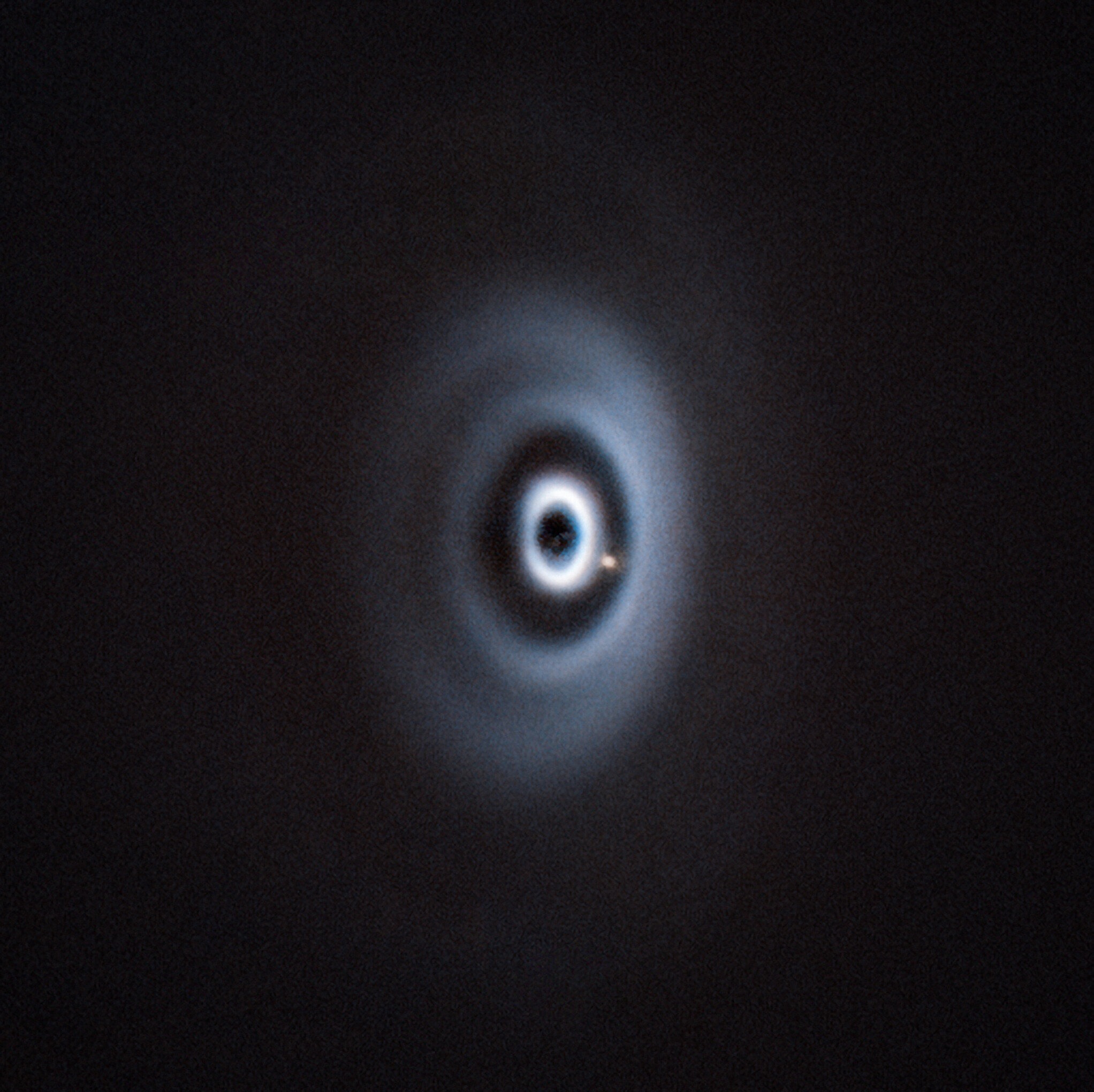
The team from Leiden and Galway obtained an extremely clear image of a protoplanet embedded in the gap of the disk. And scientists from Arizona discovered it in visible light using a special device, which indicated the active accumulation of gases and the formation of its atmosphere.
This discovery provides scientists with an unprecedented opportunity to understand why thousands of older exoplanetary systems differ so greatly from our Solar System. The WISPIT 2b study will undoubtedly continue for many years and promises new revolutionary discoveries in astrophysics.
Earlier, we reported on how the exoplanet GJ 3929b turned out to be devoid of atmosphere.
According to Phys.org

