

On July 5, 2025, astronomers recorded a flash caused by an object falling onto Saturn. Of course, scientists already knew that the sixth planet in the Solar System was regularly bombarded by various small bodies. However, until then, they had never seen anything fall on Saturn with their own eyes.
In this article, you will learn about other well-known cases of cosmic bombardment of bodies in the Solar System, from Jupiter to our Moon.
Heroic Jupiter
Jupiter is the most massive planet. Its mass is more than twice that of all the other planets combined. Because of this, its gravity has a huge impact on the Solar System, including asteroids and comets. Some scientists even believe that Jupiter should be called the protector of Earth – after all, its powerful gravity protects our planet by deflecting bodies that would otherwise fall on it.
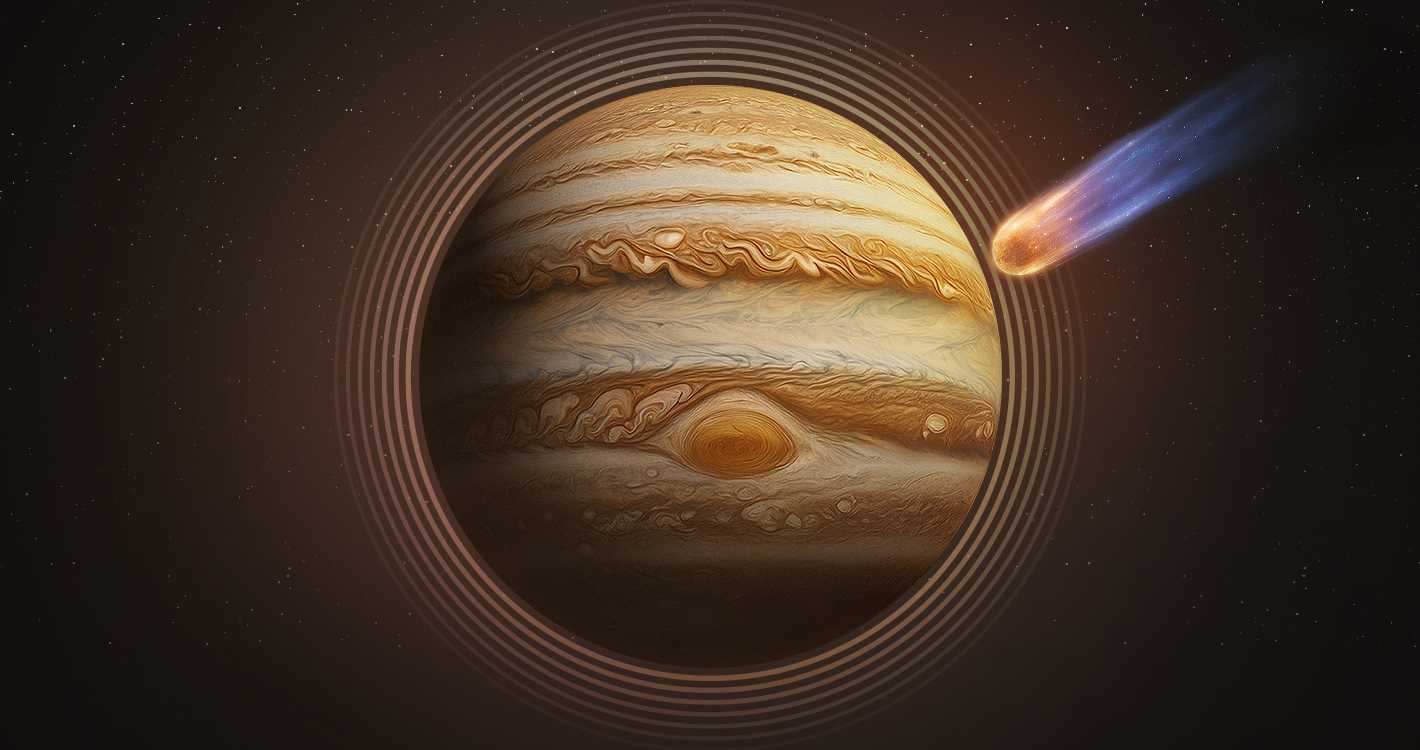
The flip side of the coin is that Jupiter is regularly bombarded by comets and asteroids. The most famous such event occurred in July 1994, when debris from the Shoemaker-Levy 9 comet fell on the gas giant.
The consequences of the Shoemaker-Levy 9 debris falling far exceeded all astronomers’ expectations. Telescopes recorded giant fireballs that appeared in the planet’s atmosphere at the moment the debris entered it. Their temperature exceeded 30,000 degrees. The impacts created giant plumes of material from the lower layers of Jupiter’s atmosphere, which rose three thousand kilometers above the cloud tops into the stratosphere. They were spotted by Hubble and ground-based observatories.
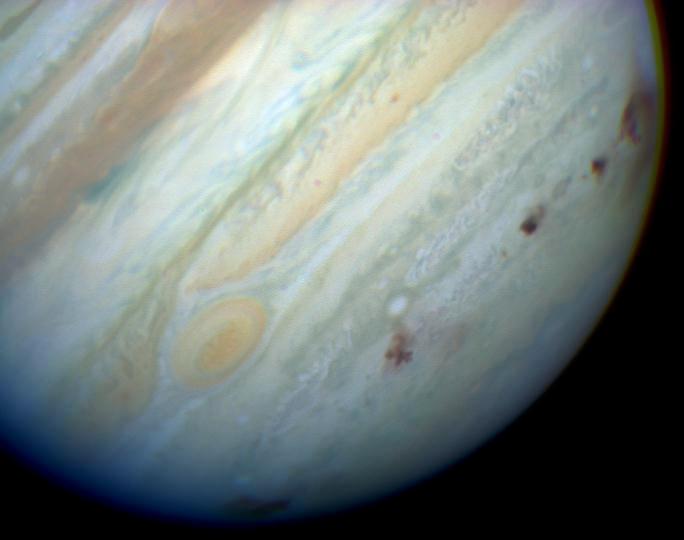
But that was not the end of it. After the bombardment, Jupiter was left with numerous “scars” – huge dark spots marking the places where the debris had fallen. The largest of these was as wide as Earth itself – it was more visible through telescopes than the famous Great Red Spot. It took several months for the spots to finally dissipate.
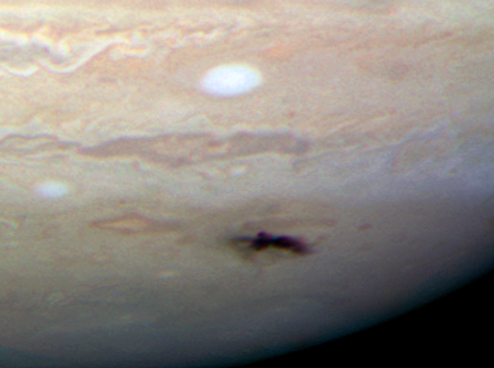
Since then, astronomers have recorded 12 more instances of objects large enough to produce a flash visible from Earth falling on Jupiter. The most powerful such incident occurred on July 19, 2009. It led to the formation of a black spot in the planet’s atmosphere, comparable in size to the Pacific Ocean. The diameter of the impactor is believed to have been between 200 and 500 meters. According to NASA estimates, collisions between Earth and objects of this size occur approximately once every 100,000 years. Jupiter, on the other hand, experiences them regularly.
Secretive Mars
Since Mars’ orbit passes close to the main asteroid belt, the Red Planet is more frequently hit by asteroids than Earth. In addition, the Martian atmosphere is much thinner than Earth’s. This means that a body that is unable to pass through our planet’s atmosphere is very likely to reach the Martian surface.
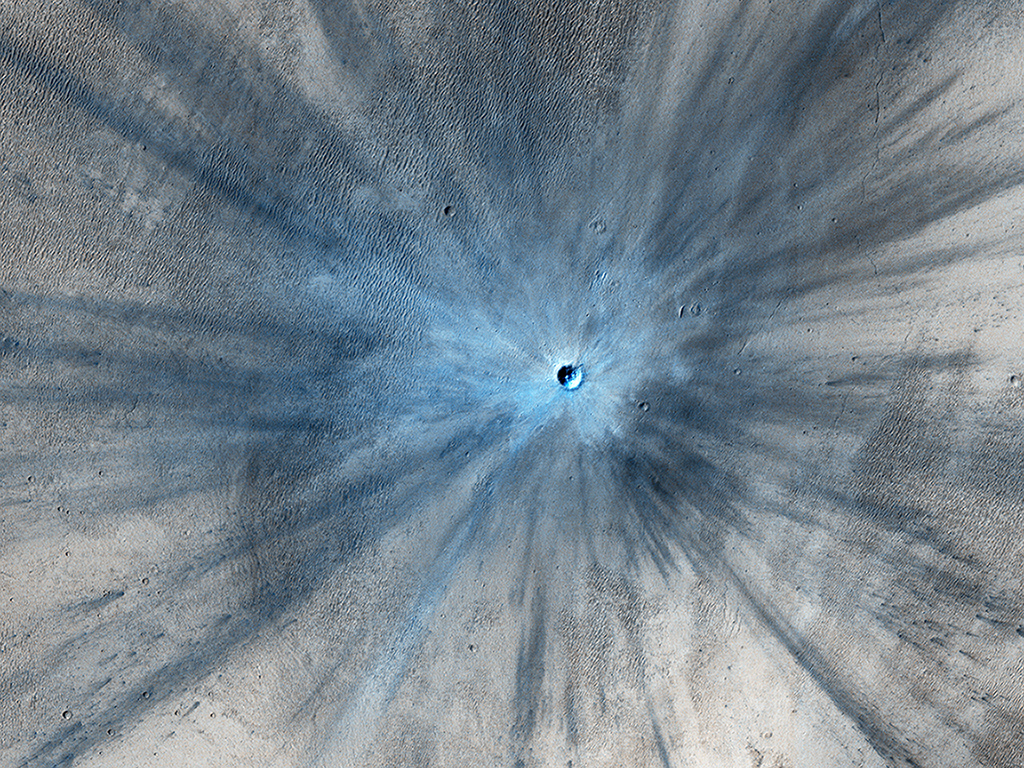
Source: NASA/JPL-Caltech/Univ. of Arizona
Over the past quarter-century, spacecraft have discovered over a hundred fresh Martian craters. On average, they range from 10 to 30 meters in diameter and were created by impacts from objects several meters in size.
Recent research suggests that Mars is bombarded by meteorites even more frequently than previously thought. Analysis of seismic data collected by the InSight mission has shown that many Marsquakes are caused not by geological activity, but by impacts from space. For example, in 2021, the device recorded two powerful Marsquakes with a magnitude of 4. Researchers were later able to determine the areas where the objects that caused the underground vibrations fell. It turned out that they left behind craters with diameters of 130 and 150 meters.
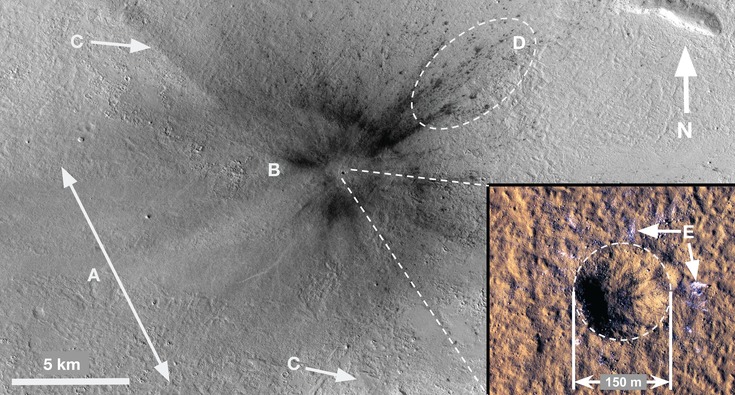
All Martian impact events have one thing in common: the craters were found after the fact. To date, astronomers have never witnessed the process of objects falling on Mars. However, if humanity seriously sets out to conquer the Red Planet, this situation is likely to change. Data on the frequency of meteorite impacts on Mars will clearly be useful when planning manned missions and deciding where best to locate future settlements.
Defenseless Moon
Unlike Mars, the Moon does not even have a thin atmosphere. Therefore, any space object can reach its surface without any problems. Astronomers regularly record flashes caused by various meteoroids falling on it. On average, they last a fraction of a second and are usually observed on the unlit side of the Moon.
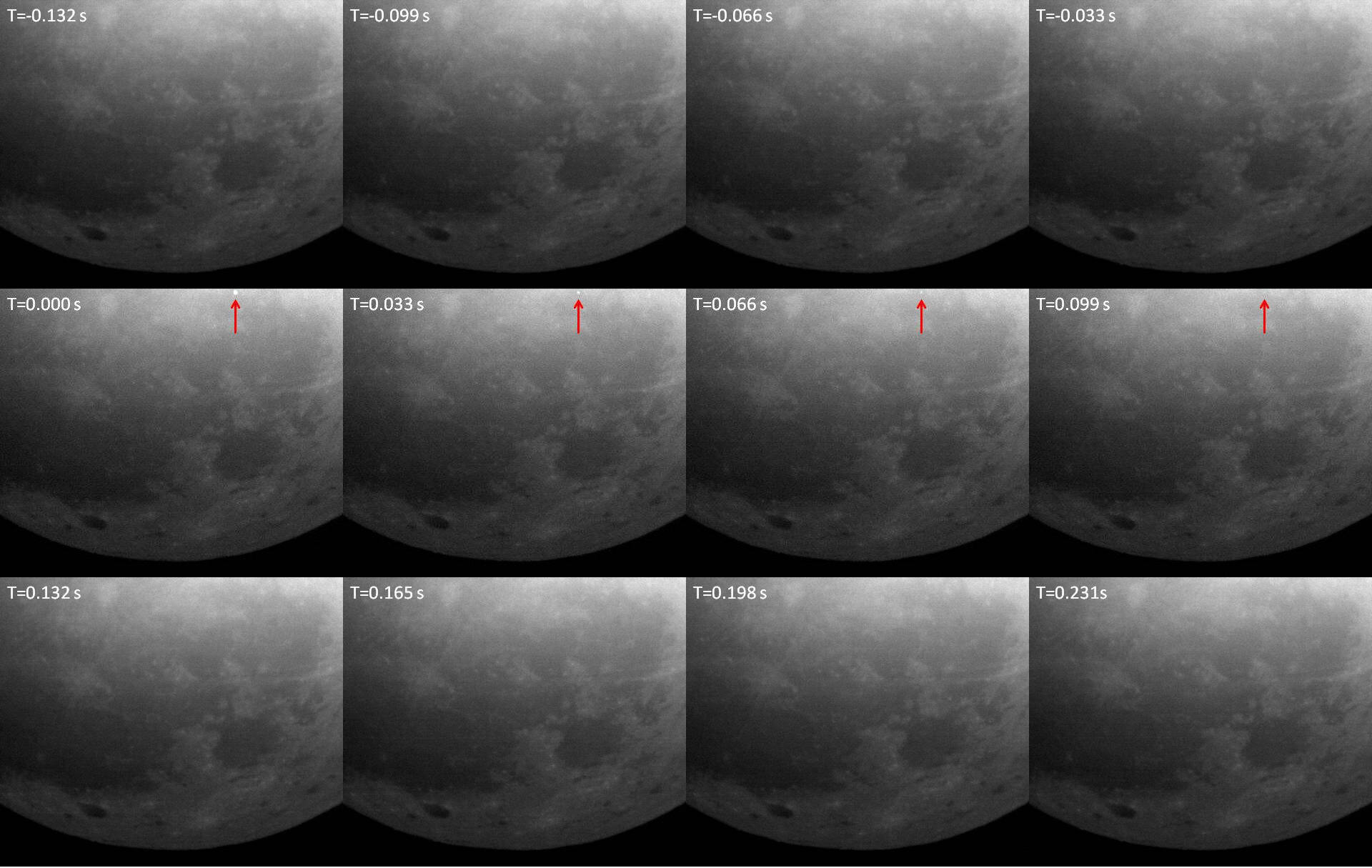
As with Mars, these collisions leave new scars on the surface of the Moon. In just the first seven years of its operation, the LRO identified over two hundred fresh craters ranging in diameter from several meters to 43 meters. In reality, there must be many more. Scientists estimate that several hundred impact events occur on the Moon each year, which, under the right conditions, can be detected from Earth.
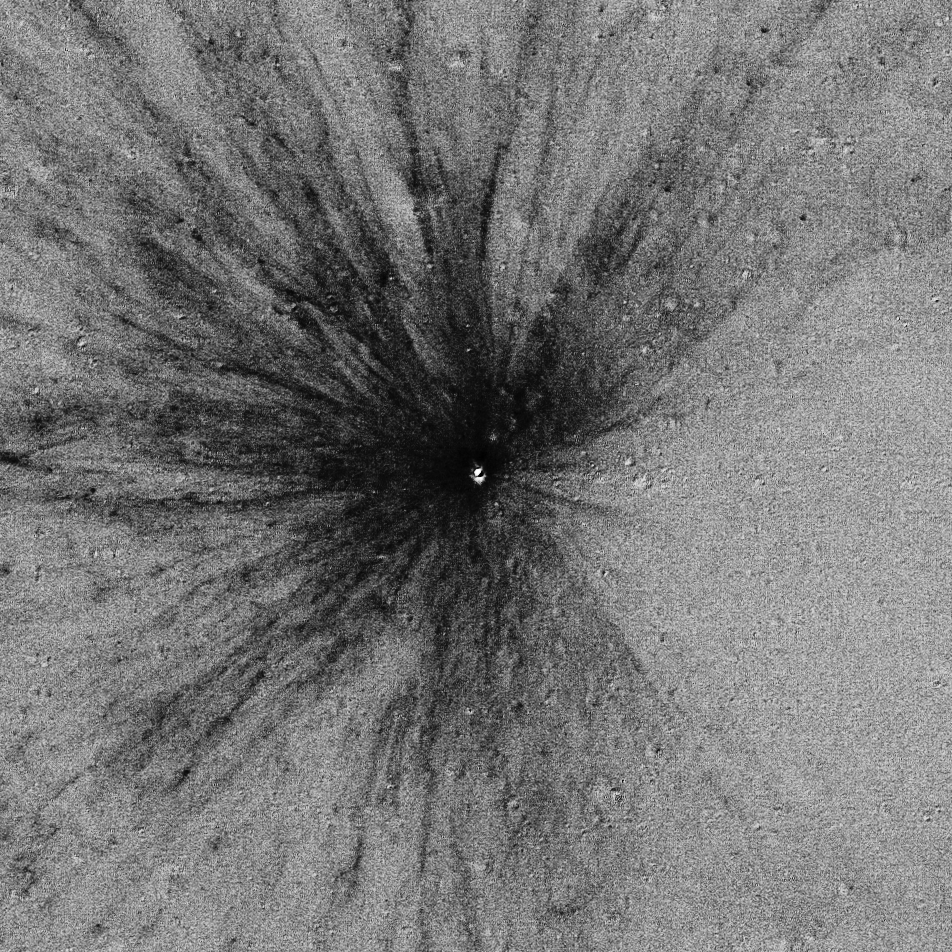
Source: NASA/GSFC/Arizona State University
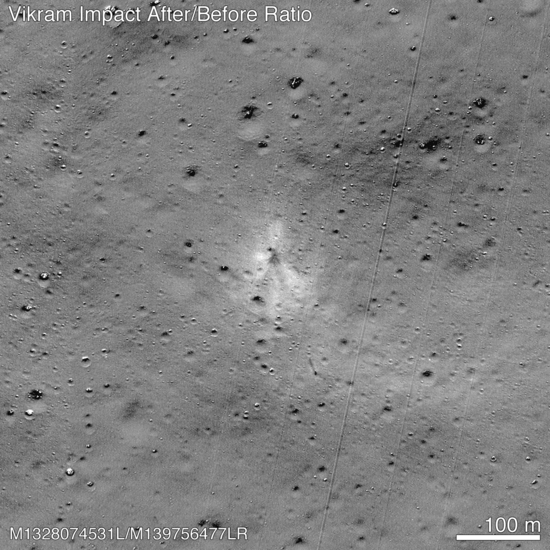
In addition to craters of natural origin, man-made craters can also be found on the Moon. Some of them date back to the space race and the Apollo program. These include the landing sites of the first Soviet and American probes, as well as craters from the third stages of Saturn V rockets. They were deliberately sent to the Moon as part of seismic experiments.
In recent years, several more man-made craters have appeared on the Moon as a result of unsuccessful landings and accidents involving the Beresheet, Vikram, Hakuto-R, Resilience, and Luna-25 spacecraft.
In conclusion, we can also mention an incident that occurred in 1178. At that time, five monks from Canterbury reported to the abbey chronicler that shortly after sunset, they saw the upper horn of the Moon “split” in two. In the 20th century, a hypothesis emerged that the monks had observed the aftermath of an impact that formed the 22-kilometer Bruno crater on the far side of the Moon.
However, most scientists still believe that these events are unrelated. It is most likely that the crater is about a million years old. The monks may have seen a meteor superimposed on the lunar disk.

