

A new study shows that planets with dense, hot atmospheres composed of carbon dioxide are likely to form more easily than cooler ones with higher oxygen content. Perhaps a planet like Venus, which resembles hell, is more typical of our Universe than Earth.
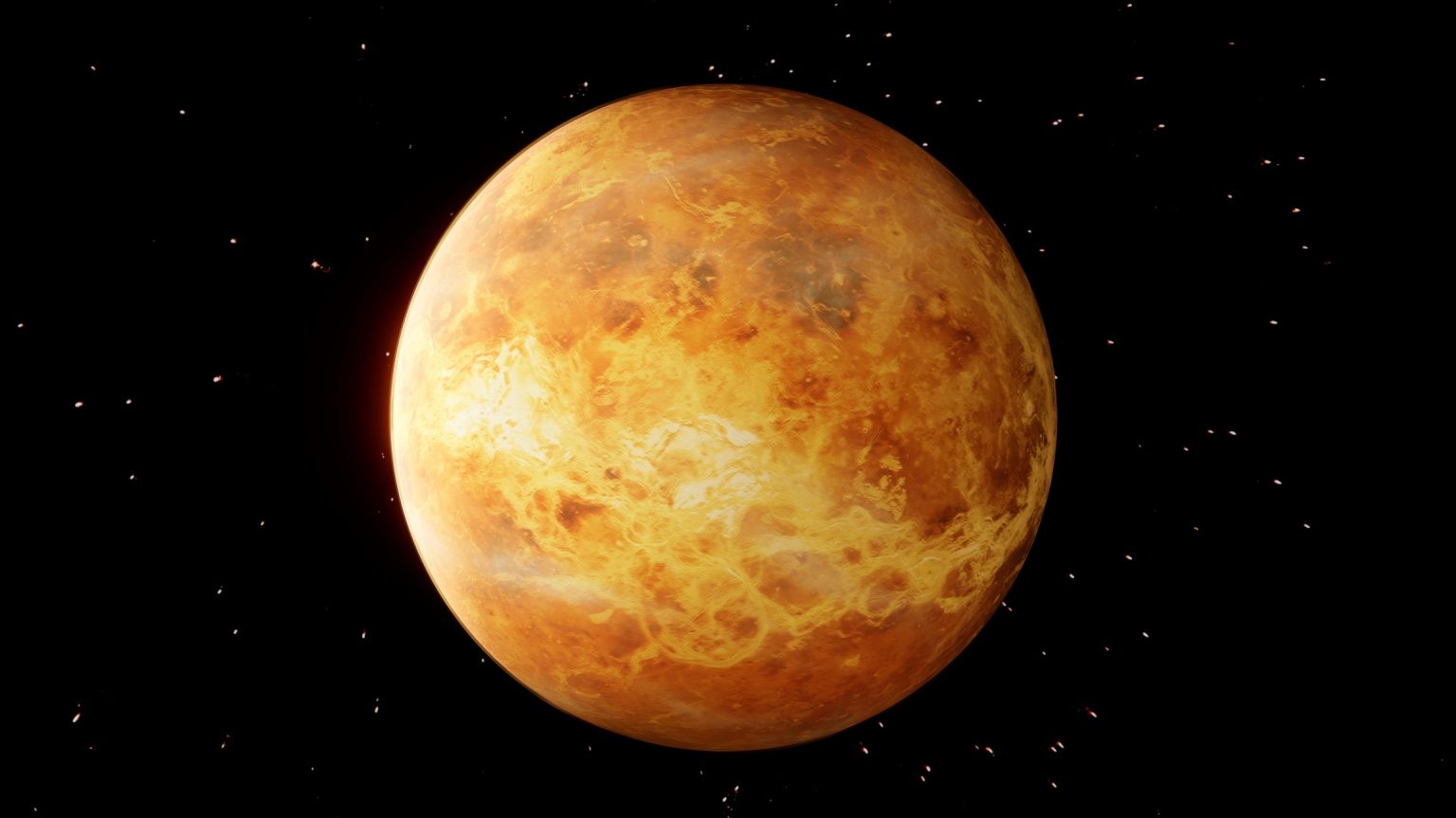
Hellish planets
Hellish planets similar to Venus may be twice as common in space as Earth-like planets. This conclusion was recently presented at the General Assembly of the European Geosciences Union in Vienna.
At first, scientists doubted how common planets actually were in the Universe, then for some time the prevailing view was that there were few rocky planets compared to gas giants. And now, when it has become clear that there are many such worlds, the question has arisen as to which planet they actually resemble: Earth or Venus.
These are the two planets in the Solar System that are most similar in size. However, their environmental conditions differ greatly. Earth has a relatively thin and cool atmosphere composed of nitrogen and oxygen, while Venus has a much denser atmosphere that heats it up more than the Sun alone could.
Venus is not an anomaly
That is precisely why many have always viewed Venus as an anomaly. Estimates of the prevalence of life in the universe have been based on the assumption that if there is a planet somewhere near a star’s “habitable zone” that is similar in mass and brightness to Earth, it will most likely resemble us rather than our hostile neighbor.
And now a new study has been published, with the authors modeling what the planet’s atmosphere would have looked like in the early stages of its existence, when its surface was completely covered by an ocean of magma. This kind of past is considered typical for rocky planets.
Thus, researchers have found that it is relatively easy to reproduce Venus’s dense, hellish atmosphere under this scenario. However, it is quite difficult to extract Earth’s light, cool gaseous envelope from it.
Based on this, they conclude that hellish worlds may be far more common among rocky planets than those suitable for life. And that’s not even taking into account the fact that some of them may lack an atmosphere altogether.
According to phys.org

