

The Perseverance rover has detected high concentrations of nickel in the sediments of the ancient Neretva Vallis. This metal is an essential component of biochemical processes in certain ancient microorganisms. Such a discovery could provide evidence that life once existed on the Red Planet.
Nickel in Martian rocks
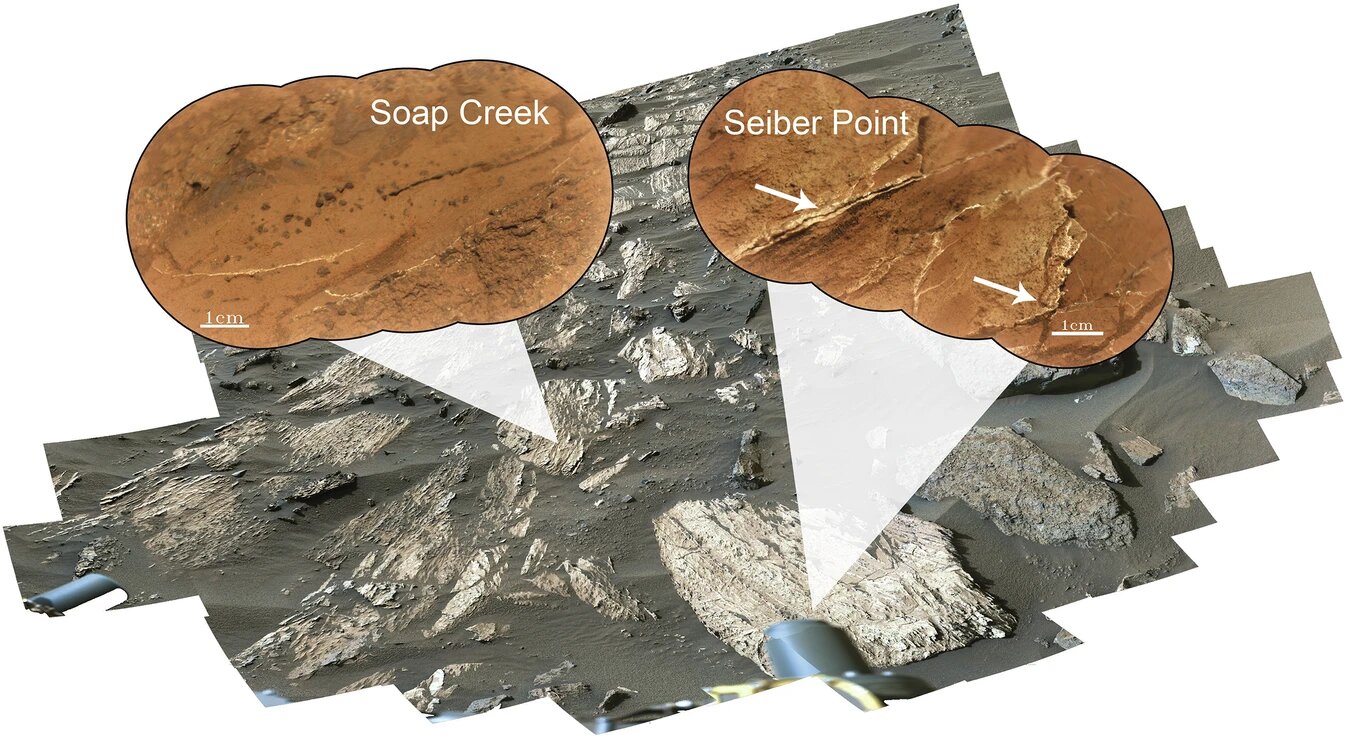
A study published recently in the journal Nature Communications provides evidence that life once existed on the Red Planet. At least, that is the conclusion reached by the authors, who analyzed sedimentary rock samples from the Beaver Falls geological formation in ancient Neretva Vallis.
Specifically, this refers to an elevated nickel content of 1.1% by weight. In total, 32 of the 126 samples collected by the Perseverance rover contain more than 0.12% of this metal by mass. Nickel is totally insufficient in Martian rocks.
This is hardly surprising, given that it is not particularly abundant in the rock formations on the Earth’s surface. Nickel is a heavy metal and is found primarily in the cores of planets. There are not many reasons why high concentrations of it would be found somewhere in the cortex. And one of them is life.
Life and nickel
The paradox is simply that nickel does not play a role in the vast majority of biochemical processes occurring on Earth. And that is precisely why no one has yet considered it as a biomarker. But this is true only of aerobic life, which dominates our planet, and the biochemical processes that rely on the oxygen that sustains it.
However, such processes did not always dominate. In the very beginning, Earth had an atmosphere and hydrosphere that were low in oxygen. So, at that time, living organisms used other mechanisms, such as the Wood-Ljungdahl (W-L) pathway. It is still used by methanogenic archaea, and at one time it was the peak of energy efficiency.
Nickel acts as a catalyst in the formation of iron-containing sulfides from sulfates in the presence of iron. In this way, a great many ores were formed on Earth. On Mars, in Neretva Vallis—which once flowed into the crater lake known as Jezero—nickel was also found in sulfates.
Archaea are very ancient living organisms. They could well have existed on Mars back when it was warm and wet. Although, in fact, scientists have not yet been able to definitively confirm that the nickel on its surface was formed as a result of their biological activity.
According to phys.org

