The Artemis II mission has successfully completed the main phase of its lunar flyby, coming within approximately 6,545 km of the Moon’s surface. This maneuver not only allowed the crew to reach a record distance from Earth—406,000 km—but also provided science with an invaluable trove of data. Over the course of seven hours of intensive work, astronauts Reid Wiseman, Victor Glover, Christina Koch, and Jeremy Hansen took approximately 10,000 high-quality photographs.
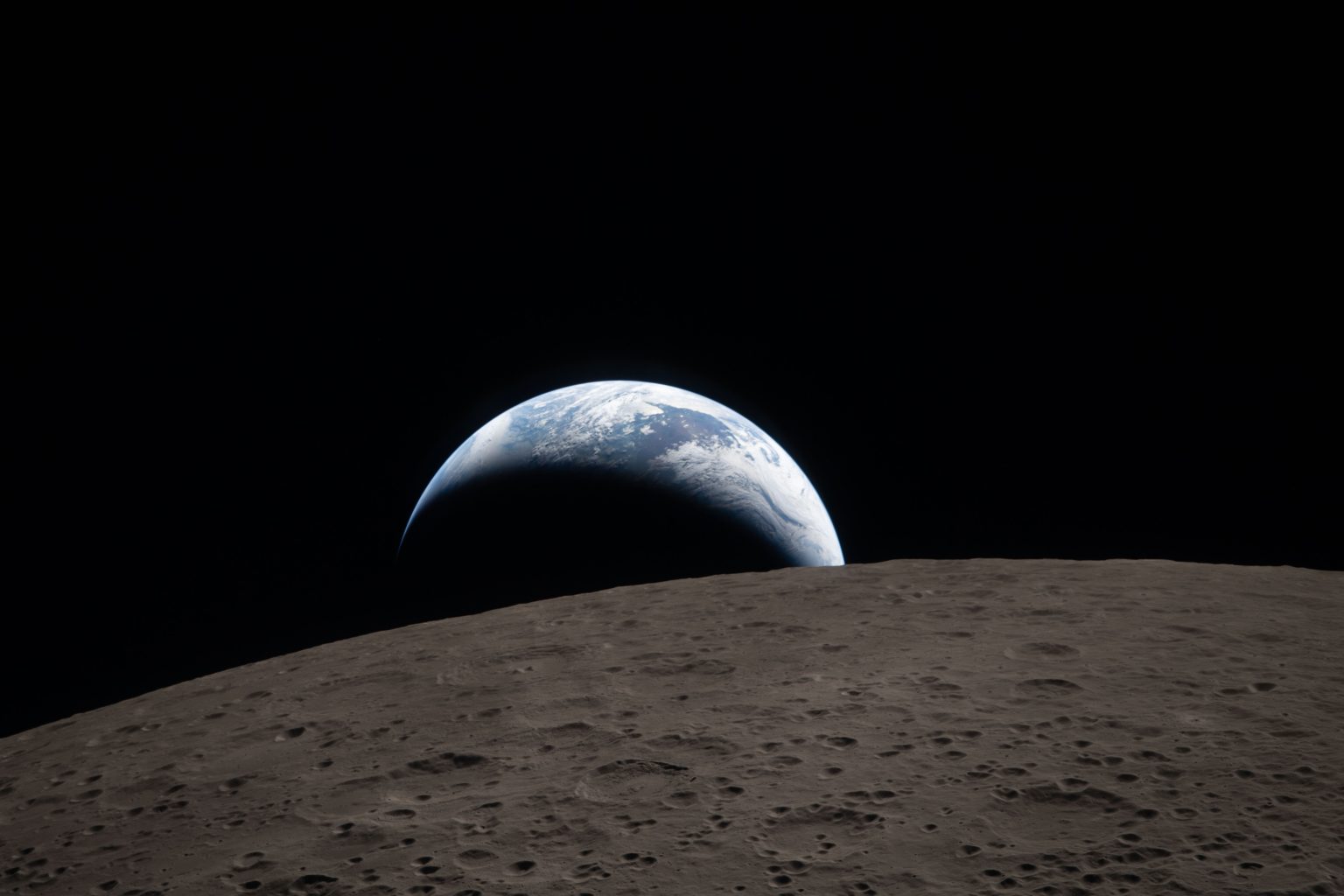
A sunset on Earth, photographed through the window of the Orion spacecraft on April 6, 2026, during a flyby of the Moon. The Earth, a muted blue with bright white clouds, sets behind the cratered surface of the Moon. It is currently nighttime on the dark side of Earth. On the day side of Earth, thick clouds are visible over the region of Australia and Oceania. In the foreground, the Om crater has terraced rims and a flat floor interrupted by central peaks. Photo: NASA
While flying over the unlit side of the Moon, communication with Earth was interrupted for 40 minutes—this is a standard radio silence that occurs when the satellite blocks the signal. It was at that very moment that the crew witnessed the majestic “sunset of Earth,” as our blue planet slowly disappeared behind the curved lunar horizon.
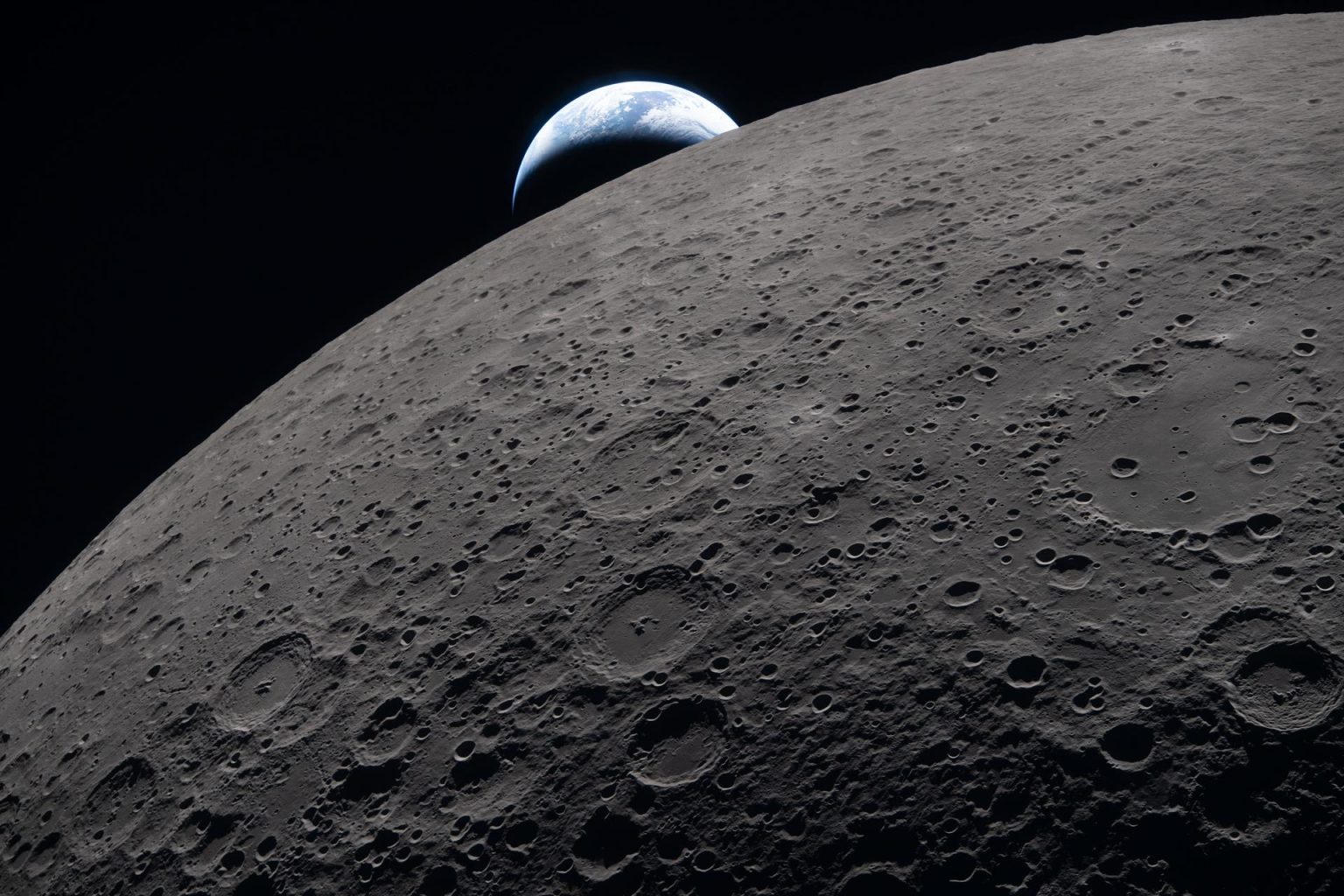
The Moon’s surface fills the frame in minute detail, as seen during the flyby of the Moon as part of the Artemis II mission, while distant Earth is hidden beyond the horizon in the background. The photo was taken on April 6, 2026, just three minutes before the Orion spacecraft and its crew disappeared behind the moon and lost contact with Earth for 40 minutes, before reappearing on the other side. Photo: NASA
Thanks to their specialized training, the astronauts identified key geological features:
The Hertzsprung Basin: a massive structure consisting of two concentric rings on the far side.
The Orientale Basin: one of the youngest and best-preserved impact craters, which had never been seen by human eyes before this mission.
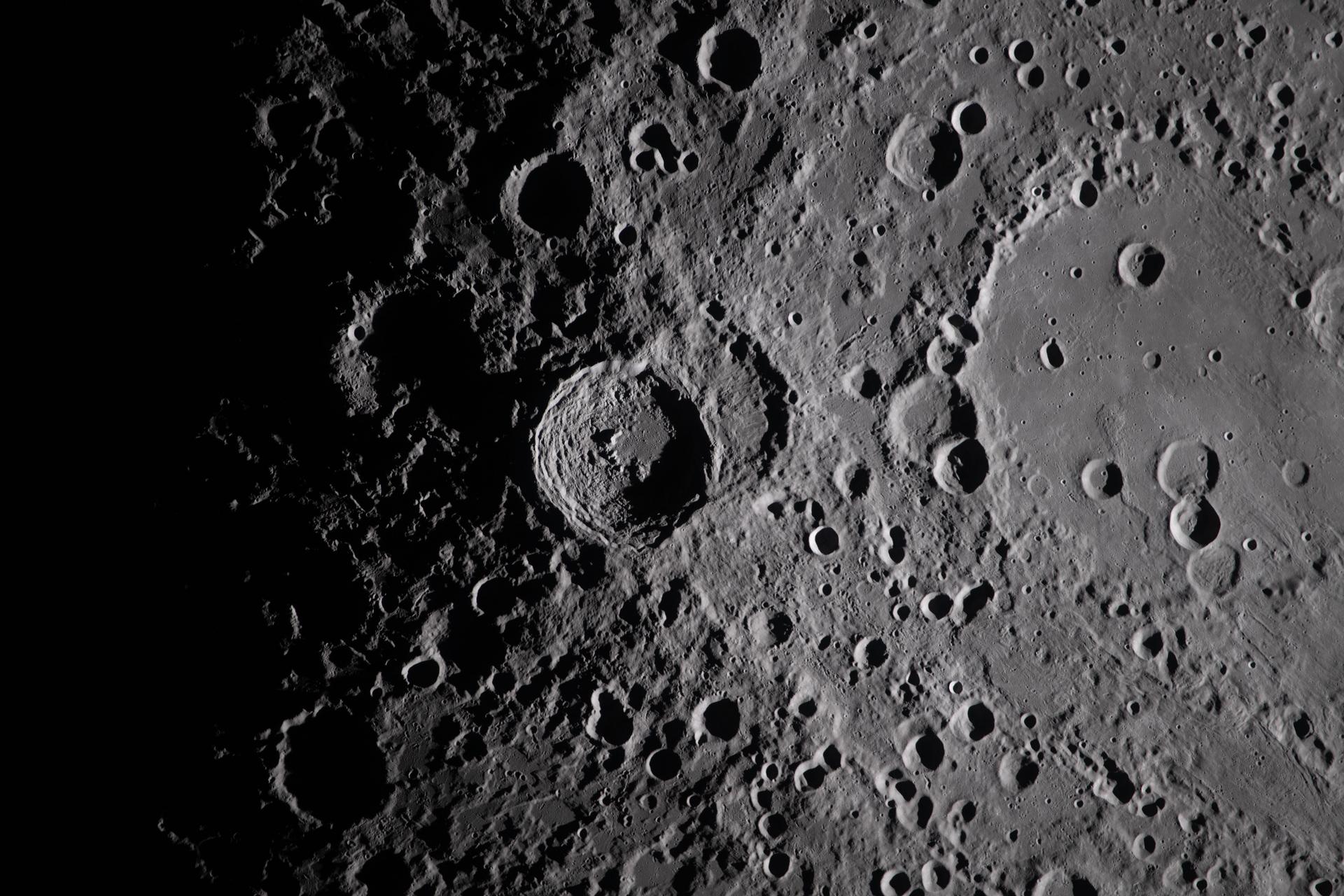
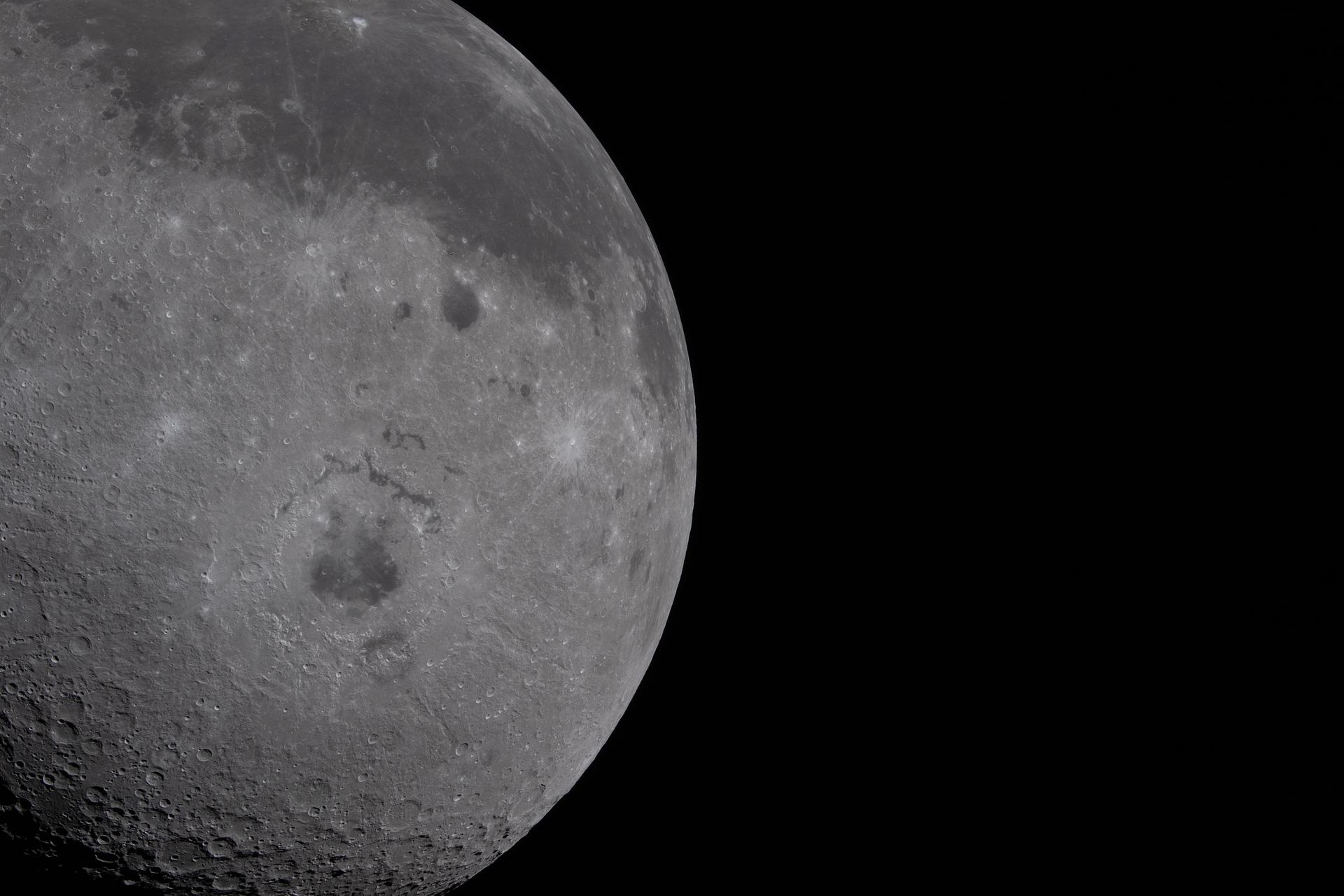
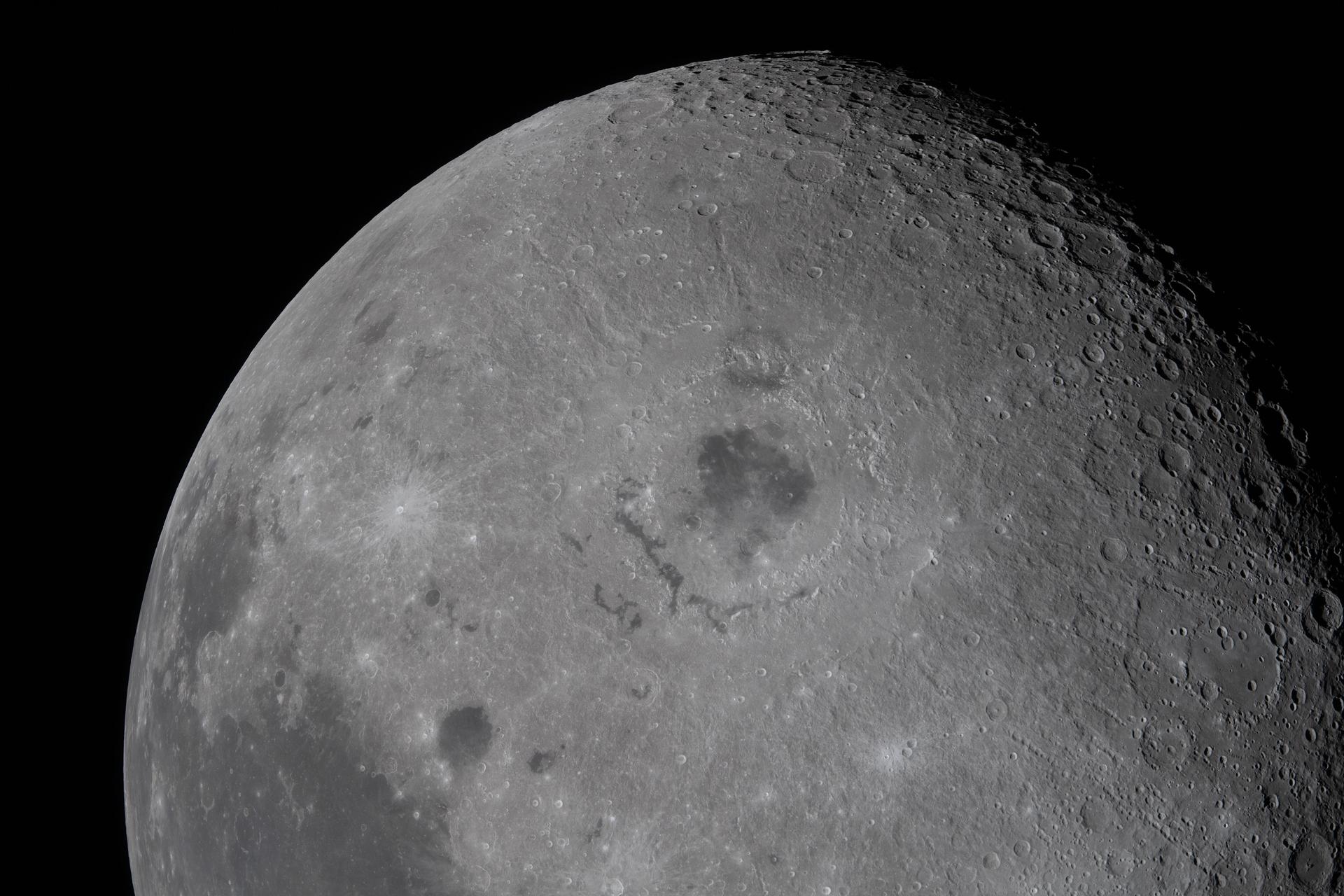
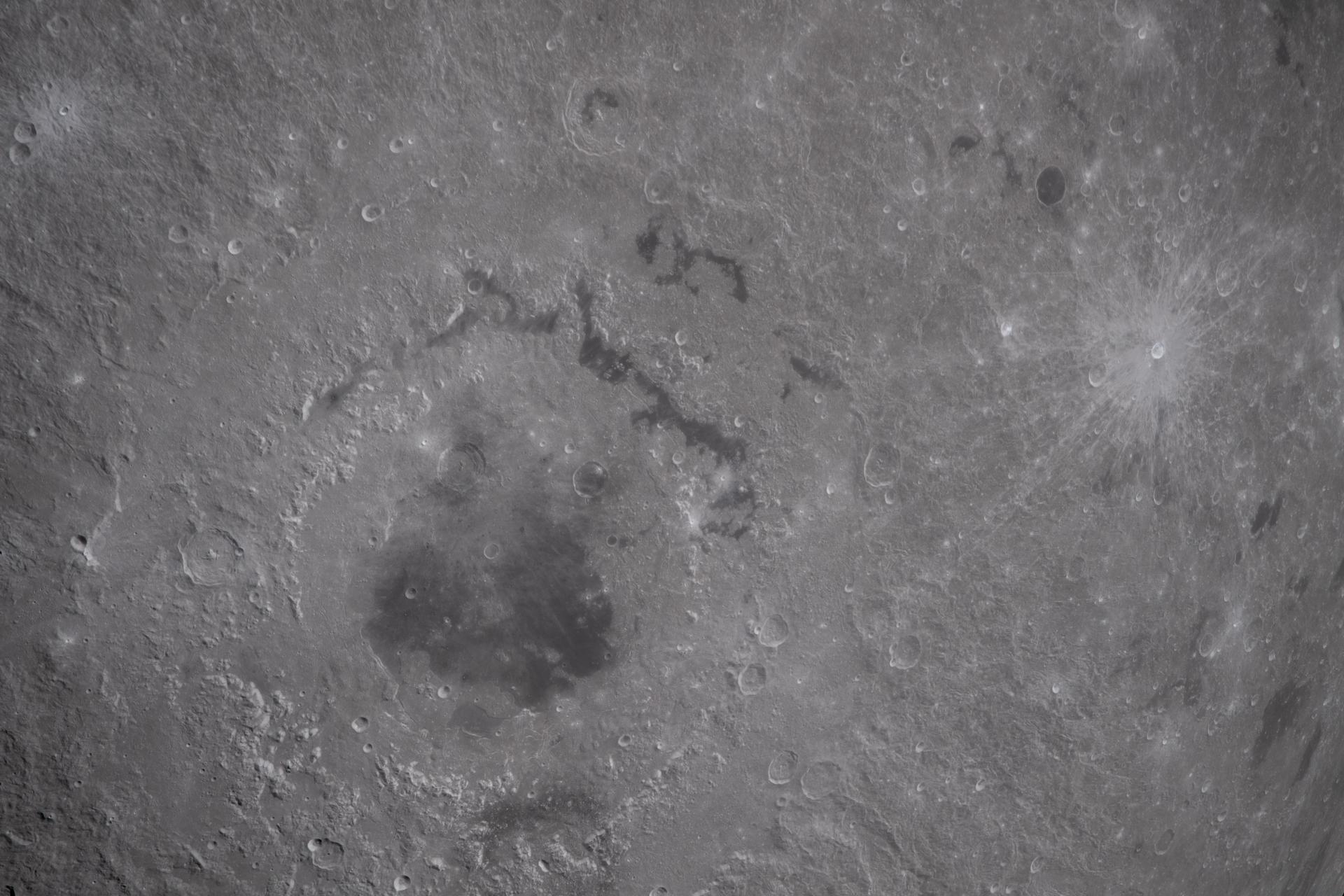
A photograph of the Vavilov crater taken by the Artemis II crew at the edge of the older and larger Hertzsprung basin. The Vavilov crater, other craters, and their ejecta are particularly prominent due to the long shadows cast along the terminator—the boundary between the lunar day and night. The photo was taken with a handheld camera with a 400-mm focal length while the crew was flying around the far side of the Moon. Source: NASAA little more than half of the Moon fills the left side of the photo. The near side, characterized by dark patches of ancient lava, is visible in the upper third of the lunar disk. The Orientale Crater, with a black patch of ancient lava at its center, is surrounded by rings of mountains. The round black spot northeast of Orientale is the Grimaldi crater, while the Aristarchus crater is the bright white dot in the middle of the dark gray lava flow at the top of the image. Photo: NASAIn this image of the Moon taken by the Artemis II crew, the Eastern Basin is visible, marked by a dark patch of ancient lava that pierced the Moon’s crust during an eruption billions of years ago. This impact crater, nearly 1,000 km wide, is located along the transition zone between the near and far sides and is sometimes partially visible from Earth. The small, bright crater to its left is Birgius, from which 500-km-long rays extend. Photo: NASAIn this image of the Moon, the Artemis II crew captured a composite view of the rings of the Orientale Basin—one of the Moon’s youngest and best-preserved large impact craters—during their first change during the Moon flyby observation period. Photo: NASA
It was near Orientale that the astronauts chose two craters for symbolic naming: Integrity, in honor of their spacecraft, and Carroll, in memory of the wife of the Artemis II commander.
Space Eclipse
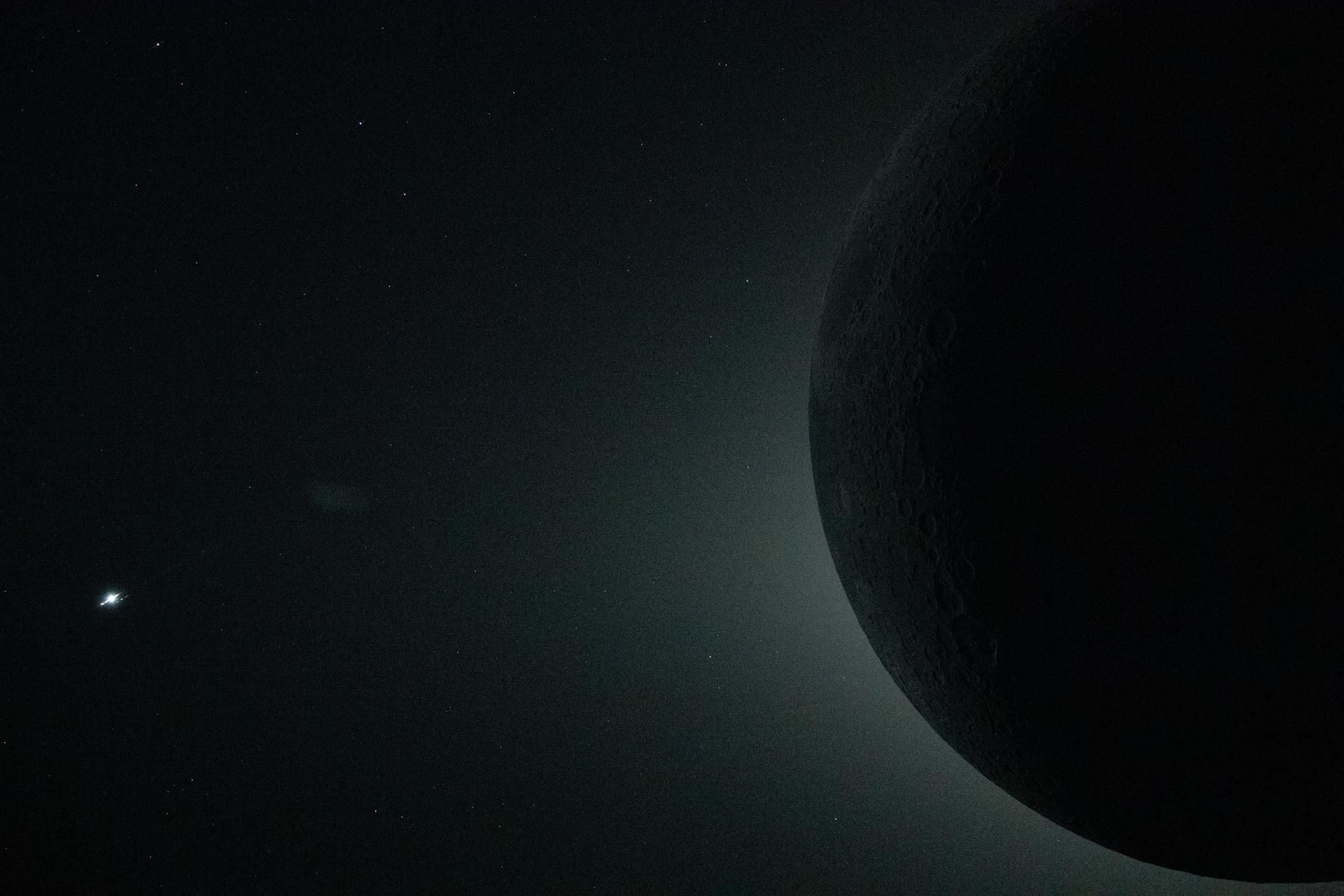
This close-up photo, taken from the Orion spacecraft during the Artemis II mission’s flyby of the Moon on April 6, 2026, captures a total solar eclipse: the frame shows only a portion of the Moon, which completely covers the Sun. We can see a glow around the dark lunar disk. The scientific community is investigating whether this phenomenon is related to the solar corona, zodiacal light, or a combination of the two. From this perspective, deep in space, the Moon appeared large enough to sustain a total phase lasting nearly 54 minutes—much longer than the total solar eclipses typically observed from Earth. The bright silvery glow on the left edge of the image is the planet Venus. The round, dark-gray feature visible along the lunar horizon between the 9 and 10 o’clock positions is Mare Crisium, a feature that can be seen from Earth. Image credit: NASA
One of the most breathtaking moments was the solar eclipse, which lasted nearly an hour for the Orion crew. When the Moon completely obscured the Sun’s disk, the solar corona flared up around it. The astronauts described the fine structures of the solar jets, which resembled strands of hair.
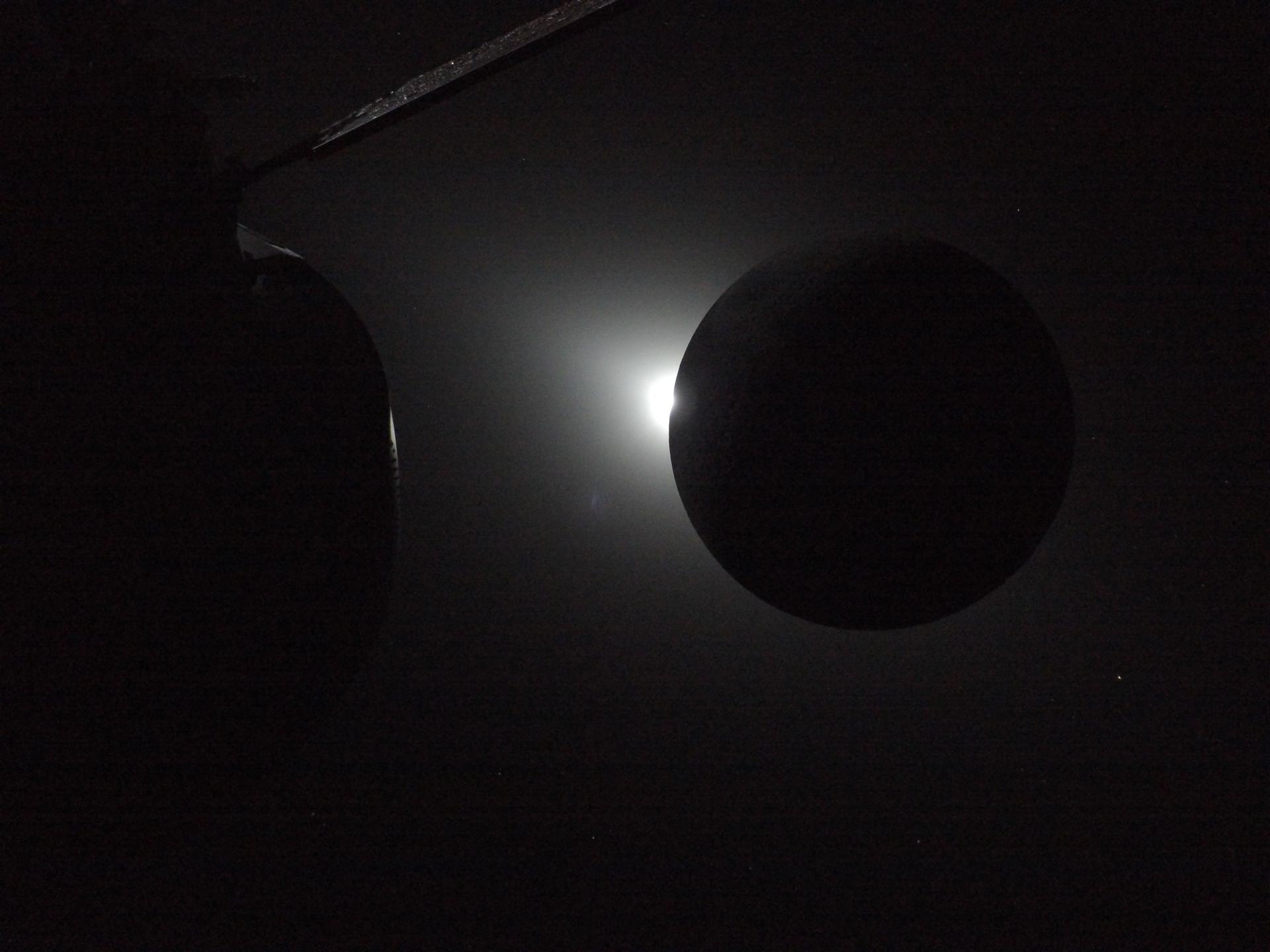
Sunrise on the left edge of the Moon, marking the end of the nearly hour-long total solar eclipse on April 6, 2026. While the Sun was hidden behind the Moon, the crew of the Orion spacecraft saw the dark side of the Moon. This provided an excellent opportunity to observe rare phenomena. After establishing contact with Earth, the crew reported seeing five impact flashes as meteoroids traveling at speeds of thousands of kilometers per hour crashed into the Moon’s surface. Photo: NASA
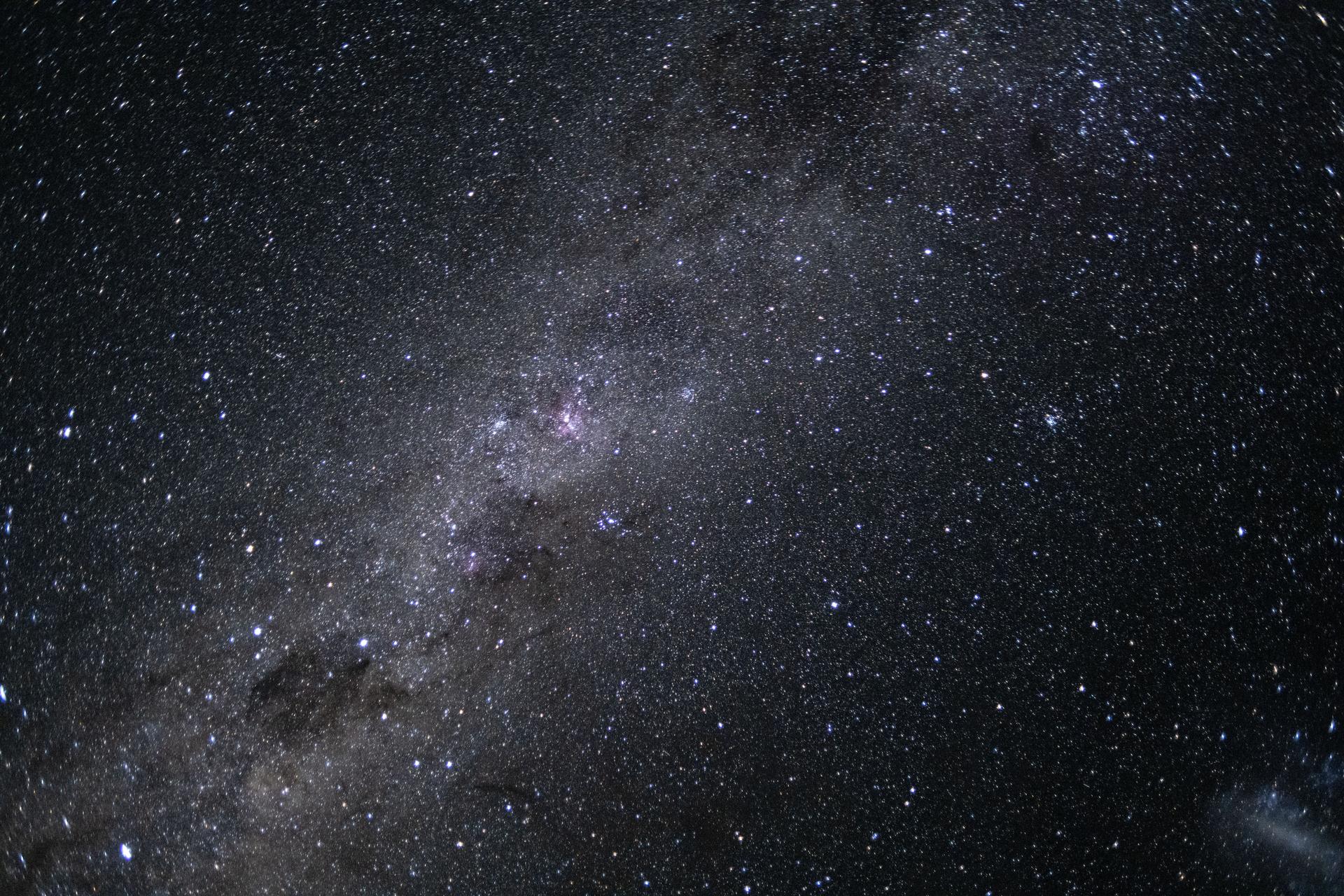
In the complete darkness beyond the moon’s disk, Mars, Venus, and Saturn shone brightly. The crew even managed to capture images of the spiral arms of our galaxy, the Milky Way, clearly showing Earth’s location within one of its spiral arms.
The Artemis II crew took this breathtaking photo of our galaxy, the Milky Way, from far away from Earth. Credit: NASA
A sense of the scale of reality
Dr. Kelsey Young, the mission’s scientific lead, emphasized that the images obtained would help scientists finally unravel the mysteries of the Moon’s origin. Astronaut Jeremy Hansen noted in a conversation with the NASA administrator that viewing Earth from the far side of the Moon gave a unique sense of scale: “It’s like being transported to another reality. It’s an extraordinary human experience.”
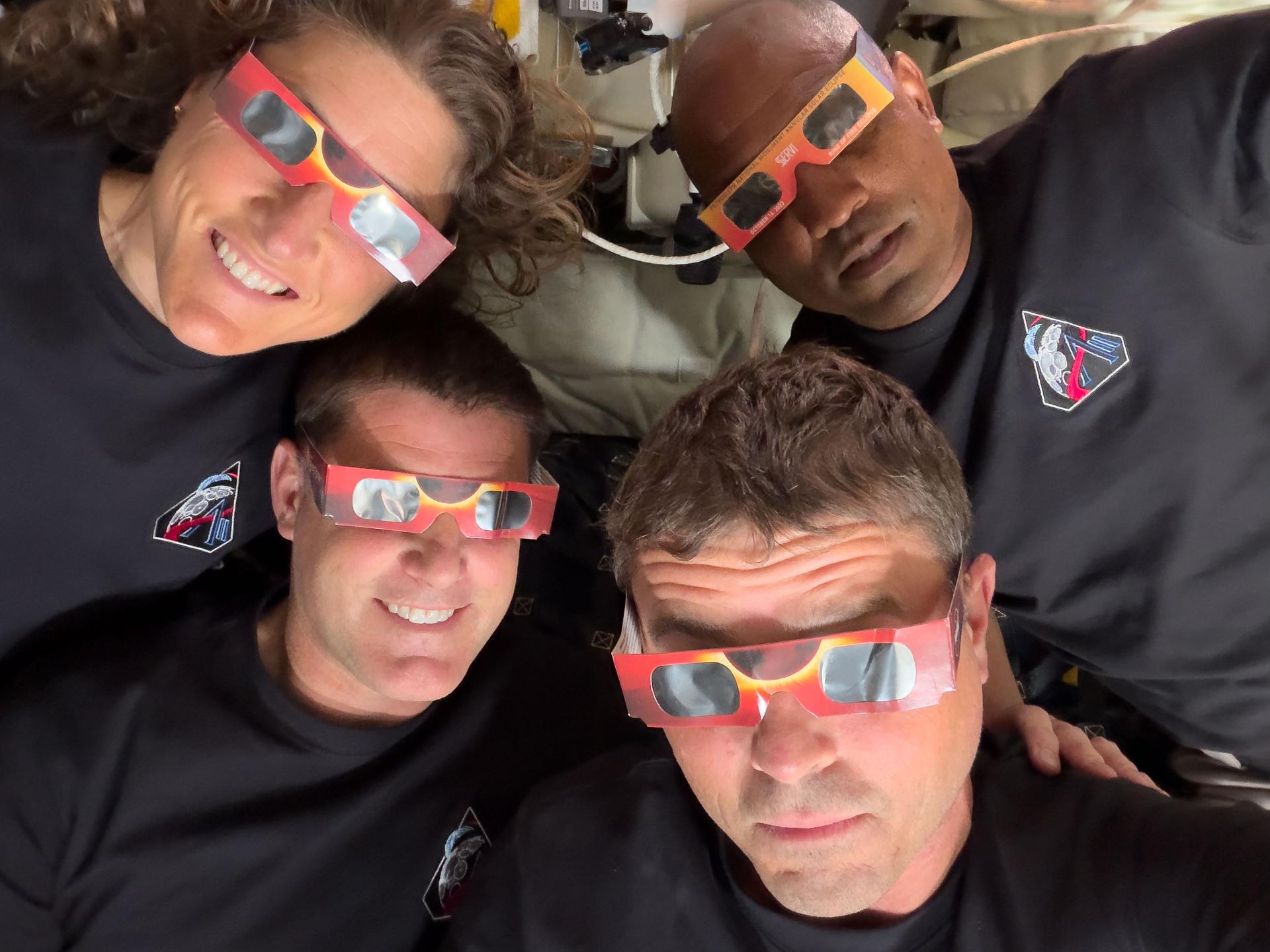
The Artemis II crew—Mission Specialist Christina Koch (top left), Mission Specialist Jeremy Hansen (bottom left), Commander Reid Wiseman (bottom right) and Pilot Victor Glover (top right) use glasses to view the solar eclipse they observed during their flyby of the Moon. Photo: NASA
Commander Reid Wiseman summed up the mission by expressing his gratitude to the entire team on Earth: “This is what we do best when we work together. You’ve brought the Moon closer to every person on our planet.” These images and data will serve as the foundation for the Artemis III mission, which will return humans to the Moon’s surface by the end of this decade.
Brings 15 years of experience in science journalism. Holds a technical degree from the National Technical University of Ukraine “Igor Sikorsky Kyiv Polytechnic Institute” in “Automation and Control in Technical Systems.” His strong technical background and skill in simplifying complex material helped him work as an author and editor in the tech sections of major Ukrainian media outlets.At Universe Space Tech, Ivan covers astronomy, science, technology, and discoveries in space research. His materials serve as a bridge between complex science and readers seeking to understand the universe in simple terms. Fascinated by space since childhood — especially black holes, dark matter, and quasars — he sees space not only as science but as a source of inspiration, philosophy, and humanity’s quest to understand their place in the cosmos.