

55 years ago, the US lunar program could have been interrupted after only two flights. This would have happened if, during the Apollo 14 mission, as during the previous one, technical problems had arisen and the astronauts had been forced to return. However, on February 5, 1971, the Antares lunar module landed near the Fra Mauro formation and saved the program.
Problem flight
On February 5, 1971, exactly 55 years ago, as part of the Apollo 14 mission, the Antares module landed near the Fra Mauro formation on the Moon. Alan Shepard and Edgar Mitchell became the fifth and sixth people to reach the surface of our satellite.
Although Apollo 14 was only the third spacecraft to reach the surface of the Moon, and the mission itself did not involve many scientific experiments, it forced the crew and engineers on the ground to give their all. Because NASA needed success more than ever.
It all began in August 1969. Apollo 11 had already flown to the Moon, and preparations for Apollo 12 were in full swing. NASA had already announced the crews for the next two flights, and mission plans had been drawn up as far as Apollo 20. According to this plan, Apollo 14 was scheduled to launch in July 1970.
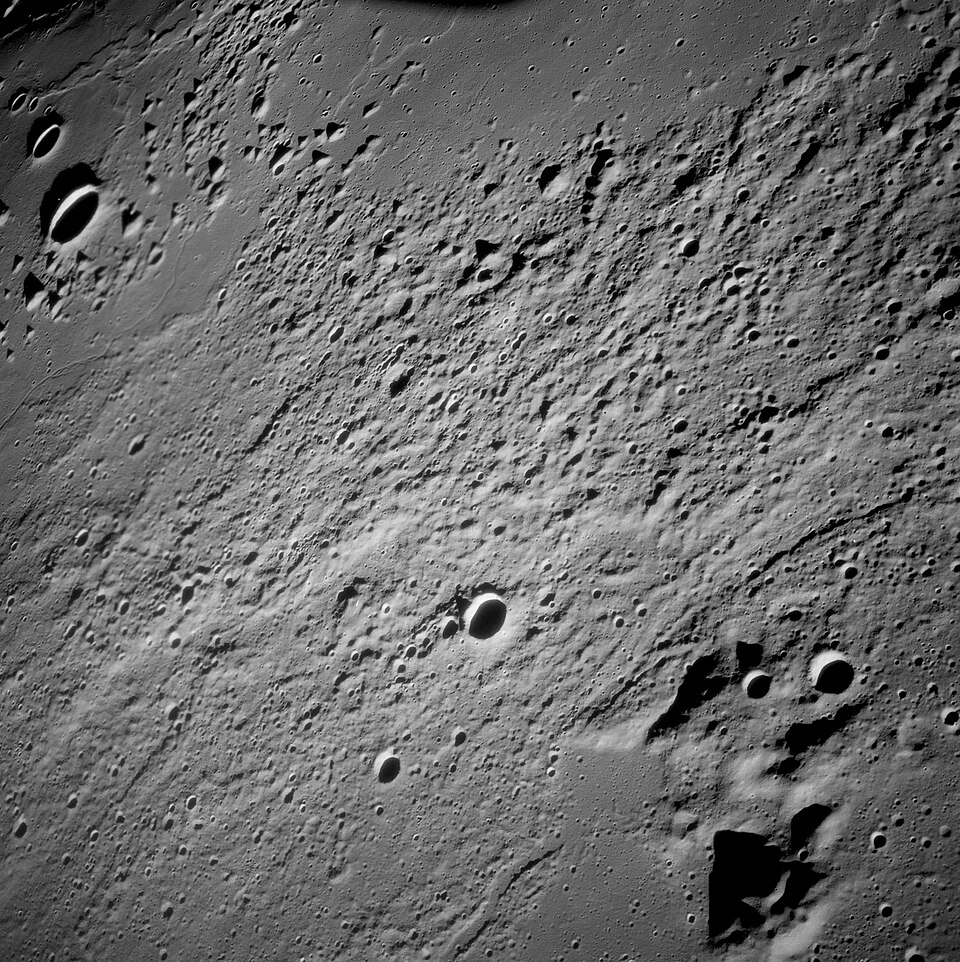
However, by January 1970, the American public interest in the topic had begun to wane, the program’s budget was cut, and some of the missions were canceled. Regardless, Apollo 13 launched in April. It was expected to explore the Fra Mauro formation to understand how the Mare Serenitatis, located near it, was formed and to photograph the areas where subsequent missions were to land. However, an explosion occurred on board, the landing was canceled, and the astronauts barely managed to return to Earth.
Of course, this incident forced engineers to inspect the rocket and spacecraft thoroughly. The launch of Apollo 14 was postponed, and the mission objectives were revised. Instead of the Little Rowe crater, where it was originally planned to land, the landing module was to fly to Fra Mauro. That ancient crater was too interesting. Parallel to the command module, the astronaut who remained on it had to photograph the Descartes crater in detail and make sure that there were places suitable for the Apollo 16 landing.
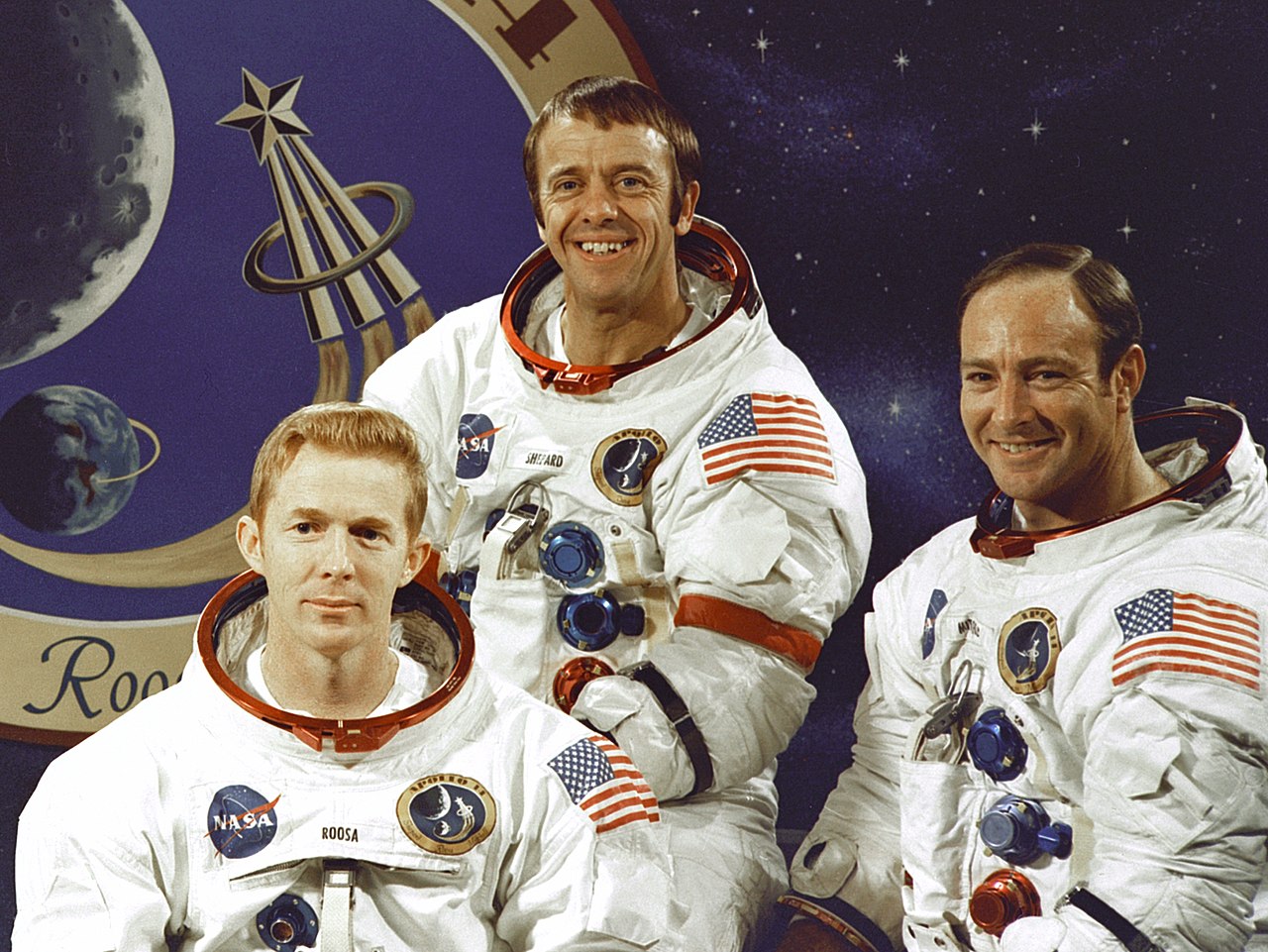
The Apollo 14 crew
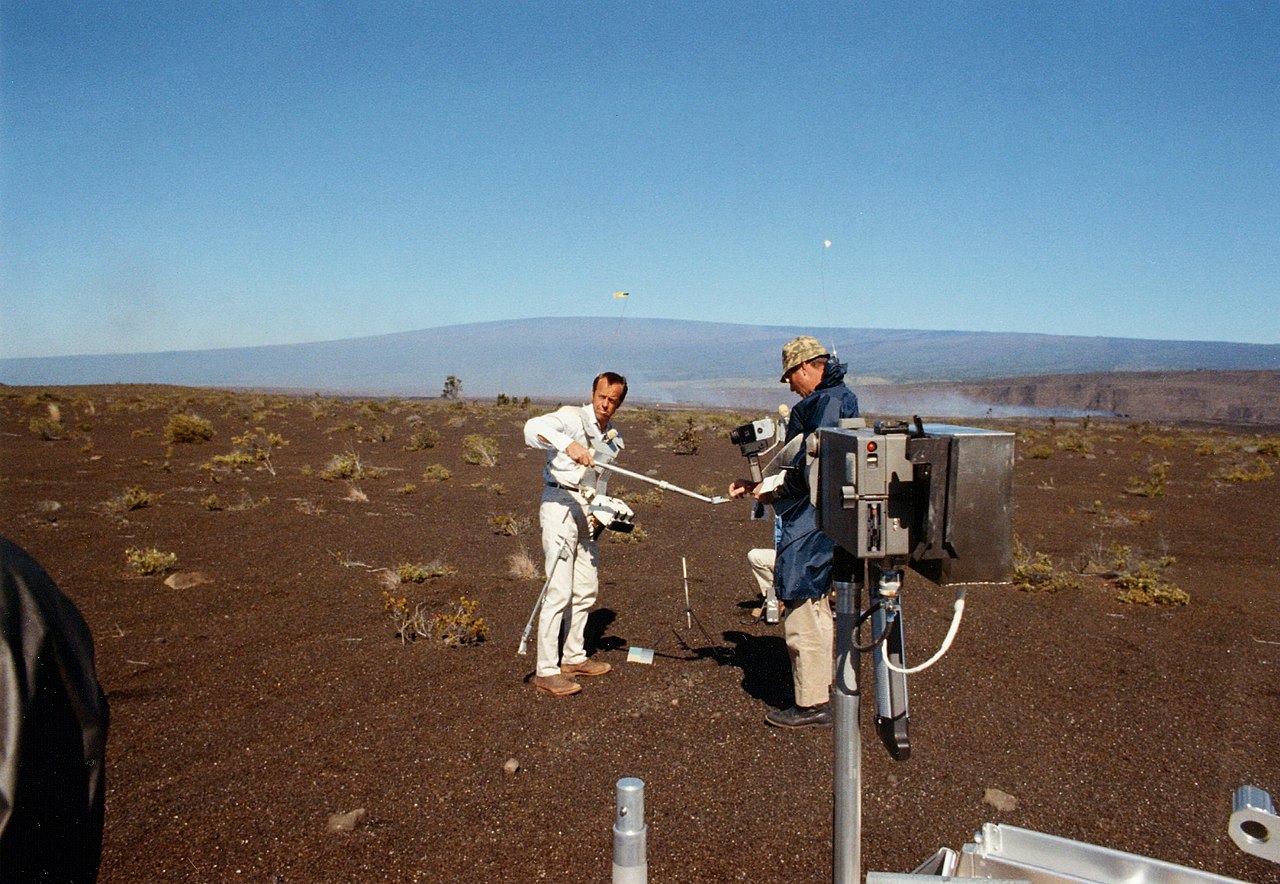
Since the main research tasks to be carried out by the crew were in the field of geology, the astronauts trained mainly in collecting samples. This did not inspire much enthusiasm in them, as all three were preoccupied with how to fly to the Moon without any problems.
The fact is that the American public was becoming less and less interested in the Moon, and talk of better uses for the money was becoming more and more frequent. If something happened again during the flight, resulting in a return without landing, it could be the last attempt to reach our satellite.
Therefore, the crew was under a lot of pressure, and of the three, only Commander Alan Shepard had experience flying in space. And even that was a suborbital trip aboard Mercury-Redstone 3, which took place 10 years before the launch of Apollo 14.
It was not that Edgar Mitchell, who was supposed to accompany him in the lunar module, and Stuart Roosa, who was supposed to remain in orbit in the command module, were inexperienced. Each of them was a pilot with many years of experience. Roosa was also a firefighter-parachutist, which meant he had to parachute into the epicenter of forest fires. Mitchell had a doctorate in aeronautics.
However, none of them had ever really tried space before. And there was no certainty that even Shepard’s 8,000 hours of flight time in combat aircraft and numerous landings on aircraft carriers would prepare him for landing on the Moon.
Launch and flight to the Moon
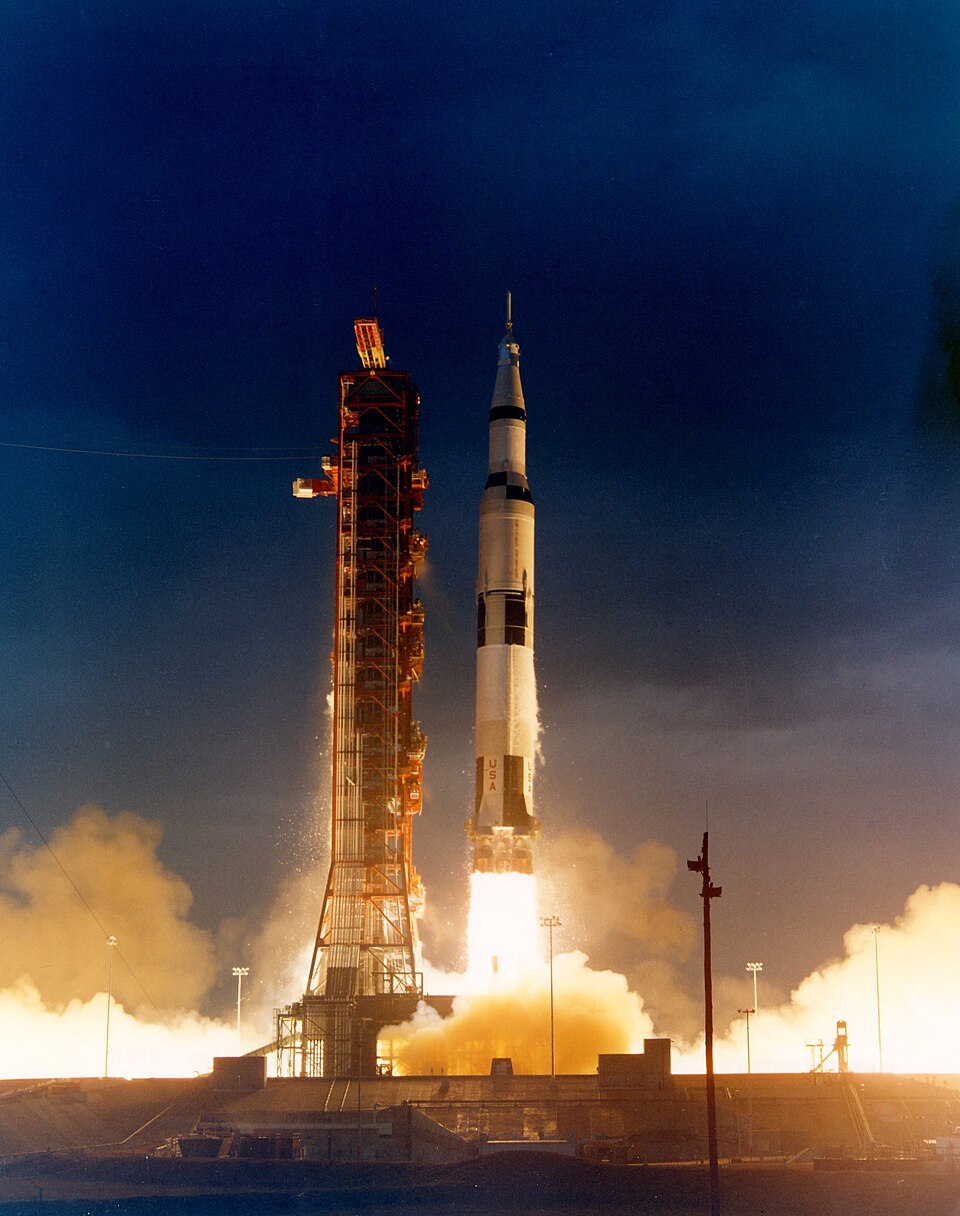
Despite all doubts, on January 31, 1971, Apollo 14 launched from launch pad 39A at Cape Canaveral. The launch was successful, and the third stage of the Saturn-V rocket put the spacecraft on a trajectory to the Moon. And here, the first test awaited the astronauts.
Like every Apollo spacecraft, the one that Shepard, Mitchell, and Roosa flew in consisted of a command module and a lunar module. In this mission, the former was named Kitty Hawk after the city where the Wright brothers made their first flight, and the latter was named Antares after the brightest star in the Orion constellation.
As with every Apollo mission, the modules were launched together, but not in the position in which they were to be undocked and docked. That is why, three hours after launch, one of the crew members had to go out into space, move to the command module, and turn it around as needed.
During the Apollo 14 mission, this role fell to Stuart Roosa. He made six attempts at docking, all of which were unsuccessful. It was obvious that the connectors that were supposed to ensure the connection were somehow not fitting into their designated slots.
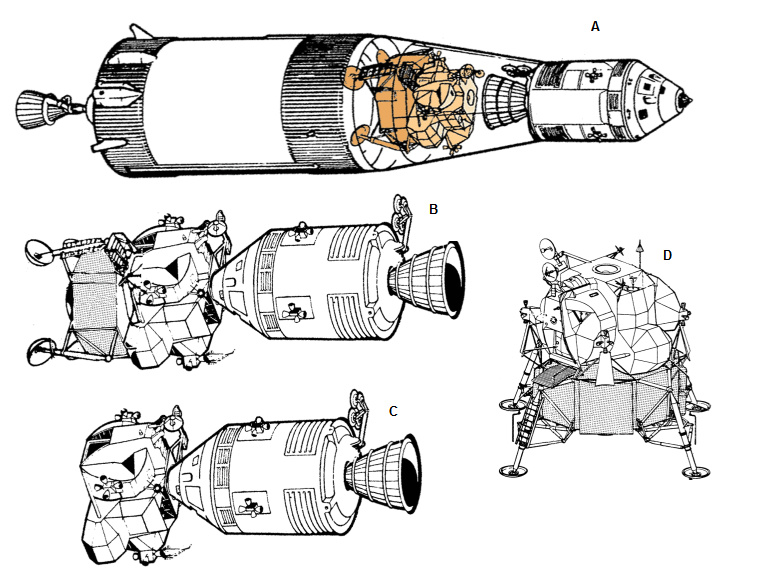
Shepard suspected that something was wrong with the special pin that was part of the docking device, but this could only be determined by depressurizing the command compartment, climbing into the future docking airlock in a spacesuit, and inspecting it from the outside. This was far beyond the flight plan, but without it, the mission could simply be aborted.
Shepard was already preparing to put on his spacesuit when a command came from Earth to try to pull this part in from the inside, and to everyone’s surprise, it worked. Antares docked, and the expedition continued its flight.
What is inside the Moon?
On February 4, Apollo 14 entered a selenocentric orbit, and at that very moment, the first scientific experiment planned for the mission took place. The astronauts had nothing to do with it. It was simply that the last stage of their rocket crashed into the Moon.
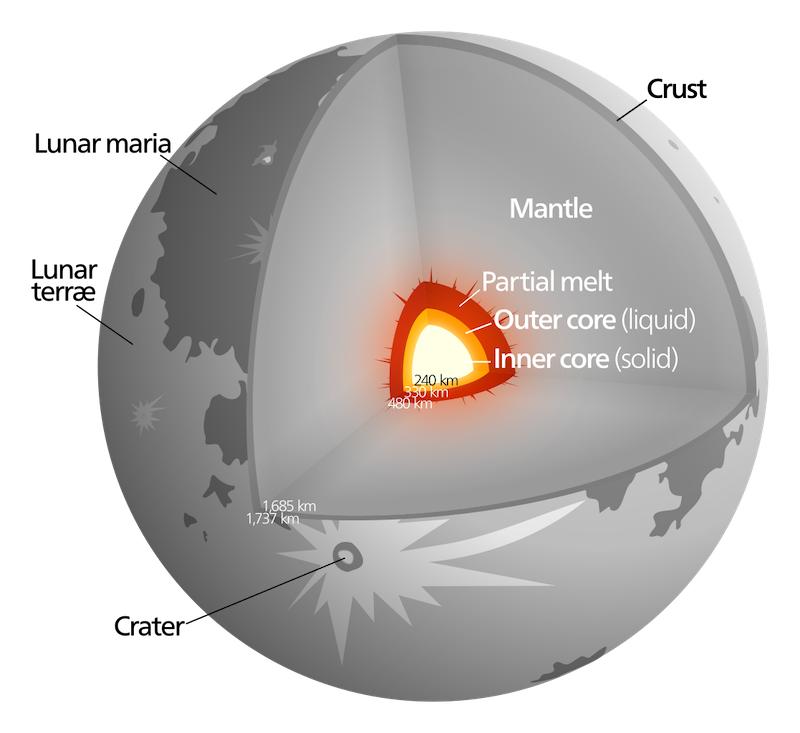
In the fall of 1969, the Apollo 12 crew left a seismometer on the surface of our satellite. But over the years of its operation, it only recorded that this celestial body is geologically dead. Scientists were very interested to find out what was inside it.
And so a plan was born, which was then repeated many times. All that was needed was to create an artificial source of seismic waves. And it was the last stage of the rocket that launched Apollo 14 into lunar orbit that performed this role. The vibrations passed through the thickness of the lunar rocks and told scientists what was inside the Moon.
However, the main research still had to be carried out by humans. Shepard and Mitchell climbed into the landing module and set off for Fra Mauro. On February 5, 1971, at 9:18 a.m. UTC, Antares landed, and a short time later, Shepard, followed by Mitchell, emerged onto the surface. “It has been a long journey, but here we are,” commented the expedition commander.
Then a three-day mission on the surface began. The astronauts collected samples and climbed the rim of the nearby Cone crater. They also installed corner reflectors on the surface. These simple devices allowed scientists on Earth to send a laser beam to the Moon and receive its reflection back. This made it possible to determine the distance to our satellite with extreme precision. It soon became clear that it was slowly moving away from us.
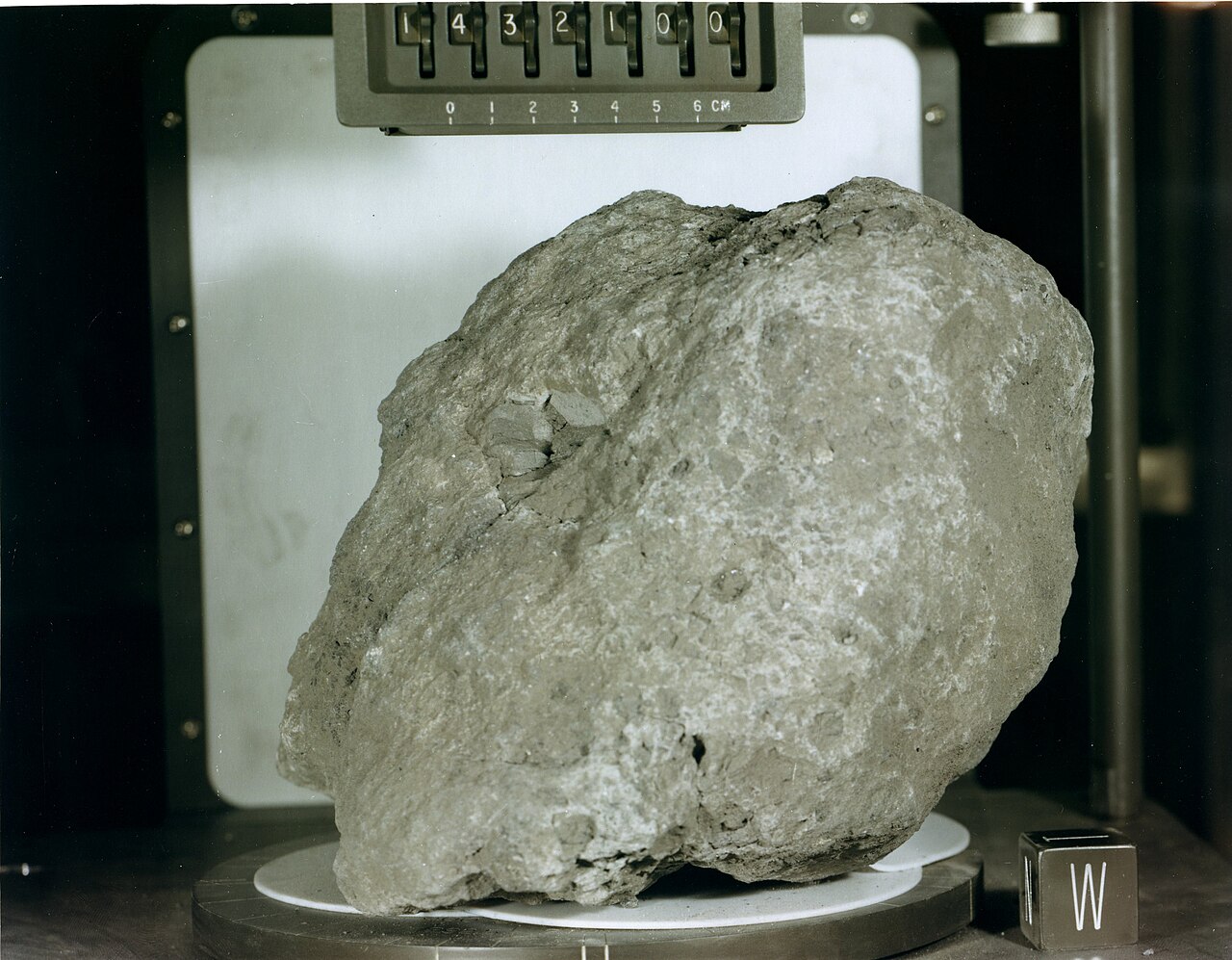
Among the samples collected by Shepard and Mitchell, one stands out in particular, nicknamed Big Bertha. It formed on Earth approximately 4.0-4.1 billion years ago, but was then ejected from it and soon ended up on the Moon, which was then three times closer to our planet than it is now. The zircon crystals it contains have told researchers a lot about what was happening at that time.
In total, Shepard and Mitchell spent 33 hours and 24 minutes on the Moon. After that, they took off from its surface and soon docked with the command module. They were waiting to return home.
Moon trees
At this time, Roosa, who remained in the command module, was not idle either. He observed the surface of the Moon, in particular, filming the Descartes crater in search of good landing sites for future expeditions. However, his main camera malfunctioned, so he had to use a spare one. Nevertheless, he accomplished his task.
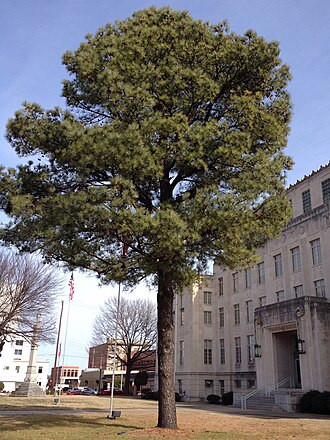
In addition, Husi had his own scientific experiment. While still on Earth, Edward Cliff, director of the US Forest Service, who had known Roosa from his days as a firefighter, suggested that he take with him a packet of seeds from several tree species: incense cedar, sycamore, liquidambar, sequoia, and Pseudotsuga menziesii.
The purpose of the experiment was to see how the trees would grow and whether cosmic radiation would cause any serious changes. After the crew returned to Earth, the seeds sprouted, and experts studied the seedlings for a long time, but found no anomalies.
So, it was decided to plant them in 1975-76 as part of the celebration of the 200th anniversary of the US Declaration of Independence. This is how the term «moon trees» came about. They were planted in many US states, and then they produced seeds, which soon sprouted. The first such tree was planted by Stewart Roosa himself.

