

Scientists have studied a brown dwarf orbiting the star HR 7672. It was discovered back in 2002, but only now have researchers been able to determine its age and surface temperature.
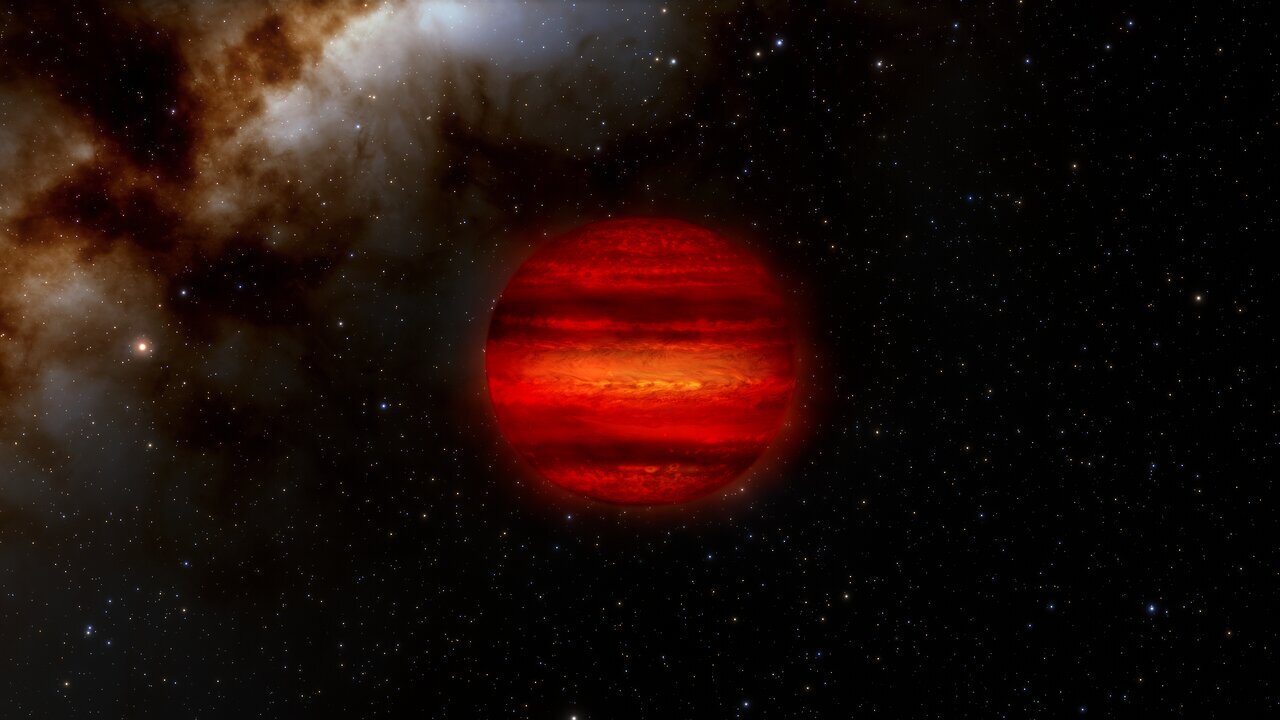
Determining the age of a brown dwarf
Using the V. M. Keck Observatory on Mauna Kea, a team from the Institute for Astronomy at the University of Hawaii (IfA) studied the HR 7672 system, which consists of a Sun-like star and a faint companion—a brown dwarf. Using an instrument called the “Keck Planet Finder,” they detected tiny five-minute pulsations in the star’s light and, based on these, determined its age to be approximately 2.3 billion years.
Since the brown dwarf formed at the same time as the star, the star’s age also reveals the age of the companion, giving researchers a rare opportunity to test whether their models of brown dwarf cooling over time are accurate.
“This is like finally having a reliable clock for an object we’ve been trying to understand for years,” said IfA Parrent Fellow Yaguang Li at the Institute for Astrophysics (IfA) who led the study. “It really helps us place evolutionary models under stringent tests and determine which physical ingredients are correct.”
HR 7672B — a key object in understanding the nature of brown dwarfs
For more than two decades, the HR 7672 system has helped shape astronomers’ approaches to the study of brown dwarfs. Its companion, HR 7672B, was discovered in 2002 and became one of the first brown dwarfs to be imaged directly around a Sun-like star using adaptive optics (AO)—a technology that enhances the clarity of images blurred by Earth’s atmosphere.
These early observations helped reveal just how rare brown dwarfs are around Sun-like stars at close orbital distances.
Brown dwarfs do not sustain the same energy-producing reactions as stars. Instead, they slowly cool down and fade over time. However, it was difficult to verify exactly how this happens, partly because scientists rarely know their exact age.
Thanks to these new measurements, combined with previously known data on the object’s energy output and mass, HR 7672B now serves as a key reference point. The team compared their findings with several models and found that they are most consistent with the latest theories, which provide a better description of what is happening inside these objects.
More than 20 years ago, Michael Liu discovered HR 7672B using the adaptive optics (AO) system of the Keck Telescope. Today, Yaguang Li is continuing this work by conducting a new, highly accurate age determination of the same system.
According to phys.org

