

More than half a billion years ago, our planet experienced the most extreme climatic upheavals in its history. Geological data indicates that at that time, the Earth was covered with ice from pole to pole, so from space it looked like a giant “snowball.” Scientists have long sought to understand why some of these global glaciations lasted only a few million years, while others stretched on for tens of millions of years. A new study published in the journal Geology offers an unexpected explanation for this phenomenon, shifting the focus from the planet’s surface to its hidden ocean floor.
Carbon thermostat
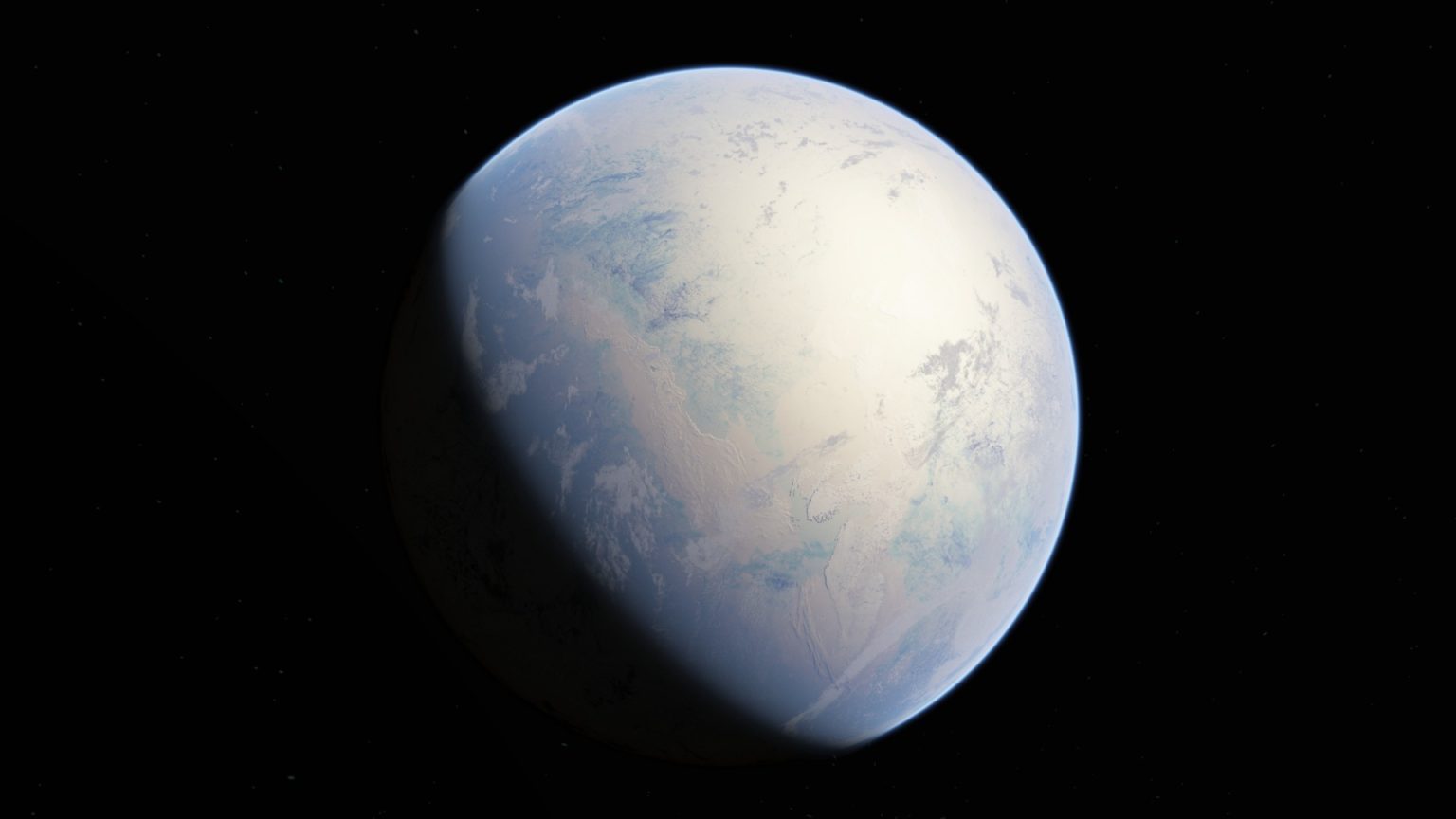
The Earth’s climate is regulated by a complex carbon cycle that functions like a giant thermostat. Under normal conditions, volcanoes release carbon dioxide (CO₂) into the atmosphere, and the weathering of rocks on the continents absorbs it, binding it in minerals.
During the “snowball” era, this mechanism failed. Bright ice reflects sunlight, cooling the planet even further. But volcanoes continue their work, gradually accumulating CO₂ in the atmosphere. When there is enough greenhouse gas, the ice melts and the Earth rapidly transitions from global cold to extreme heat. The duration of this icy captivity depends on the balance between the supply of volcanic gas and its absorption.
A strange difference
An international team of researchers led by planetary scientist Trent Thomas of the University of Washington focused on two glaciations that occurred approximately 720–635 million years ago. Geologists determined that one of them lasted about 56 million years, while the other lasted only 4 million years. The 14-fold difference required an explanation.
Since the intensity of volcanism did not change significantly during those times, scientists suggested that the reason lay elsewhere — in the rate at which CO₂ was removed from the atmosphere. But if the continents are buried under kilometers of ice during glaciation, who then acts as a “vacuum cleaner” for carbon?
Weathering at the bottom of the ocean
To answer this question, scientists created a computer model of the climate system. They tested various scenarios and found that the only plausible explanation for the 14-fold difference was a change in the rate of so-called seafloor weathering.
It turns out that seawater, circulating through the porous oceanic crust, undergoes chemical reactions with rocks, binding carbon dioxide. In today’s world, this process plays a minor role, but 700 million years ago, it may have been the main driver of climate change.
- Prolonged glaciation. Modeling showed that accelerated weathering at the bottom of the ocean was required for the 56-million-year-old “snowball.” It acted like a powerful pump, pumping out volcanic CO₂ faster than it could warm the planet.
- Short glaciation. On the contrary, the 4-million-year episode could have been caused by a “clogging” of this mechanism. Slow CO₂ absorption allowed greenhouse gases to accumulate rapidly and melt glaciers.
How does the bottom filter become “clogged”?
Why could the rate of this underwater weathering vary so greatly? Researchers suggest that the porosity of the oceanic crust played a key role. The more pores there are, the more actively water circulates and absorbs CO₂.
The porosity could be regulated by sulfates dissolved in water. In hot hydrothermal springs, they react with calcium to form minerals that “clog” the pores, blocking water circulation. If the chemical composition of the ocean varied over different periods, this affected the throughput capacity of the “carbon filter” at the bottom.
A look into the abyss
The study by Thomas and his colleagues is the first to propose a coherent model that explains the varying durations of ancient glaciations without invoking external factors. It shifts the focus from well-studied continental processes to the poorly understood geology of the ocean floor.
Scientists note that their theory remains a hypothesis that requires verification with additional data. However, it opens up new avenues for research: scientists now understand that the key to unlocking the most dramatic climatic events in Earth’s history lies not only in the sky or on the continents, but also in the depths of the ocean, beneath layers of water and sedimentary rock.
Earlier, we explained in detail the reasons for the periodic freezing of the Earth.
According to spacedaily.com

