

February 18 commemorates the 113th anniversary of the occasion on which English physicist Frederick Soddy introduced the term “isotope” to characterize atoms of the same element possessing different masses. Presently, this terminology has become emblematic of radiophobia. Nonetheless, the lack of awareness regarding their existence would, in fact, be significantly more detrimental.
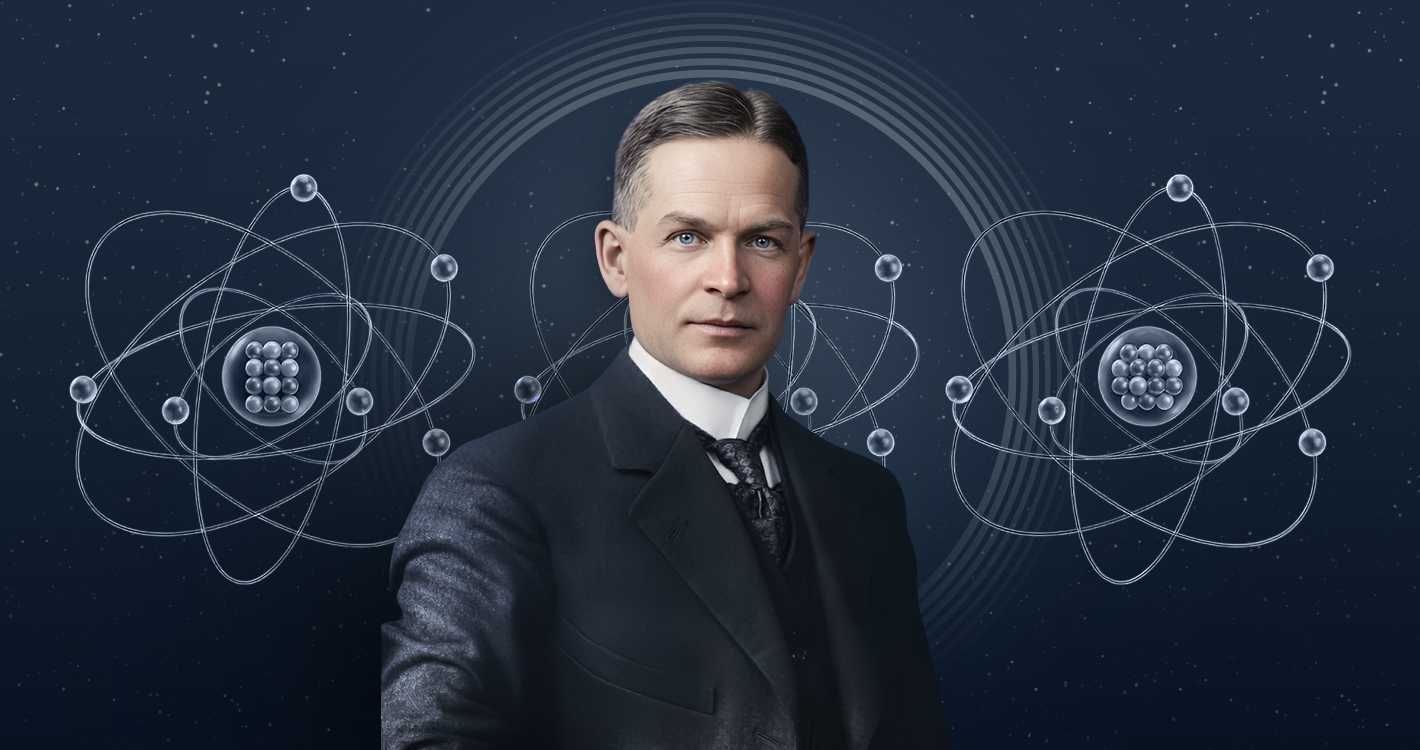
Atoms
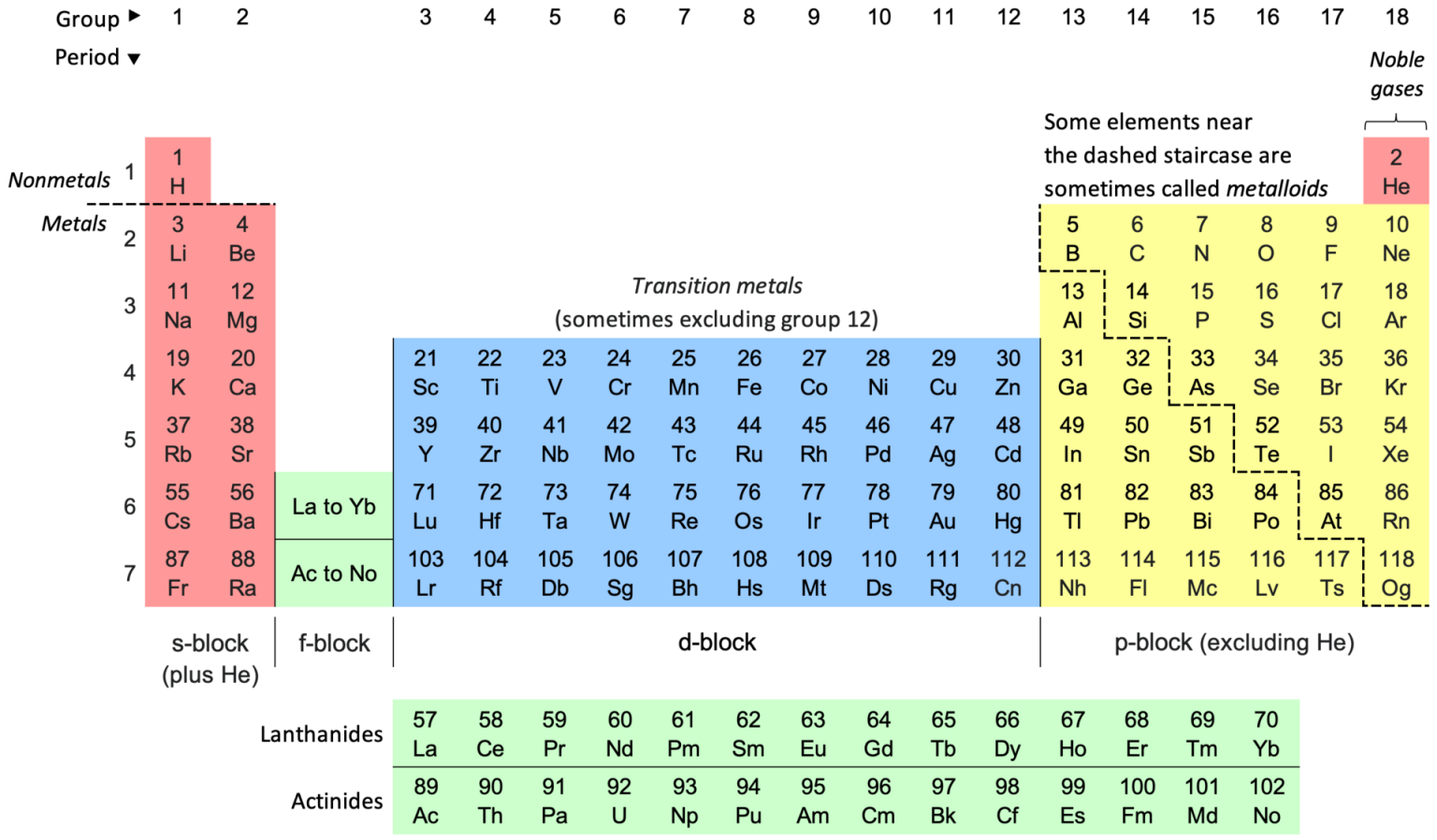
The term “isotope” is derived from Greek, meaning “in the same place,” and it refers to the same position within the periodic table of chemical elements. Notably, this definition is unusual in that atoms of distinct isotopes have different atomic masses.
The latter may be unexpected to individuals who had to memorize masses from textbooks during their education; however, those who paid closer attention will recall that the table actually listed them with an accuracy of tenths and hundredths. In reality, these were average values, derived from the summation of the masses of all atoms of a specific element within a unit volume.
At this juncture, one may be inclined to inquire as to the originator of this concept. The succinct response is from British physicist Frederick Soddy, who made this contribution precisely 113 years ago. However, the situation is somewhat more intricate, and to elucidate what transpired and how, it is necessary to commence the narrative a little earlier.
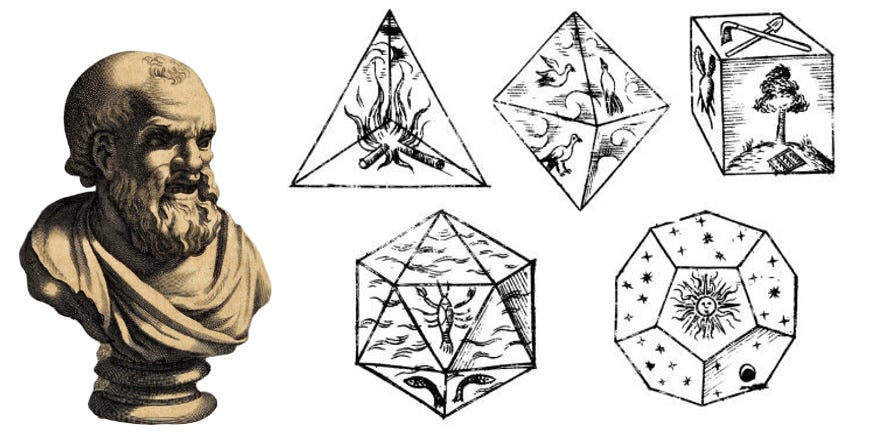
Source: aetherczar.substack.com
Since ancient times, there has been a prevalent theory suggesting that all matter in the universe is composed of the smallest indivisible particles – atoms. The term “atom” originates from the Greek word meaning “indivisible.” The nature of atoms, their total quantity, and how a finite number of their types can account for the vast diversity of materials and chemical reactions around us have long remained a subject of scientific inquiry. For instance, this article discusses the relationship between atoms, the four classical elements, and regular polygons.
However, at the turn of the 18th and 19th centuries, thanks to the work of Antoine Lavoisier and John Dalton, the atomic-molecular theory prevailed, according to which only a few dozen types of atoms can combine into a wide variety of molecules and crystal lattices, and these determine the physical and chemical properties of substances.
In the latter half of the 19th century, a periodic table was developed that integrated atomic mass and charge with the number of electrons and specific chemical properties. At first glance, a comprehensive model of matter transformation appeared to have been established.
Atomic decay
Everything was fine until 1896, when Henri Becquerel decided to experiment with uranium salts, which showed signs of luminescence. Experiments showed that they produced something that resembled the newly discovered X-rays in its ability to expose photographic paper.
The only problem was that X-rays were produced from a specially designed lamp when high voltage was applied. But what Becquerel saw appeared simply from a piece of stone.
At first glance, this discovery had nothing to do with atomic theory. However, Pierre and Marie Curie took an interest in it. Several years passed, and they announced to the world the discovery of a new phenomenon of radioactivity, observed not only in all uranium compounds but also in thorium, radium, and polonium.

The question arose as to where all this energy came from, and Curie’s research provided a completely unexpected answer: uranium is converted into thorium, and thorium into radium. It was clear that the element’s atomic mass decreased, and that was where the radiation energy came from. At the same time, in the early 20th century, there was no concept of the equivalence of mass and energy, nor was there any idea that there could be anything inside an atom.
For physicists, it was a great shock that the atom suddenly turned out to be not indivisible at all. One after another, various models of its structure began to appear, very quickly approaching what we know today.
Isotopes
By early 1913, physicists had already formed an idea of the atomic nucleus, around which a cloud of electrons revolves, which determines most chemical properties. But during radioactive decay, something was happening inside the autonomous nucleus itself, challenging the carefully constructed picture of matter as a finite number of well-ordered elements.
For example, the decay of thorium-232 produced something called “mesothorium,” which had an atomic weight of 228 a.m.u. However, studies of its chemical properties showed that it initially behaved like radium and then like a completely different element, actinium. At the same time, other decay reactions could produce other variants of these elements, which had different masses but behaved exactly like different variants of mesothorium.
The question arose of how not to get confused in all these variants of nuclei that exist in the region of numbers 85-92 of the periodic table. English physicist Frederick Soddy, a student of Ernest Rutherford, the founder of the theory of atomic structure, also considered this. He himself experimented extensively with radioactive materials and learned from his own experience how complicated it all was.
In early 1913, he corresponded with his acquaintance, Scottish physician Margaret Todd. They discussed the problem of atomic nuclei, and it was Todd who proposed the term “isotope,” which helped sort out the confusion. There were still as many elements in the periodic table as there had been before, but each of them could have different isotopes.
Laws of decay
Armed with this knowledge, Soddy formulated the laws of atomic decay in 1913: in alpha decay, the atomic number decreases by 2, and the mass number decreases by 4; in beta decay, the atomic number increases by 1, and the mass number remains unchanged.
Interestingly, at the same time as Soddy, the Polish-Jewish physicist Kazimierz Fajans reached the same conclusions in Germany. Much of what was known about the laws of radioactivity was indeed obvious. In 1921, Soddy received the Nobel Prize for his research on isotopes and the laws of radioactivity. However, the puzzle behind the laws he formulated was not finally solved until 1932, when the neutron was discovered.
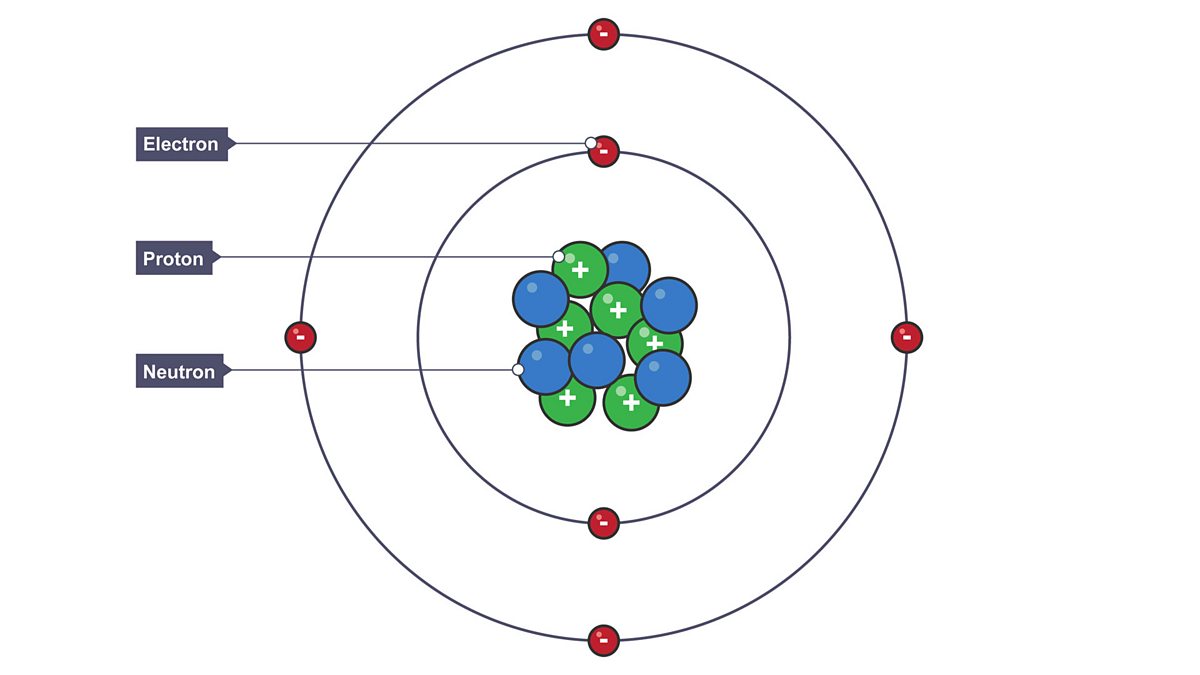
The nucleus of an atom consists of two types of heavy particles: neutrons and protons. The mass of each of them is equal to one atomic mass unit. The difference is that a proton is a charged particle, while a neutron is neutral.
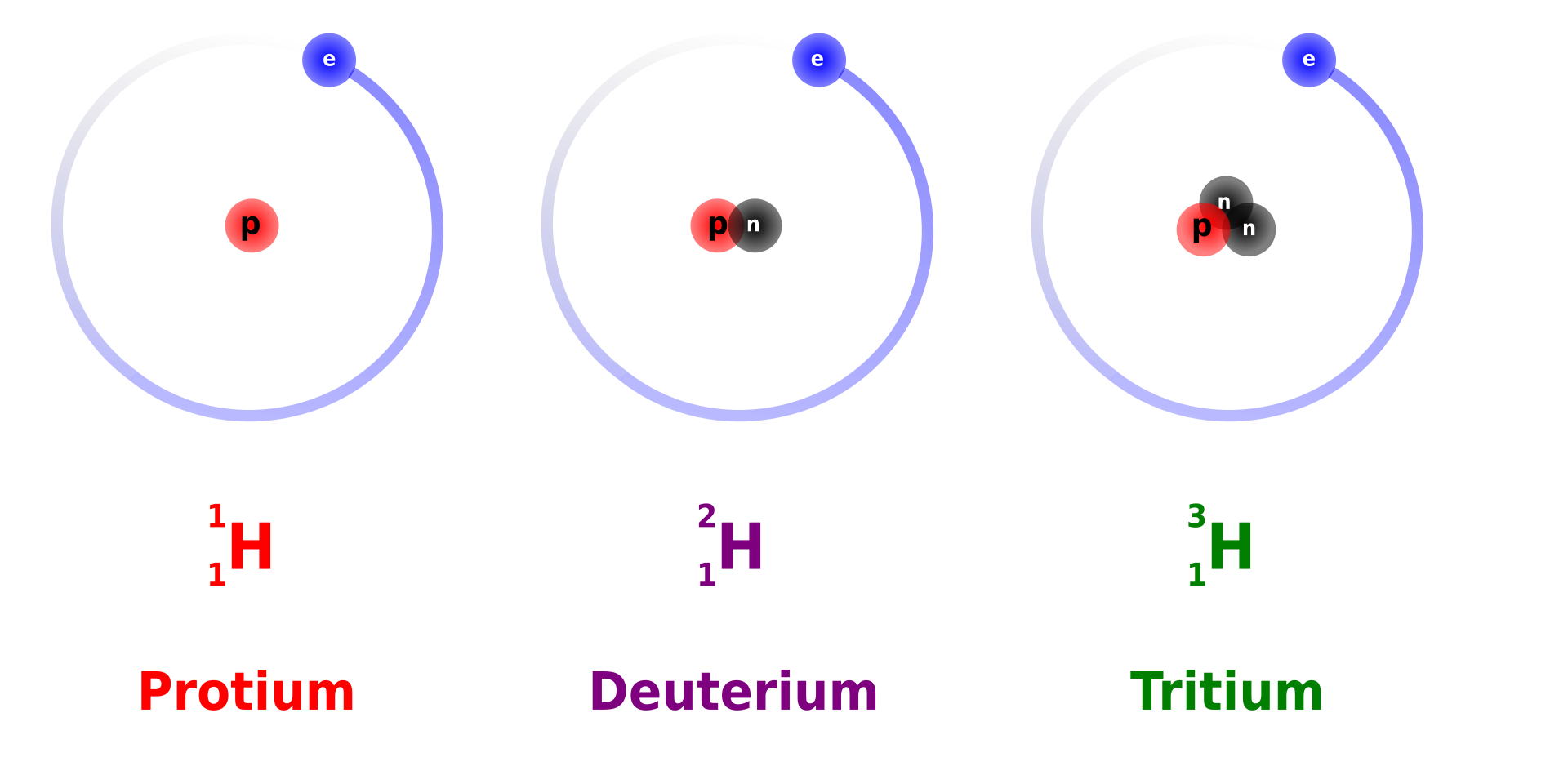
At the same time, any neutral atom consists of a nucleus and an electron shell. Hence, the simplest atom is a single proton surrounded by an electron orbiting around it (according to modern theory, it does not even revolve, but exists in the form of a certain region within which it can be detected with a certain probability as something that has charge and mass, but for simplicity, we can assume that it behaves like a planet).
If a neutron is added to a proton, a heavy isotope of hydrogen – deuterium – is formed, but this does not affect the number of electrons that can surround it. And even a second neutron, which brings the mass to three, does not affect the fact that it will still be hydrogen, although it will be called tritium.
But if another proton is added to tritium, it will gain another orbital for electrons and become helium with atomic number 2. Which, in turn, will simply turn into its own lighter electron if it loses one neutron.
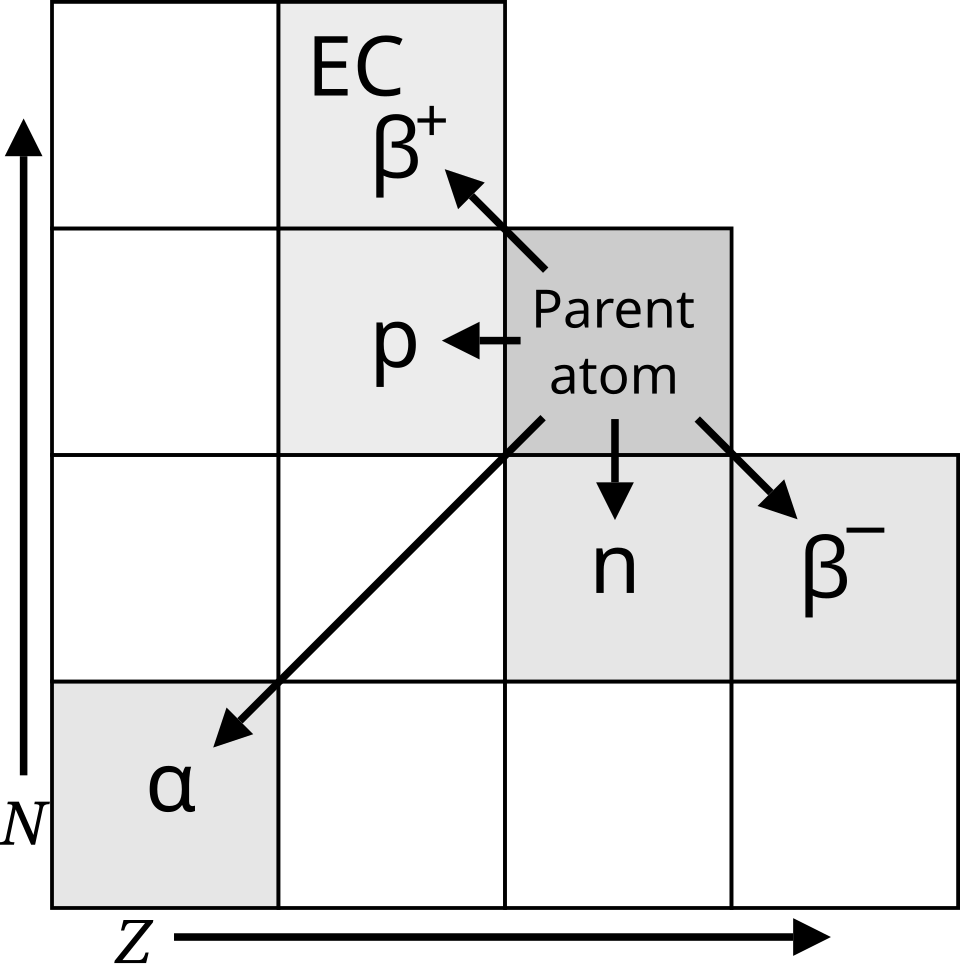
By adding protons and neutrons, new atoms can be created. This continues until the mass reaches 200 atomic units. At this point, atoms become unstable, and the laws of Soddy and Fajans come into play. If two neutrons and two protons (an alpha particle, also known as a helium-4 nucleus) escape from the nucleus, alpha decay occurs. If an electron escapes from a neutron, it can turn into a proton, and beta decay occurs. It should be noted that even light atoms can decay according to these laws if powerful sources of radiation are present.
Are isotopes dangerous?
From all of the above, we can conclude that isotopes are necessarily associated with radiation and, therefore, dangerous. However, this is not entirely true. Indeed, most isotopes are unstable. But this only means that they have a certain half-life – the time it takes for half of the atoms in a given volume to transform into something else.
It can be thousands or millions of years. And usually, the longer it is, the lower the radiation level. That is why most long-lived isotopes do not pose a significant threat to human health.
At the same time, people often forget that even stable atoms are their own isotopes. That is, there is nothing scary about the word itself. Take carbon, for example. It is the main element for life on Earth. It actually has two stable isotopes: carbon-12, 1/12 of whose mass is the standard for one atomic mass unit, and carbon-13, which accounts for only 1.07% of all carbon in nature.
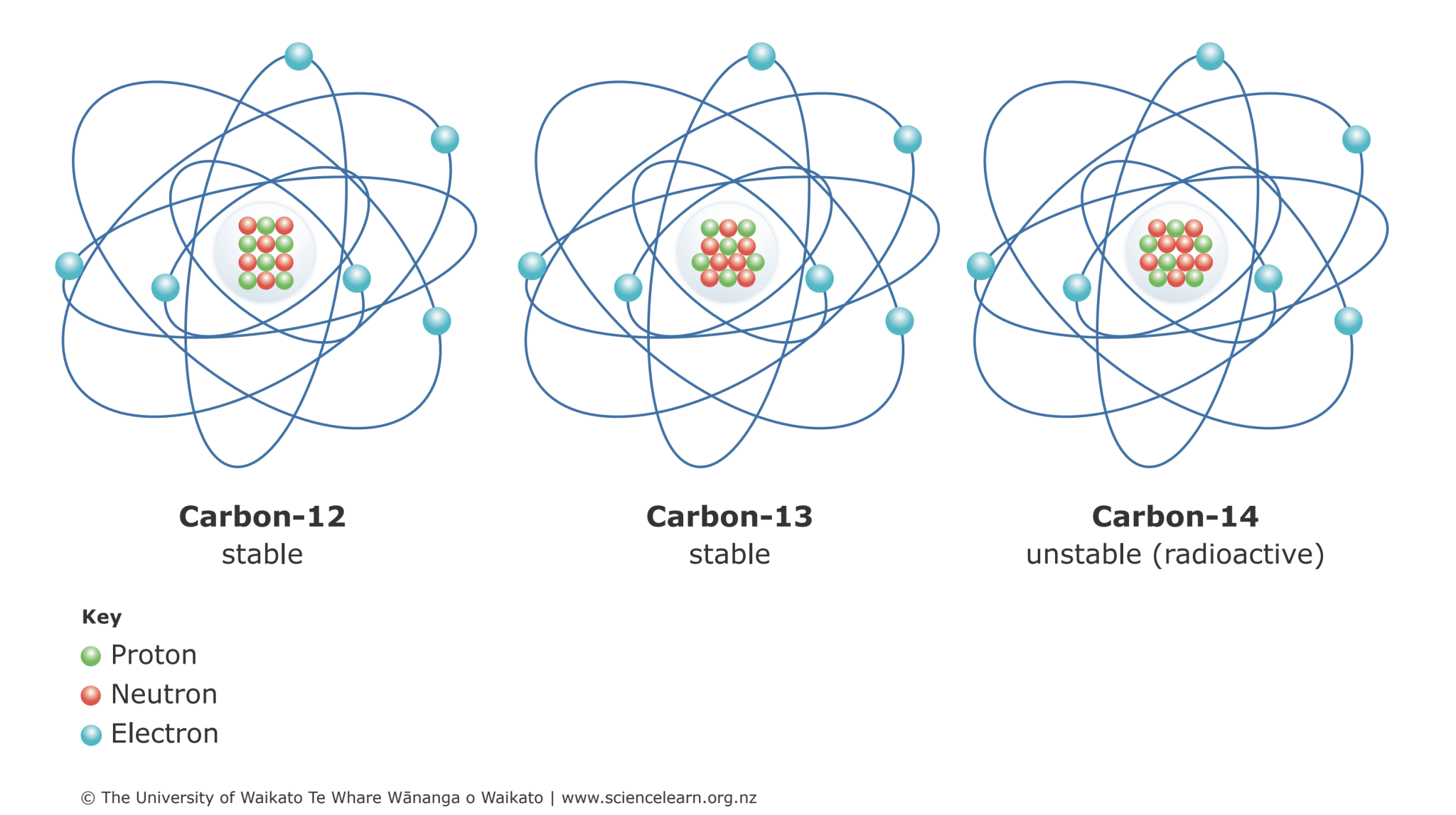
However, carbon has 13 more unstable isotopes, from carbon-8 to carbon-21. However, except for one, their half-life does not exceed a few minutes. This means that they are highly radioactive but cannot exist for long. Therefore, it is impossible to encounter them outside of a laboratory.
However, carbon-14 is a real gift for scientists. Its half-life is 5,700 years. It is radioactive, but not very strongly. What is important is that it is well preserved in organic remains and decays just fast enough to be used to date events that occurred between 2,000 and 200,000 years ago. In other words, they tell us about our own history.
Other elements also have many isotopes with long half-lives. Scientists are carefully studying chemical reactions in which some atoms of a substance lose or gain neutrons. In this case, by finding the corresponding isotopes somewhere, it is possible to learn about events that occurred a long time ago and far away.
An island of stability
There is also an interesting mystery associated with isotopes. As the atomic numbers of elements in the periodic table increase, so does the average number of neutrons per proton in their various elements.
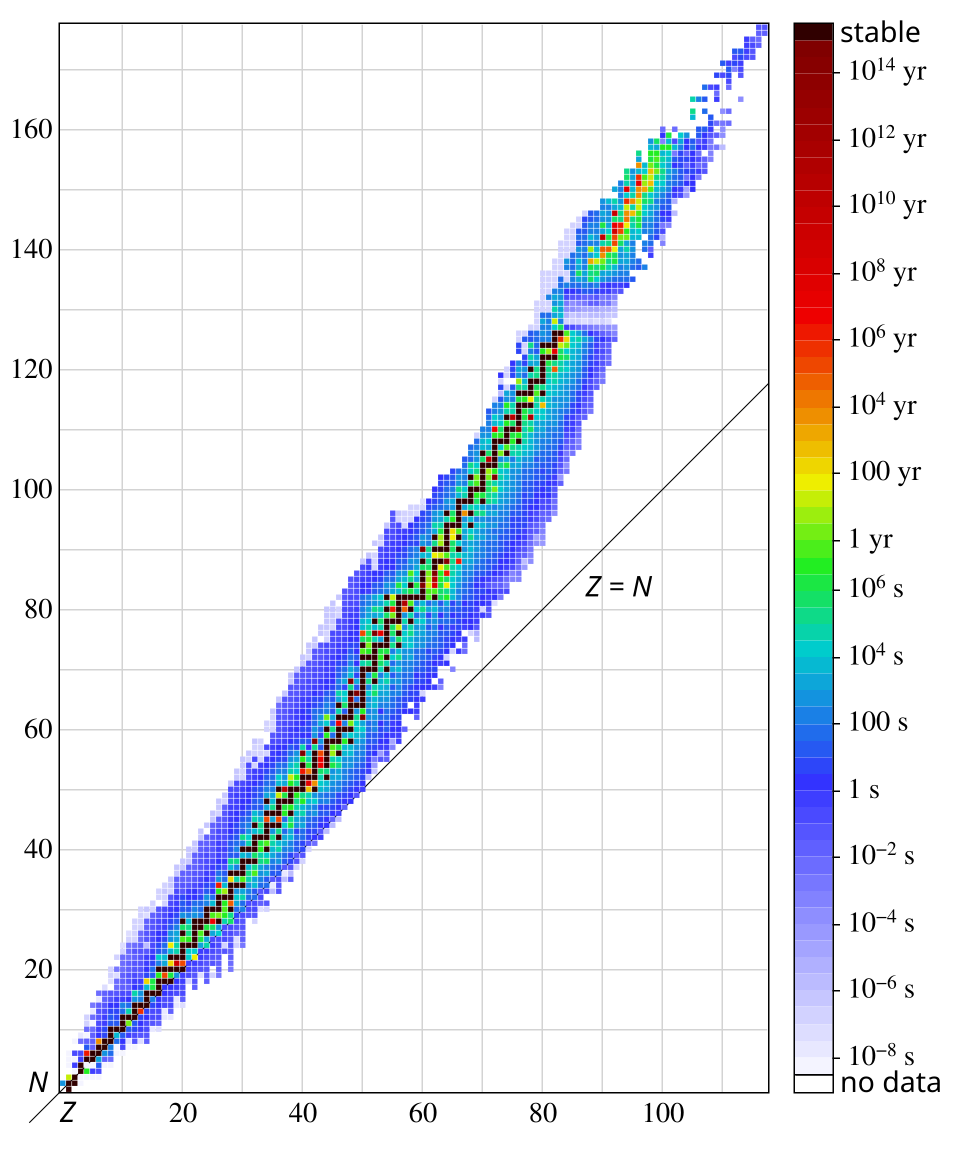
Ultimately, this means that after uranium, elements not only lack stable isotopes but also have unstable isotopes with increasingly short half-lives. For example, the most stable isotope of plutonium has a half-life of 80.8 million years, while the next one, americium, has a half-life of 7,370 years.
Next are several more elements whose most stable isotopes have half-lives of several hundred or thousands of years, but in einsteinium (element 99), the most stable isotope has a half-life of only 20 days. Then this value is expressed in seconds and microseconds.
However, scientists believe that somewhere further on, there may be a so-called “island of stability” – an area where half-lives begin to increase. Theoretically, this could happen because of something called magic numbers: a certain number of electrons that corresponds to a filled orbital, and around element 114, this situation should have occurred. And in flerovium, the half-lives are indeed longer than in the elements before it. However, they are still measured in seconds. Nevertheless, scientists are not giving up and continue to search for new isotopes, dreaming of finding a true “island of stability.”

