

Japan is deploying hypersonic missile tracking technology in space. The HTV-X1 cargo spacecraft launched on an H3 rocket from Tanegashima and successfully docked with the ISS. After completing its mission, HTV-X1 will be used as a space experimental platform to test infrared sensors capable of detecting the heat signature of a hypersonic glide vehicle (HGV) maneuvering at speeds exceeding Mach 5 and difficult to detect with conventional radar.
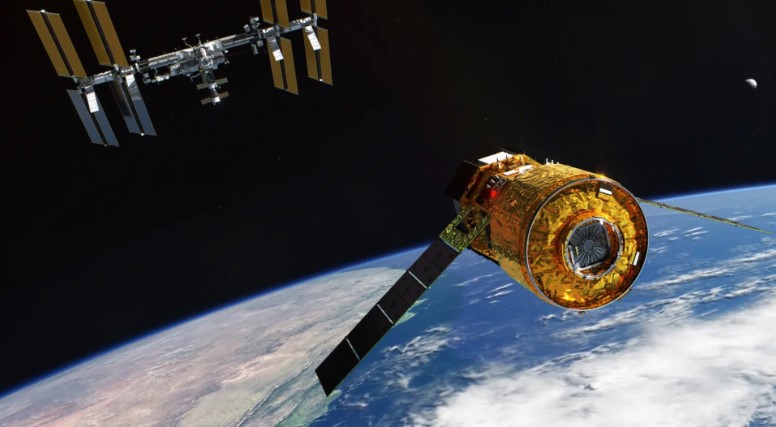
The idea is simple: sensors in orbit have clearer lines of sight and more time to warn, while data processing algorithms can distinguish targets from background noise. The project is officially included in the Japanese Ministry of Defense budget: $24.6 million has been allocated to demonstrate the capabilities of satellite detection/tracking of HGVs and to test infrared sensors in space on the platform of the new HTV-X cargo spacecraft. This is part of strengthening capabilities in the space environment, including the establishment of satellite constellations for situational awareness.
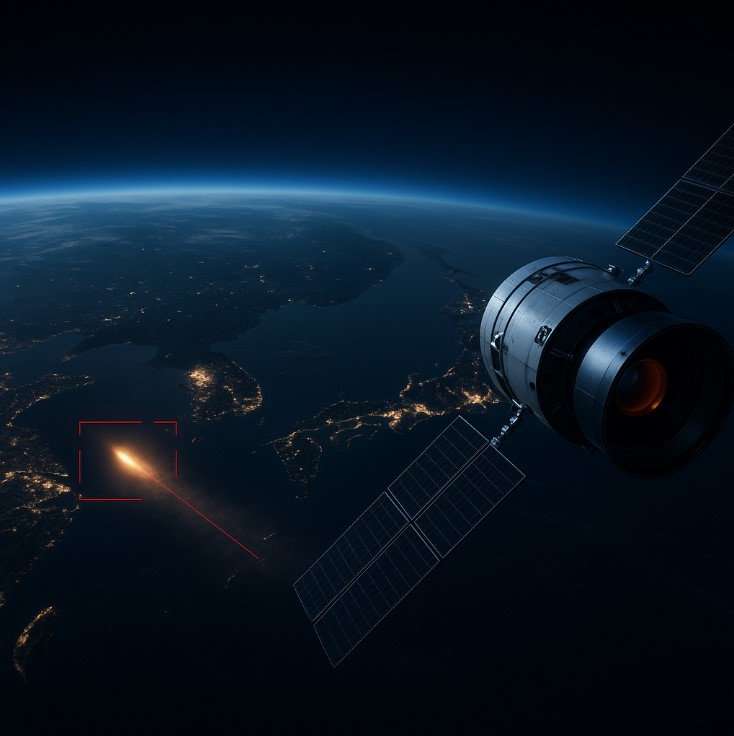
How does it work? In simple terms, it is a space heat detector. A satellite infrared sensor constantly observes the Earth and records everything that heats up significantly during flight. A hypersonic rocket or glider traveling at speeds of Mach 5+ heats up its fairing surfaces and the air around it — to an IR camera, this looks like a red-hot spark against a dark background. The algorithms compare frames one by one, filter out clouds, fires, and sun halos, find a small, fast-moving hot target, and calculate its trajectory. The secret lies in a combination of three things: a view from above (longer observation time and no radio horizon), thermal windows in the atmosphere where heat is clearly visible, and fast data processing/AI that instantly distinguishes a missile from the background. Multiple sensors from different orbits together provide more accurate guidance and early warning.
Why is this useful? Highly sensitive IR sensors and rapid track processing methods are also useful in science: improving the detection of meteors and re-entries of spacecraft into the atmosphere, tracking space debris, thermal monitoring of eruptions and forest fires, as well as test modes for future astronomical IR missions. Using HTV-X as an orbital laboratory accelerates the TRL improvement of such instruments and algorithms, which directly benefits space research.
Want to quickly understand what KAB is and why there is so much talk about “ jet” versions? We explain in simple terms how KABs differ from missiles, how navigation and amplifiers work, what their actual range and accuracy are, what affects their price, and what countermeasures really work. Read a detailed analysis in our article “Rocket-propelled guided bombs — Russia’s cheap missiles: how they work and why they are dangerous.”

