

The super-heavy Space Launch System rocket is what allows the Orion spacecraft not only to go into space, but also to fly to the Moon. The history of their creation was not easy, and the design deserves to be described in detail.
The dream of returning to the Moon
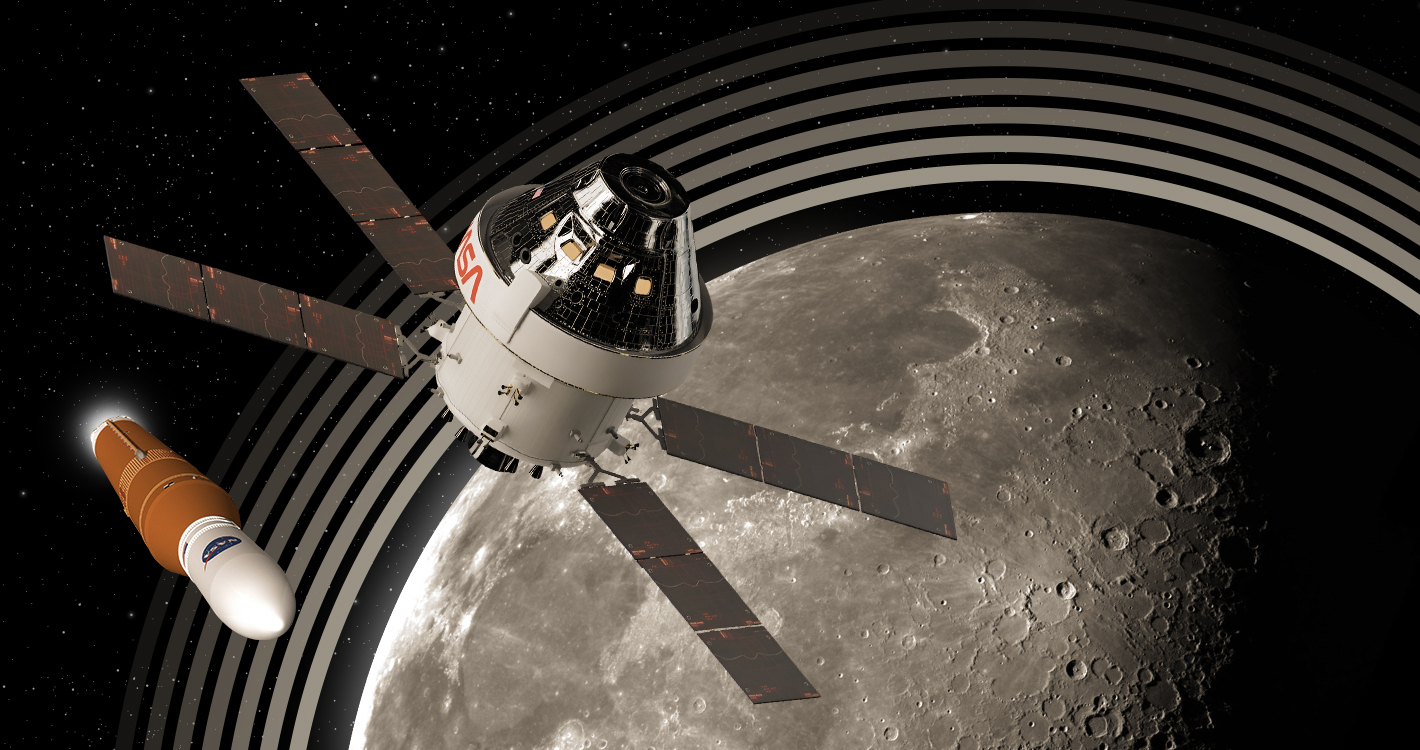
Soon, four astronauts may embark on a journey around the Moon as part of the Artemis II mission. If this happens, it will be a great success not only for the United States but for all of humanity. But most of all, it will be a success for the NASA engineers who created the super-heavy Space Launch System rocket and the Orion spacecraft, as well as their European colleagues who developed the service module for the latter.
All these devices are true works of engineering genius. However, their path to space flight was extremely difficult and long. It all began in 2003, when the Columbia shuttle disaster forced the US to reconsider how and by what means it planned to explore space in the future. At that time, the main focus was on returning to the Moon. However, the giant Saturn-V rocket, which was used to send the Orion spacecraft there in the 1960s and 1970s, was no longer available, and it proved impossible to resume its production.
The response to this was the Constellation program, adopted in 2004. It involved the creation of two rockets: Ares I and Ares V. The first was larger and two-stage. With a height of 94 m, it was designed to carry 25.4 tons of payload into orbit. It was intended to carry the Orion manned spacecraft together with the Altair landing module.
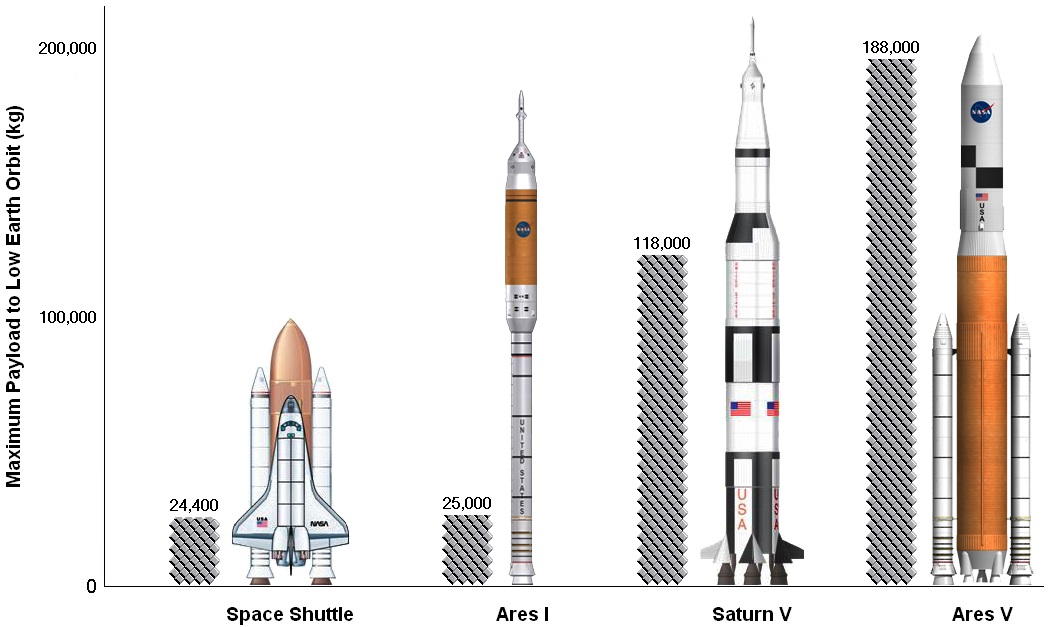
Ares V was supposed to be smaller, also two-stage, and was supposed to launch the Orion upper stage into orbit. In space, both parts were supposed to connect and fly to the Moon. Outwardly, everything looked quite realistic, but in 2010, it was acknowledged that the program had failed due to underfunding, and of all the above, only the Orion spacecraft is at some stage of readiness.
Constellation was canceled, but plans to return to the Moon were not abandoned. In 2011, a new program called Artemis was adopted, in which only the Orion spacecraft remained from Constellation. Only now, instead of two large rockets, one giant rocket was to send it to the Moon. It was named the Space Launch System, or SLS.
SLS design
The Space Launch System is a three-stage rocket that can exist in several variants, depending on the tasks assigned to it. For the first three missions carried out under the Artemis program, a smaller variant called Block 1 is used. Its height is 98 m, and its mass when fueled is 2,610 tons.
The “zero” stage in SLS is a pair of solid-fuel boosters. They are a modification of similar accelerators that were used for the Space Shuttle program. However, while the space shuttle used four segments connected in series, each with a diameter of 3.71 m, the lunar rocket has five, so each booster is actually over 50 m long.
A mixture of ammonium perchlorate, aluminum, and iron oxide enclosed within plastic is used as fuel. Segments containing this material burn out sequentially, propelling the SLS away from Earth and providing its initial acceleration.
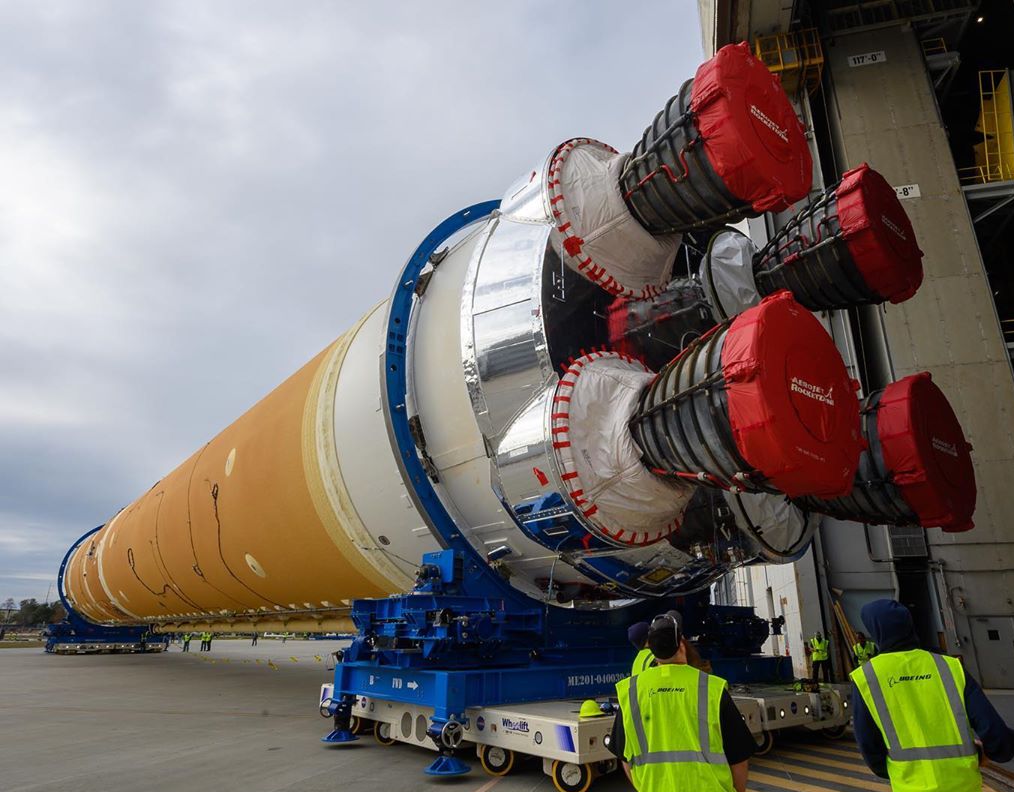
After they have worked and separated, the main stage begins to operate. It is a huge metal tank with a diameter of 8.4 meters and a height of 65 meters. For comparison, this is equivalent to two nine-story residential buildings placed one on top of the other. Inside are tanks of liquid hydrogen and liquid oxygen, a cryogenic unit for their maintenance, and four RS-25 engines at the bottom. These were also used on the shuttle.
The upper stage of the rocket is called the Interim Cryogenic Propulsion Stage (ICPS). It is essentially a modified upper stage of the Delta III rocket.
It is 8.8 m high and 4 m in diameter. Inside are tanks containing liquid hydrogen and liquid oxygen. There is only one engine. In the Artemis I mission, it was an RL10B-2. In the second mission, it was replaced with a more powerful RL10C-2. The engine is designed for launch in the upper layers of the atmosphere.
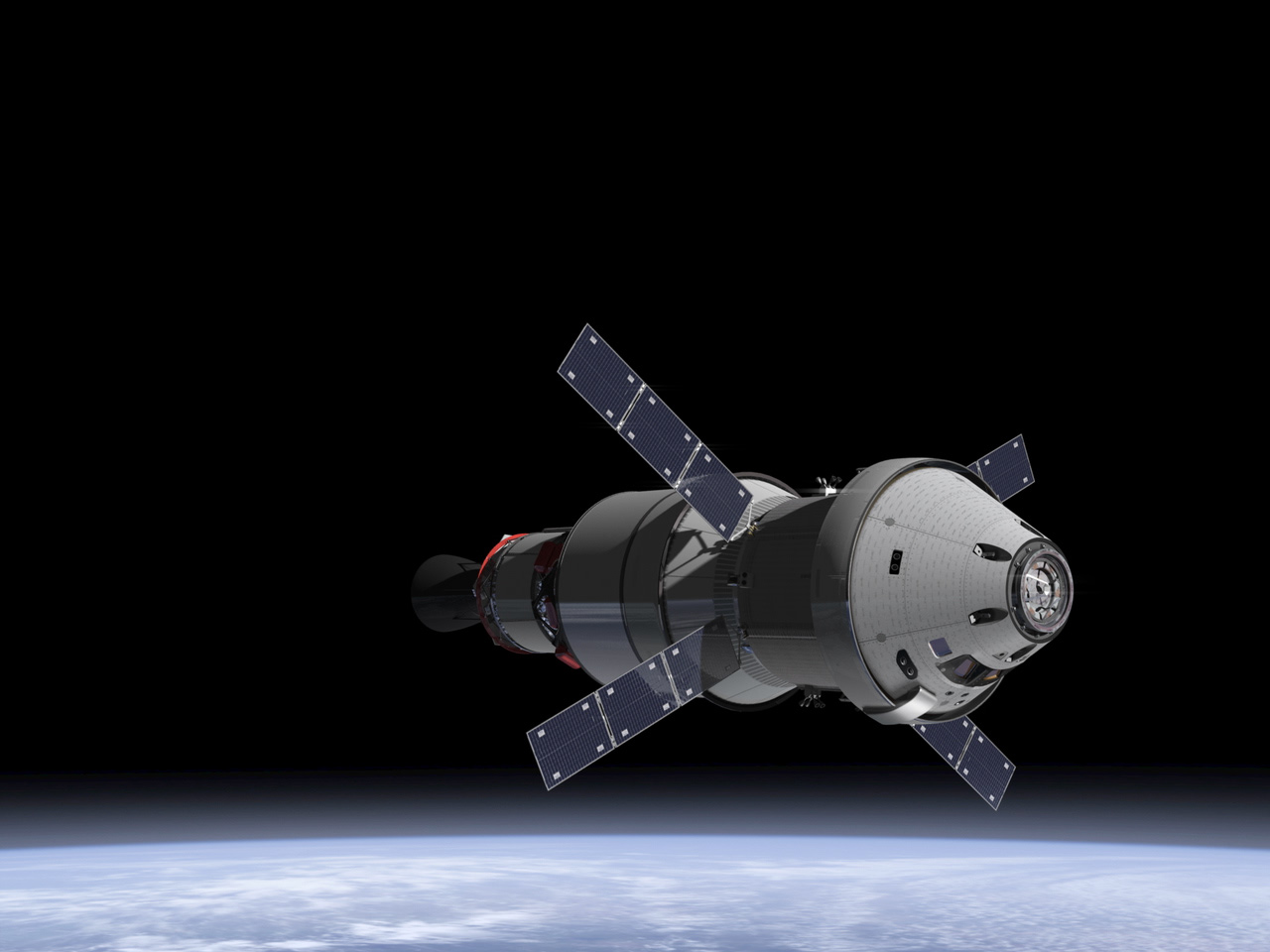
Above all, this is the Orion spacecraft. It consists of two parts: a command module built by Lockheed Martin and a service module built in Europe by Airbus Defence and Space.
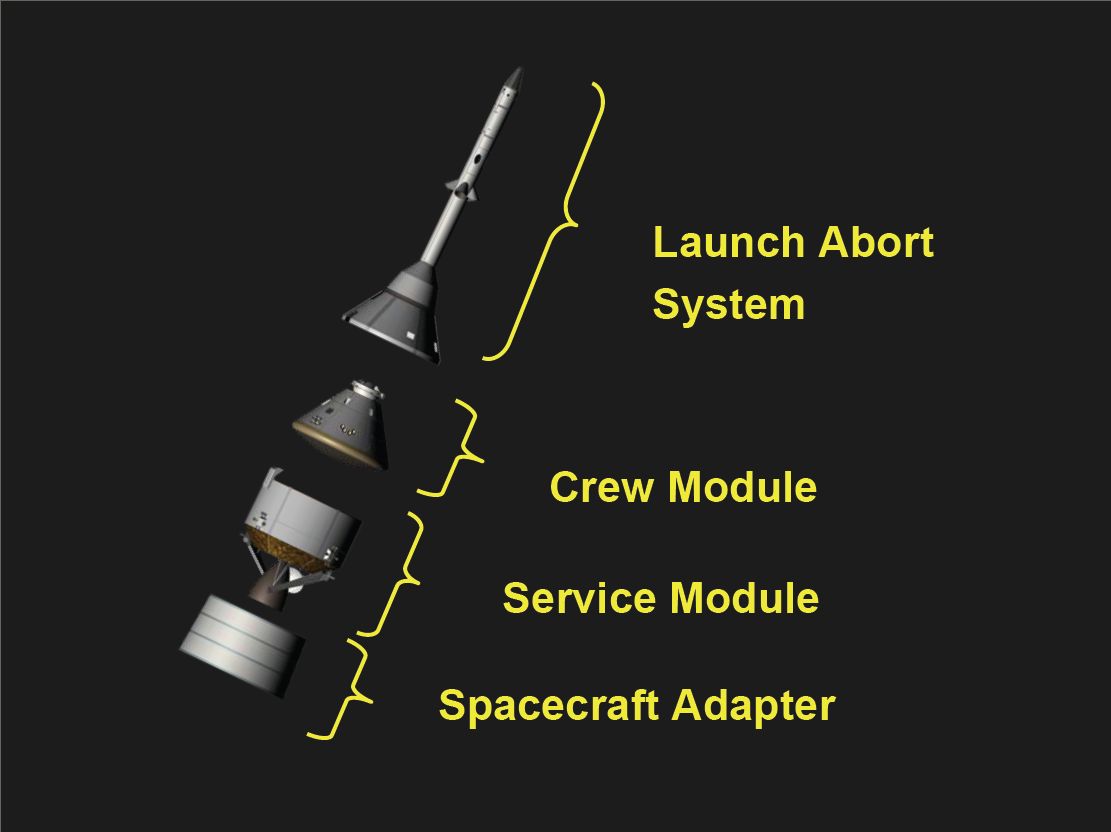
The command module is a truncated cone with a diameter of 5.03 m and a height of 3.3 m. Inside, there is room for a crew of four astronauts, control systems, and scientific equipment. Attached to the bottom is a service module in the form of a cylinder with a diameter of 4 m and a height of 4 m. Its main purpose is to propel the spacecraft through space and supply its systems with electricity. To do this, it is equipped with an engine, its own fuel tanks, and folding solar panels. All of this is an adaptation of the systems used on the European ATV cargo spacecraft.
The long road to space
As you can easily see, most of the SLS components are not new, but are already used versions. This was done to make its creation cheaper and faster.
However, it was still not possible to complete everything on time. The Artemis program was supposed to begin with an unmanned flight around the Moon. Initially, it was planned that this would happen in 2017. But as time went on, it became increasingly clear that there would simply not be enough time to quickly assemble and test this most complex puzzle in the world.
Many components could not even be manufactured on time. Therefore, the Artemis I mission dates kept getting pushed back. First to 2019, then to 2020. At the same time, the rest of the plans had to be changed as well.
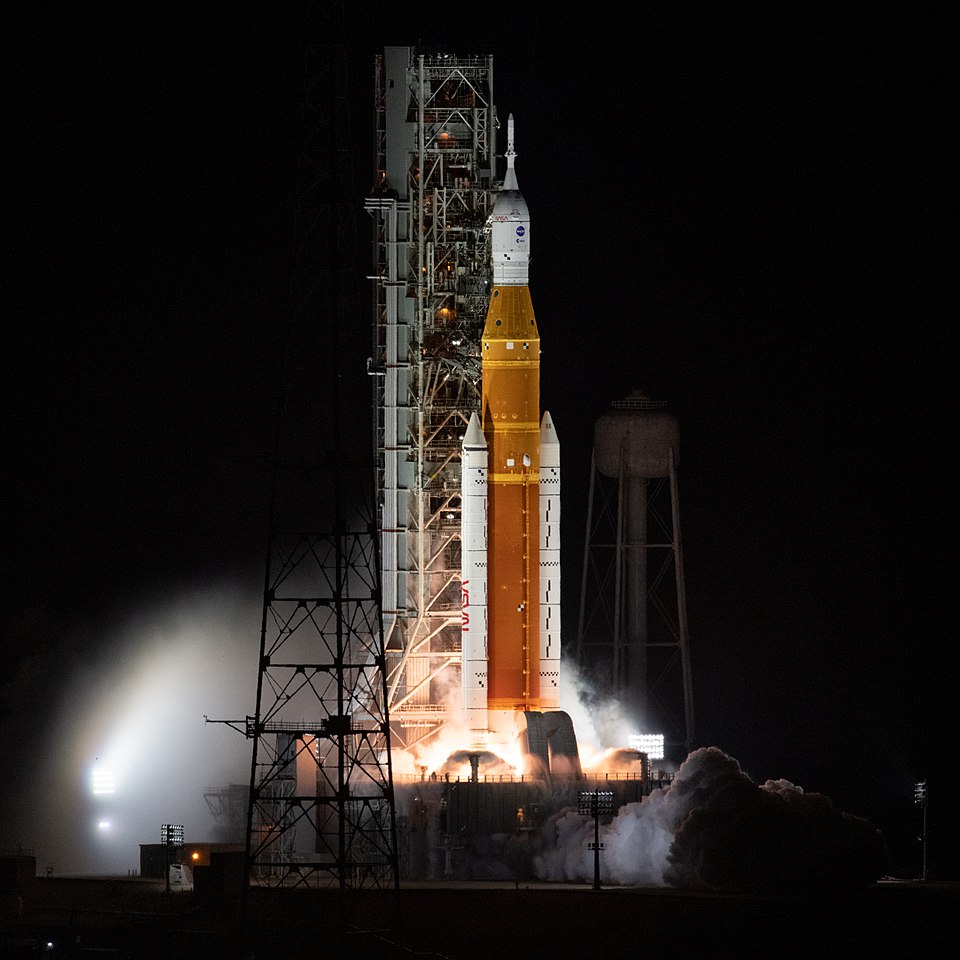
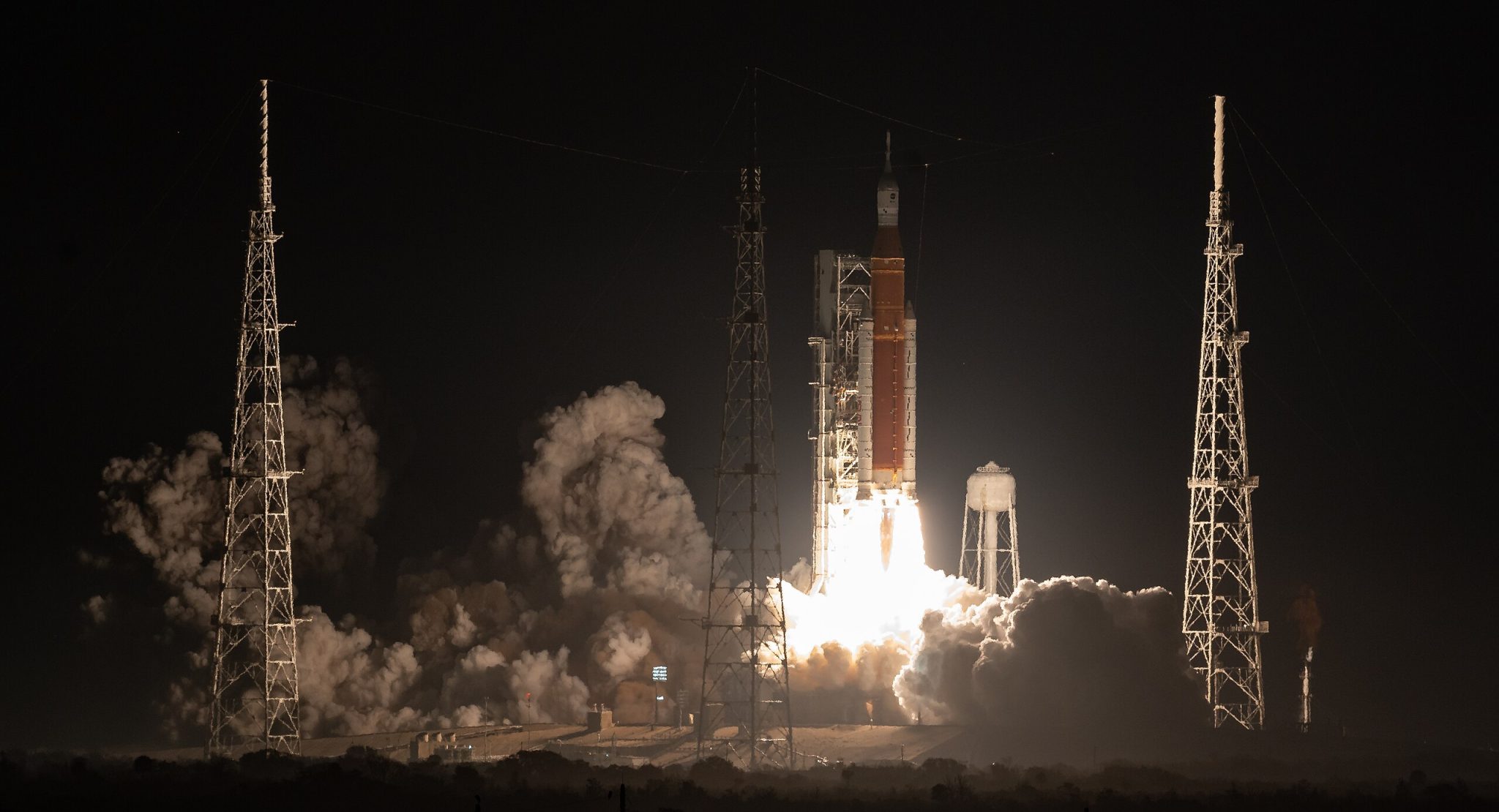
The SLS and Orion, designed for the Artemis I mission, were first transported to the launch pad in March 2022. But that was not the end of the horror that accompanied its first launch. The rocket was refueled several times, a launch simulation was conducted, technical problems were found, and it was returned to the assembly shop. This continued until November, when it was finally launched.
Overall, the Artemis I mission was successful in terms of the flight to the Moon itself. There were problems with the spacecraft that were launched together with Orion as an additional payload, but this did not interfere with the plans to explore the Moon.
Much more attention was paid to the Orion spacecraft, which, upon returning to Earth, was found to have problems with its heat shield, designed to protect it from atmospheric friction. The problem was not unsolvable, but it did require attention.
But then it turned out that while the first SLS was being prepared for launch, the schematics used to manufacture its components were compromised, and many things had to be redesigned. Therefore, it will not be possible to launch the second mission as quickly as possible.
At one point, delays in the Artemis II launch schedule led to fears that it would never happen. Criticism reached its peak in February 2025, when Elon Musk himself joined in. He stated that the SLS should be recognized as a non-viable concept and that instead of the Moon, it should fly to Mars.

For a while, it seemed as if this idea would prevail. But then Starship, which was supposed to fly to the fourth planet from the Sun, suffered several accidents, and the technical staff of the Artemis project managed to solve the problem and complete the assembly of the rocket.
And now it has been delivered to the launch pad. This means that at least this launch will not be canceled due to technical problems. Another issue is that the procedure that took everyone involved six months of work and a lot of nerves in 2022 may now begin. Before launch, engineers must ensure that everything is working properly, and to do this, they will fuel the rocket and carry out all the procedures that will take place during launch. Except for the actual ignition of the engines.
Everything may work as it should the first time around. However, it is more likely that it will not. And then, the rocket will have to be brought back, and the launch postponed. After all, no one promised that it would be easy. But the rocket will only fly when everyone is confident that the technology is working as it should and the people on board are safe.

