

The American lunar program of the 1960s is usually seen as an example of how the technologies developed as part of it gave a big boost to the whole US economy. But new research shows that these processes were actually way more complicated.
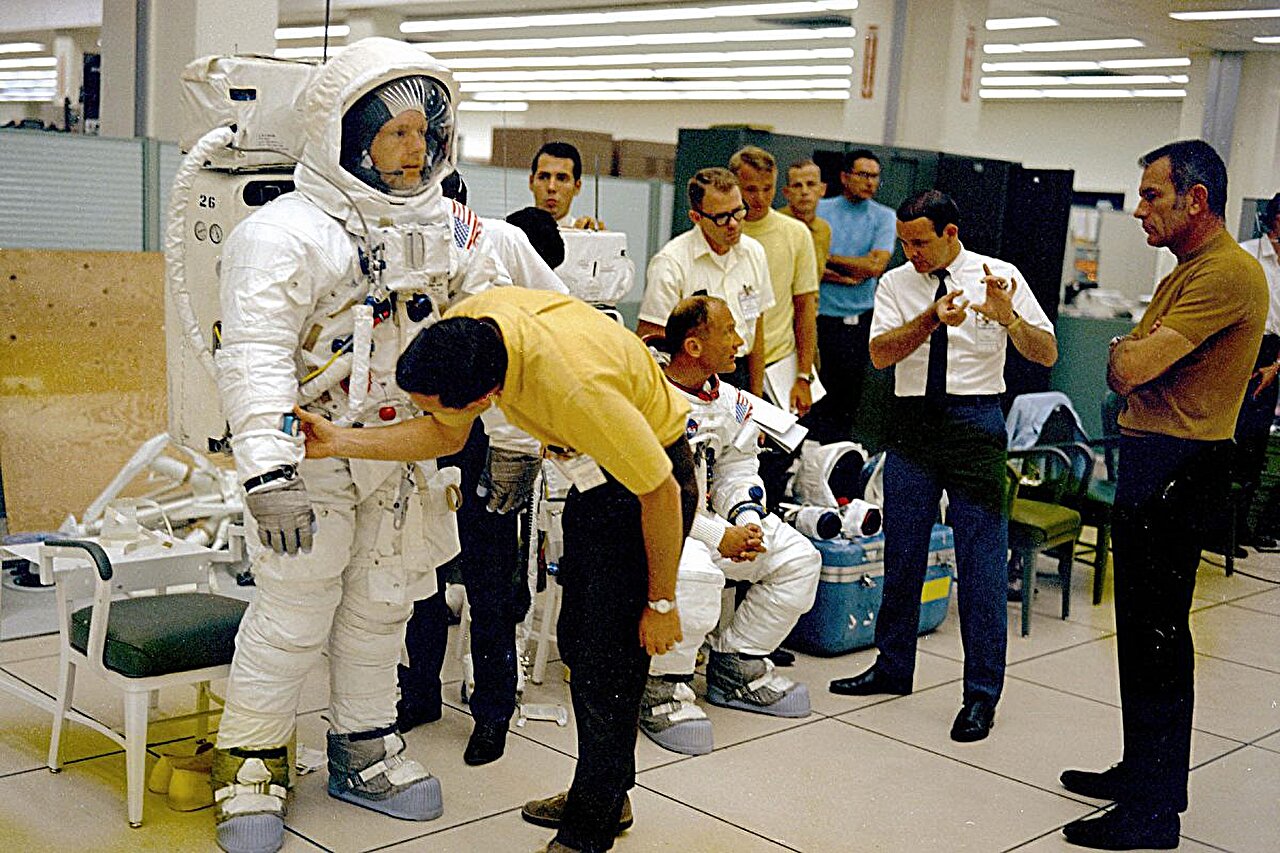
New research by economists
Recent research by a professor of economics at Florida State University offers a new perspective on the long-held belief that the space race of the 1950s and 1960s was the main driver of broad economic growth in the United States.
Shawn Kantor, Professor Emeritus of Economic Prosperity and Individual Opportunity at Charles Hilton Jr. University, and co-author Alexander Whalley of the University of Calgary investigated whether large-scale government investment in development during the Cold War led to the spread of technological effects, often cited by contemporary policymakers.
Rather than denying the historical significance of the space race, the study offers a nuanced interpretation, emphasizing its role as a targeted, mission-oriented industrial policy rather than as a catalyst for innovation in the economy as a whole.
“For decades, the iconic moonshot mission has been treated as a kind of economic miracle,” Kantor said. “Our research shows a more nuanced story—one where the geopolitical benefits were real, but the economic outcomes were far more targeted and mission-driven than people often assume.”
A new approach to assessing the economic results of the space race
A study published in the American Economic Review finds insufficient evidence that increased federal spending on research and development during the space race led to broad economic growth in the country. Instead, Kantor and Whalley show that NASA contracts mainly benefited specific industries and regions and had almost no broader technological impact.
To isolate the causal impact of NASA spending, the researchers developed a new empirical strategy using declassified CIA documents. By analyzing intelligence reports on Soviet space technology during the Cold War, Kantor and Whalley identified which industries and counties in the United States were already specializing in space research before NASA began its major spending.
This approach allowed researchers to separate new growth driven by the space program from growth reflecting existing technological capabilities. Based on Soviet estimates, the analysis captures demand related to the space industry, regardless of potentially biased NASA contracting decisions.
The conclusions of Kantor and Whalley complicate the familiar view of the space race as a “boost” for the national economy. Although companies that received contracts from NASA experienced significant growth in employment and capital investment, often in the range of 35% to 50%, these effects were very localized, and there was little evidence of spillover to other industries in the same county or neighboring regions.
Reassessing the impact of the space race on the US economy
“Landing Americans on the moon and returning them home safely was an extraordinary engineering achievement, but it didn’t generate the kind of widespread productivity gains people often associate with major technological breakthroughs,” Kantor said.
According to this interpretation, Kantor and Whalley calculated that during the space race, the fiscal multiplier was approximately 0.3. In practice, this means that for every dollar spent by the federal government on the space program, local economic output increased by approximately $0.30, which is significantly lower than the multiplier of 0.6 to 0.8 typically associated with general government spending.
The study also shows that although companies expanded and hired more workers, these changes did not lead to significant productivity growth.
Ultimately, Kantor and Whalley argue that the space race functioned as applied industrial policy. Rather than generating fundamental new scientific knowledge, the program accelerated and consolidated existing technologies to achieve a specific geopolitical goal.
For modern politicians advocating new “lunar” programs in areas such as climate change or medicine, Kantor suggests a more balanced approach. He emphasizes that the value of such initiatives should be assessed primarily on whether they achieve their stated goals, rather than on expectations of automatic and widespread economic effects.
According to phys.org

