

The dream of interplanetary travel is becoming a reality. For decades, humanity has dreamed of flying to other planets, in particular, landing on Mars. Today, this dream is gradually becoming a reality thanks to new reusable spacecraft. However, interplanetary travel requires not only a powerful rocket to launch the spacecraft beyond Earth, but also a space home for the crew that can sustain human life and health for many months on the road. During a long flight, a number of complex tasks will have to be solved: maintaining the physical health of astronauts in zero gravity, protecting them from cosmic radiation, providing adequate nutrition, comfortable sleep, psychological well-being, and the ability to perform various work and scientific tasks. All this requires careful planning of the ship’s interior space.
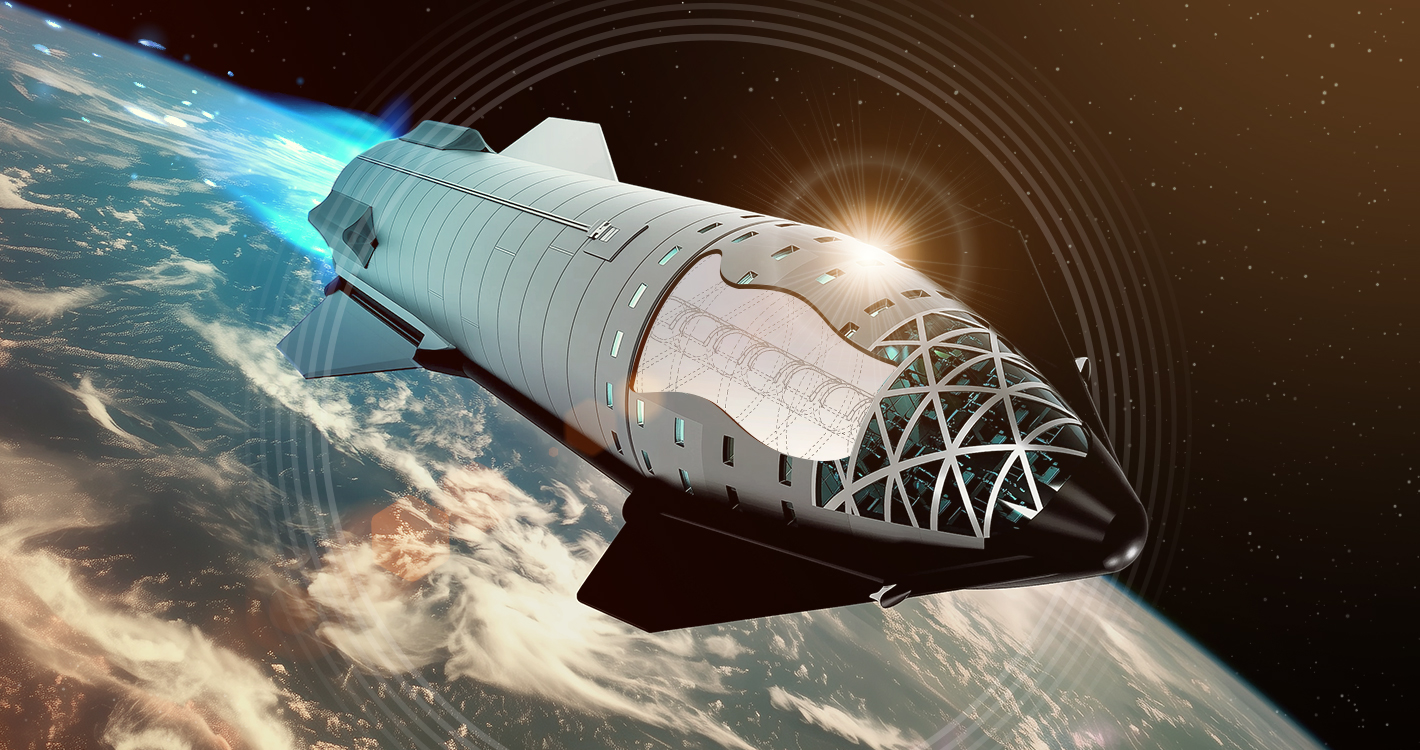
One example of an interplanetary spacecraft concept is SpaceX’s Starship project, a reusable spacecraft planned for flights to Mars. According to Elon Musk, Starship will be able to carry up to 100 people in the future. Such a large crew could not be accommodated in a traditional capsule – a ship with a significant internal volume and several levels (decks) is required. We propose dividing the living space of Starship into seven decks, conditionally designated from A (lower) to G (upper). Each deck has its own functions and is equipped for specific needs – from technical compartments and gyms to cabins for rest and observation windows. Below, we will look at what these decks might look like using the geometry of Starship as an example and what engineering solutions are behind their purpose, focusing on a trip to Mars. This will help us understand what a real interplanetary spacecraft should be like, capable of transporting people to another planet and becoming their home for the duration of the flight.
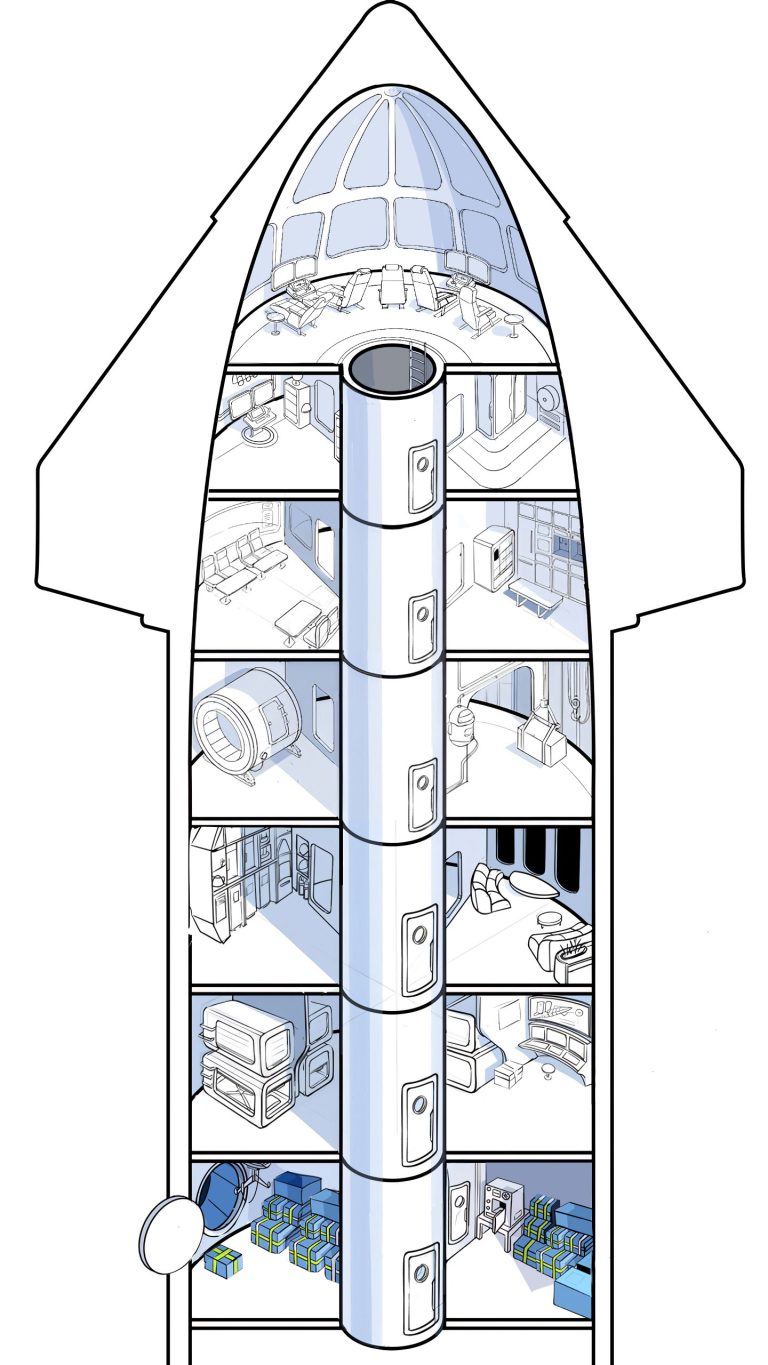
In the center of such a ship, there is a vertical elevator/airlock shaft common to all decks – a sealed structure with a diameter of ~1.2-1.5 m with sectional hatches and interdeck insulation rings. It combines a crew elevator (personnel/small cargo) and a rapid sealing unit: each level has an airlock module with its own pressure sensor, smoke/CO2 detector, and electromechanical gates that instantly isolate the emergency section. The elevator has a dual power supply (main + emergency battery), a manual winch for lowering/raising without power, and a parallel stationary ladderway for EVA evacuation.
At the bottom, the shaft connects to the two-chamber airlock of deck A (via a transition hatch) for quick access to open space or cargo delivery; at the top, it connects to the F-G deck bridge for quick access by the commander and medical personnel. Interlocks prevent opposite doors from being opened when the pressure is different; a “red thread” indicator leads the shortest route to the shelter on deck D. Thus, the shaft is simultaneously a mobility artery, a safety barrier, and a backup evacuation route for the entire ship.
Deck A: Technical compartment and training
The lower deck is the core of logistics and in-flight services: it houses the main cargo compartment, a gym for daily workouts, a two-chamber exit hatch (EVA), storage rooms with work areas, a bathroom, and general safety systems. The layout is built around standardized mounting interfaces and safe movement of masses in zero gravity.
Cargo handling. A ceiling track hoist with a manipulator carriage and shock load limiter runs along the ceiling (item 1). The lifting mechanism operates in two modes: precise positioning (micro-speed for docking modules in guides) and logistics (fast movement with soft inertia damping). All slings and trolleys have self-locking carabiners, and the floor/walls are equipped with tie-down points and handrails.
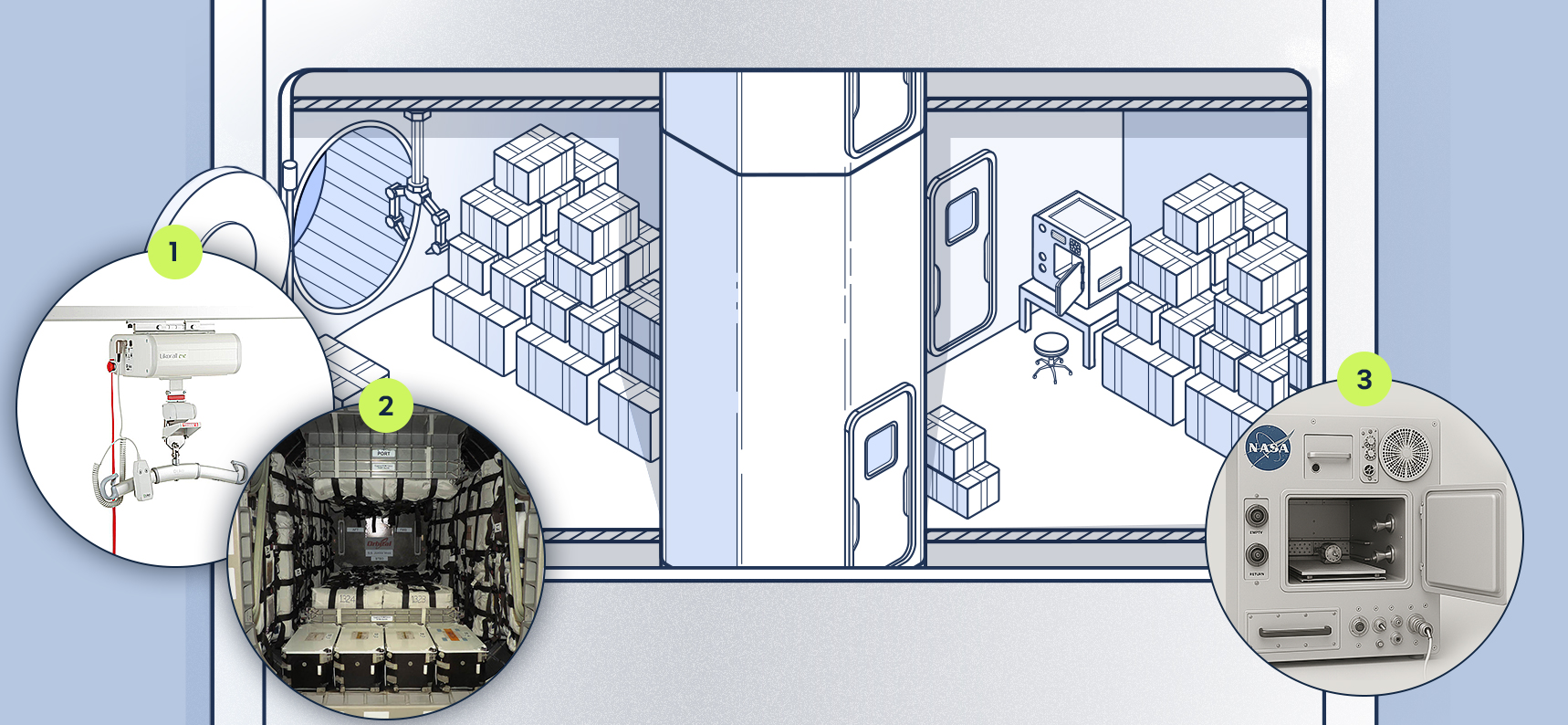
Unified cargo architecture. Modular rack systems with CBM-compatible nodes (Common Berthing Mechanism) and COTS fasteners for quick equipment rearrangement are mounted along the perimeter of the compartment (item 2). Each equipment location has a standard grid of mounting points, power and data buses, as well as swivel/sliding guides with fasteners for ISS-standard CTB or SpaceX Dragon-style containers. This allows for:
- quickly reconfigure cargo to accommodate changing mission requirements;
- ensure compatibility with ground and orbital containers;
- minimize free masses during turbulent sections of the flight profile (takeoff/braking).
Workshop and repair. A compact work area is set up on the deck for the rapid manufacture/repair of small parts: a portable FDM/PEEK 3D printer (for high-strength thermoplastics) and a filament drying oven with humidity and temperature control (item 3). Nearby is a workbench with clamping systems, a set of calibrated tools, testers, a manual vacuum press, and particle/vapor extraction filtration modules. Above the hot zone – local ventilation with spark-proof fans, floor and walls – easily removable panels for access to communication lines.
EVA airlock complex. Integrated two-chamber airlock: an antechamber for preparation and an outer chamber with a transition hatch. The rapid evacuation/transfer system provides a cycle of 60 kPa → 0 kPa in ≤ 5 minutes, with air recovery into onboard cylinders. Along the wall are four SpaceX Extravehicular Suit 2.0 spacesuits on individual docking frames: battery shelves, thermoregulation modules, glove and boot heating/drying, and interfaces for pre-launch checks (communication lines, pressure, tightness). The antechamber serves as a “mudroom” for dust/particles: there are sticky mats, removable filters, and containers for temporary isolation of samples.
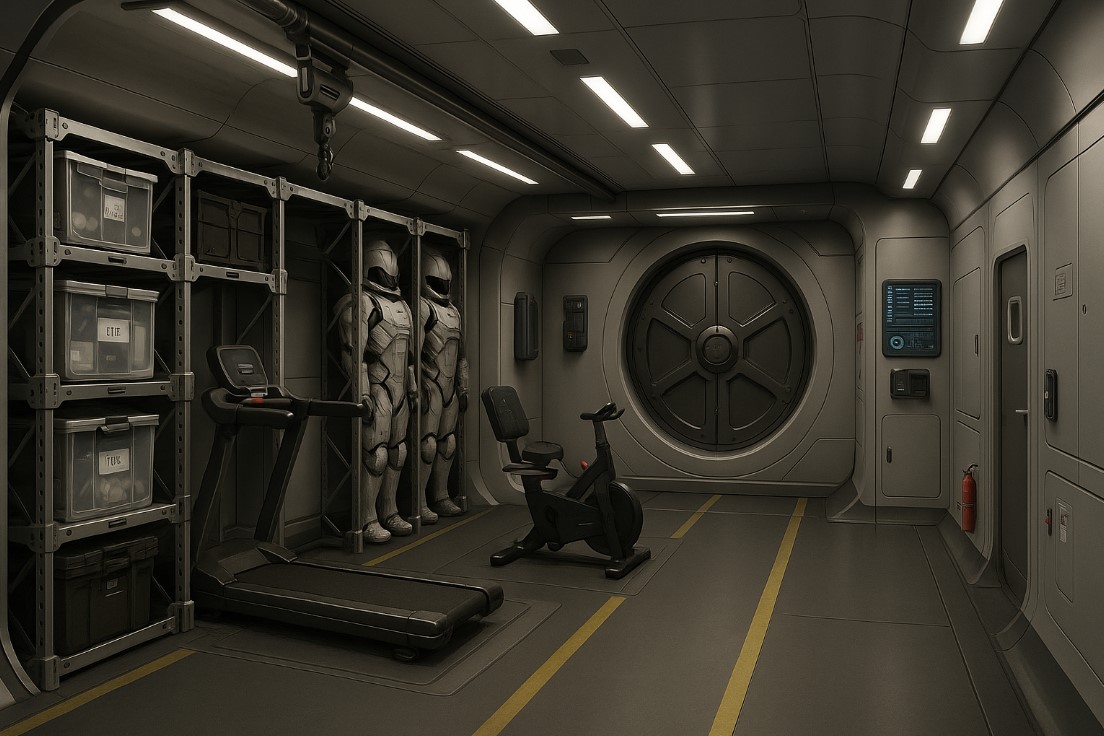
Gym. Why is a gym needed in a spacecraft? The fact is that weightlessness has a detrimental effect on human muscles and bones – without exercise, they gradually atrophy. Therefore, astronauts on the ISS exercise for at least ~2 hours a day. A similar training regime is planned for interplanetary expeditions. Some of the exercise equipment will be mounted on the walls or ceiling, since in zero gravity, the concepts of “up” and “down” are rather arbitrary, and the entire available surface area of the room can be used effectively. Of course, creating artificial gravity on the ship would be the simplest solution, but rotating the entire ship or a separate module to generate centrifugal force is extremely difficult from an engineering point of view. Therefore, physical health must be maintained using traditional methods – regular exercise and medical monitoring of the crew members.
A comprehensive safety system is in place throughout the ship, consisting of portable carbon dioxide and lithium fire extinguishers, individual protective helmets (item 6), smoke/CO/CO2 detectors, and medical evacuation kits (AED, CLS first aid kit) on each deck.
Thus, Deck A combines the functions of a warehouse, service workshop, training center, and operational port for external work with a focus on safety, rapid reconfiguration, and compatibility with current orbital standards.
Decks B and C: crew quarters
The next two levels – decks B and C – are reserved for crew quarters. Each crew member needs a personal space where they can sleep, relax, and be alone. Imagine a ship carrying dozens of people (the Starship concept envisages up to 100 passengers) – how can they all be accommodated comfortably? The solution is as follows: decks B and C contain approximately 25 compact cabins on each level, with each cabin accommodating two people. In total, this is ~50 cabins on two levels, which is enough for 100 people. Of course, the first expeditions to Mars will be much less crowded (about 6–10 astronauts), so they won’t need that many rooms. In the case of a small crew, the interior layout can be simplified: only a few modular cabins can be installed, or sleeping places can be arranged in an open space – for example, sleeping bags can be attached to the walls, as is practiced on the ISS. On the International Space Station, each astronaut sleeps in a special sleeping bag attached to the wall in a small individual capsule room. A similar approach can be applied to an interplanetary spacecraft: in zero gravity, bulky beds or large sleeping spaces are not necessary, so even a small capsule or compartment with a sleeping bag covered by a curtain will provide sufficient comfort for rest. The main thing is privacy and the ability to sleep normally, which is extremely important for psychological well-being during a long journey.
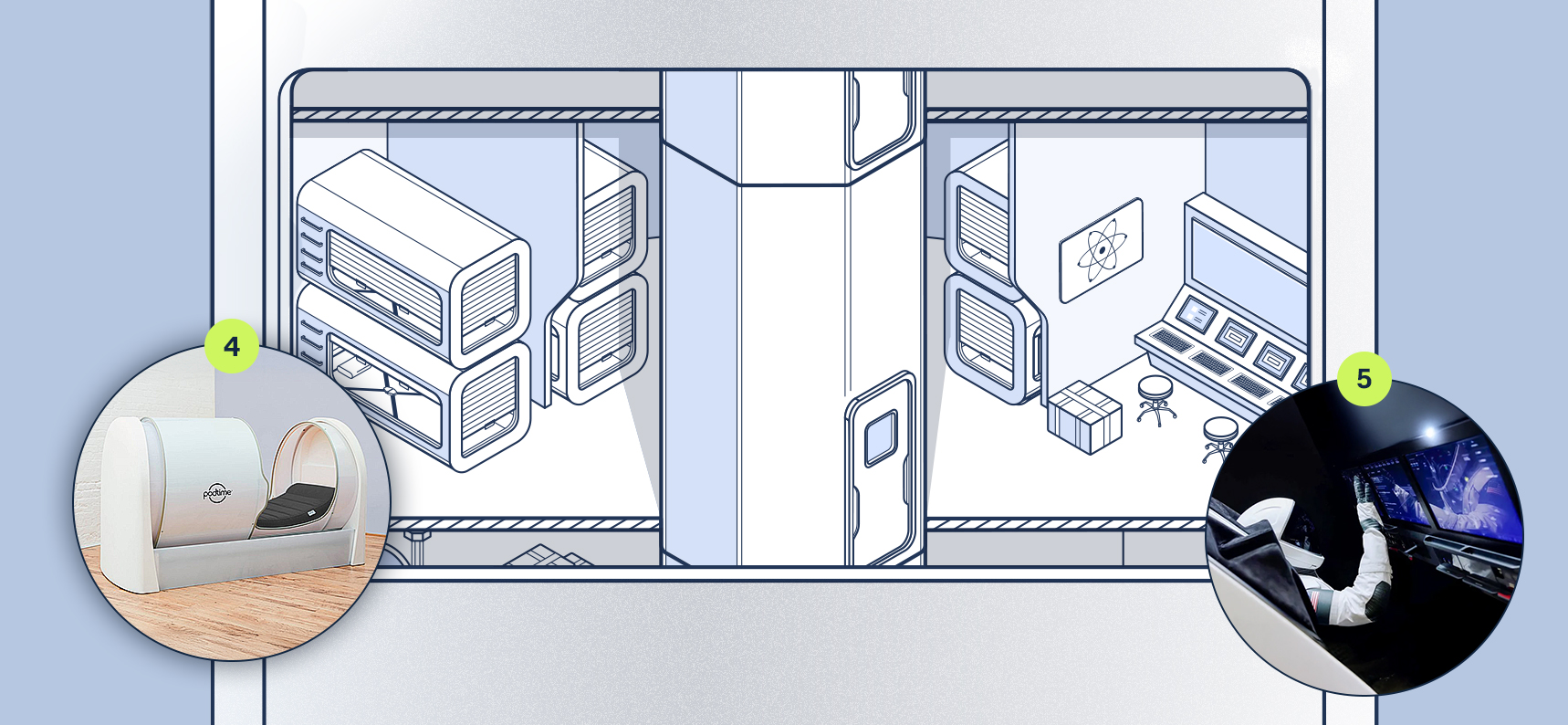
Cabin layout. Along the sides are modular cabins (item 4) with movable partitions; each has a curtain, individual lighting (CCT 2700-6500 K with circadian scenarios), sound-absorbing panels, and personal cubbies with locks. Ventilation is organized “upward–exhaust / downward–supply” to avoid CO2 pockets in zero gravity; the floor/wall frames have guides for quick conversion of the section into a medical station or additional sleeping places.
Crew Display Panel information stands (item 5). Every ~5 m in the corridor, there are 15″ shared access panels. They display:
- real-time telemetry of the environment (O2, CO2, pressure, humidity, temperature, volatile impurities);
- shift schedule, personal reminders (sleep, training, water/food intake);
- emergency instructions and evacuation routes with dynamic highlighting (SafePath), in case of alarm – automatic switch to EVA / Fire / Depressurization mode.
The panels feature NFC for quick authorization, tactile handrails, and PA/Call Medic buttons. At night, the interface switches to a low-brightness night mode.
Conclusion: Deck B combines private sleep, quick meals, and rapid communication – it is a place where the crew prepares for their watch, receives data on the ship’s condition, and maintains the social rhythm of the mission without losing peace and order.
Deck C complements the living area of Deck B: it houses quiet workstations for individual tasks, a small medical and amenity corner, as well as a galley and mess module. The layout is designed for low noise, a stable microclimate, and comfortable working conditions.
Compact galley. In the central “pocket” of the deck, there is a multifunctional unit for short breaks (item 7) and night shifts:
- regenerative water heater (energy savings through heat recovery from “gray” circuits);
- convection oven with microvent and crumb/aerosol catcher;
- 3-in-1 dispenser (room temperature water/hot water/drinks from concentrates with automatic consumption tracking);
- vacuum waste compactor (sealed cassettes, fill indicator, connection to waste line).
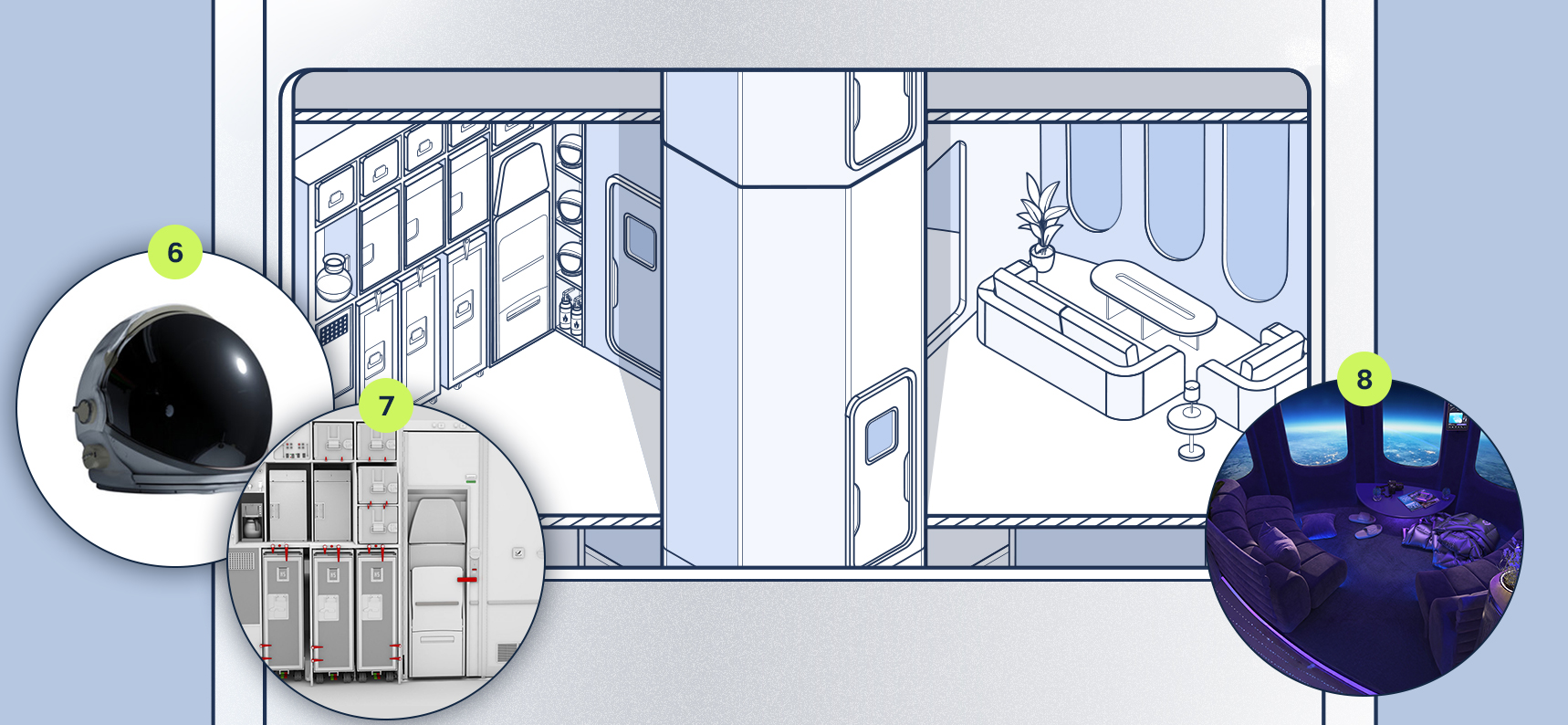
Lounge/mess module (item 8). A small but multi-purpose living room:
- leaf table with magnetic adhesive areas for holding packs and tools;
- soft-tie-seat chairs with pelvic/foot restraint straps and floating headrests; chairs can be quickly attached to floor rails or walls, depending on the task at hand;
- 50″ foldable AR/VR screen for briefings, telemedicine, joint communication sessions with Earth, and relaxation; in training mode, it displays breathing/stress management protocols, and in alarm mode, it displays checklists of actions for different scenarios;
- micro-perforated acoustics and a “night” noise profile allow for short meetings without disturbing neighboring cabins.
Crew Display Panels form the “digital backbone” of the deck: from any point, visibility to the nearest panel is ≤5 m. The galley and lounge are grouped in the center to minimize traffic near the cabins. All furniture and units are flight-safe (red lock indicators), and cable routes run under quick-release panels for service without disturbing private areas.
Deck C is a quiet living area that also serves as a nerve center for monitoring and a haven. Paired with Deck B, it creates a comfortable environment for rest and work, and paired with Deck D, it quickly adapts to the radiation conditions of the mission.
So, decks B and C are the living quarters with modular cabins and shared service areas within easy reach. This is where the crew sleeps, relaxes, holds briefings, and has quick meals between watches. The layout combines the privacy of the cabins with small but functional shared “islands” – information desks, a compact galley, and a lounge/mess module.
Deck D: radiation shelter and storage room
A powerful solar flare can send a lethal dose of radiation to the spacecraft in a matter of hours – if no protective measures are taken. Therefore, the interplanetary spacecraft design includes a special radiation bunker (storm shelter, item 9), where the crew can take refuge during a sudden surge in radiation levels. Deck D is reserved for such a protected compartment, which also serves as a storage room for supplies. The principle of protection is simple: the greater the mass between people and space, the lower the dose of radiation they will receive. The best natural shields are water and other water-containing substances, as well as a thick layer of dense material. Therefore, we decided to use the supplies available on board as a protective barrier. In this way, the protection system also serves as a resource: water is not only a radiation shield, but also a vital supply that is constantly replenished during the expedition.
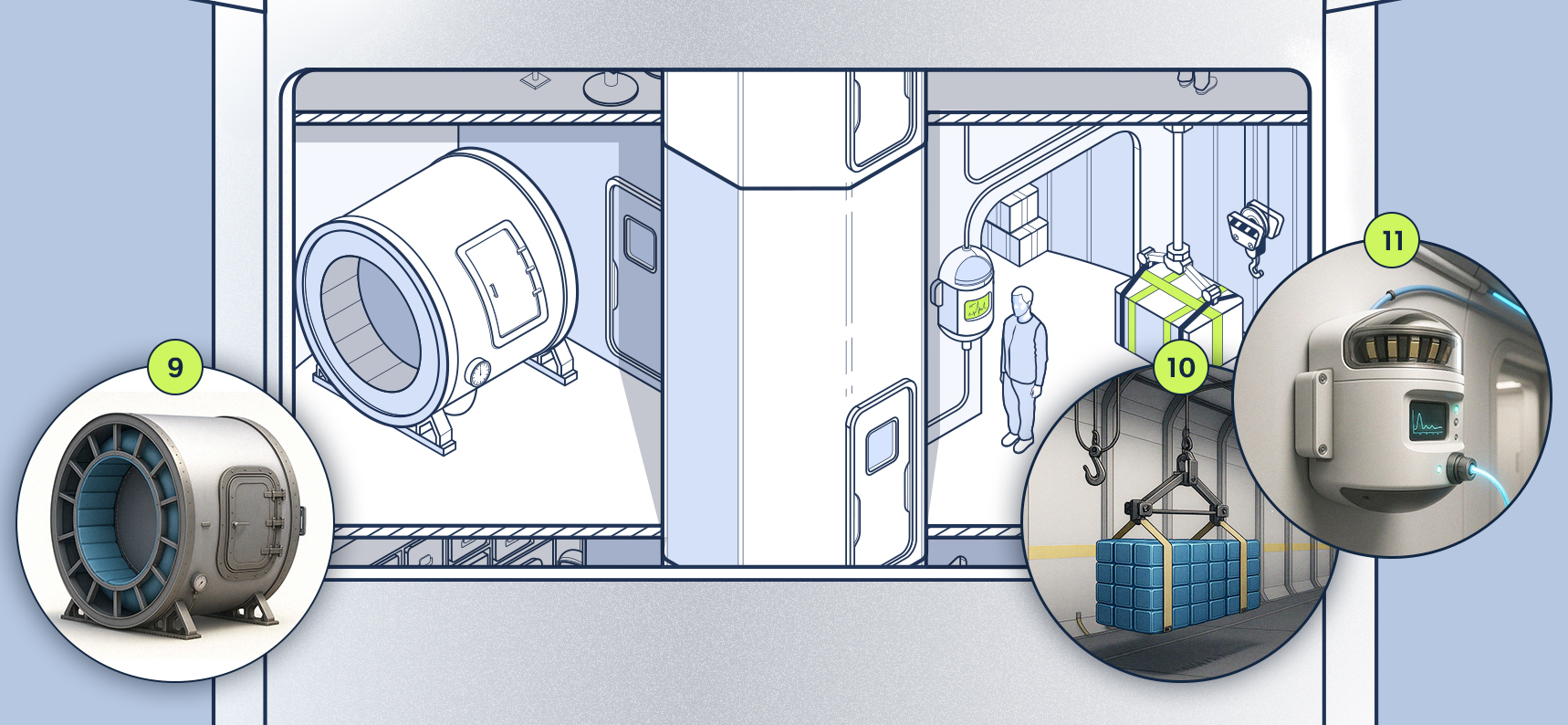
On normal days, Deck D serves as a storage room. It houses long-term food supplies, water reserves, oxygen tanks, spare parts, and other necessary items that do not require frequent access. Moreover, it is advisable to place some of the life support systems here as well: for example, the main water tanks, water and air purification and regeneration filters, waste processing systems, etc. All this massive equipment, located around the shelter, further enhances radiation protection. The Starship concept, for example, provides for a closed water supply system similar to the ISS, where even condensate and waste products are collected and purified.
A radiation sensor unit (item 10) with a panoramic scan (SREM class) is installed in the central node of the deck. Algorithms classify events (GCR, SEP, bursts) and construct heat maps of flux and dose rate.
Cargo is moved using cable suspension systems (item 11). A cable suspension line with self-braking trolleys is laid along the deck axis for transporting water cassettes (shielding screens) and luggage containers between storerooms.
In general, Deck D is a strategic level of the ship, which in everyday life serves as a storage room and technical floor, but in an emergency turns into a refuge from the formidable forces of space.
Deck E: galley and dining room
The next deck, E, is dedicated to something no human can survive without: food. For a flight lasting several months, it is necessary to consider not only food supplies, but also the process of preparing and eating food in zero gravity. Therefore, this level houses a galley (kitchen) and a place for the crew to eat together. The kitchen module includes appliances for heating and cooking food (item 14), food regeneration and rehydration systems (most space meals are stored in dry form and require the addition of water), as well as special containers for food storage.
Provisions on board are dispensed in measured doses – there may be automatic dispensers (item 13) from which astronauts will receive planned portions of food for each meal. This will help to use supplies rationally and avoid social problems, such as conflicts over someone’s excessive love of certain delicacies. The issue of waste needs to be considered separately: food packaging, used dishes, food waste – all this cannot simply be thrown overboard. Deck E is equipped with waste disposal and compact waste storage systems. For example, much of the waste can be compressed and stored until returning to Earth, or recycled (burned) in a special module, producing water or carbon dioxide for technical needs. The galley is also equipped with a sink and basic cleaning supplies, because in zero gravity, crumbs or drops can fly around, so it is necessary to maintain cleanliness.
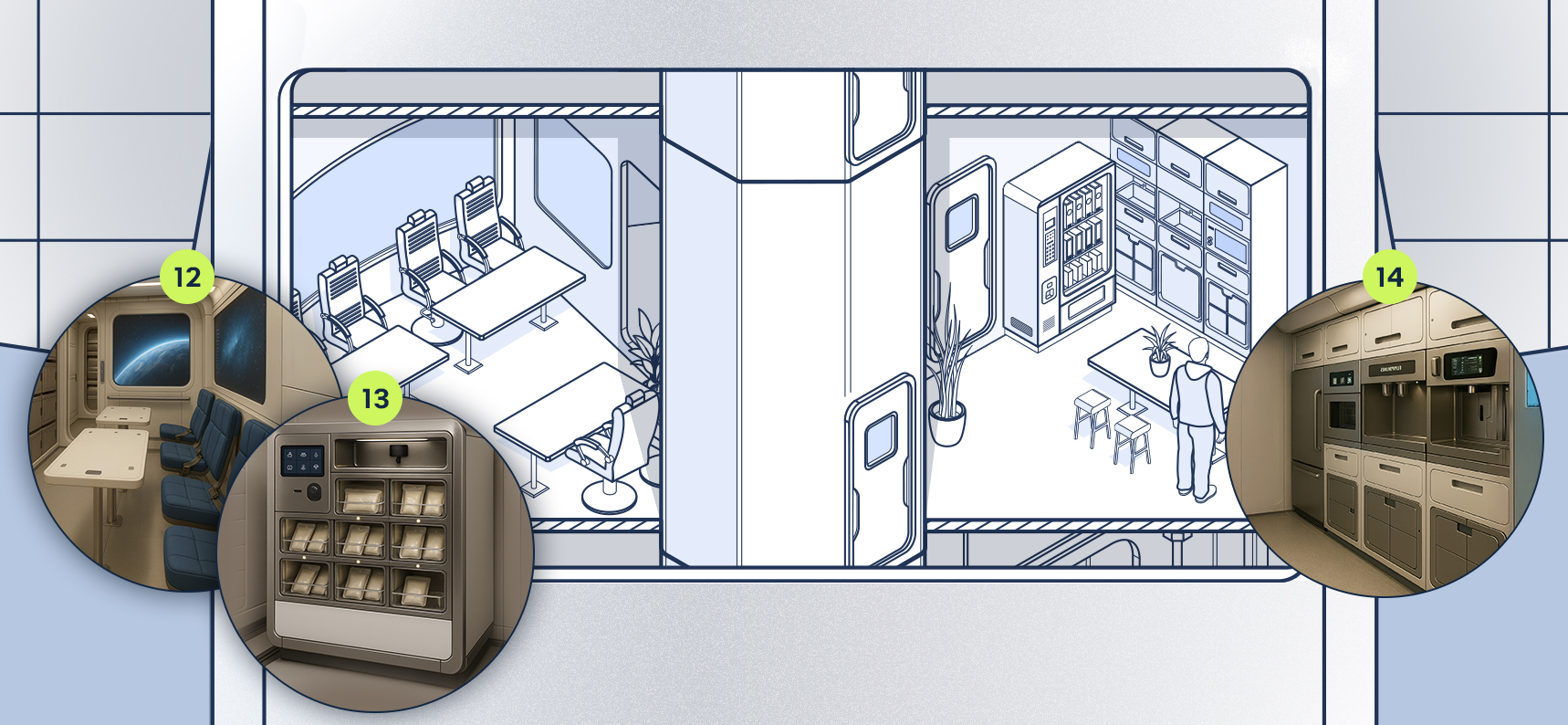
The dining area on a spacecraft is significantly different from that on Earth. In zero gravity, you cannot put a plate on the table – it will simply fly away. Therefore, instead of ordinary tables, there may be fixed racks or consoles (item 12) to which food containers can be attached, and the astronauts themselves are secured with their feet or straps so that they do not fly away during meals. On the ISS, for example, there is a special table with Velcro and rubber bands to secure food bags, as well as handrails for the feet. In a spacecraft on its way to Mars, this can be improved by making several vertical racks or half-height tables with fasteners around which a group of people can sit at the same time. In addition, it is advisable to install handrails and handles around the perimeter of the dining room so that people can move around and hold on while eating in zero gravity.
Shared meals must have a positive effect on the psychological climate of the mission: when the whole team gathers at the “table,” it supports the morale of the group. According to psychologists from the European Space Agency, enjoying special meals in the company of colleagues acts as an excellent morale booster, helping to relieve tension and bring the team together. Therefore, the spacious dining room on the ship will serve as the center of the crew’s social life. It is a place where astronauts can forget about the difficulties of the mission for a while and feel like ordinary people having dinner together. In addition to its purely utilitarian function of providing food, Deck E is of great importance for maintaining a normal psychological atmosphere during the journey.
Decks F and G: Command center and recreation area
Finally, the upper levels of the ship – decks F and G – can be called the observation and command area, as well as the main decision-making space. Elon Musk plans to install a large observation window in the bow (front) of Starship – essentially a “stained glass window to space.” It will be a huge window through which astronauts will be able to admire the views of space and their destination planet.
The design concept envisages the creation of a spacious lounge (living room) (item 15) with panoramic windows on decks F-G. Here, crew members will be able to relax during their off-duty hours: they will be able to sit comfortably, play board games (or rather, “wall games”), read a book, or watch a movie together on a large screen. Large monitors can be installed on the walls of the lounge for watching videos together, conducting video conferences with Earth, etc. Since this is the most spacious and aesthetically pleasing corner of the ship (with a beautiful view outside), it is here that it is appropriate to hold festive events – birthday celebrations, joint evenings, and psychological training sessions.
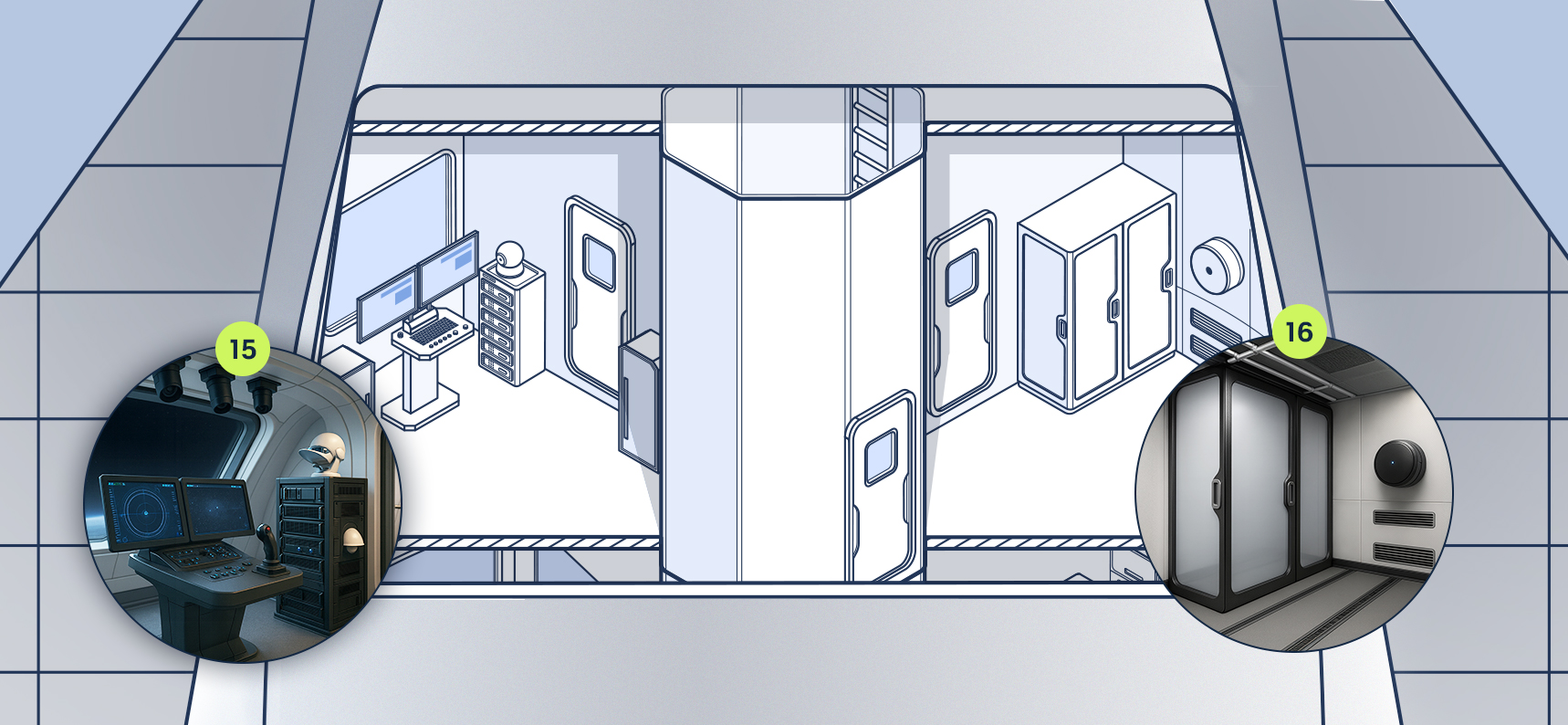
Another important function of the upper decks is the ship’s command center. Next to the observation window is the commander’s workstation (item 18) and the control panel, which is similar to an airplane cockpit. This is where navigation and radio communication are carried out: although most of the time the ship flies in automatic mode, during maneuvers to approach Mars or docking, as well as in unpredictable situations, the crew must be able to take control. Panoramic windows (item 17) will greatly facilitate visual orientation during manual control (for example, during landing on Mars, the commander will see the surface of the planet with his own eyes). Imagine this scene: the captain of the ship is sitting in a chair next to a huge porthole, and the red surface of Mars stretches out before him – such a sight takes the breath away even from the most experienced!
Decks F and G are designed to be very flexible in terms of layout. As in the living quarters, movable partitions (item 16) are used here, which can be installed as desired. The crew will decide for themselves how best to organize the space on the upper decks. You can leave the space open – then both levels will form a large hall with a high ceiling (across two decks), where the whole company can gather together. Or you can divide the area into several smaller rooms: for example, set aside a quiet corner for solitude or reading, allocate a small room for music lessons, or, say, for working with important scientific data that requires silence. This transformation of space for different needs will help avoid feelings of monotony and crampedness during long flights.
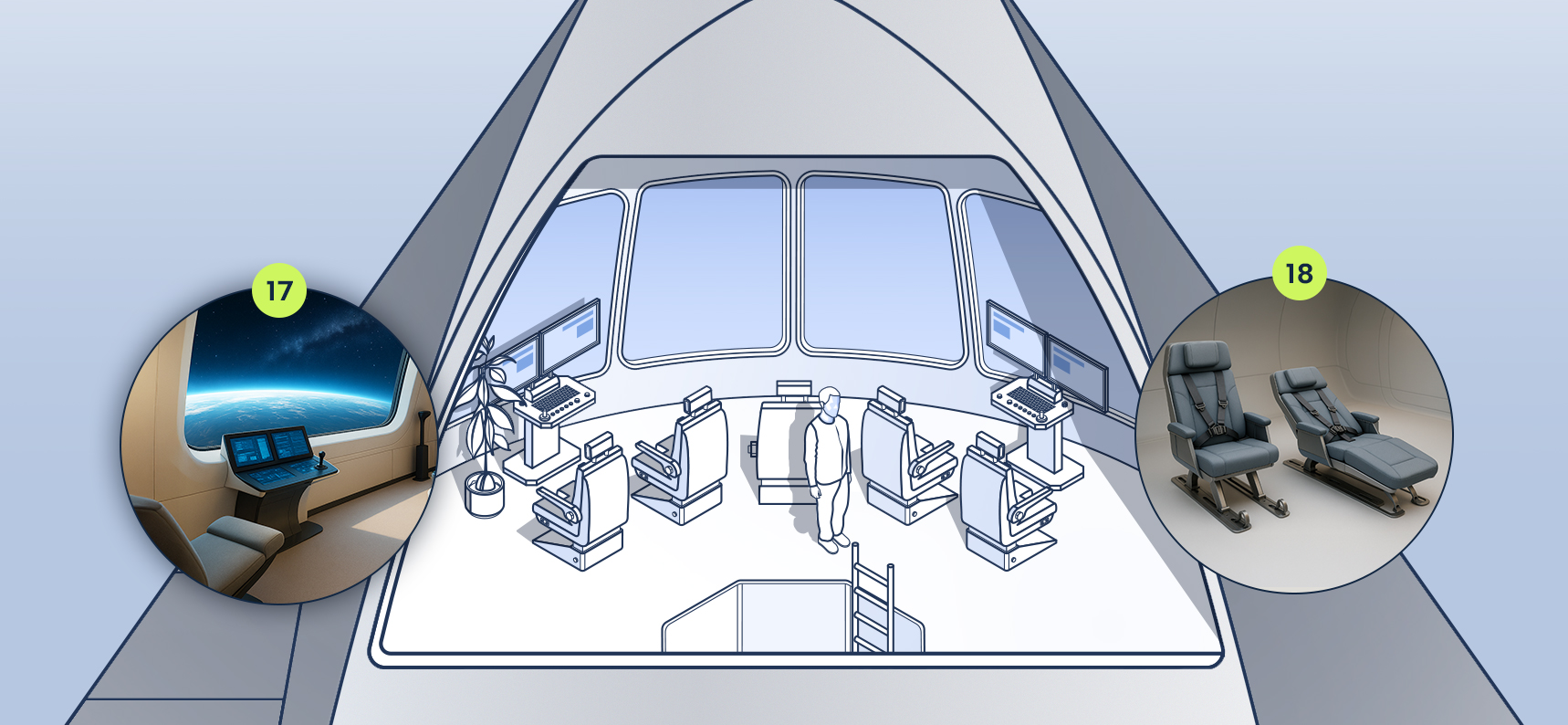
Deck F also features several bathrooms so that crew members do not have to go down to the lower levels unnecessarily. Through the observation porthole, both upper decks will have a magnificent view of space. When the ship is flying in deep interplanetary space, the opportunity to see Earth (a small blue disc in the distance) or the approaching Mars in the window is not only an emotional luxury but also an important psychological factor. Stargazing, scientific astronomy sessions for the crew, or simply relaxing during the “space sunset” – all this will become a reality thanks to the well-designed portholes on the upper levels of the ship.
It can be said that decks F-G are the living room of an interplanetary spacecraft, a space for maintaining mental health and team unity during a long expedition. Here, astronauts will spend their free time sharing their impressions, dreams, and plans for the future – already on the surface of distant Mars.
A spacecraft for flying to Mars
Having examined all levels of a hypothetical interplanetary spacecraft, we see that its design is a compromise between the harsh requirements of space travel and basic human needs. Each deck plays an important role in supporting the life and performance of the crew: from physical training and radiation protection to providing private space, food, and rest. This multi-deck approach allows for the efficient use of the large spacecraft’s volume and creates an environment suitable for a journey lasting many months. Of course, real projects may differ from the concept described – engineers are constantly refining details, modeling different scenarios, and testing new technologies. However, the general idea remains the same: a spacecraft for a flight to Mars must be an autonomous “ecosystem” where people can live and work with almost no dependence on Earth.
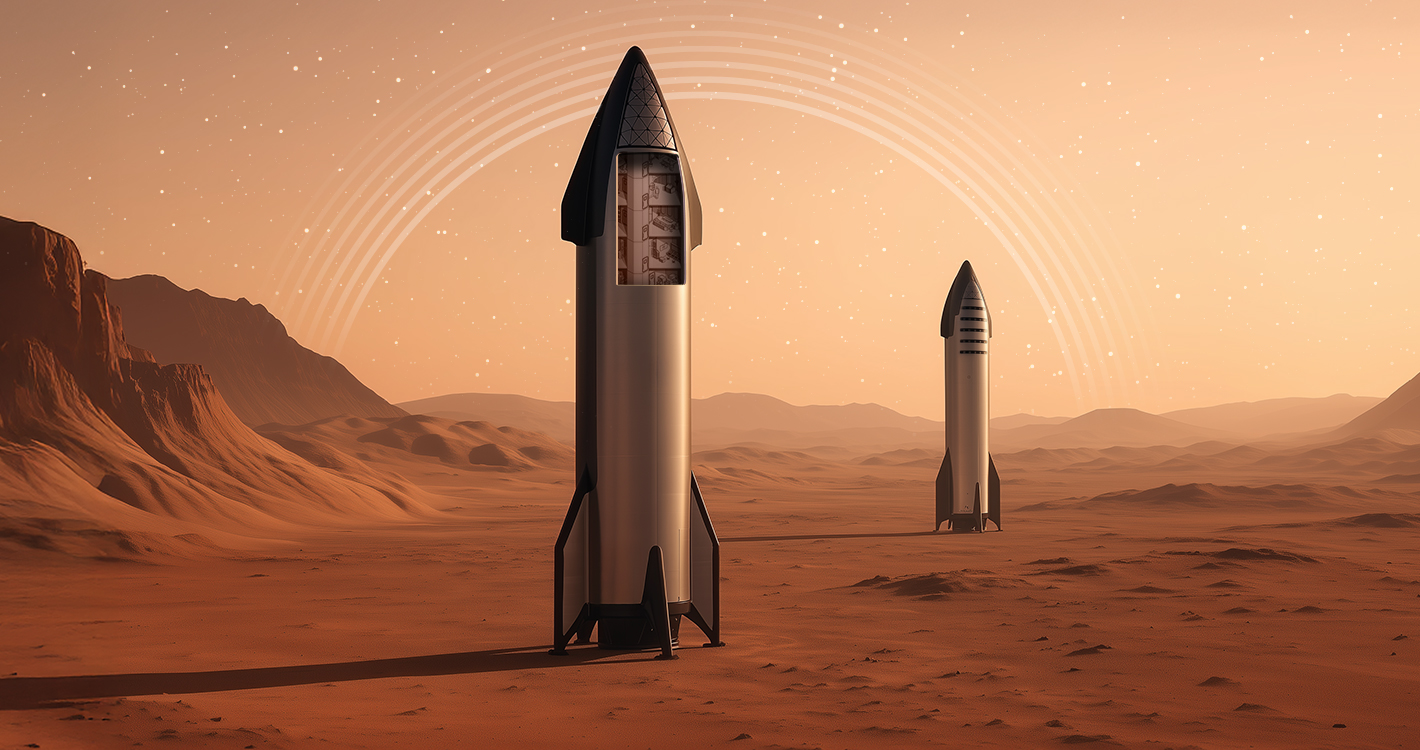
SpaceX is already actively working on Starship, a spacecraft that could usher in a new era of interplanetary travel. The first test launches of Starship have already taken place, and orbital flights and landing tests on Mars are expected in the coming years. NASA is also developing its own projects for long-distance expeditions, including modules for the Gateway lunar station and concepts for spacecraft to fly to Mars in the 2030s. All these efforts are united by a common understanding: to make humans an interplanetary species, we need to learn how to build reliable, comfortable, and safe long-range spacecraft. The seven-deck architecture described above is just one option, but it is based on real data and experience (for example, lessons learned from the ISS regarding weightlessness and radiation). There are still many challenges ahead, but step by step, the fantastic “spaceships of the future” are becoming more and more realistic. Perhaps in a few decades, the first explorers heading to Mars will climb the ladder aboard such an interplanetary spacecraft – with a gym, cabins, a galley, and a large observation room. And when the engines accelerate it and the Red Planet appears on the horizon in the portholes, humanity will open a new chapter in its history. It will be a story about how we built an interplanetary ship and reached other worlds.
Would you like to take a look behind the scenes of a large space mission – from the first “crazy” idea on a napkin to the “Go for launch!” commands and the final flight review? In our article “How space missions are planned: from concept to launch and return,” you will see how goals are born, reviewed (SRR/CDR/FRR), trajectories are selected, devices are tested, risks and budgets are balanced, and then all of this turns into a real launch. Real-life examples, clear stages, planning tools, and lessons that save years and millions!

