

When people begin to explore the Moon, wheeled vehicles will help them do so. However, their wheels accumulate electrical charge from friction with lunar regolith. Scientists recently published recommendations on how to combat this effect.
Wheeled transport on the Moon
The fact that the US is extremely close to sending four astronauts on a trip around the Moon in just a few weeks has reignited everyone’s interest in what will happen when humans set foot on its surface again. Construction of a base for the exploration of this celestial body should then begin.
Recently, the journal Advances in Space Research published research on an old problem related to the movement of wheeled vehicles on the Moon, both with astronauts on board and unmanned. The authors are Bill Farrell from the Space Science Institute in Colorado and Mike Zimmerman from Johns Hopkins University.
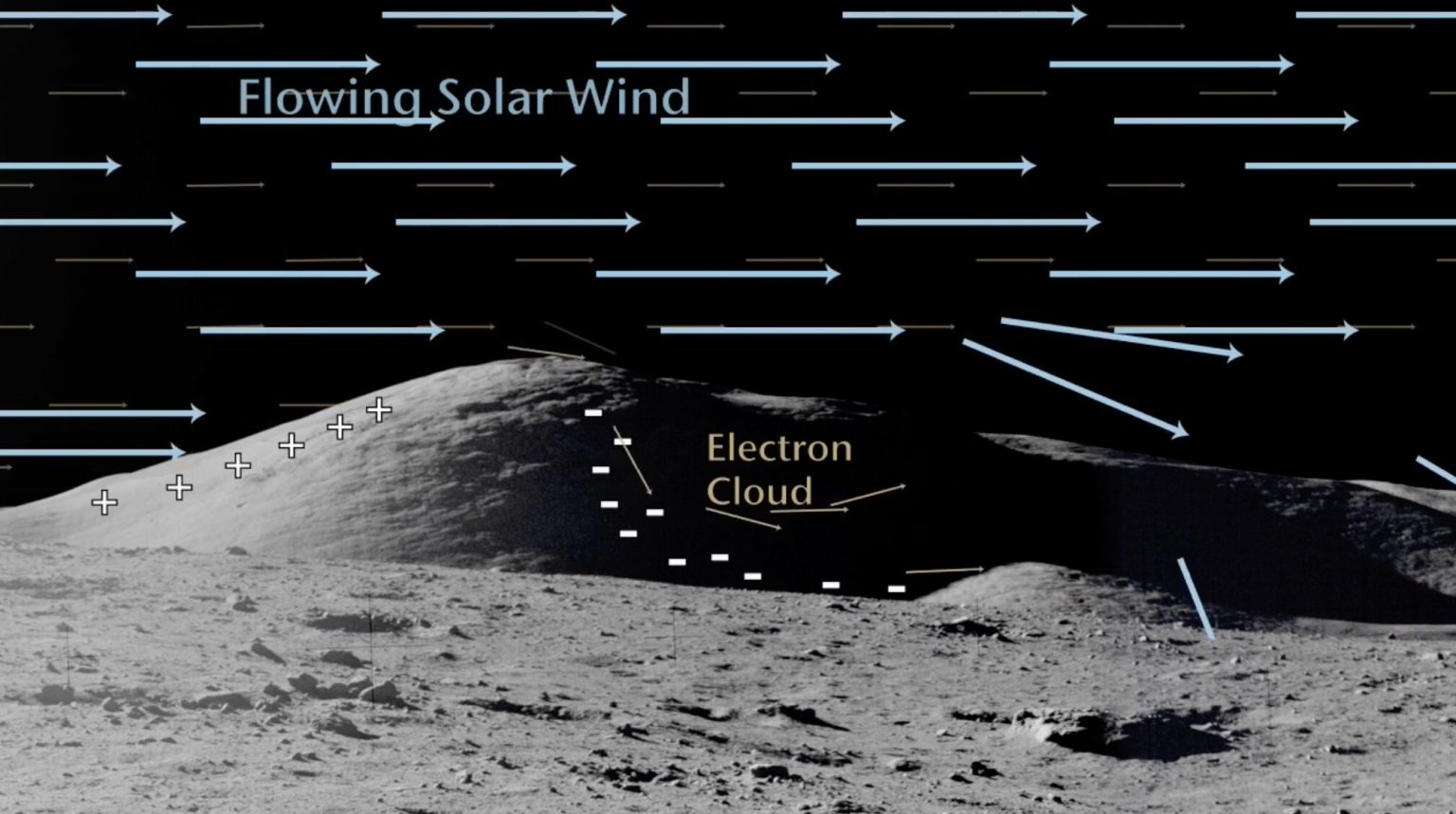
The fact is that there is no atmosphere on the Moon. The top layer of soil, called regolith, consists of very dry dust and small debris. Therefore, the wheels of lunar rovers, especially large ones, accumulate a lot of electrical charge when friction occurs.
And this charge cannot accumulate indefinitely. Sooner or later, a discharge will occur on the body, which is likely to pass through the electronic device and will not be beneficial to the latter.
Recommendations
In a new study, scientists analyzed the situation and concluded that the accumulation of charge in areas of our moon that are shaded from the sun is particularly dangerous. Where solar wind particles fall on it, there is still a certain environment in which it can dissipate.
Accordingly, the first recommendation left by scientists is to avoid shaded surfaces. In particular, this applies to the descent of wheeled vehicles into craters. It is recommended to do this on the side opposite the sun and facing it in order to move along the illuminated surface at all times. If you do the opposite, you will have to move along a shaded slope, where static charge accumulates particularly quickly.
The second recommendation concerns the speed at which the devices should move. Scientists have proven that if it does not exceed 0.2 cm/s, the charge practically does not accumulate. The only question that remains is whether it is possible to do anything useful at such a speed, since it is only 18 m per hour.
Finally, scientists advise looking at the design of the wheels of lunar rovers. It makes no sense to make them electrically isolated from the body. They only accumulate more charge, which causes more damage when it breaks through. On the contrary, good electrical conductivity should be ensured so that the charge quickly flows to the body.
According to phys.org

