

NASA specialists have installed the super-heavy SLS rocket with the Orion spacecraft on launch pad 39B. In the coming weeks, it could send humans to the Moon for the first time since 1972.
NASA’s most powerful rocket
The SLS is NASA’s largest rocket since the Apollo program. It is 98 meters tall. The launch vehicle consists of two solid-fuel side boosters and two stages. The side boosters were built by Northrop Grumman and are a modified version of the units that were once installed on the shuttles. They differ from them by having an additional segment.
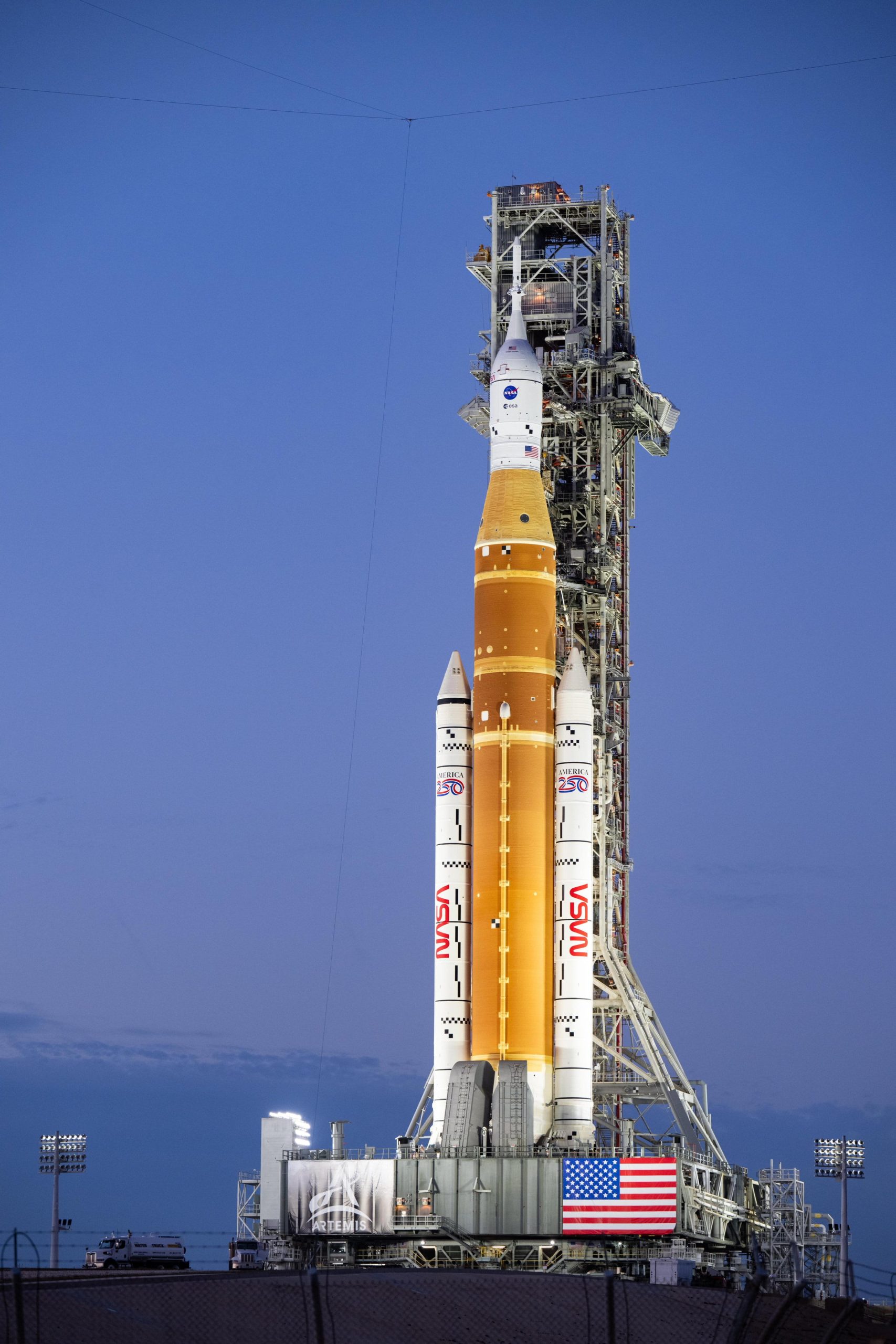
The first (central) stage of the SLS was developed by Boeing. It is equipped with four modified RS-25 engines running on a fuel mixture of liquid hydrogen and liquid oxygen. These power units were also used on the space shuttles. The second (upper) stage of the SLS is the DCSS (Delta Cryogenic Second Stage) cryogenic unit, which was previously used on Delta family rockets.
In total, SLS can deliver 95 tons of cargo to low Earth orbit (LEO) and up to 27 tons of cargo to a flight path to the Moon.
Preparing for the flight to the Moon
On January 17, the assembled SLS with the Orion spacecraft installed on it was transported from the Vertical Assembly Building to the launch pad at Cape Canaveral. A NASA crawler transporter was used for its transportation. In the past, this machine was used to deliver Saturn V rockets to the launch pad.
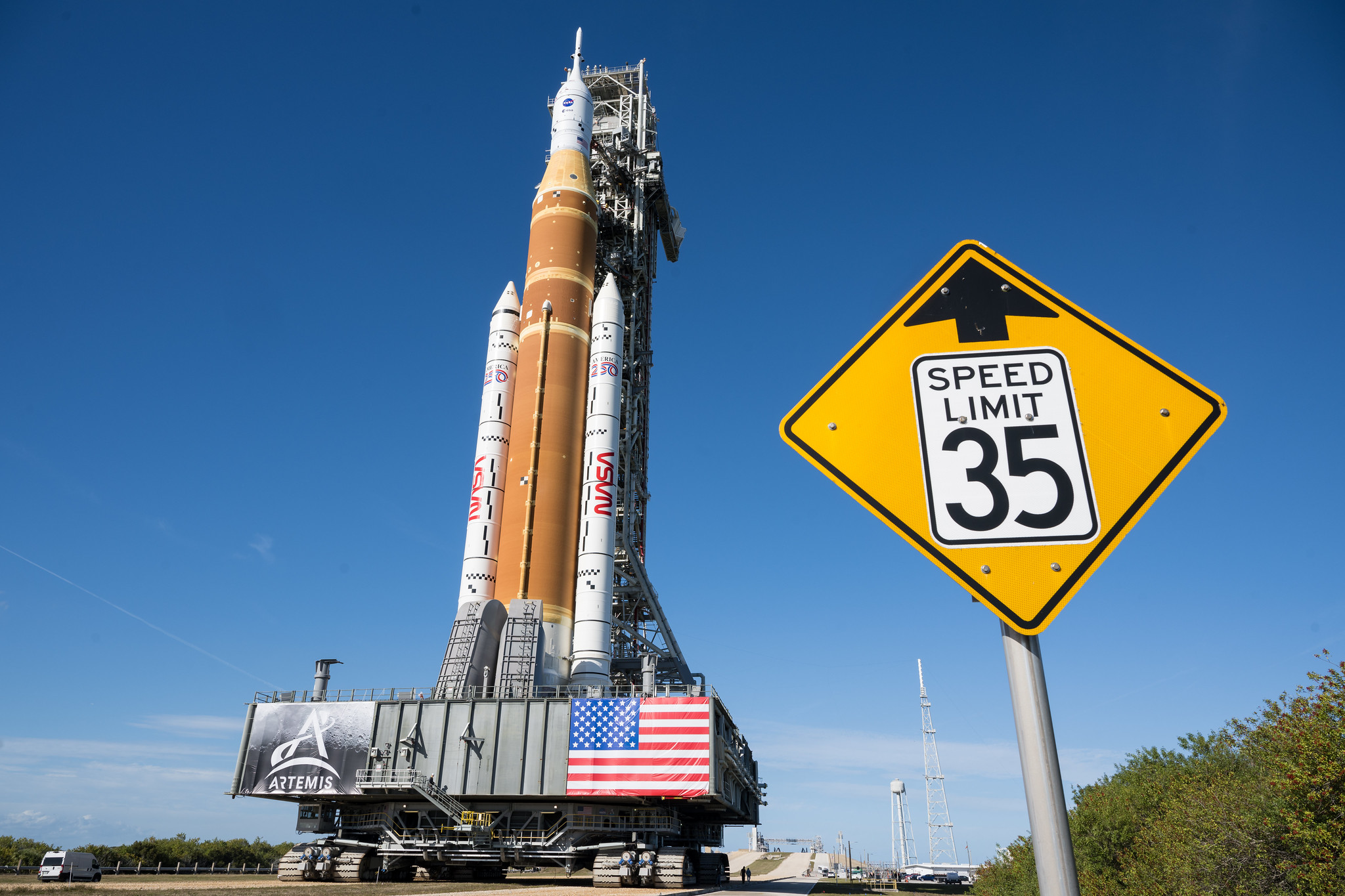
In the coming days, NASA specialists will prepare the SLS for its final test: a dress rehearsal for launch. As part of this, the rocket will be fully fueled with liquid oxygen and hydrogen, after which a practice countdown will be conducted. During the previous SLS launch in 2022, NASA refueled the rocket three times and canceled the launch twice due to fuel leaks detected during refueling.
The next launch windows for SLS will be open between February 6 and 11. However, NASA has not yet announced a possible date, preferring to wait for the results of the launch rehearsal.
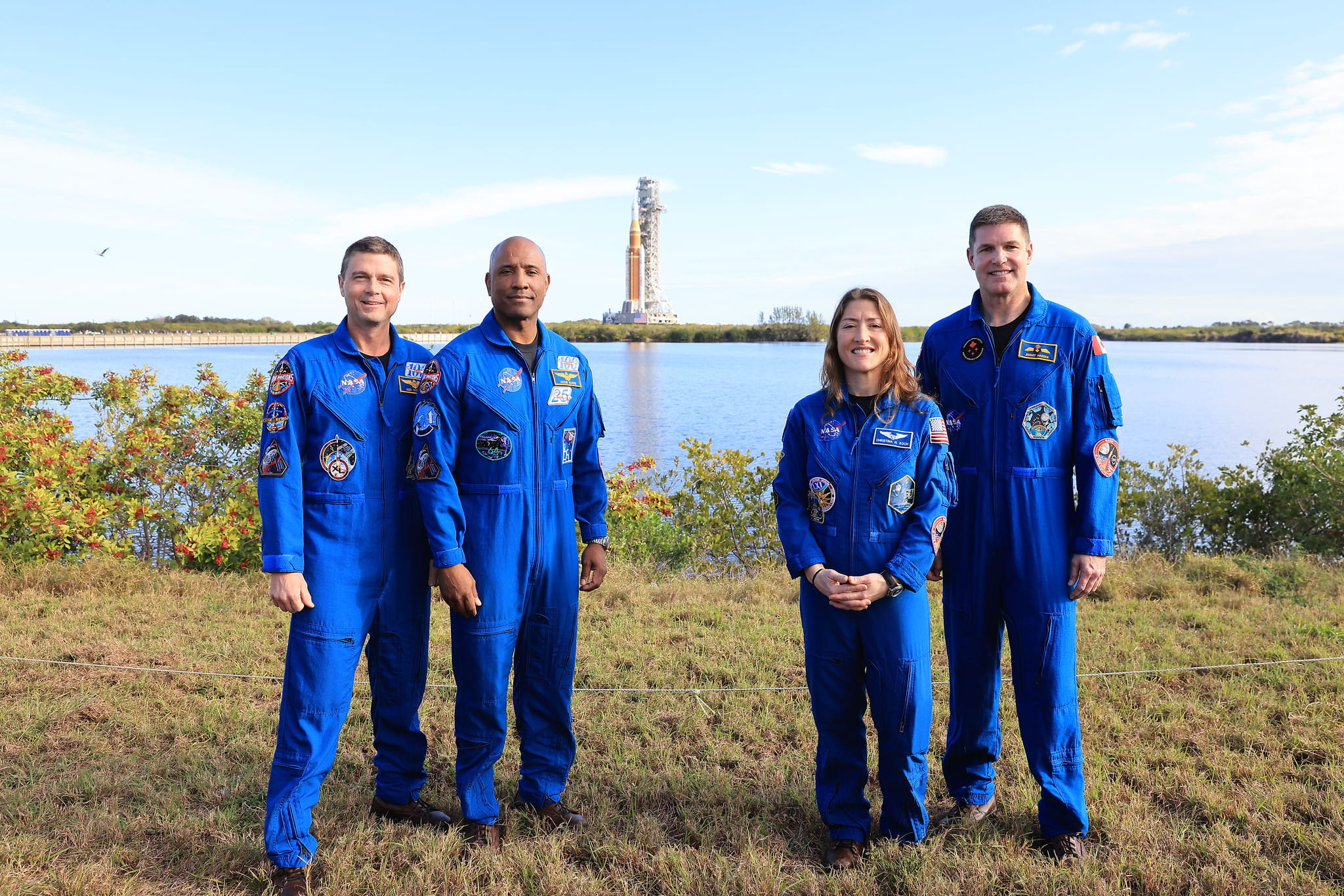
As part of the Artemis II mission, SLS will send the Orion spacecraft with four astronauts to the Moon. This will be the first manned flight beyond Earth’s orbit since 1972. During the ten-day mission, Orion will fly around the Moon on a free flight trajectory and then return to Earth. This flight will be a prelude to the much more ambitious Artemis III mission, during which two American astronauts will land at the Moon’s South Pole.

