

The mesosphere is one of the least studied layers of the Earth’s atmosphere. This layer is located at an altitude of 60-85 km, which is too low for satellites but too high for weather balloons. Because of this, scientists call it the “ignorosphere.” But a new invention inspired by 19th-century technology could change that.

Researchers from Harvard University and other scientific centers have unveiled a unique device — a tiny disc capable of levitating using sunlight. It is made of ceramic aluminum oxide with added chromium and uses the effect of photophoresis — movement under the influence of light. When the sun’s rays heat the disc, the difference in pressure creates lift, which keeps it in the air. The scientists published an article about their invention in Nature.
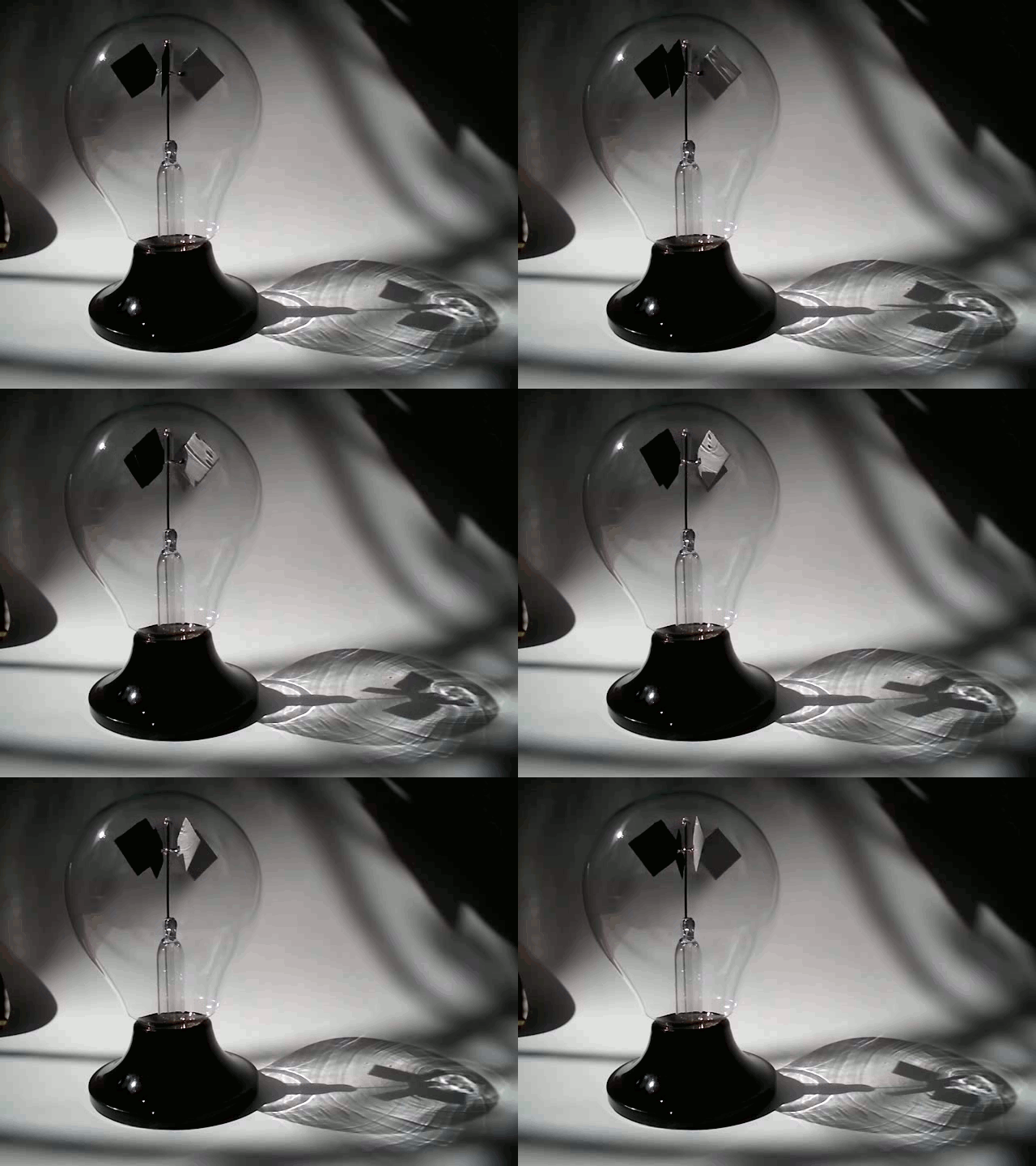
The idea of photophoresis is not new. Back in 1873, physicist William Crookes created a radiometer that rotated under the influence of light. However, it was only thanks to modern nanotechnology that tiny discs half the size of a coin were developed and could levitate.
The team conducted experiments in a low-pressure chamber, simulating mesosphere conditions. The discs successfully took to the air, confirming the viability of the concept. Researchers are now working on equipping them with sensors to measure temperature, pressure, and other parameters.
This technology can be used not only on Earth. Given sufficient sunlight, such devices will be able to explore the thin atmosphere of Mars.
“We plan to create entire swarms of such devices to collect data on weather and space phenomena,” said Ben Schafer, head of research.
As experts note, this technology, invented in the Victorian era, could be a breakthrough in the study of the mesosphere. This opens up new opportunities for meteorology, telecommunications, and even space exploration.
According to gizmodo.com

