

Astronomers have published a new image taken by the Hubble Space Telescope. It shows the globular cluster NGC 1786.
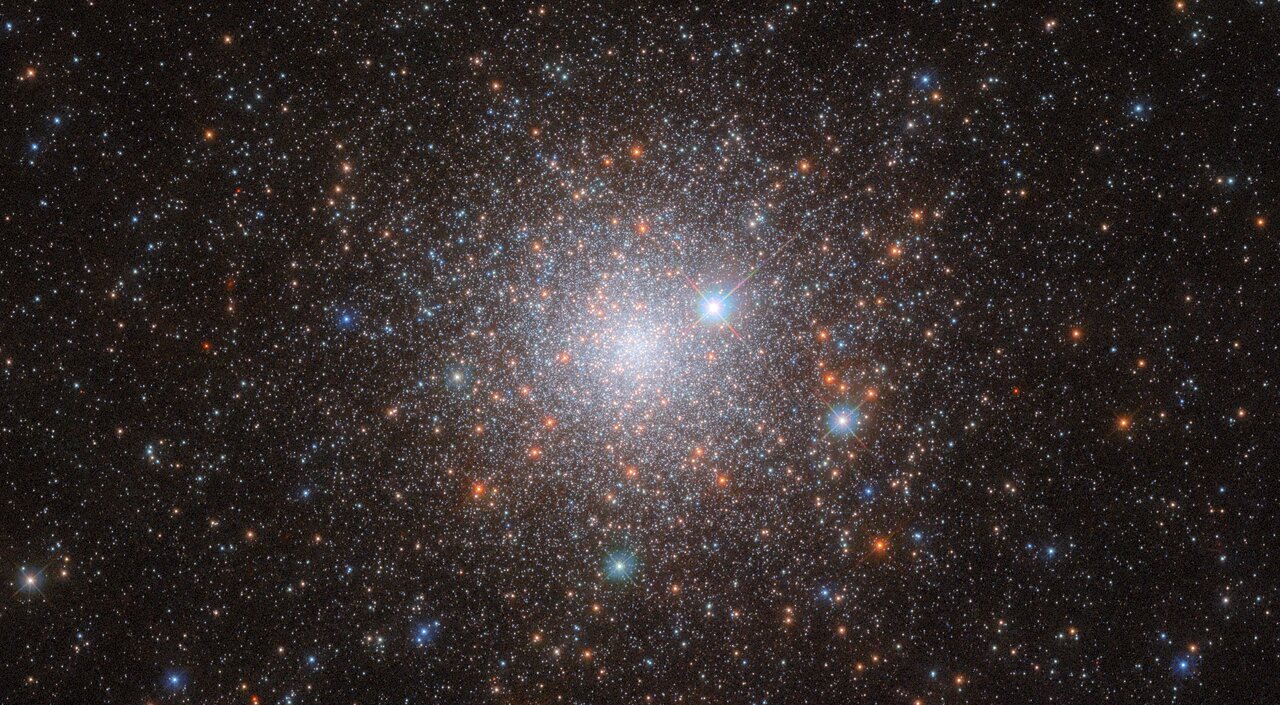
NGC 1786 is located in the Large Magellanic Cloud, a small satellite galaxy of the Milky Way, located approximately 160,000 light-years from Earth. The cluster was discovered in 1835 by John Herschel. To date, astronomers have identified 65 variable stars in it.
The image of NGC 1786 was obtained as part of a program in which scientists compare old globular clusters in nearby dwarf galaxies with old clusters in the Milky Way. Our galaxy contains more than 150 such spherical structures. Being very stable and durable, they act as a kind of time capsule, preserving stars from the earliest stages of galaxy formation.
Astronomers once believed that all stars in a globular cluster formed at approximately the same time. However, studies of old globular clusters in our galaxy have revealed the existence of several populations of stars of different ages. In order to use them as historical markers, astronomers need to understand how they form and where stars of different ages come from.
To solve this problem, it was decided to use Hubble. Observations of old globular clusters in nearby dwarf galaxies will help determine whether they contain multiple populations of stars, which will provide insight into the history not only of dwarf galaxies, but also of our own Milky Way.
Earlier, we reported on how Hubble took a portrait of a massive galaxy cluster.
According to Esahubble

