

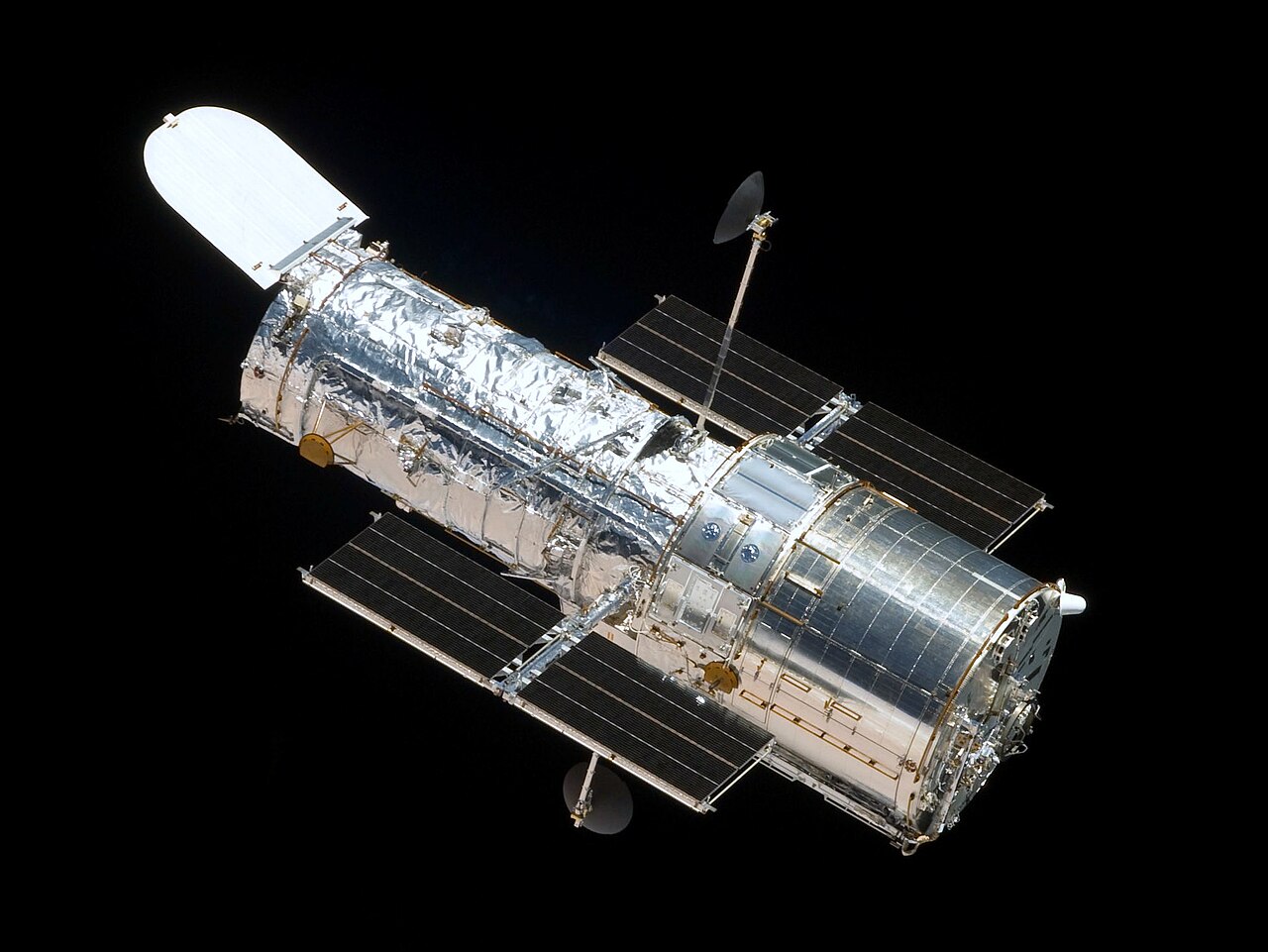
The Hubble Space Telescope, which has radically changed our understanding of the Universe for more than three decades, is nearing the end of its mission. Due to atmospheric drag, its orbit is steadily decreasing, threatening to burn up in Earth’s atmosphere. According to new calculations presented at a meeting of the American Astronomical Society, this could happen as early as 2033, and in a pessimistic scenario, even as early as 2029.
Why is Hubble falling?
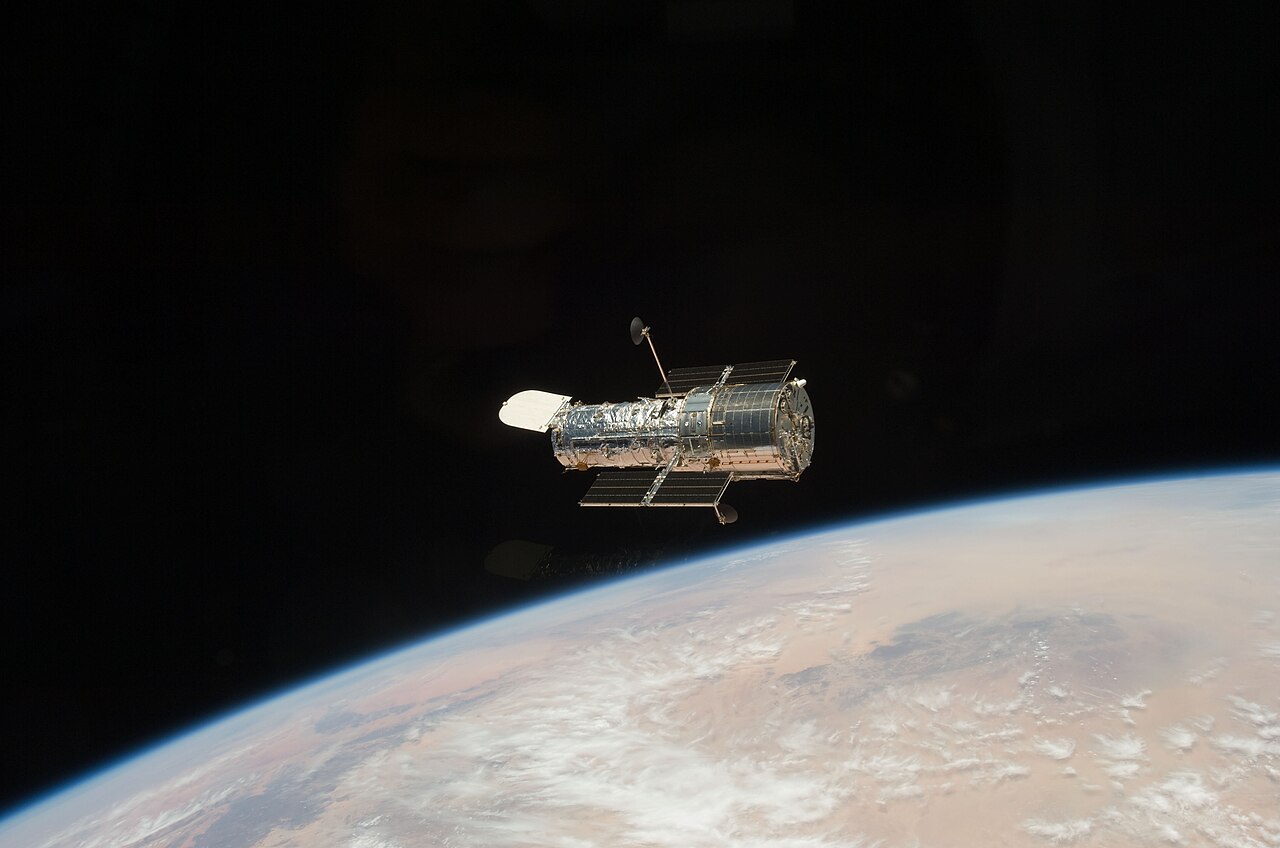
Launched in 1990 at an altitude of about 579 km, the space telescope has “fallen” more than 50 km over the years of its service. Although NASA periodically adjusted the observatory’s orbit, the main factor is atmospheric drag. The density of the upper layers of the atmosphere varies depending on the activity of the Sun. The current period of high solar activity is accelerating the fall. If the altitude falls below 400 km, there will be only a year left before the final entry into the atmosphere.
One note from the STScI town hall at #AAS247 today: the median reentry date for Hubble, based on current modeling, is 2033; a <10% chance of reentry by 2029.
— Jeff Foust (@jeff_foust) January 7, 2026
Priceless heritage
Before Hubble, we didn’t even know the exact age and size of the Universe. Its 2.5-meter mirror made it possible to measure distances to stars with incredible accuracy, prove the accelerated expansion of the cosmos, and provide evidence for the existence of black holes and dark energy.
The telescope has given the world iconic images such as the Pillars of Creation and the Hubble Deep Field, which revealed thousands of galaxies in a tiny section of the sky, allowing us to glimpse into the distant past. In total, it has made more than 1.7 million observations.
Is there any chance of rescue?
The idea of raising Hubble to a higher orbit using a private SpaceX mission has been discussed, but NASA has no plans for such an operation at this time. However, there is still hope: according to the best forecasts, with favorable solar activity, the telescope could operate until 2040.
The era of large state-owned observatories may be coming to the end. Private projects are already preparing to replace Hubble. For example, Schmidt Sciences, founded by former Google CEO Eric Schmidt, has announced the development of the Lazuli space telescope with a 2.4-meter mirror. It is scheduled to be launched in 2028 into an extended orbit. If successful, Lazuli will be the first private instrument of this level in history, continuing Hubble’s work in a new phase of space exploration.
Earlier, we reported on how NASA was asking private space companies to save Hubble.
According to Gizmodo

