

Estimates of the size of at least 200 currently known exoplanets are underestimated due to a misunderstanding of their nature. Scientists came to this conclusion based on an analysis of data from the TESS space telescope.
A new understanding of exoplanets
In a new study, astronomers at the University of California, Irvine, describe how more than 200 known exoplanets are likely to be larger than previously thought. This discovery could change researchers’ perceptions of which distant worlds are potential refuges for extraterrestrial life.
Scientists have discovered that there are hundreds more exoplanets than initially thought, which fundamentally changes our understanding of exoplanets. “This means that we have actually found fewer Earth-like planets than we previously thought,” said Te Han, a graduate student at the University of California, Irvine, and lead author of the new study published in the Astrophysical Journal Letters.
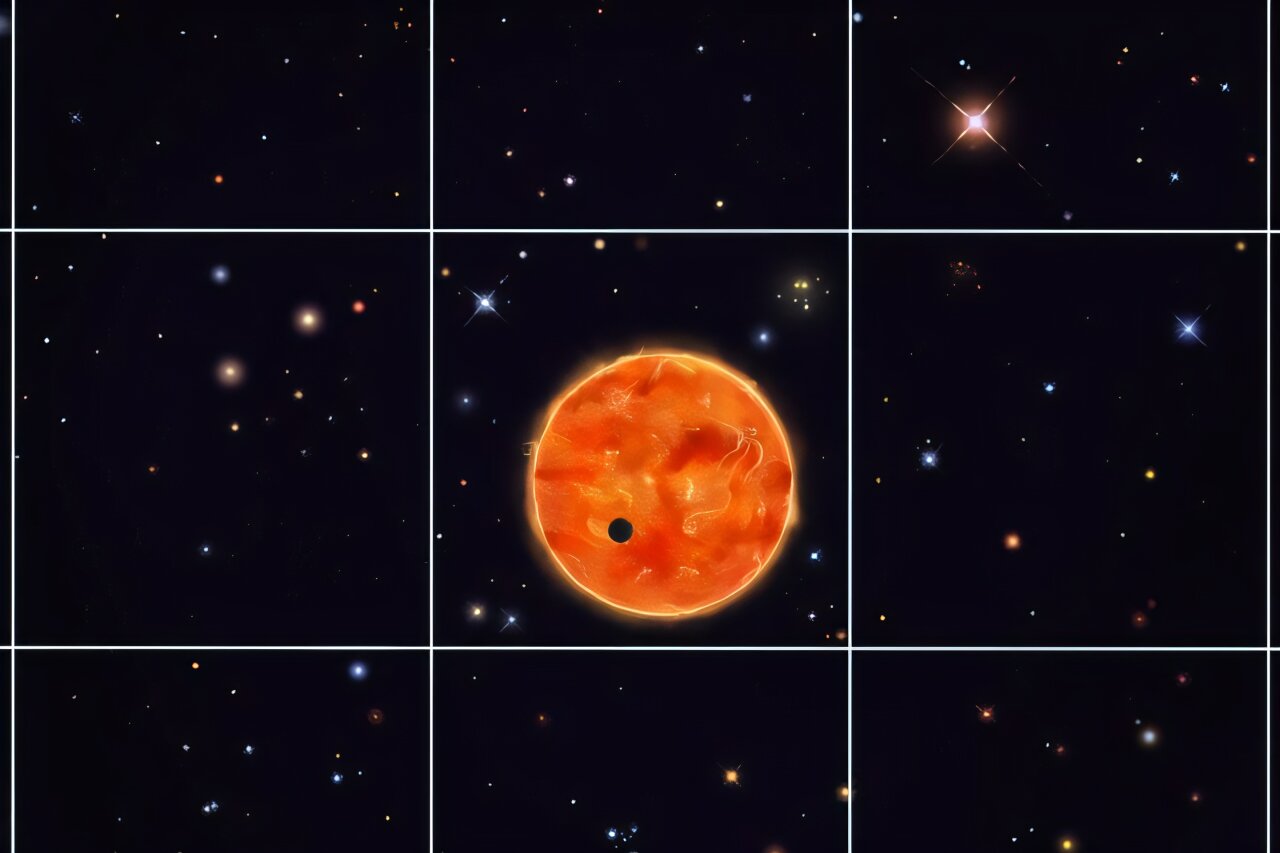
Astronomers cannot observe exoplanets directly. They have to wait until the planet passes in front of its star, and then measure the very slight decrease in the brightness of the light emitted by the star.
“We’re basically measuring the shadow of the planet,” said Paul Robertson, professor of astronomy at the University of California, Irvine, and co-author of the study.
Sorting data from TESS
Han’s team studied observations of hundreds of exoplanets made by NASA’s Transiting Exoplanet Survey Satellite (TESS) and found that light from neighboring stars can “pollute” the light of the star being studied by astronomers. This can make any planet passing in front of a star appear smaller than it actually is, since smaller planets block less light than larger ones.
Han collected hundreds of studies describing exoplanets discovered by the TESS mission and sorted the planets according to how different research teams measured the radii of exoplanets in order to use a computer model to assess the degree of bias in these measurements due to light pollution from neighboring stars. The team used observations from another satellite mission called Gaia to assess how much light pollution affects TESS observations.
The number of exoplanets believed to be similar in size to Earth was already small. “Of the single-planet systems discovered by TESS so far, only three were thought to be similar to Earth in their composition,” Han noted. “With this new finding, all of them are actually bigger than we thought.”
Prevalence of “water worlds”
This means that instead of being rocky planets like Earth, these planets are most likely so-called “water worlds” — planets covered by a single giant ocean, which are typically larger than Earth, or even larger gas planets like Uranus or Neptune. This could affect the search for life on distant planets, because although water worlds may be refuges for life, they may not have the same characteristics that promote the flourishing of life on planets such as Earth.
“This has important implications for our understanding of exoplanets, including—among other things—prioritization for follow-up observations with the James Webb Space Telescope, and the controversial existence of a galactic population of water worlds,” Robertson said.
Next, Han and his team plan to use the new data to begin reviewing planets that used to be considered uninhabitable due to their size, as well as to warn other researchers about the need for caution when interpreting data from satellites such as TESS.
According to phys.org

