

Dark matter is one of the unsolved mysteries of astronomy. We cannot see it, although we have serious reasons to believe that it exists. This invisible substance makes up the bulk of the universe, but we do not know what it is made of. For decades, it was believed to be clouds of elusive particles. However, fruitless searches have forced scientists to consider radical alternatives. New scientific work proposes an original method for detecting them: looking at stars very, very closely to find boson stars and Q-balls.
Strange guests from the darkness
A boson star is a hypothetical object that can form from superlight particles that behave like waves. Gravity compresses this wave into a stable spherical structure the size of a star. A Q-ball is an even stranger formation, like a “lump” of quantum field that has separated and taken shape.
Both types are classified as exotic astrophysical dark objects (EADO). They are massive but completely invisible because they do not emit light.
Dark matter lens
How can we find something that does not shine? The key is gravitational microlensing. If such a dark object passes directly in front of a distant star, its gravity will bend and momentarily intensify the light of that star, like a lens. To an observer on Earth, the star will suddenly become brighter and then return to normal. This flash will last for days or weeks.
The Great Eye of Gaia
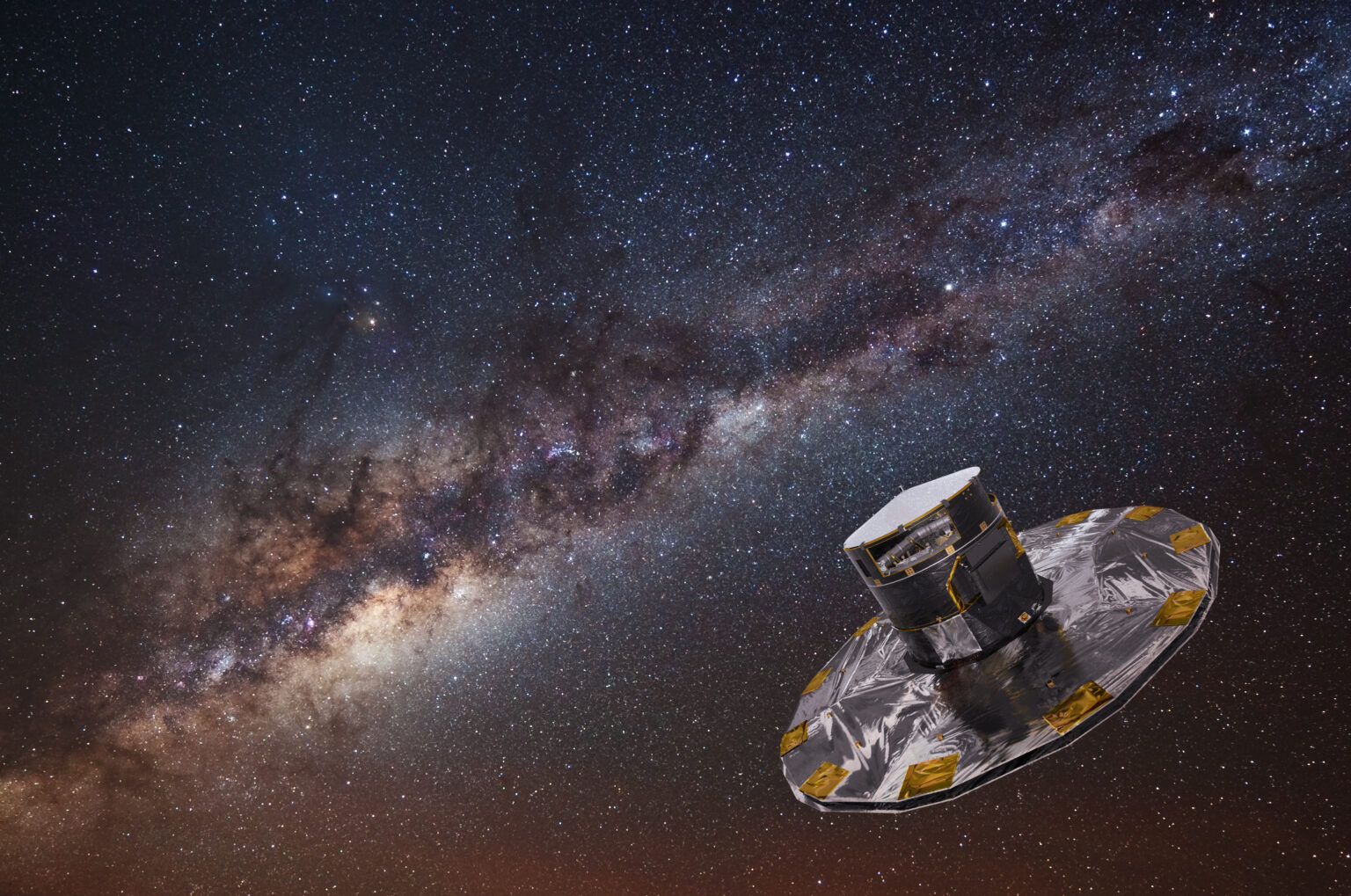
This is where the Gaia space telescope comes in. Its mission is to map the positions and brightnesses of billions of stars with unprecedented accuracy. Astrophysicists propose analyzing its long-term data, looking for characteristic microlensing flashes. This systematic “hunt” could reveal thousands of EADOs, if they are common.
If the search proves fruitless, this will serve as strong evidence against the existence of such massive dark objects. In any case, it will transform passive observation of darkness into active scientific investigation of the greatest mystery of space.
We previously reported on how signals from the Dark Ages of the Universe contain the key to dark matter.
Provided by Space

