

As it approaches the Sun, Comet Lemmon becomes brighter and brighter, and the coma and tail surrounding its nucleus are actively changing. Many astrophotographers around the world are trying to capture these changes in the behavior and appearance of the tailed visitor.
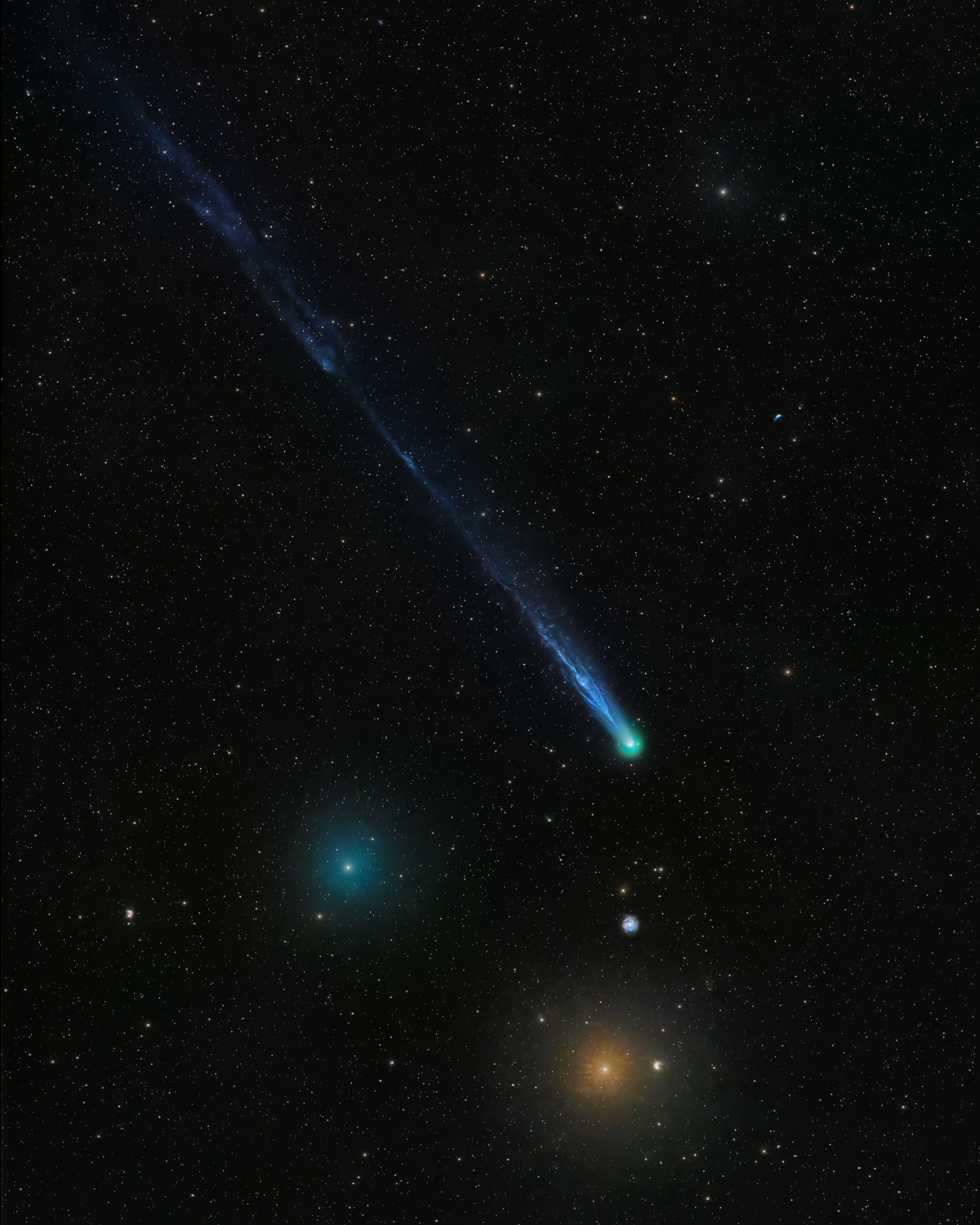
Among them is well-known astrophotographer Andrew McCarthy. On October 5, he photographed Comet Lemmon. But it turned out to be far from the only cosmic object in the image. The galaxy NGC 3185 was also captured in the photo, located below the comet.
NGC 3185 is a spiral galaxy with a bar. At its center is an ultra-bright X-ray source, which is most likely associated with the activity of the supermassive black hole located there. Another interesting feature of the galaxy is that it is surrounded by a ring of matter in which star formation is taking place.
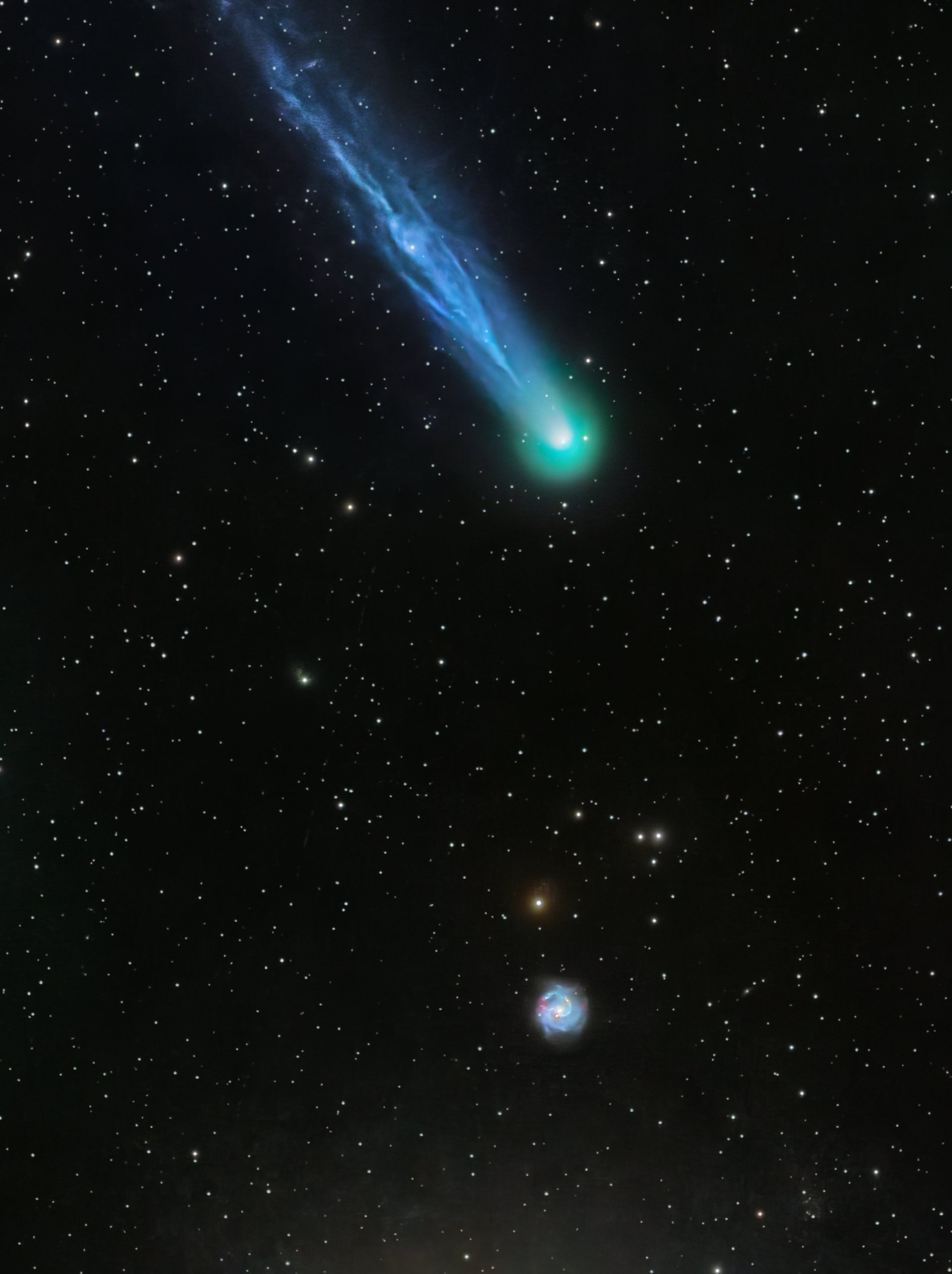
In McCarthy’s photograph, NGC 3185 and Comet Lemmon appear to be neighbors. But, of course, this is only an apparent proximity. Comet Lemmon is located in our solar system, while NGC 3185 is located at an unimaginably distant range of 25 million light-years by human standards. That is ten times greater than the distance between the Milky Way and the Andromeda Galaxy.
As it approaches the Sun, the brightness of Comet Lemmon will continue to increase. According to the most optimistic estimates, at its peak, its brightness will reach +2.5 magnitude. In this case, it will be visible to the naked eye even from within the city limits.
On October 21, the comet will pass at a minimum distance of 0.68 AU (101 million km) from Earth. On November 8, it will pass the perihelion of its orbit, approaching the Sun at a distance of 0.53 AU (80 million km), after which it will begin its return journey to the outskirts of the Solar System. Its next visit to the Sun will take place in 1,150 years.
You can find out more about Comet Lemmon and the conditions for observing it in our article.

