

On the night of January 19, an extremely rare cosmic spectacle unfolded over southern Brazil — a true southern lights show. Astrophotographer Egon Filter, who had long dreamed of capturing such an image, managed to record it.
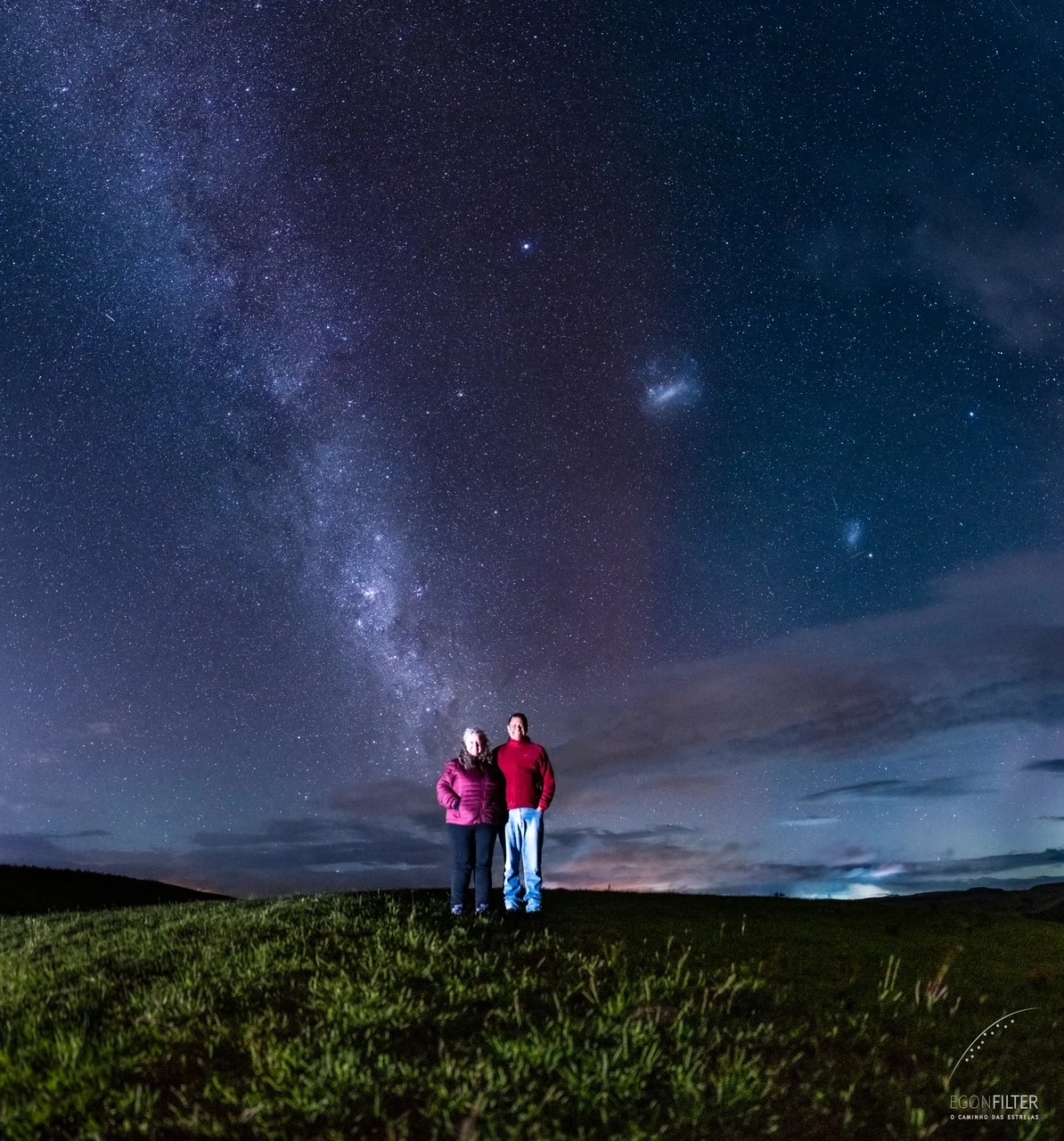
The phenomenon was observed in the state of Rio Grande do Sul, at a latitude of 27-33°, which is extremely unusual: auroras usually occur at the planet’s magnetic poles, far from the equator. Its appearance was due to a powerful geomagnetic storm. “It was fantastic to check the camera and see that I had captured this image,” the photographer shared his impressions.
Mystery of the South Atlantic Anomaly
What is particularly surprising is that the phenomenon occurred precisely in the South Atlantic Anomaly. There, the Earth’s magnetic shield is significantly weaker, and this usually suppresses rather than enhances auroras. Therefore, if this happens, such phenomena appear very blurred here.
Initially, hypotheses were put forward that this could be a stable auroral red (SAR) arc — weak scattered light from energy leakage from the Earth’s “ring current.”
Science’s verdict
However, solar physicist Tamitha Skov refutes this version. She notes that the observation was high in the sky, not on the horizon, which is characteristic of an aurora. According to her, it was probably a diffuse equatorial aurora that managed to “break through” the anomalous zone of weak magnetic field.
“It’s an aurora, but it comes from a source that’s different from the usual one,” explains Skov.
Is it worth waiting for a repeat?
Although this phenomenon is rare, scientists do not consider it unexpected. The sun is currently at the peak of its 11-year cycle.
“These observations are consistent with the expected behavior of the Sun-Earth system. Many of us have been waiting and predicting such auroras for years,” notes Tamitha Skov.
Thus, in the coming years, residents of not only high latitudes but also temperate latitudes will have the chance to witness such impressive cosmic shows.
Earlier, we reported on what the auroras look like on different planets in the Solar System.
According to space.com

