

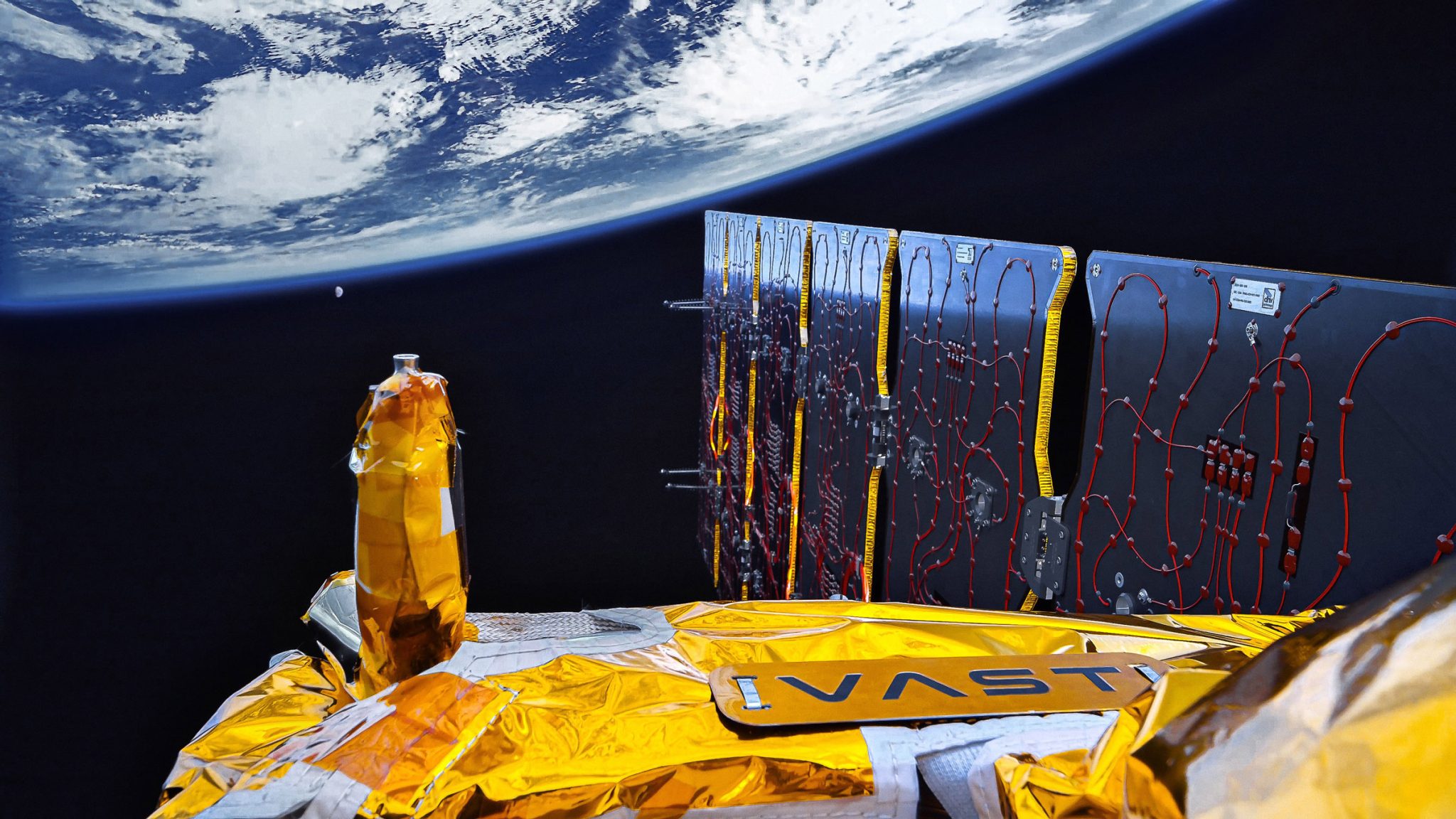
Vast has published a 4K video taken by its Haven Demo satellite. It shows the spacecraft flying in near-Earth orbit and unfolding its solar panels.
Vast has gained notoriety for its plans to build the first-ever commercial orbital station, Haven-1, scheduled for launch in 2026. It will consist of a single 14-ton compartment 10.1 meters long, 4.4 meters in diameter, and with a sealed volume of 80 m³, capable of accommodating four astronauts for 30 days. Crew Dragon spacecraft are expected to be used to transport them to Haven-1.
The first commercial station in history will be equipped with 10 racks for scientific equipment. Vast has already signed a number of contracts with various private companies to host their instruments and conduct experiments.
Over the past few months, Vast has reported the completion of welding on the Haven-1 hull and the station’s successful pressure testing. The next step in the company’s ambitious plans was the launch of Haven Demo.
The Haven Demo satellite is designed to test key technologies and components that are planned to be used on Haven-1: computers, software, power supply, navigation and control systems, as well as solar panel design. The device will also give Vast engineers the opportunity to test their ground stations and gain flight control experience.
Mission Success.
Haven Demo, our Haven-1 space station technologies test bed is now on orbit and healthy. Watch footage from our onboard cameras in full duration 4K. More to come. pic.twitter.com/nlVD3I5TpG
— Vast (@vast) November 4, 2025
Haven Demo was launched on November 2, 2025, by a Falcon 9 rocket. According to Vast, the spacecraft reached its planned 500-kilometer orbit and all its systems are operating normally. The company also published a 4K video recorded by Haven Demo’s onboard cameras.
The next step will be to deliver Haven-1 to NASA’s Neil Armstrong Flight Test Center. There, it will undergo a series of thermal vacuum, acoustic, vibration, and other tests. These tests are necessary to ensure that the station can withstand exposure to outer space.

