

This fall, there will be a unique astronomical show that even owners of small telescopes will be able to see. Saturn’s legendary rings will practically disappear from view. This is not a cosmic catastrophe, but an impressive optical illusion created by the fortunate alignment of the planets.
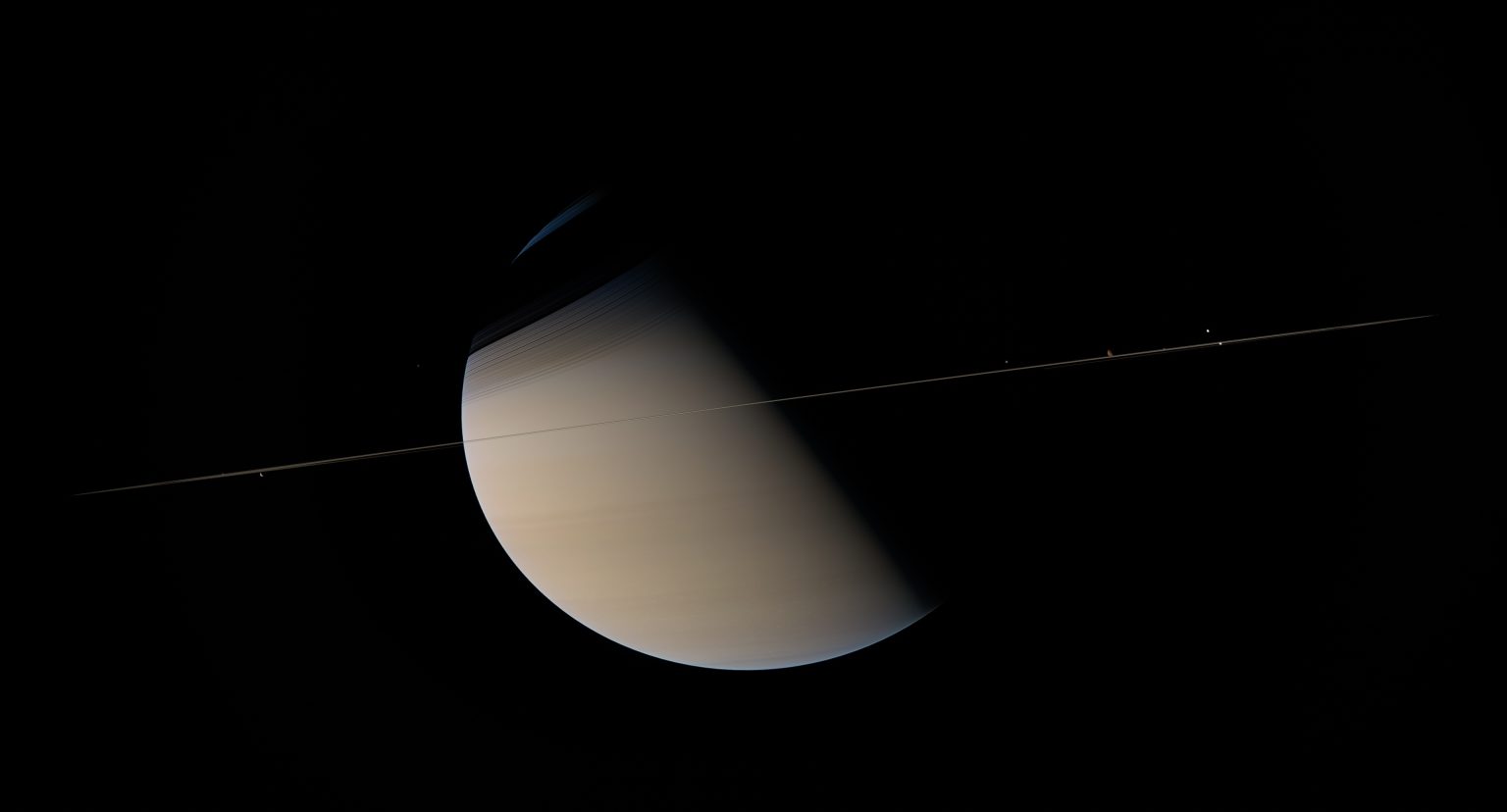
On November 23, Saturn will align with Earth so that its rings will be facing us edge-on. The impressive ring system, over 280,000 kilometers wide, is incredibly thin – less than a kilometer at its thickest points. It is because of this proportion that, when viewed from the side, they are virtually invisible to Earth-based observers.
This phenomenon, known as “ring alignment,” occurs periodically due to Saturn’s axial tilt and its movement around the Sun. Such alignment occurs approximately once every 14 years. The next opportunity to see “Saturn without rings” will not be until October 2038.
How to observe the phenomenon?
To witness this rare spectacle, you will need a telescope. Even a small amateur device will suffice. Over the weekend, Saturn will be visible in the southeastern sky after sunset. The best effect of the “edge” can be observed on Saturday night, when the planet shines in the night sky.
Those who want to see the rings in all their glory again will have to wait a little longer. Over the coming months, they will gradually “open up” and reach their maximum width in 2027.
The future of Saturn’s rings
This temporary disappearance is just an optical illusion. However, science confirms that Saturn is indeed slowly losing its rings. Data collected by the Cassini spacecraft shows that the planet’s gravity attracts material from the rings in the form of dust rain. However, this process is extremely slow: the actual disappearance of the rings will not occur for at least 100 million years. Therefore, we will still have many opportunities to admire this impressive decoration of the Solar System.
Previously, we provided the best tips for stunning observations of Saturn.
Provided by NASA

