

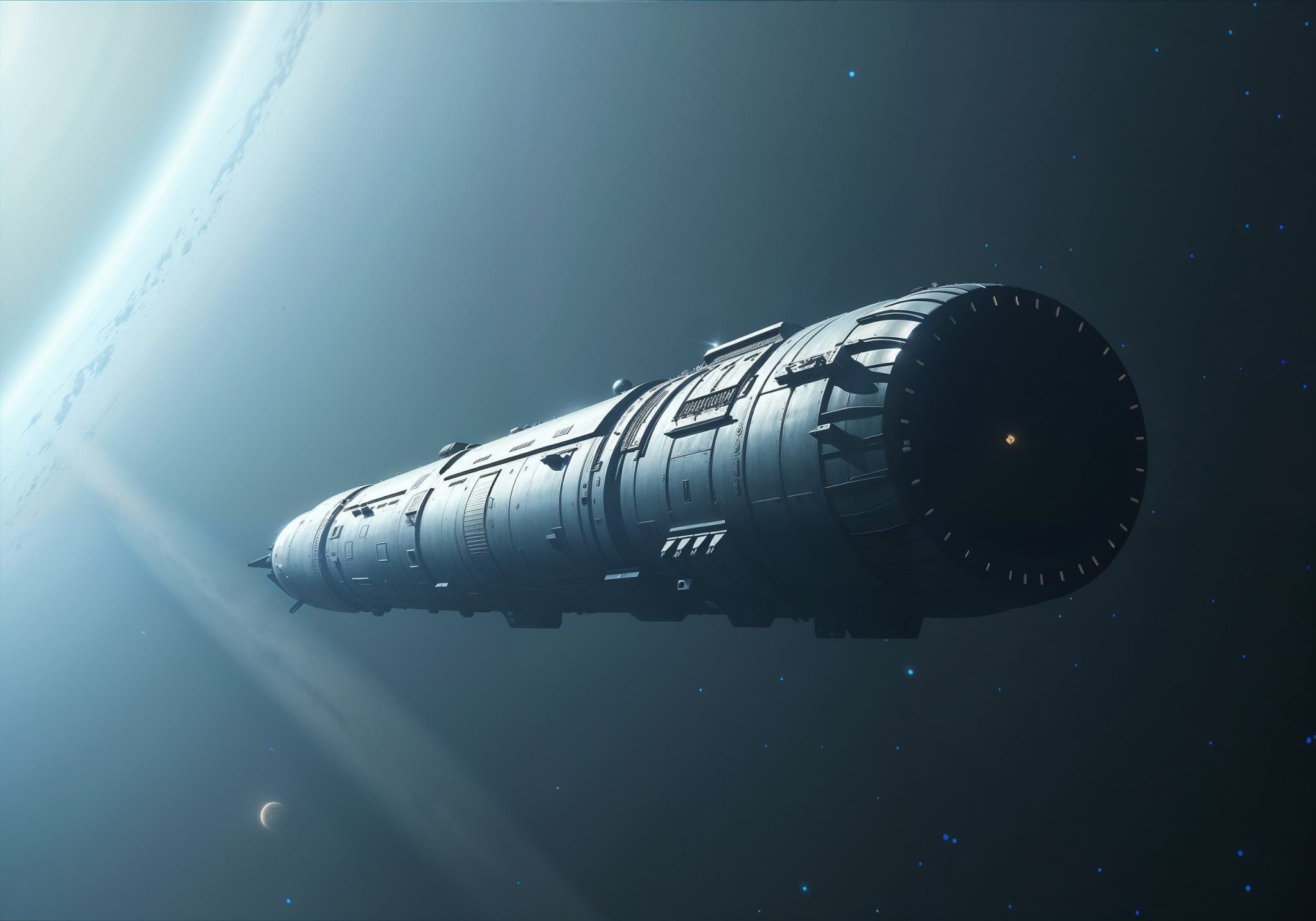
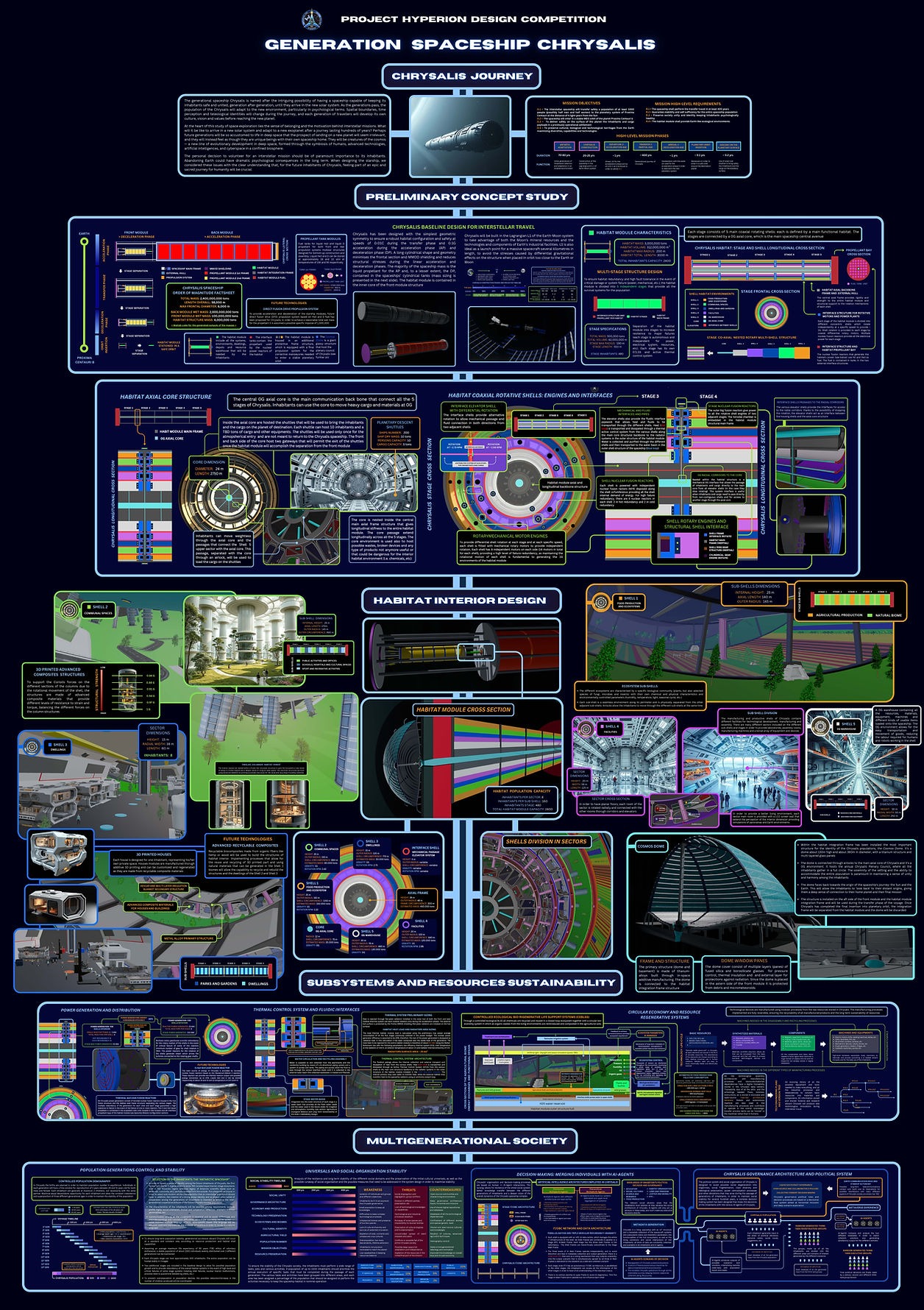
Engineers have unveiled plans for a giant spacecraft called Chrysalis, capable of transporting up to 2,400 colonists to the nearest star system, Alpha Centauri. This ambitious mission, designed to last 400 years, means that many generations of people will be born, live, and die on board without ever seeing Earth or their destination. The target is the potentially habitable exoplanet Proxima Centauri b. The Chrysalis project won the Project Hyperion Design Competition for the best design of a multi-generational starship.
Preparing for a long journey
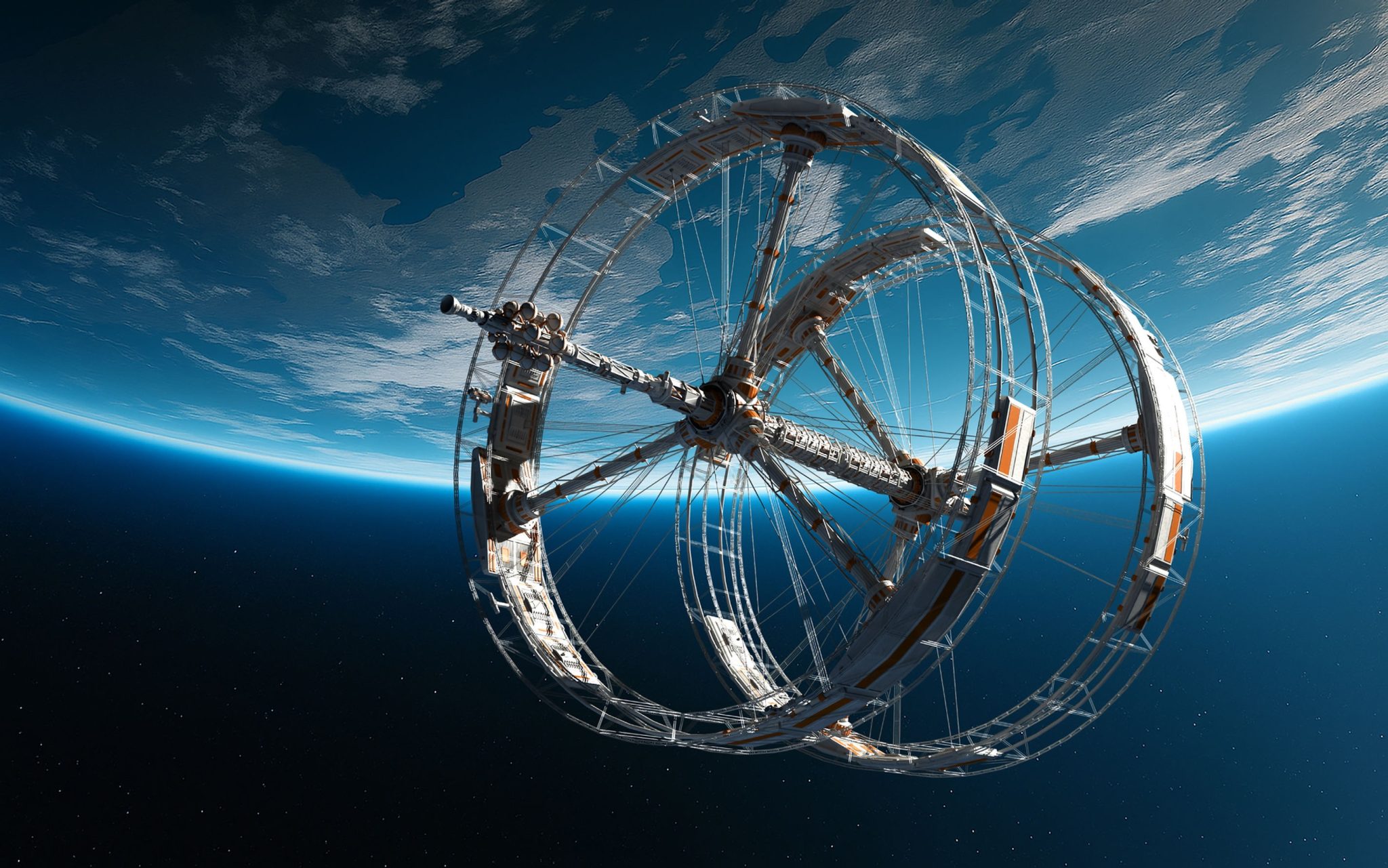
Life in the closed system of a spacecraft requires special training. The first generations of future colonists will have to spend 70-80 years in an isolated colony in order to psychologically adapt to conditions similar to those in space. The spacecraft, which is 58 km long, could theoretically be built in 20-25 years. Artificial gravity will be provided by the constant rotation of the structure.
Chrysalis is designed according to the “matryoshka” principle, consisting of five concentric layers around a central core. The core contains launch vehicles for exoplanets and communication equipment. The layer closest to the core is a large-scale agricultural complex for growing plants, fungi, microorganisms, insects, and livestock in various artificial environments, from the tropics to northern forests, in order to maintain biodiversity.
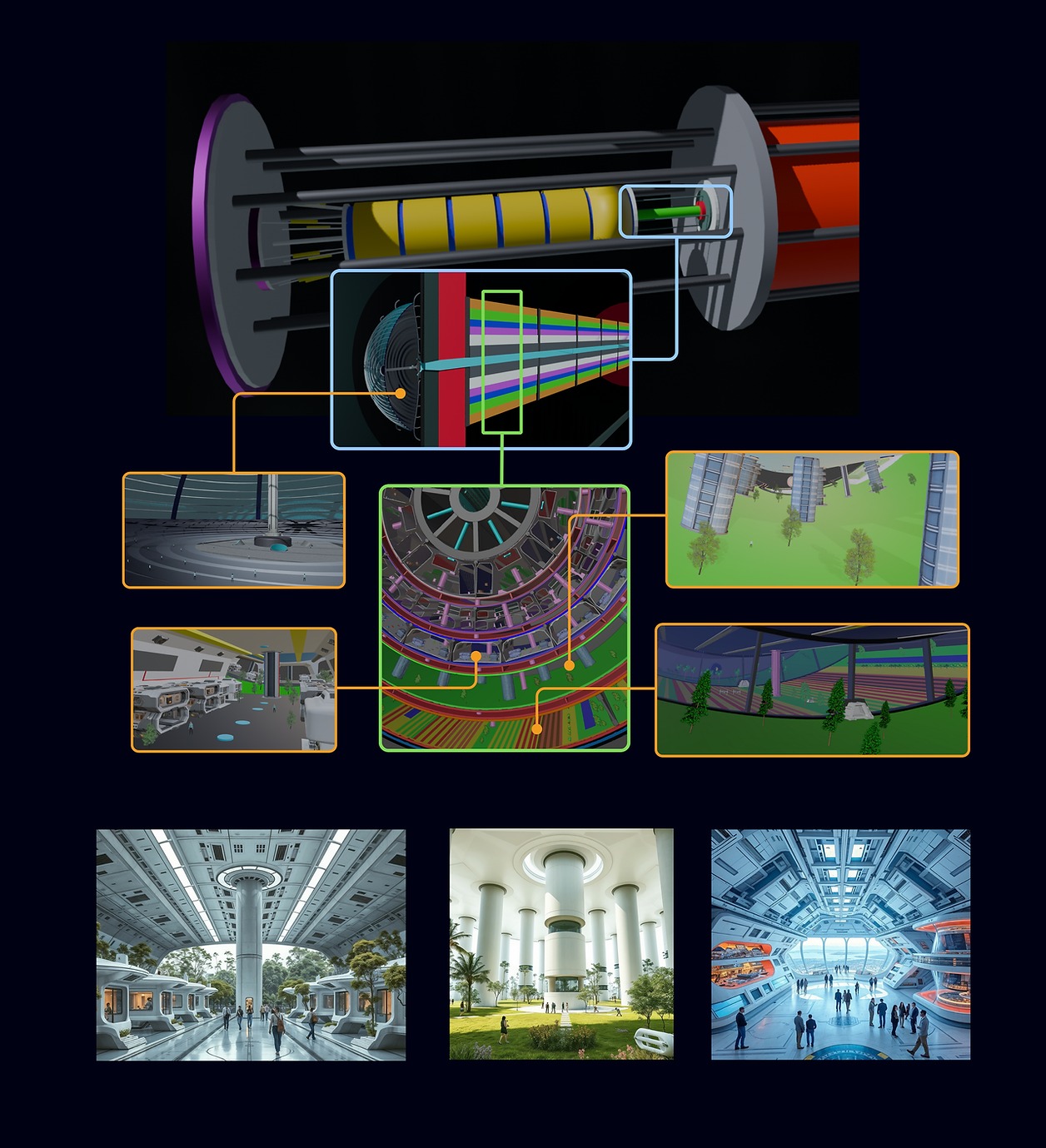
The second layer is the “city”: parks, schools, hospitals, libraries, and other public spaces. The third layer is reserved for residential modules for individual families with life support systems. The fourth layer is industrial: waste processing, pharmaceutical, and manufacturing enterprises. The last fifth layer consists of warehouses for resources, materials, and equipment, which, according to the plan, will be managed by robots.
Life on board
The population is planned to be maintained at around 1,500 people – less than the maximum capacity – through birth control. The spacecraft will be operated by humans in close cooperation with artificial intelligence. This should ensure the stability of the social system, effective knowledge exchange between generations, and a deep understanding of all processes on Chrysalis.
It is important to note that the project is purely conceptual. The necessary technologies, primarily commercial thermonuclear reactors, do not yet exist. However, such hypothetical developments expand our knowledge and help shape future technological solutions.
The Project Hyperion competition jury gave special recognition to Chrysalis for its systematic consistency, innovative modular design, and depth of detail, awarding the winning team a prize of $5,000.
Earlier, we covered the types of exoplanets worth visiting.
According to thebrighterside.news

