

The James Webb Space Telescope (JWST) has found compelling evidence of an exoplanet in the Alpha Centauri system. It is a gas giant whose orbit passes through the habitable zone.
The star closest to the Sun
Alpha Centauri is the closest star system to us, located 4.2 light-years from the Sun. It consists of three stars. At present, astronomers have confirmed the existence of two exoplanets orbiting Proxima Centauri. The orbit of one of them lies within the habitable zone. This means that its surface receives enough heat for liquid water to exist there.
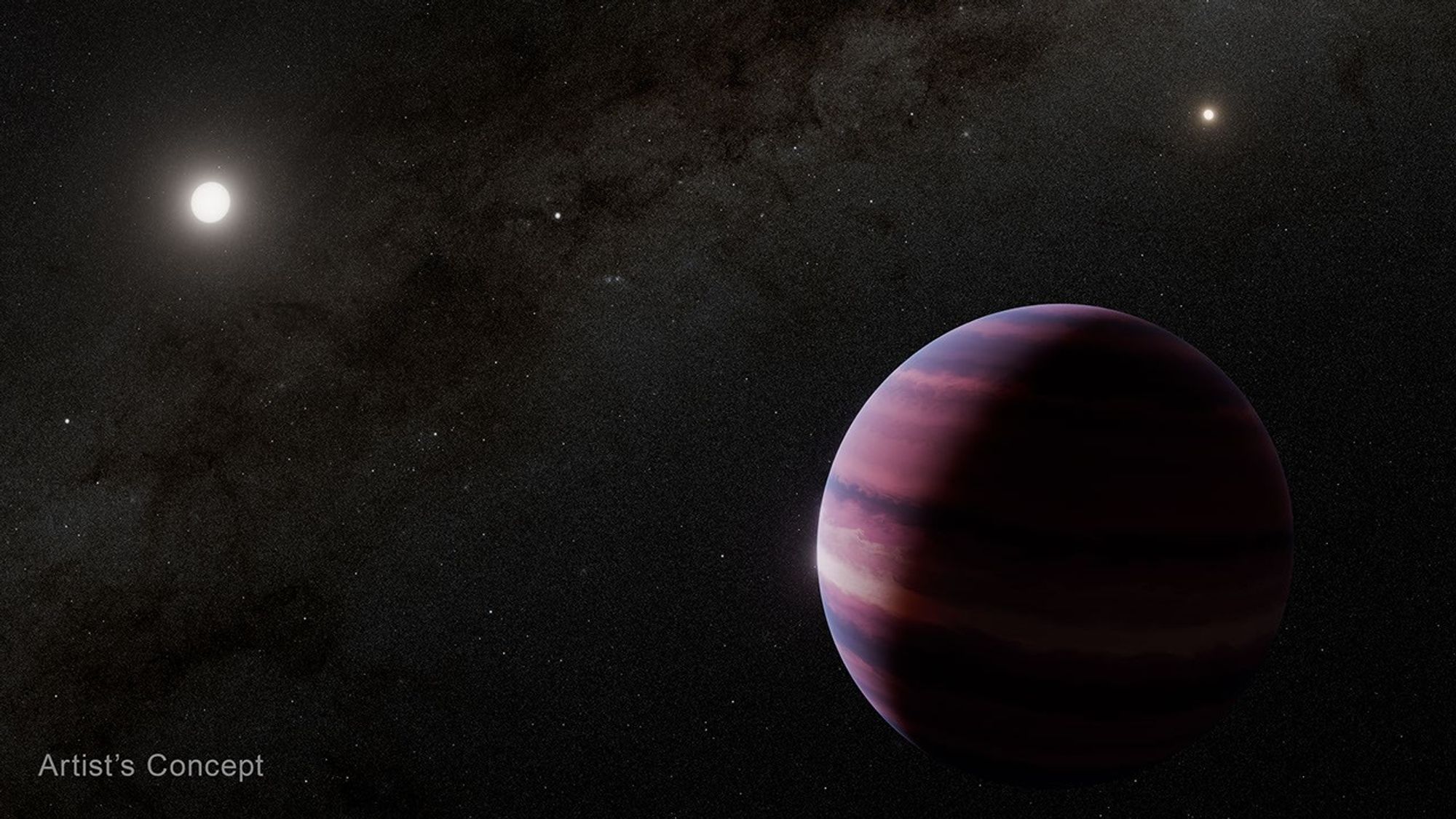
However, Proxima Centauri is a red dwarf. Such stars are completely unlike the Sun and are characterized by an extremely “violent” temperament in the form of powerful flares capable of blowing away planetary atmospheres. In addition, the exoplanets orbiting Proxima Centauri are in tidal lock and constantly face it with the same side. Therefore, the conditions on their surface are completely unlike those on Earth.
At the same time, the two main stars of the system are sun-like stars. During observations carried out in 2019, ESO’s Very Large Telescope (VLT) obtained data indicating that an exoplanet may be orbiting the central component of Alpha Centauri. Six years later, astronomers received confirmation of its existence.
Gas giant in the habitable zone
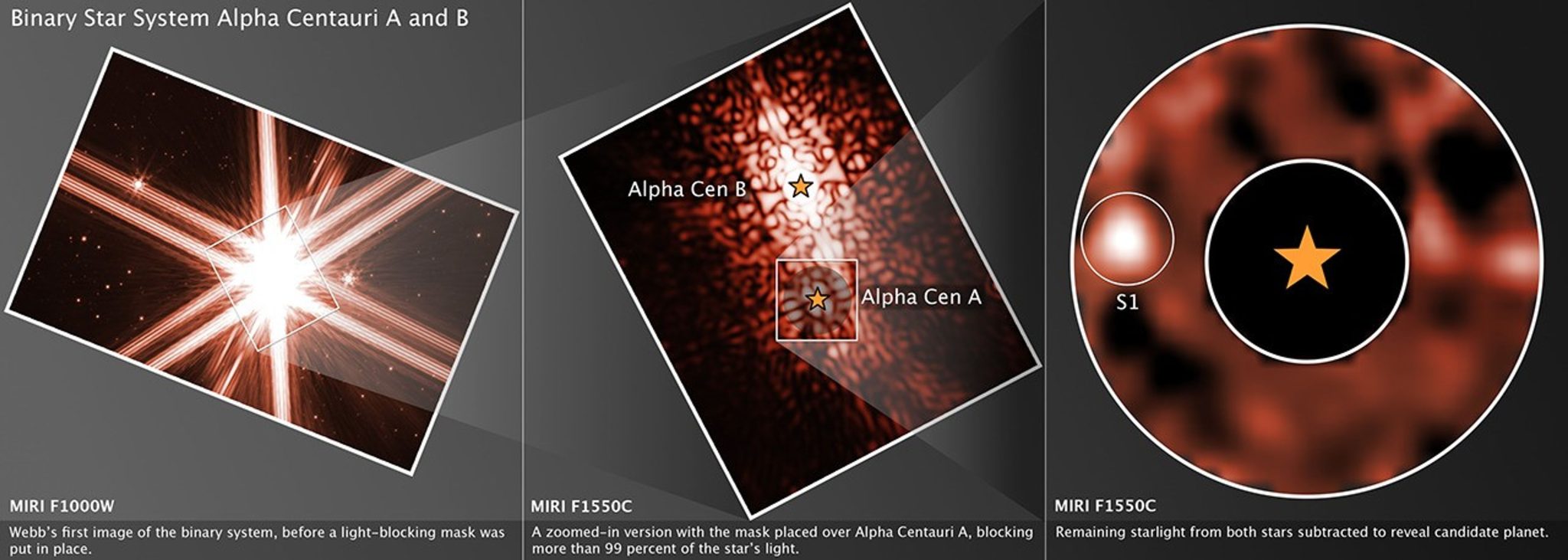
Evidence of the existence of the exoplanet was obtained using the JWST. In August 2024, it began observing Alpha Centauri in the mid-infrared range. Thanks to the advanced instruments installed on board the telescope, astronomers were able to block out the light from the two main stars in the system. This made it possible to detect a source that was not a background object or foreground object, nor an image artifact.
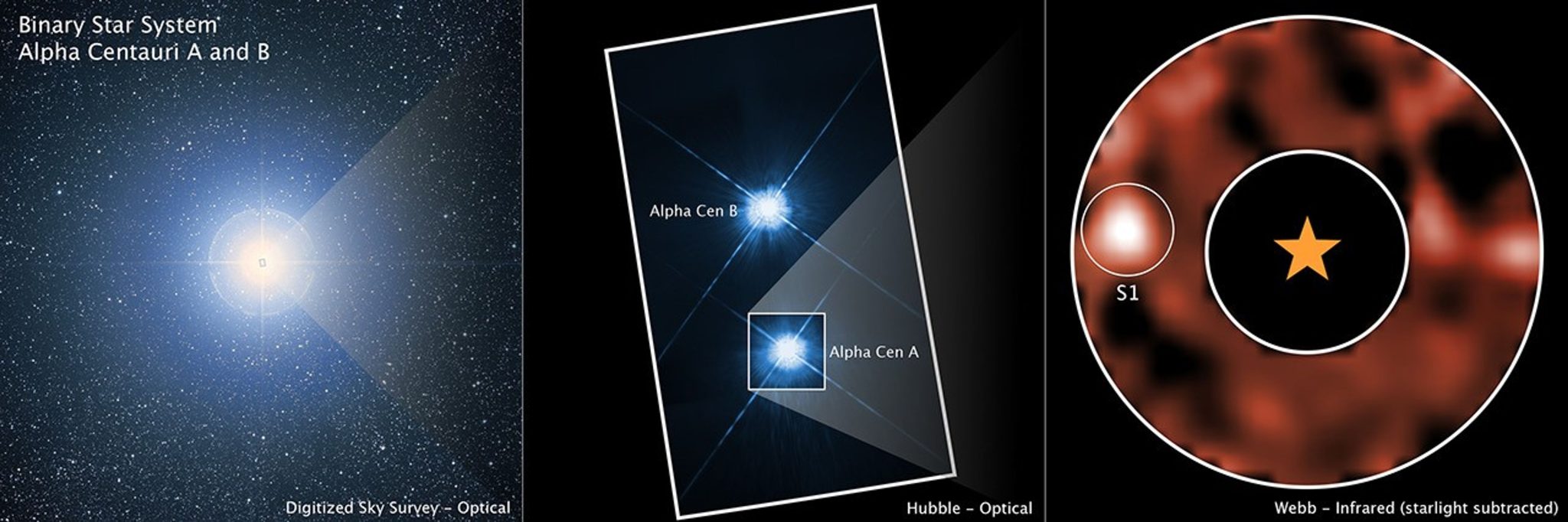
It is important to note that after the initial discovery, JWST was unable to detect the object during follow-up observations conducted in February and April 2025. To solve the mystery of the “disappearance,” astronomers resorted to computer simulation. It was based on both JWST data and old VLT observations.
Simulations have shown that the disappearance of the exoplanet is not unexpected. In half of the possible orbits, it would come too close to the star to be visible to JWST in 2025.
Based on the brightness of the exoplanet and its orbit, researchers concluded that it is a gas giant with a mass comparable to Saturn. It is located in an elliptical orbit passing at a distance of 1–2 AU from the central component of Alpha Centauri in its habitable zone.
Although the existence of life on a gas giant contradicts modern scientific beliefs, in theory it could have large moons with dense atmospheres similar to Titan. In this case, they may well be home to living creatures. It is interesting to note that, according to the plot of the film Avatar, the planet Pandora, where most of the action takes place, is a moon of a large gas giant orbiting one of the central stars of Alpha Centauri.
Astronomers intend to continue observations to confirm the existence of an exoplanet near Alpha Centauri. They have particularly high hopes for the Roman telescope, which could be launched as early as 2026. It is equipped with a coronagraph, which will allow us to collect much more data about Alpha Centauri and see the exoplanets orbiting it.
According to NASA

