

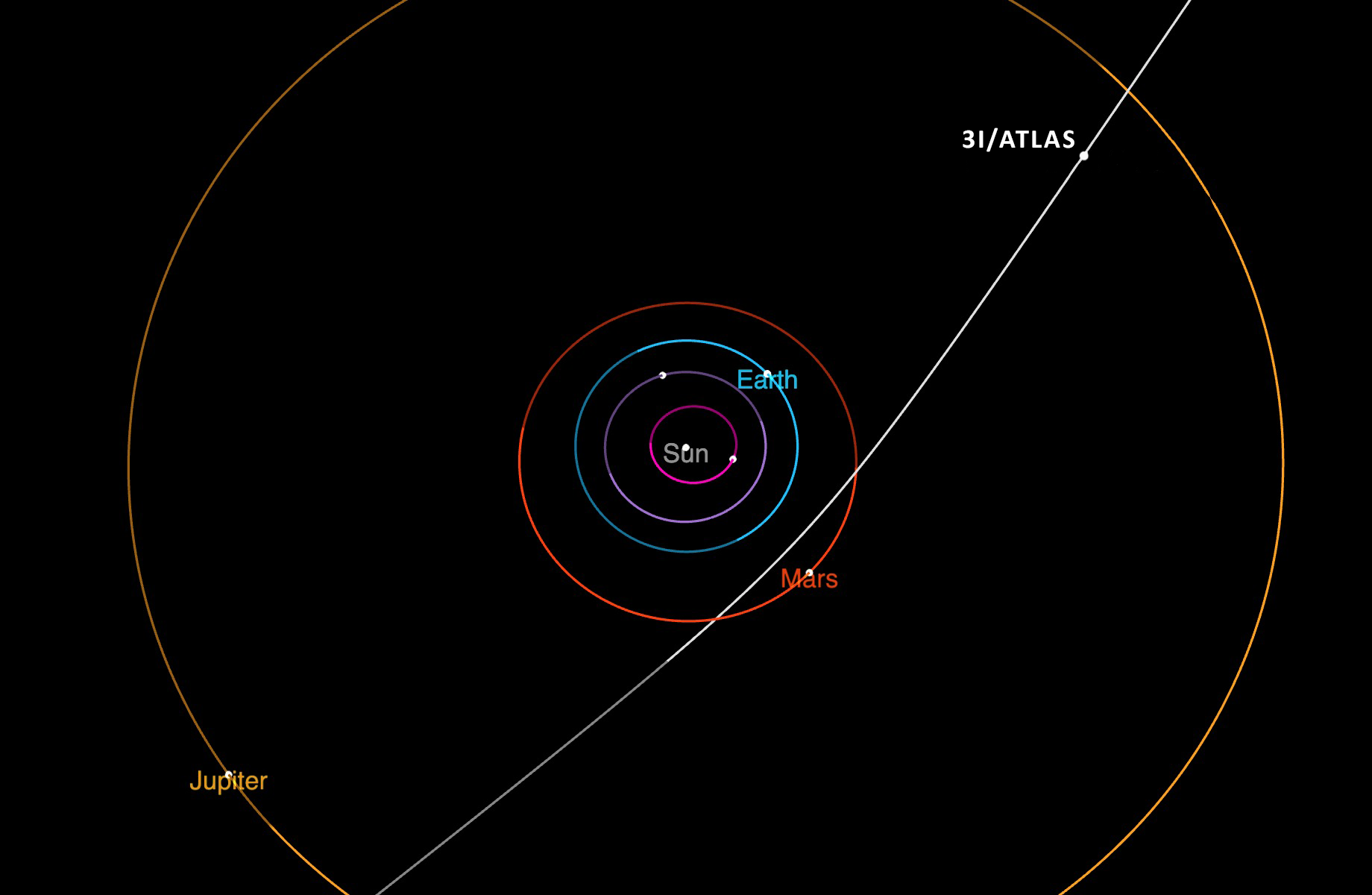
On July 1, 2025, astronomers discovered the interstellar object 3I/ATLAS. On March 16, 2026, it will approach Jupiter at a distance of 53.6 million km. This close approach opens up an incredible opportunity for the Juno spacecraft, which is already in orbit around Jupiter.
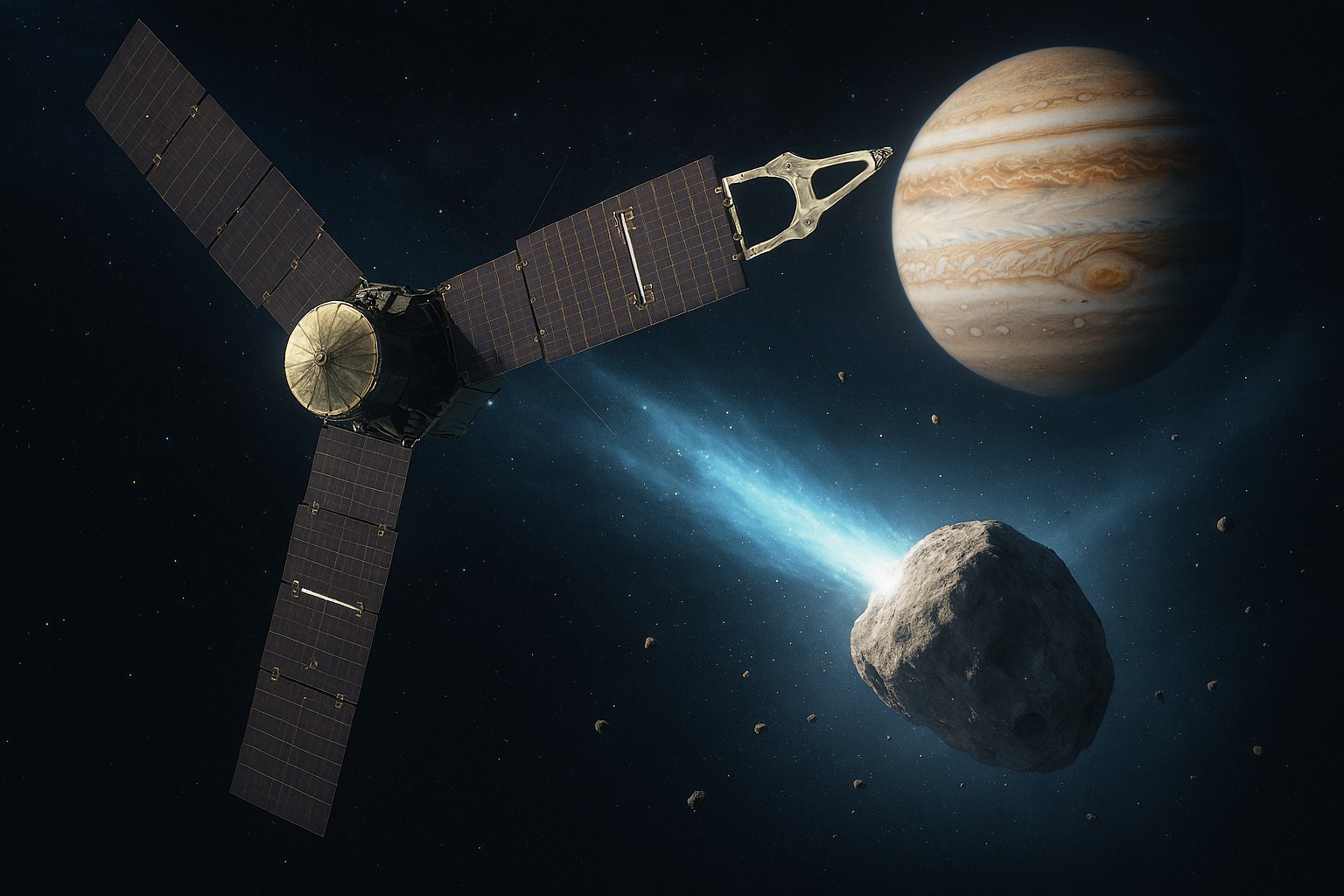
New calculations show that if, on September 9, 2025, the spacecraft performs a powerful maneuver with an additional impulse of 2.675 km/s, Juno will be able to leave its current orbit. This will allow the probe to intercept the trajectory of 3I/ATLAS at the moment of its closest approach to Jupiter on March 14, 2026. The necessary maneuver requires two impulses: one to decrease altitude, the second for the actual interception. Although the Juno engine has not been used since 2017, the necessary thrust is potentially possible given the remaining fuel.
The 3I/ATLAS interception opens up a gold mine for science. Juno is equipped with a powerful set of instruments: a near-infrared spectrometer, a magnetometer, a microwave radiometer, a particle detector, a UV spectrograph, a visible light camera, and others. They will be able to study the nature of this interstellar visitor, its composition, surrounding gas, and dust from an unprecedentedly close distance, much better than any telescope on Earth.
This bold plan will radically change Juno’s fate. Instead of ending its mission in September 2025 by entering Jupiter’s atmosphere, the spacecraft will get a chance to keep going after March 14, 2026. The successful interception of an interstellar object will be a historic event and an incredible scientific gift.
Earlier, we explained whether an interstellar comet could be an alien probe.
According to medium.com

