

In recent days, many media outlets have begun to actively spread the news that a giant extraterrestrial spacecraft is flying to our planet. Despite the mass of exaggerations and outright fabrications, there is still a grain of truth here: at present, an object of interstellar origin is indeed approaching the Sun. We are talking about comet 3I/ATLAS, which was discovered in early July.
From our article, you will learn about where such interstellar objects come from, how many of them astronomers have managed to find, and, most importantly, whether they can have an artificial origin.
What are interstellar objects?
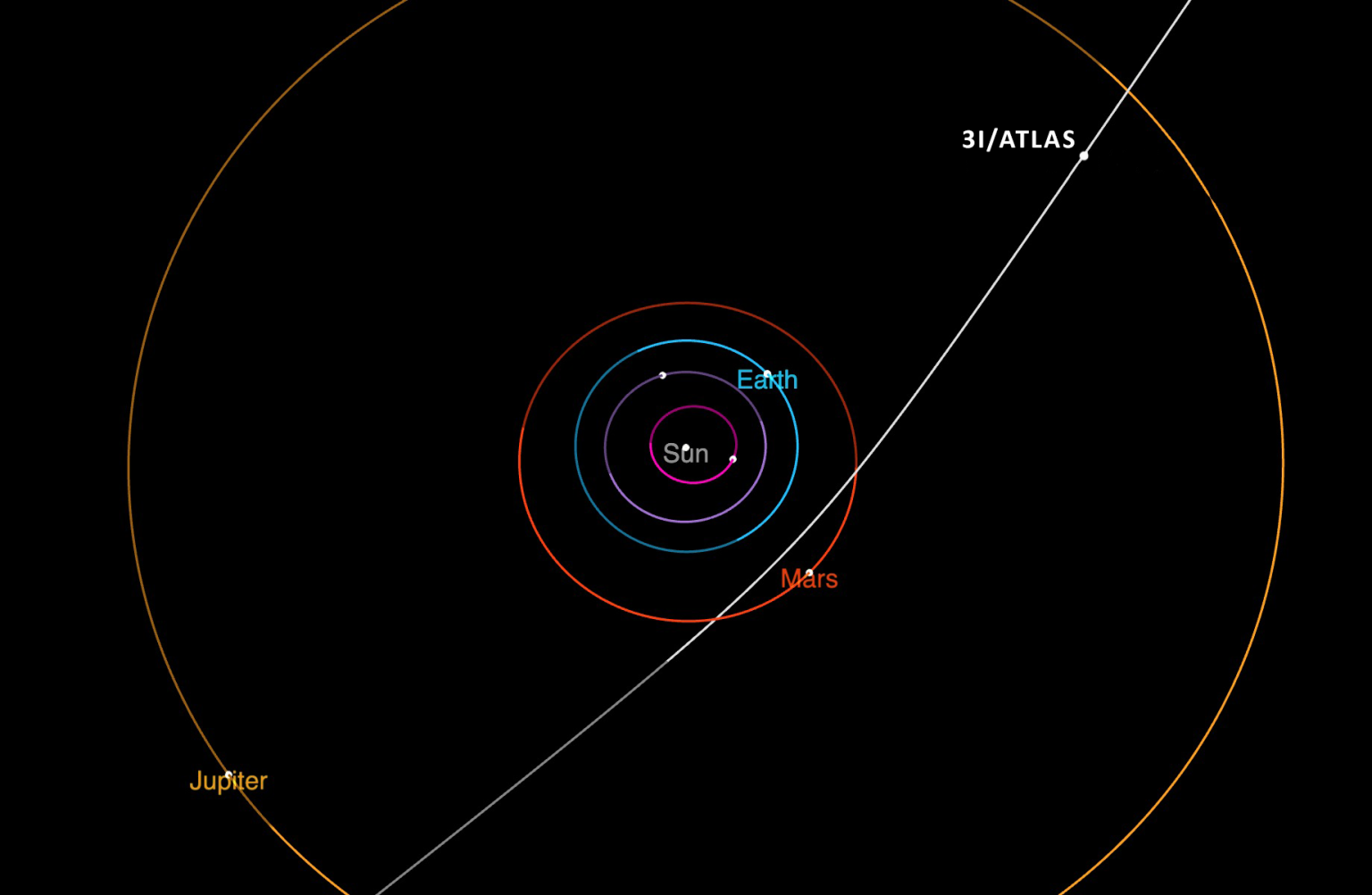
Interstellar objects are bodies that enter the Solar System from interstellar space. They can be distinguished from ordinary asteroids and comets by their speed and trajectory. Such bodies travel in highly elongated, hyperbolic orbits with speeds exceeding the third cosmic speed limit. Or, to put it another way, they are not gravitationally bound to the Sun. Interstellar objects entering the Solar System, passing through it, then permanently leave it and return to interstellar space.
Where do interstellar objects come from?
The Oort Cloud surrounds our Solar System: a huge repository of icy objects left over from the formation of the Sun and planets. It is the main “supplier” of long-period comets. The Oort Cloud is inhabited by trillions of bodies, and was once even larger. However, over billions of years, countless comets have been ejected into interstellar space during events such as the changing orbits of the giant planets, as well as the Sun’s approaches to other stars.
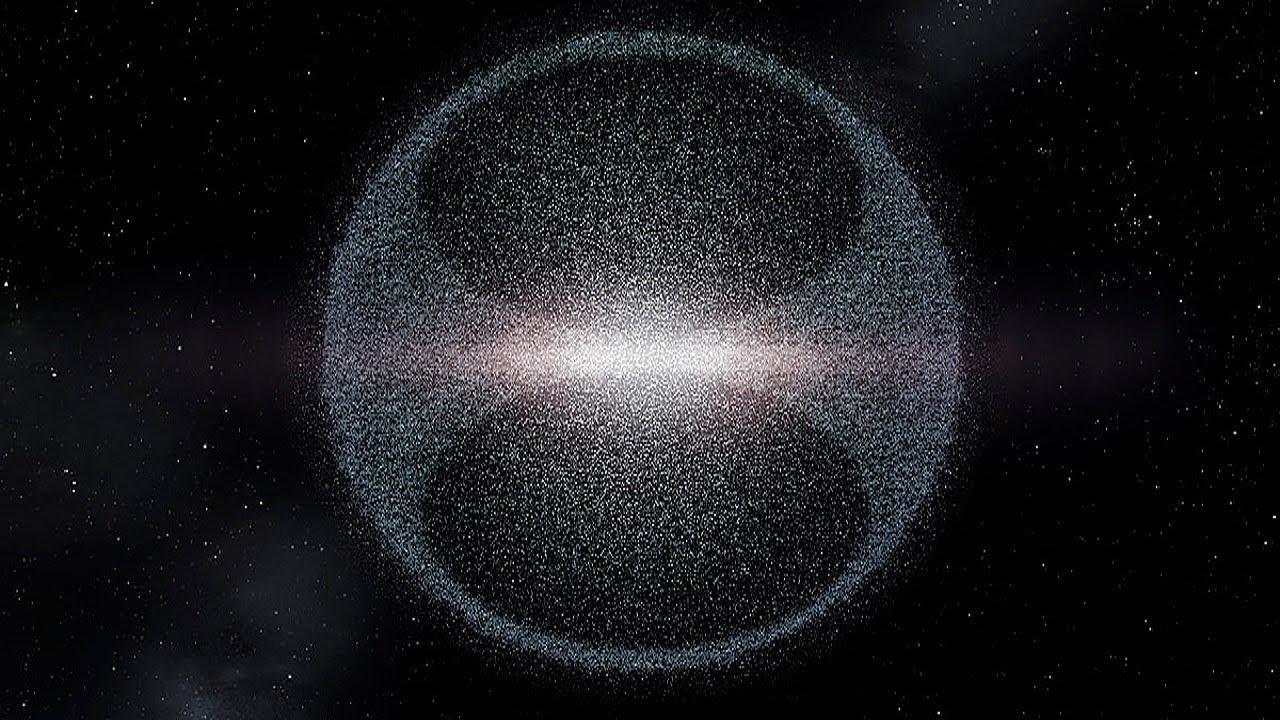
Astronomers have no reason to believe that Oort cloud analogs in other stars behave differently. Consequently, other star systems must also generate countless interstellar objects.
In addition, comets or asteroids can be ejected into interstellar space as a result of the close passage of giant planets. Astronomers know at least two such cases. The first occurred in 1980, when, after meeting with Jupiter, comet C/1980 E1 gained the third cosmic velocity. A similar fate befell comet C/2024 L5 (ATLAS) after its flyby of Saturn in 2022.
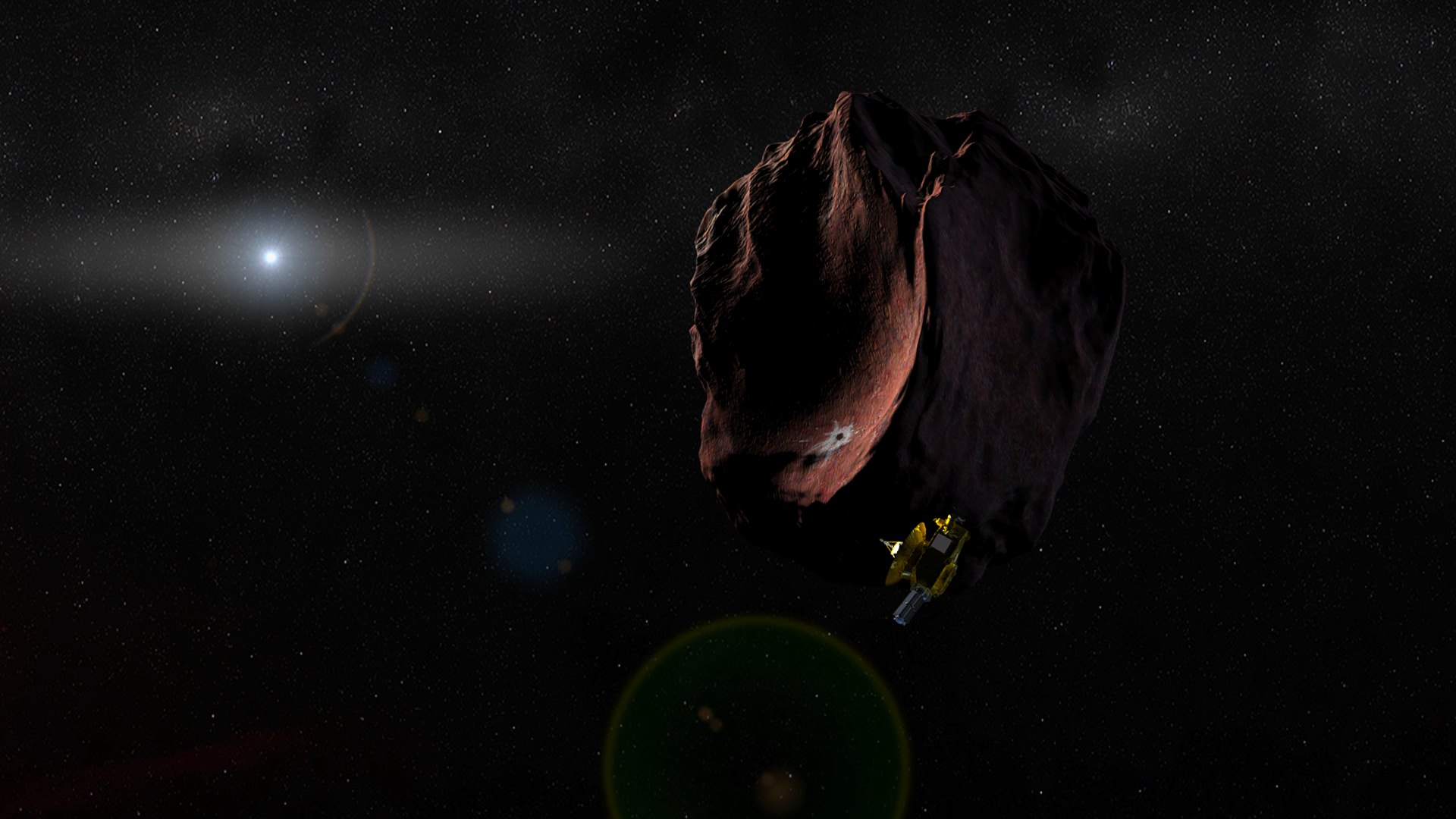
Finally, interstellar objects can be formed in the course of anthropogenic activity. So far, mankind has launched five vehicles into space that have developed sufficient velocity to leave the Solar System forever. These are Pioneer 10, Pioneer 11, Voyager 1, Voyager 2, and New Horizons. Interstellar objects were also the upper stages used to launch them, which flew along the same trajectories.
Known interstellar objects
To date, astronomers have managed to detect three objects in the Solar System that have an interstellar origin. The first was the asteroid Oumuamua, found in 2017. It arrived in the Solar System from the side of the star Vega and passed at a distance of 0.25 AU from the Sun.
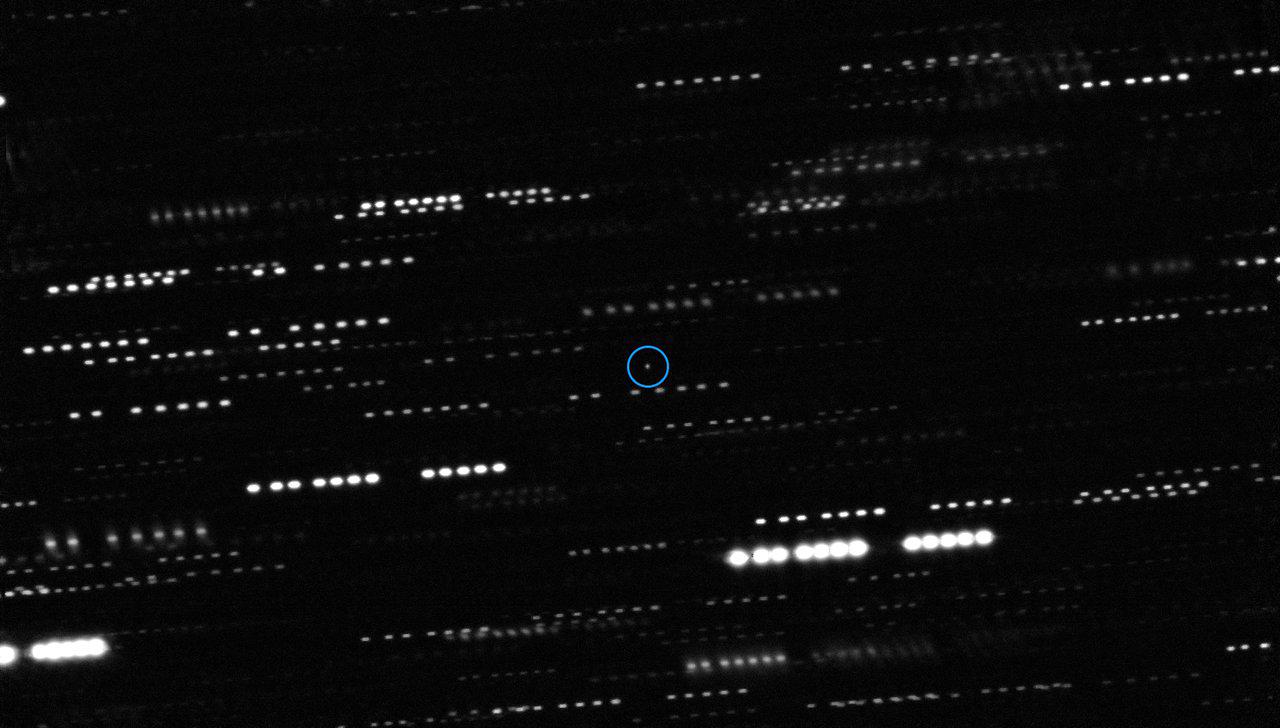
The second is comet 2I/Borisova, found in 2019. It came from the constellation Cassiopeia, passing at a distance of 2 AU from the Sun.
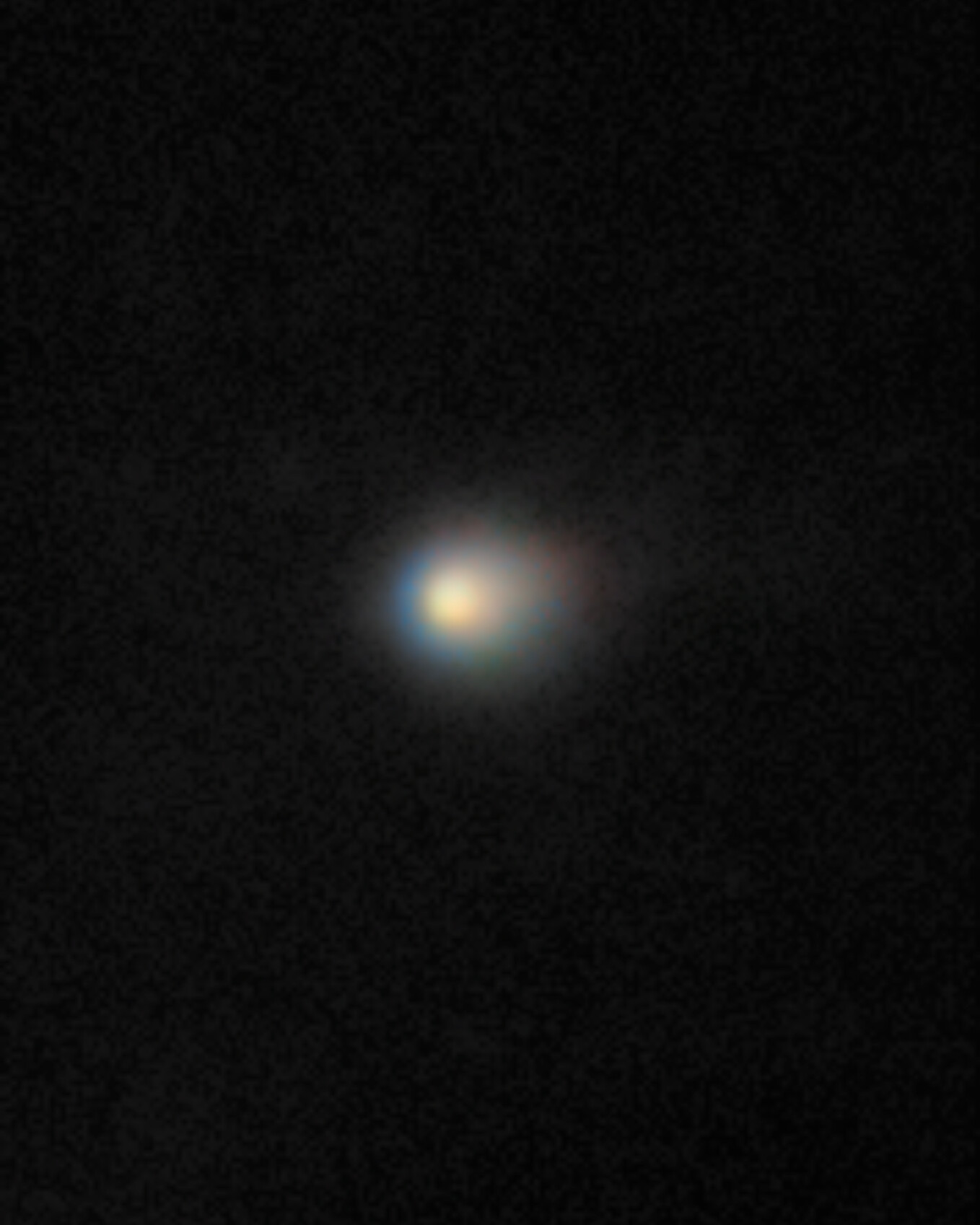
The third interstellar object was comet 3I/ATLAS. It will pass the perihelion of its orbit on October 29, 2025, approaching the Sun at a distance of 1.35 AU. 3I/ATLAS has a much more elongated orbit than its predecessors. Its eccentricity is 6.2. By comparison, the eccentricity of Oumuamua was about 1.2, and that of Borisov was about 3.6.
Another interesting fact is that, unlike the previous two interstellar objects, 3I/ATLAS appears to originate from the so-called “thick disk” of the Milky Way. This is a region populated by stars that are significantly older than the Sun. Astronomers estimate that 3I/ATLAS may be 7.5 billion years old, or even older. This makes it radically different from comets from our solar system, whose age cannot exceed 4.5 billion years.
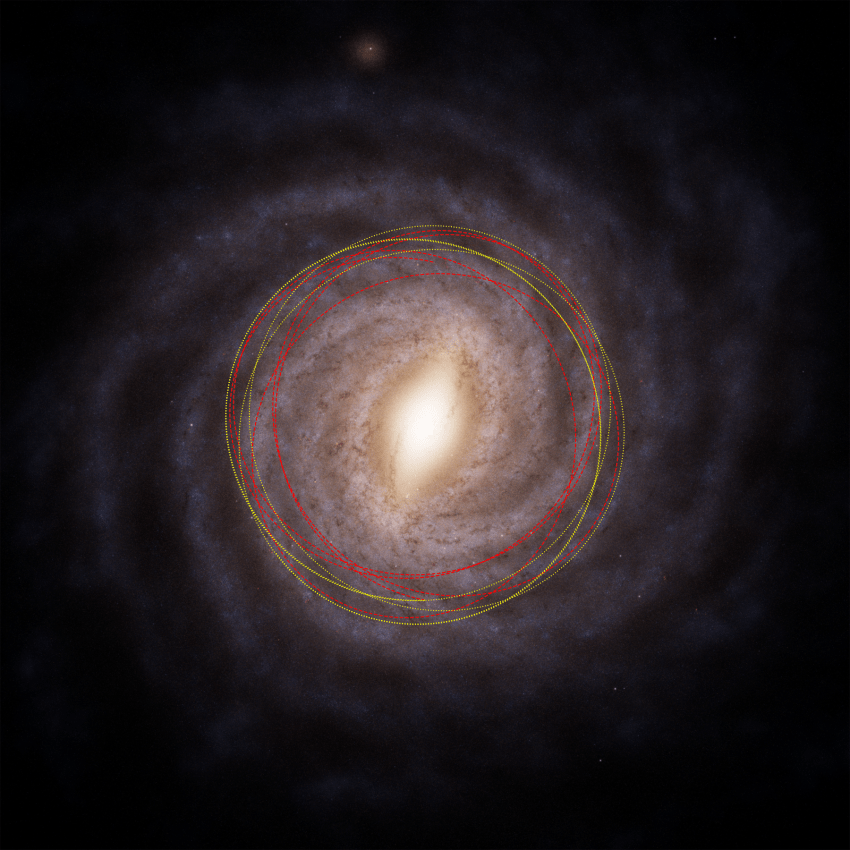
Source: M. Hopkins/Ōtautahi-Oxford team
According to most astronomers, the three known interstellar objects are just the tip of the iceberg, and in reality, there are many more in the Solar System. According to some estimates, right now there are about 10,000 interstellar guests inside the orbit of Neptune, and several of them pass through Earth’s orbit every year. The problem is, they are not easy to detect.
But that may soon be changing. Astronomers have high hopes for the newly operational Vera Rubin Observatory, which will soon begin its decade-long Legacy Survey of Space and Time. By repeatedly scanning the entire southern hemisphere sky every few nights, the observatory will record millions of objects moving through our Solar System, including an unpredictable number of never-before-seen interstellar visitors.
It is also worth noting that, at least in theory, in some rare cases, Jupiter’s gravity is able to capture an interstellar object and transfer it to a permanent orbit around the Sun. Astronomers know several bodies that could be such “aliens”. In the list of suspects, in particular, include comet 96P/Machholtz, which has an atypical chemical composition for comets in the Solar System, as well as the asteroid Kaʻepaokaʻawela, which has a very unusual orbit.
Could interstellar objects be extraterrestrial spacecraft?
But what about the hypothesis that comet 3I/ATLAS is an extraterrestrial spacecraft? Its author is Harvard University astrophysicist Avi Loeb, who is known for being a big fan of the idea of the existence of extraterrestrial civilizations and regularly writes speculative articles on the subject. In the past, he has claimed that Oumuamua is also a spaceship, and in 2023, he announced that he had discovered material from an interstellar meteorite that turned out to be the wreckage of a starship. Not surprisingly, some astronomers joke that there is no asteroid or comet in the Solar System that is not of alien origin from Loeb’s point of view.
For obvious reasons, the media loves to talk about Loeb’s hypotheses. After all, after all, all his regalia is real and he is a scientist. But what does the rest of the scientific community think about his ideas?
Let’s start with comet 3I/ATLAS, which is now on the rumor mill. Alas, but all claims about the strange nature of this object are untrue. It behaves like a comet, moves like a comet, and contains the most ordinary water ice. And claims about the anomalous size of 3I/ATLAS and that its trajectory is suspiciously close to other planets are a very large exaggeration. Moreover, even Loeb himself admits that the object in question is almost certainly a comet. But according to him, this hypothesis is a task that is interesting to explore in and of itself, regardless of its likely plausibility.
As for the Oumuumu site, things are a bit more interesting. Some of its characteristics are quite unusual. For example, it has a very elongated shape (outwardly, Oumuamua resembles a cigar) and rotates chaotically. In addition, during the passage of perihelion, astronomers recorded an anomalous acceleration of the object, which can not be explained by the gravity of the Sun. In his article, the same Avi Loeb suggested that Oumuamua is a solar sail.
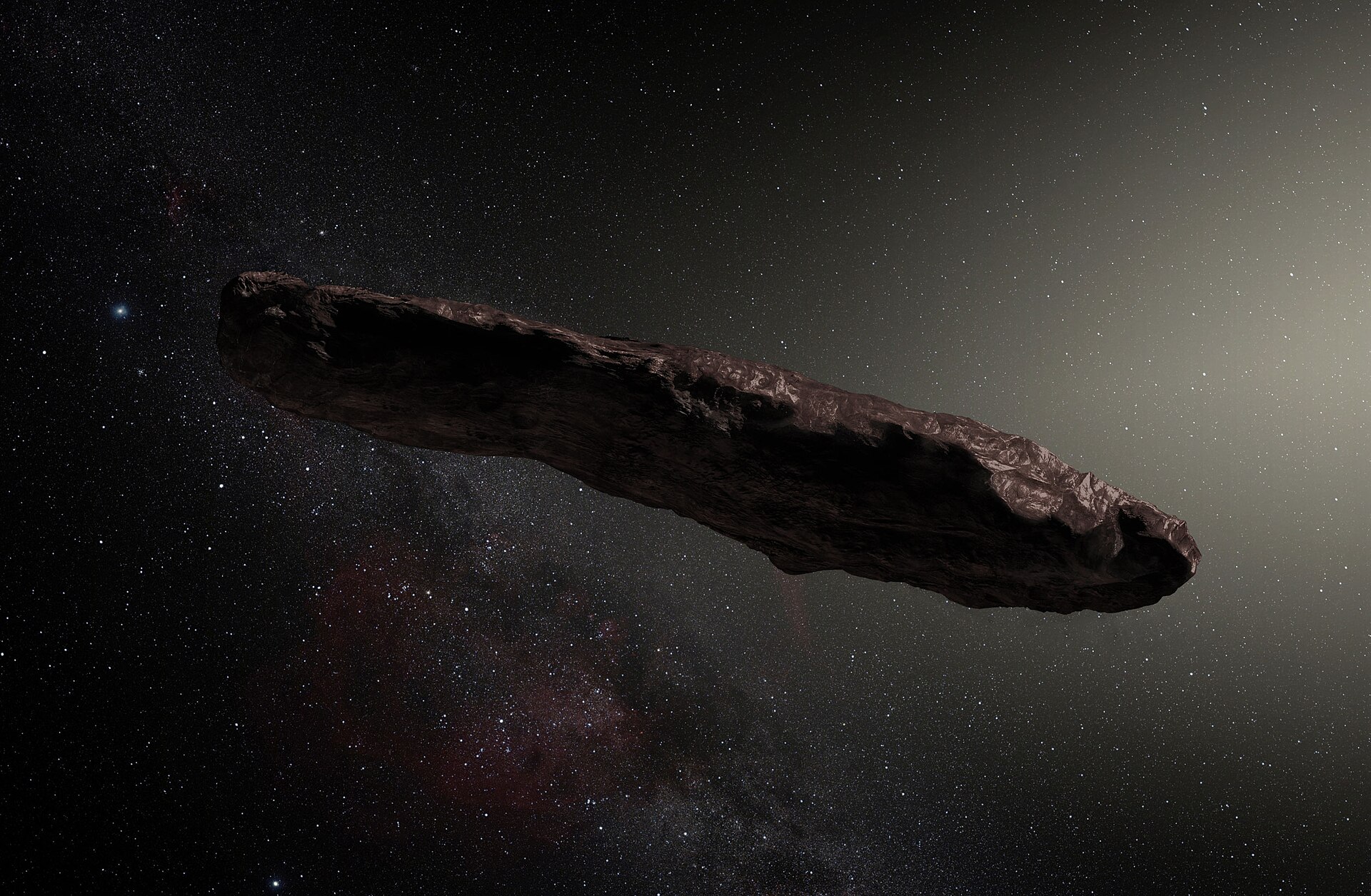
But the absolute majority of scientists do not agree with this interpretation. Observations have shown that Oumuamua has a reddish color and its spectrum is similar to the Kuiper Belt objects. Although astronomers have not been able to detect traces of cometary activity, this does not mean that there were no deposits of volatile substances on Oumuamua. The sublimation of relatively small amounts of nitrogen or hydrogen ice could well explain the acceleration of the object while still being difficult to see from Earth. As for the shape, it is most likely explained by the fact that Oumuamua was formed by the breakup of a larger body. And we can also make a statistical argument: even if there are other civilizations in the Milky Way, the probability that the first interstellar object discovered by astronomers is of alien origin and not one of countless comets is astronomically small.
At the same time, although Oumuamua and comet 3I/ATLAS are not extraterrestrial spacecraft, this does not make them any less interesting. Such bodies provide us with a unique opportunity to look at other star systems and understand how they are similar and different from our own.
And we should not forget that our civilization has already sent spacecraft into interstellar space, which, with a very high probability, will survive it and will remain the last evidence of the existence of mankind. Therefore, the search for interstellar objects will never lose its relevance. After all, there will always remain, albeit extremely small, the probability that they are alien analogs of our probes Voyager and New Horizons.

