

When the question of extraterrestrial life comes up, skeptics usually respond, “We probably won’t find any.” It’s all because the scope of the search is too vast, the instruments are too weak, and the universe is too empty. Until recently, such pessimism was entirely justified.

However, with the rapid advancement of technology, this description no longer reflects the reality we are rapidly approaching. The next half-century will be radically different from the previous one. For the first time in human history, space agencies are preparing to launch a complex of specialized instruments designed exclusively for the search for extraterrestrial life. This process will proceed simultaneously along several independent tracks: extremely large and ultra-sensitive ground-based telescopes will come online, along with flagship space observatories designed to analyze biosignatures, a fleet of probes to explore ocean worlds, and the most precise radio-analytical system in history. Only if we have not found any evidence by 2075 will it be possible to conclude that searching for life in the universe is truly futile.
Billions of potential worlds

Let’s start with the facts: as of the publication of this article, astronomers have confirmed the existence of more than 5,000 exoplanets. As Harvard researcher David Charbonneau notes, there is “very strong evidence” that at least one in four stars has an Earth-sized rocky planet in its habitable zone. There are more than 100 billion stars in our Milky Way alone. This guarantees the existence of tens of billions of potentially habitable worlds—and that’s before even considering moons or non-traditional environments, such as icy ocean planets.
The scientific community is well aware of these possibilities. According to a 2025 survey, 86.6% of astrobiologists agree that simple extraterrestrial life likely exists. This is not merely a bold hypothesis, but a consensus among experts. Scientists are no longer waiting for philosophical validation—they are waiting for tools.
Extremely Large Telescope

The first major technological breakthrough will occur as early as 2028, when the Extremely Large Telescope (ELT) begins operations in Chile’s Atacama Desert. Its 39-meter-diameter primary mirror will make it the largest optical and infrared telescope on the planet. Images from the ELT will be 16 times sharper than those from Hubble. The main advantage of the instrument is that it will be able to directly image planets that do not pass in front of their stars, filling in gaps that are inaccessible to the James Webb Space Telescope (JWST).
The simulations are impressive: the ELT is capable of detecting biosignatures (oxygen, methane, carbon dioxide) on planets orbiting Proxima Centauri, the star closest to us, in just 10 hours of observation. If the planets are larger, the mission duration will be reduced to one hour. This isn’t some vague vision of the distant future, but a real spacecraft with a confirmed launch date and a specific list of objectives.
Habitable Worlds Observatory
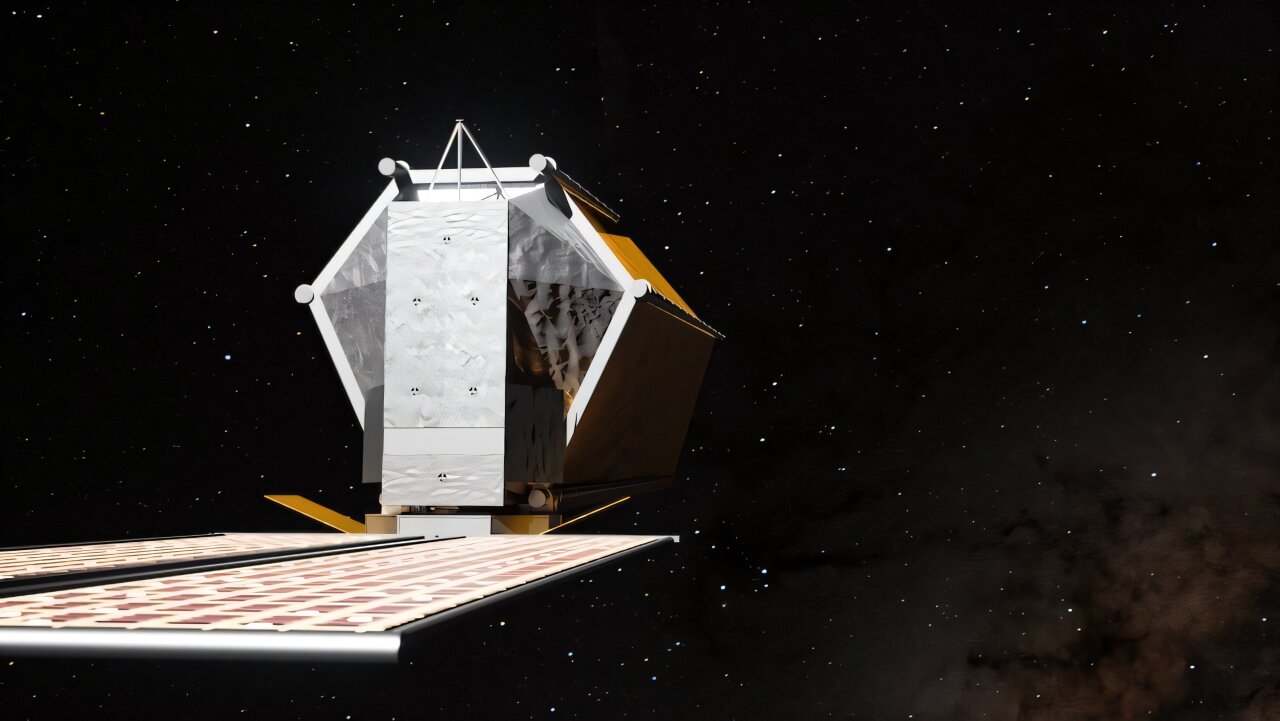
An even more ambitious project is NASA’s Habitable Worlds Observatory (HWO), which is scheduled to launch in the early 2040s. The HWO will feature a mirror with a diameter of up to 8 meters and a high-tech coronagraph capable of dimming starlight by a factor of 10 billion. The stability of its system will be 1,000 times greater than that of the James Webb Space Telescope.
The HWO mission has been established with a single objective: to directly image at least 25 potentially habitable Earth-like worlds and analyze the chemical composition of their atmospheres for biosignatures. Once HWO is in orbit, we will have the most powerful tool for cataloging extraterrestrial chemistry.
Ocean Worlds

Even if the search for distant stars yields no results, we have an alternative much closer to home. The Solar System is home to at least nine bodies with confirmed or probable subsurface oceans, including Europa, Enceladus, and Titan.
NASA’s Europa Clipper spacecraft, which is already en route to Jupiter, will perform a series of close flybys of Europa in 2030. Its mass spectrometers and dust analyzers will collect material from plumes escaping into space. If there are biological compounds there, Europa Clipper has a good chance of detecting them.
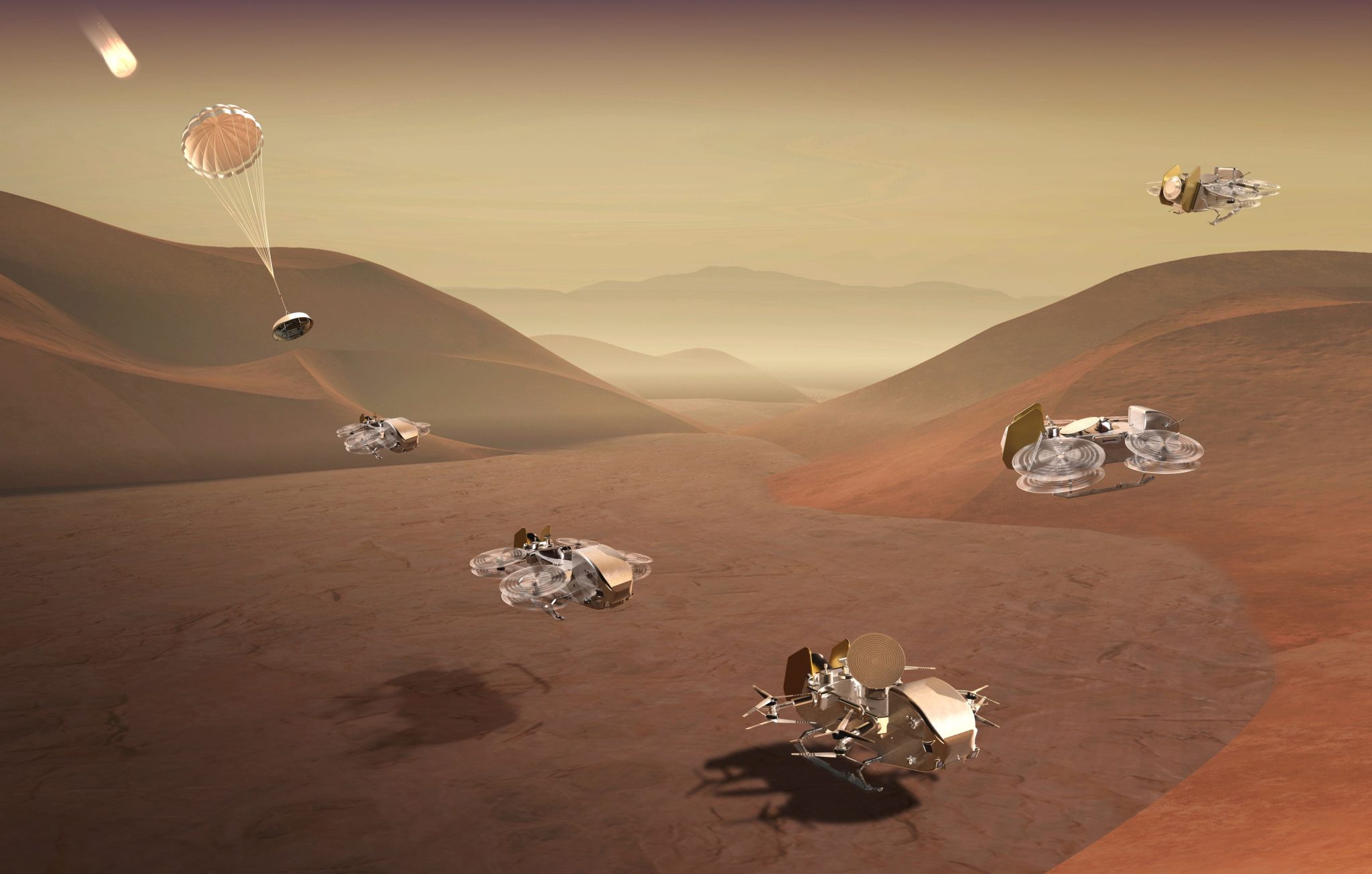
In 2034, the Dragonfly, an autonomous helicopter powered by a nuclear engine, will arrive on Saturn’s moon Titan, where it will spend more than three years exploring the most chemically rich prebiotic environment in our solar system. At the same time, missions are being planned to Enceladus, whose geysers eject fresh material from its subsurface ocean, making it the most accessible target for sample collection without the need for a complex landing. The technology used during the Cassini mission is now outdated—modern instruments are capable of detecting biomolecules at extremely low concentrations.
SETI and the Square Kilometre Array
The third key area is the search for technosignatures using radio astronomy. In 2028, the Square Kilometre Array (SKA) will become operational—a massive network comprising 131,000 antennas in Australia and nearly 200 antennas in South Africa. This will enable the scaling up of observation programs such as Breakthrough Listen. So far, we have explored a volume of space equivalent to a glass of water from the ocean. The SKA will increase the search rate by several orders of magnitude, resulting in a data set of unprecedented size.
The Final Verdict: A Game of Numbers
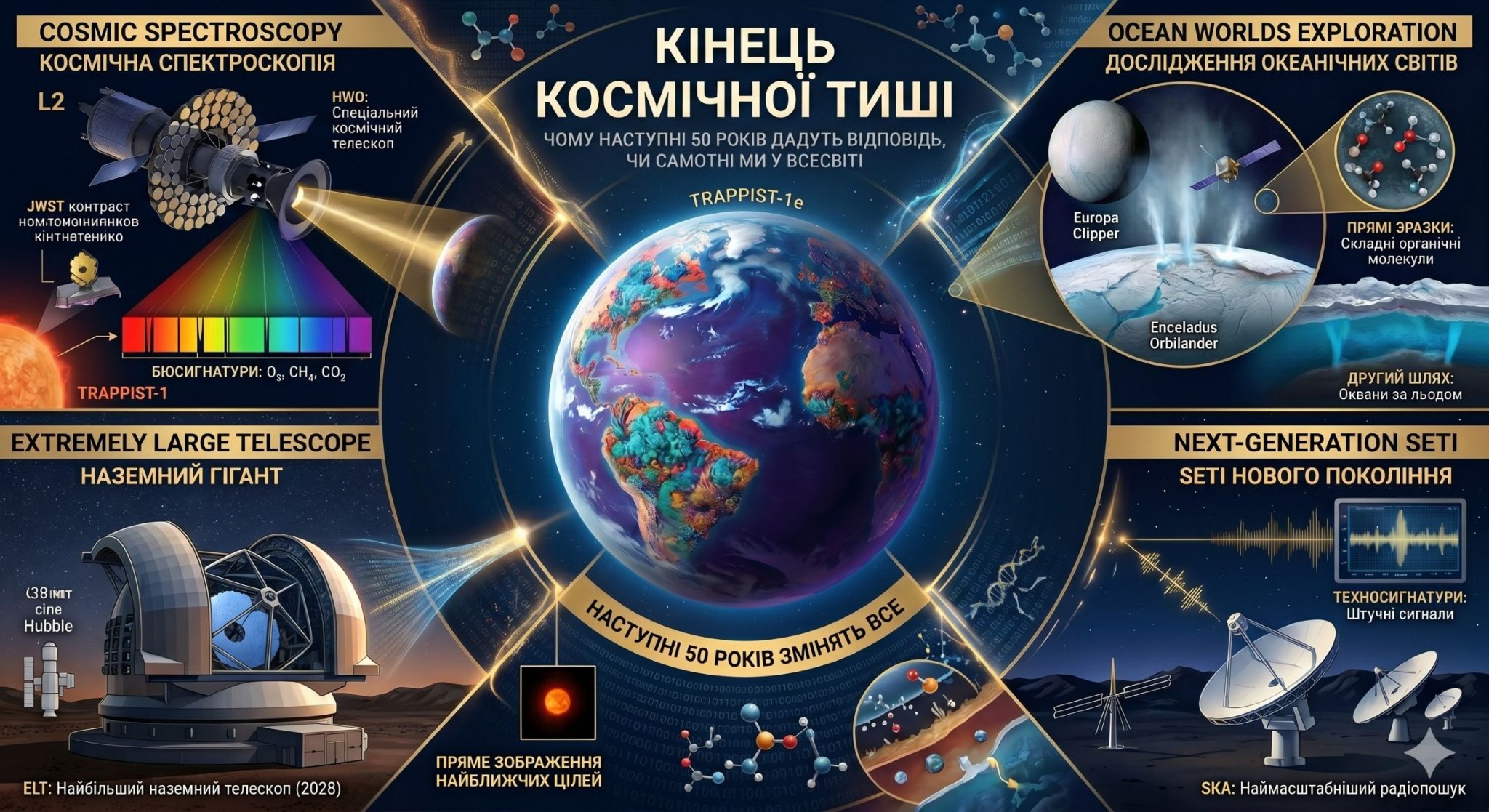
Our confidence that we will find an answer within the next 50 years is based not on a single mission, but on the simultaneous work of several independent research areas. By 2075, the ELT will have surveyed all nearby rocky exoplanets, the HWO will have analyzed Earth-like planets, probes such as Europa Clipper and Dragonfly will have collected samples from ocean worlds, and the SKA will have scanned the galactic neighborhood.
Of course, there are many obstacles ahead. There could be financial delays, mission cancellations, or false positives in the analysis of biosignatures. Biochemical data can be difficult to interpret, and we are bound to encounter counterarguments and false alarms. But that doesn’t change the overall picture.
An honest answer to the question “Will we find extraterrestrial life?” depends on whether it exists there at all. For decades, the main problem has been the lack of sufficiently sensitive technology. By 2075, that excuse will no longer hold water. If life is widespread in the universe, we will find it. If it is rare but does exist, we will obtain compelling statistics. If, however, we are truly alone, this conclusion will be based on reliable scientific evidence. We are still several decades away from a definitive answer.
We previously discussed which worlds in the Solar System might be home to extraterrestrial life.
According to spacedaily.com

