

The Applied Physics Laboratory (APL) at Johns Hopkins University has officially begun assembling one of the most unusual spacecraft in the history of space exploration. The Dragonfly unmanned helicopter, whose design resembles the legendary ornithopters from Frank Herbert’s Dune universe, is preparing for a mission to Titan.
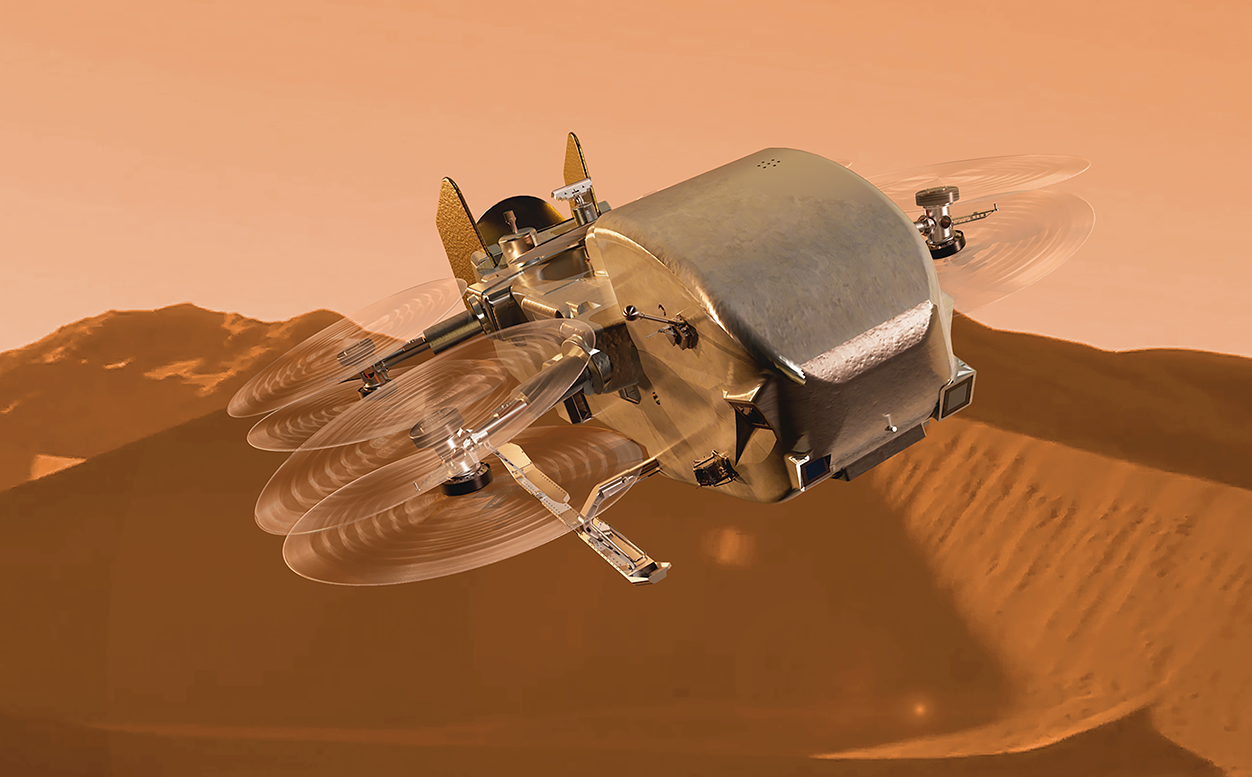
Although it is not the barren Arakis, Saturn’s largest moon will greet the explorer with vast expanses of sand dunes. And while the chances of encountering a sandworm there are practically nonexistent, the scientific potential of this mission is truly impressive.
Drone Lab
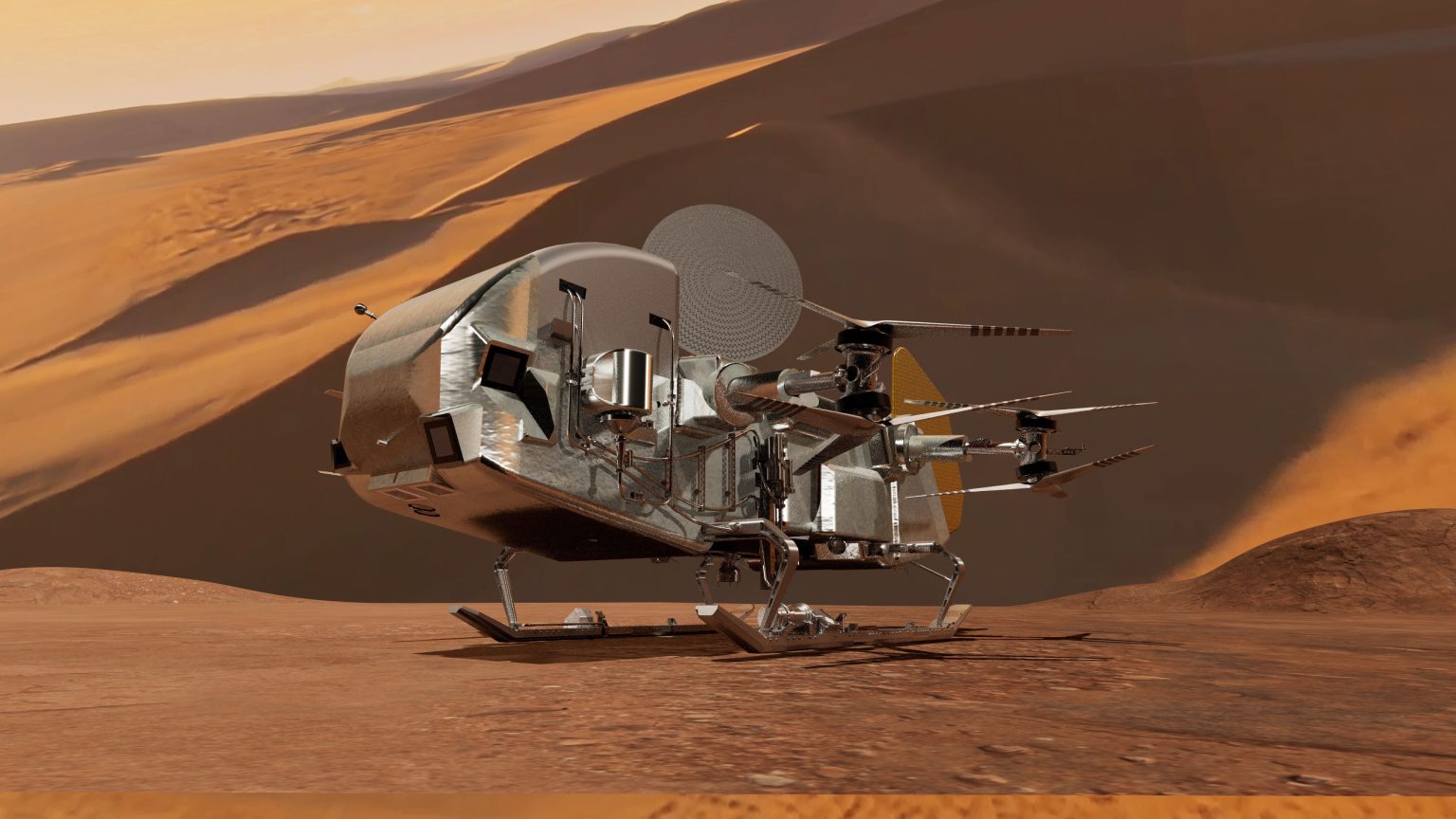
Dragonfly isn’t just a drone. It’s a fully-fledged autonomous robot about the size of a small car. Unlike rovers, which take years to cover just a few dozen kilometers, the flying probe will be able to “hop” vast distances, exploring various regions of Titan in a single flight.
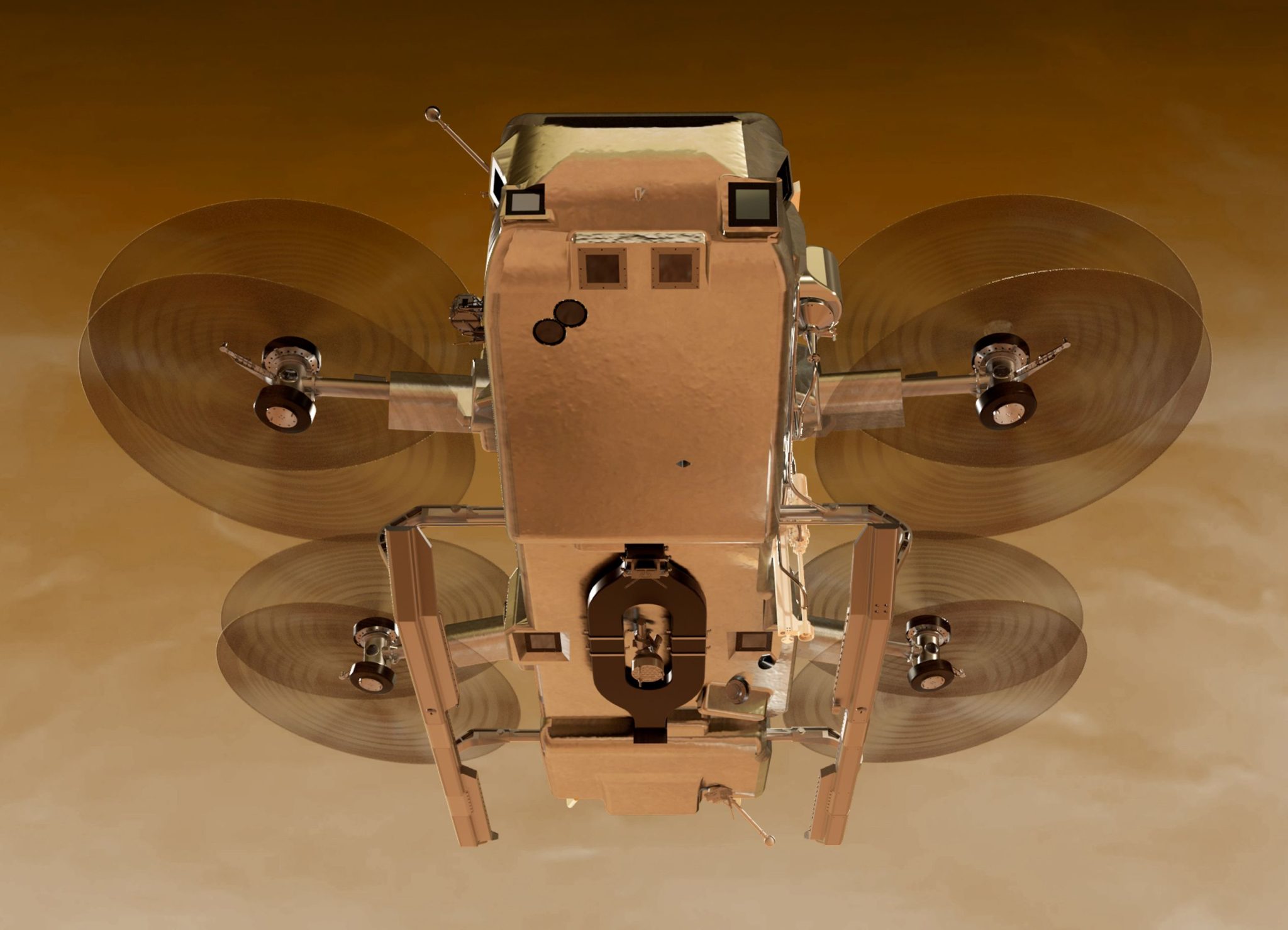
Once it reaches the moon’s surface in 2034, the spacecraft will conduct a comprehensive analysis, ranging from studying the composition of the atmosphere to taking seismic measurements. The chemical composition of the surface is of particular interest. Beneath Titan’s thick layer of ice lies a global ocean of salty water, making this world one of the most promising places to search for extraterrestrial life.
A slow and cold world
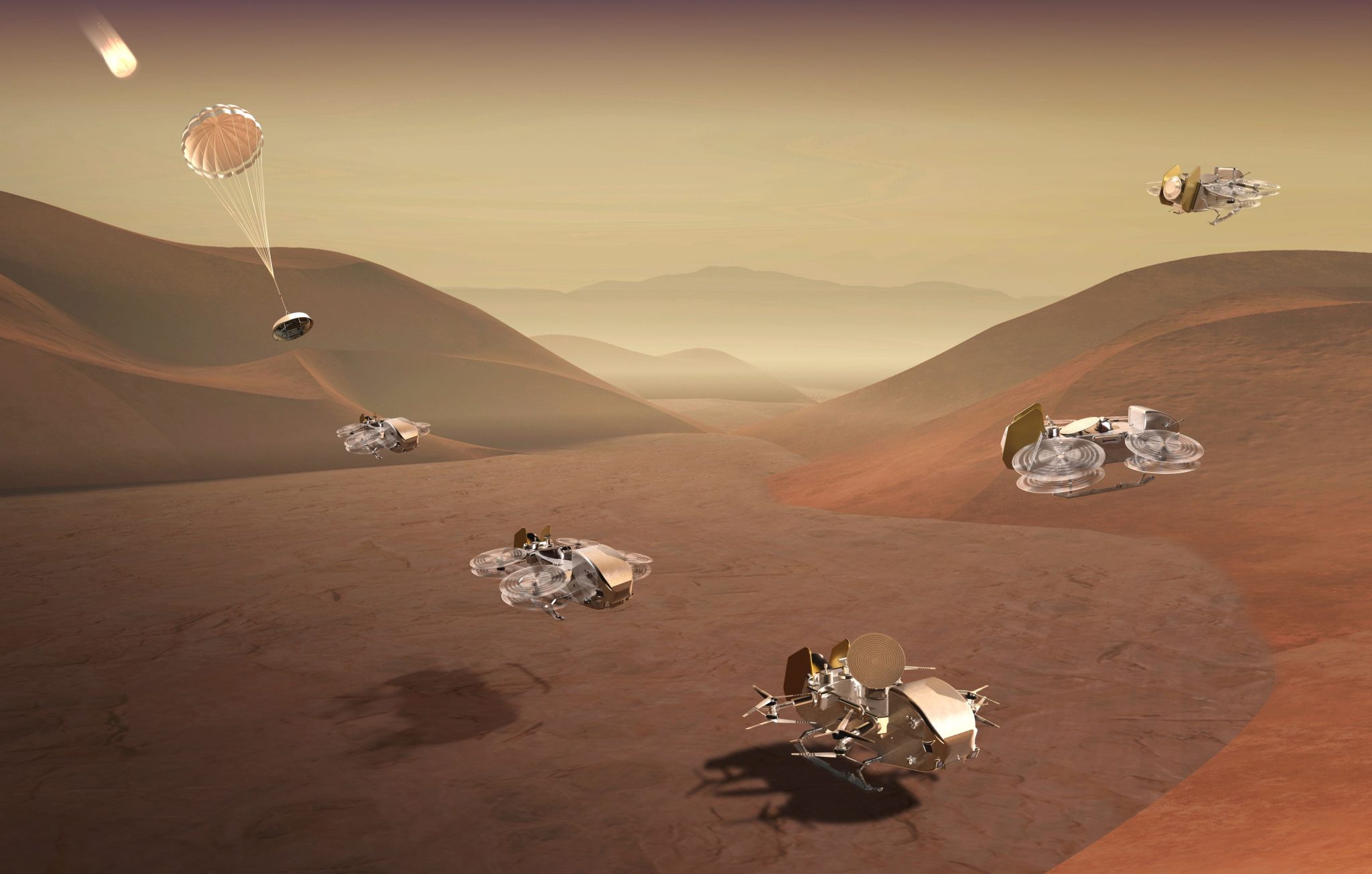
Titan is truly an amazing place. It is the only moon in the Solar System with a dense atmosphere. The air there is four times denser than Earth’s, and gravity is seven times weaker. This creates some amazing conditions: if you were there in the rain, the methane droplets would fall extremely slowly, as if in slow motion.

However, waiting for such a downpour is no easy task, since centuries can pass between precipitation events on Titan. Such a stable, albeit cold, chemical environment is the ideal place for the formation of organic compounds. Scientists consider Titan to be “Earth in the freezer”—it looks just like our planet before the first living organisms appeared on it.
A costly mission
Exploring Titan is no cheap project. The total cost of the mission is estimated at $3 billion. Previous attempts to peer beneath the moon’s thick, foggy veil have been extremely limited: in 2005, the Huygens probe lasted only a few hours on the surface due to a lack of power.
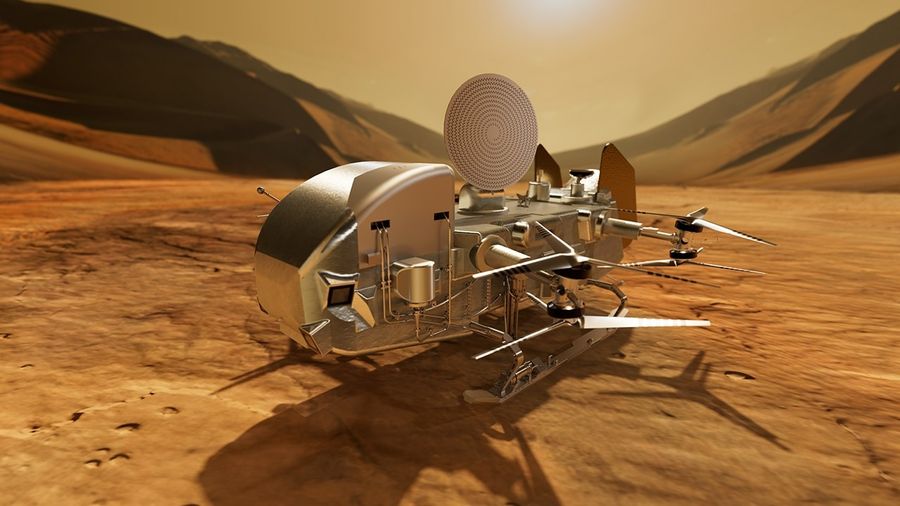
Since Dragonfly is designed for long-term operation, solar power is not an option — there is too little light penetrating Titan’s thick haze. Therefore, Dragonfly will be powered by nuclear energy. The spacecraft will be equipped with a multi-mission radioisotope thermoelectric generator (MMRTG). Fuel rods containing plutonium will generate heat, which will be converted into electricity to power electronics, servos, and scientific instruments. This technology has already proven itself on the Curiosity and Perseverance rovers.
Beginning of the journey
The mission is scheduled to be launched in 2028 using a SpaceX Falcon Heavy rocket. After launch, the spacecraft will spend six long years traveling through the Solar System. When Dragonfly finally spreads its rotors over the lakes and rivers of liquid ethane in 2034, humanity will get its clearest view of this mysterious world yet.
In the meantime, engineers continue to assemble this nuclear-powered ornithopter, keeping in mind the golden rule for travelers across the dunes: “The spice must flow,” and science must move forward.
We previously reported that the Dragonfly underwent a critical design review prior to the start of the assembly phase.
According to jalopnik.com

