

An international team of researchers has published an article on the results of observations made by the James Webb Space Telescope (JWST). Its target was black holes.
Black holes played an important role in the formation of the early Universe. However, astronomers have long debated its significance, as information about early black holes with high redshifts and located at extremely large distances from Earth has been relatively limited.
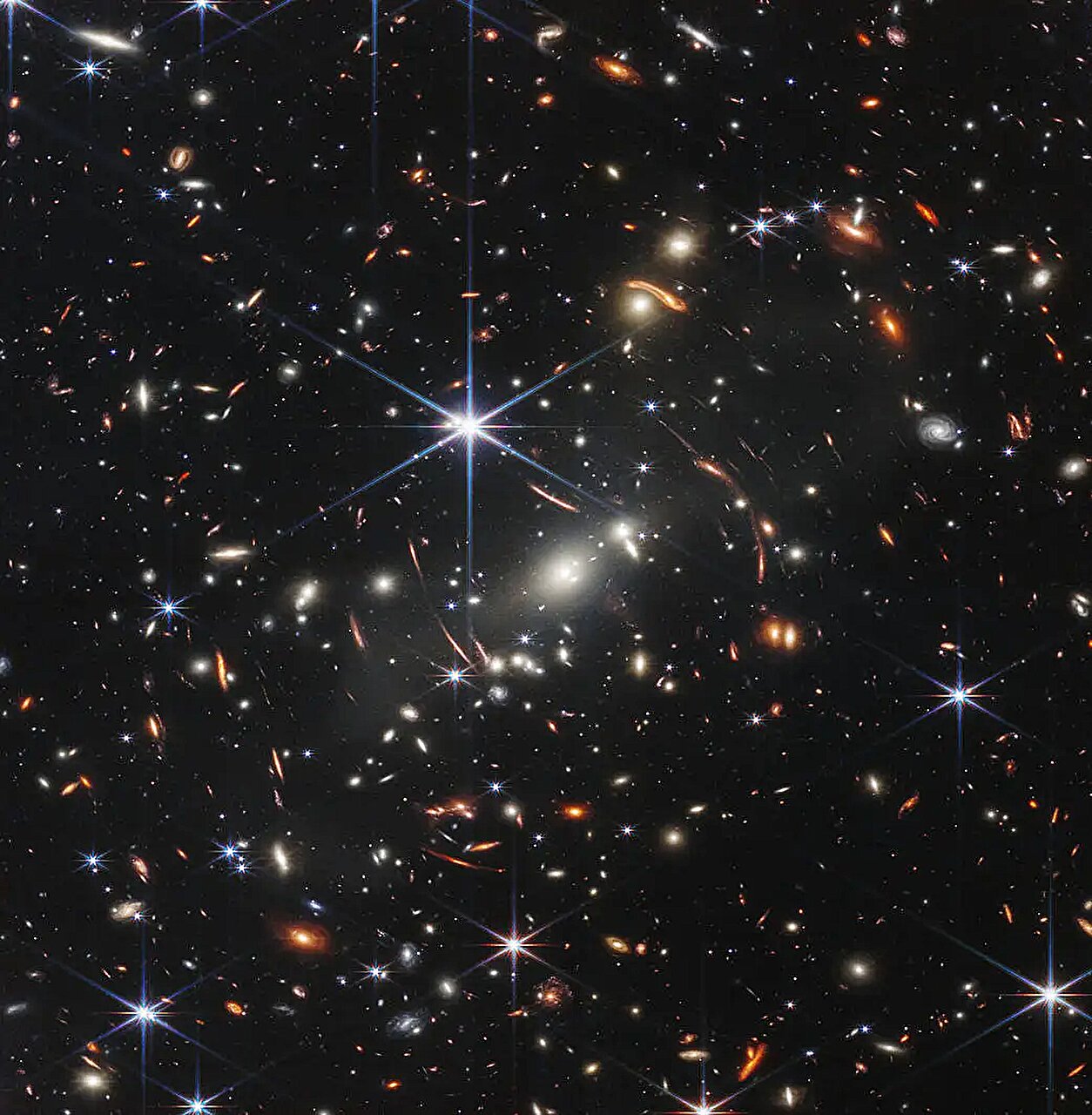
To answer this question, a group of researchers from the University of Cambridge turned to data from the JWST telescope. They analyzed 600 very distant galaxies with active cores. At their centers are supermassive black holes actively absorbing gas and dust.
Most known active galaxies are very bright. However, the study focused on very faint galaxies that would have been overlooked in traditional research. Astronomers combined a series of images obtained by JWST in different spectra to increase their brightness. They also grouped galaxies according to certain criteria, such as brightness or number of stars.
As a result, astronomers were able to identify many dim and very distant galaxies with black holes hidden at their centers. In a normal study, they would be considered inactive. It is important to note that many of the black holes at their cores are much smaller than usual. Their mass is only about one million times that of the Sun, and they are much less active.
The discovery confirms that black holes of all sizes contributed to the formation of the modern Universe. This also helps explain the previous mystery related to the size of black holes. Many of those discovered in previous studies seemed too large for their galaxies, while the black holes discovered by JWST correspond to generally accepted parameters. This may indicate the existence of many galaxies that formed before the black holes at their centers became large enough to be detected by astronomical observations.
Earlier, we reported on a star that had a close encounter with a black hole and then approached it again.
According to Phys.org

