

Astronomers used the James Webb Space Telescope (JWST) to peer into the heart of the Sagittarius B2 molecular cloud (Sgr B2). It was able to detect a cluster of massive stars and glowing cosmic dust.
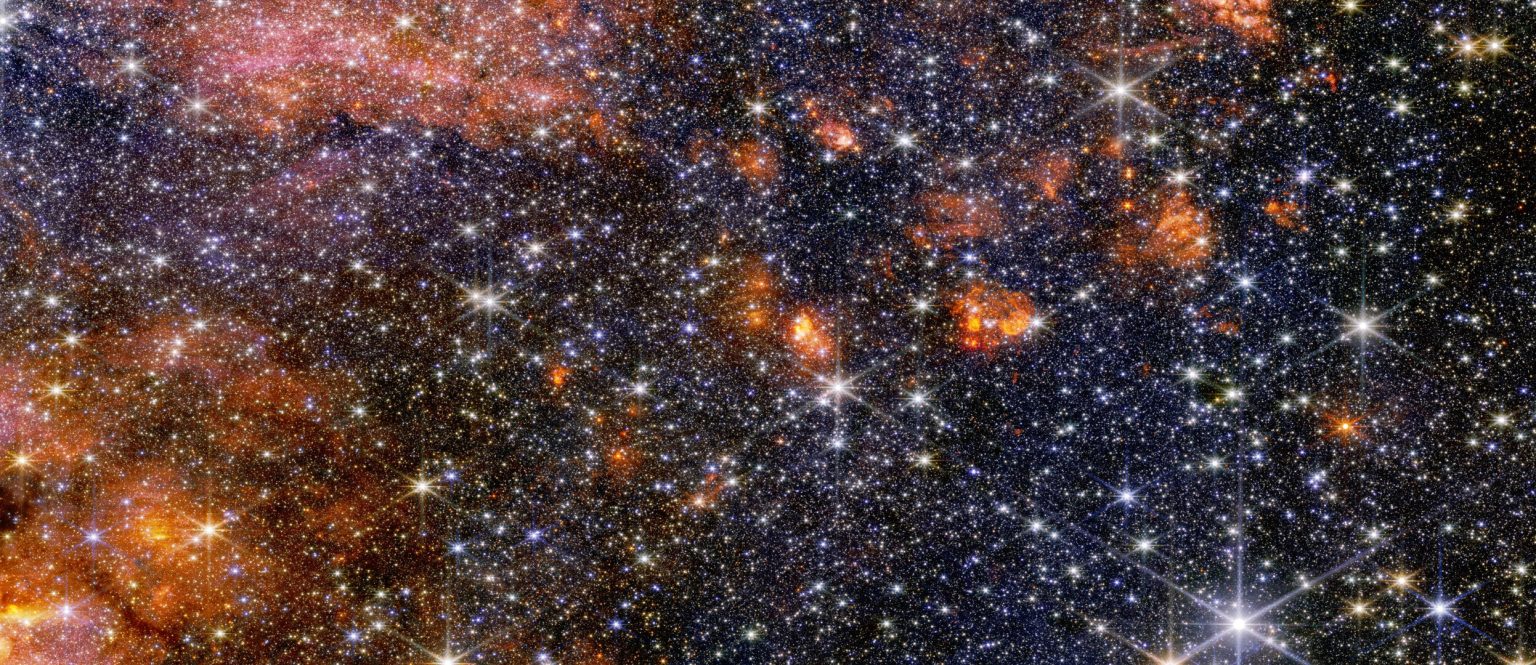
Sagittarius B2 is the most massive region of active star formation in the Milky Way. It accounts for about half of the newborn stars in the central region of our galaxy. Sagittarius B2 is located just a few hundred light-years away from the supermassive black hole Sagittarius A*.
Dense dust clouds significantly complicate the study of the center of the Milky Way using conventional optical telescopes. Fortunately, infrared radiation passes through dust, which makes it possible to use the JWST.
One of the most remarkable aspects of the images obtained of Sagittarius B2 are the areas that appear dark. These areas, which are empty at first glance, are actually so densely filled with gas and dust that even the power of the JWST is not enough to penetrate them. These dense clouds are the raw material for future stars and a cocoon for forming stars that are still too young to begin shining.
The high resolution and sensitivity of the Mid-Infrared Instrument (MIRI) allowed JWST to see this region in unprecedented detail, including glowing cosmic dust heated by very young massive stars. The red region known as Sagittarius B2 North is one of the most molecule-rich regions known to astronomers. They had never seen it with such clarity before.
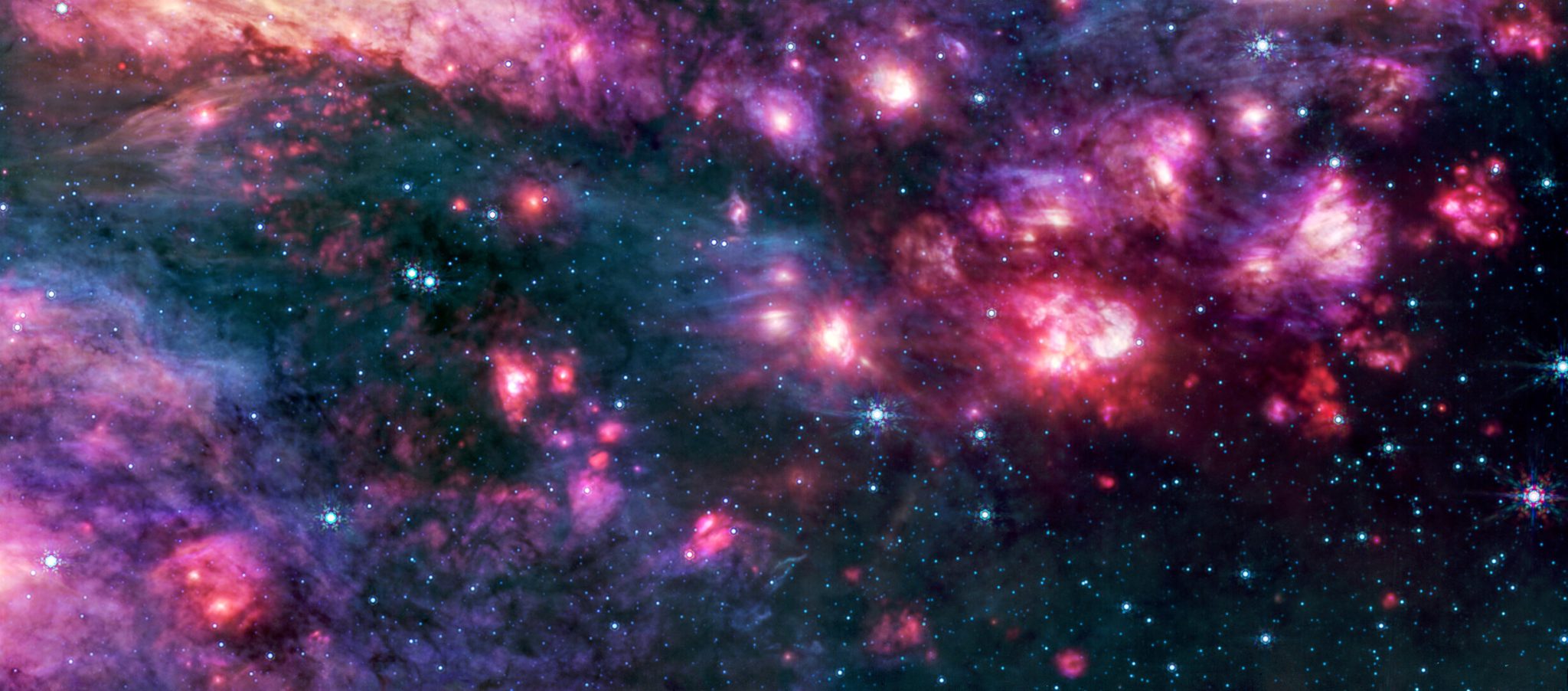
The difference provided by longer wavelengths of light, even in the infrared spectrum, becomes apparent when comparing images obtained with the MIRI and NIRCam (Near-Infrared Camera) instruments. Glowing gas and dust appear brightly in mid-infrared light, while all stars except the brightest ones disappear from view. Unlike MIRI, bright stars dominate the NIRCam image, sometimes obscured by bright clouds of gas and dust.
Further studies of the stars in Sagittarius B2 will reveal details about their mass and age, helping astronomers better understand the process of star formation in this dense, active region of the galactic center. They hope that JWST will shed light on why star formation in this region is so disproportionate. Although Sagittarius B2 contains only 10% of the gas in the center of the Milky Way, it produces about 50% of its stars. They also want to find out how long star formation lasts in this region. Has it been going on for millions of years? Or did some unknown process trigger it quite recently?
According to ESA

