

When we look at the night sky, it seems that space is a boundless black abyss. But is this really the case? It turns out that absolute darkness is an incredibly rare phenomenon, and finding it is much more difficult than one might imagine. It all depends on how exactly you define darkness.
Cosmic glow
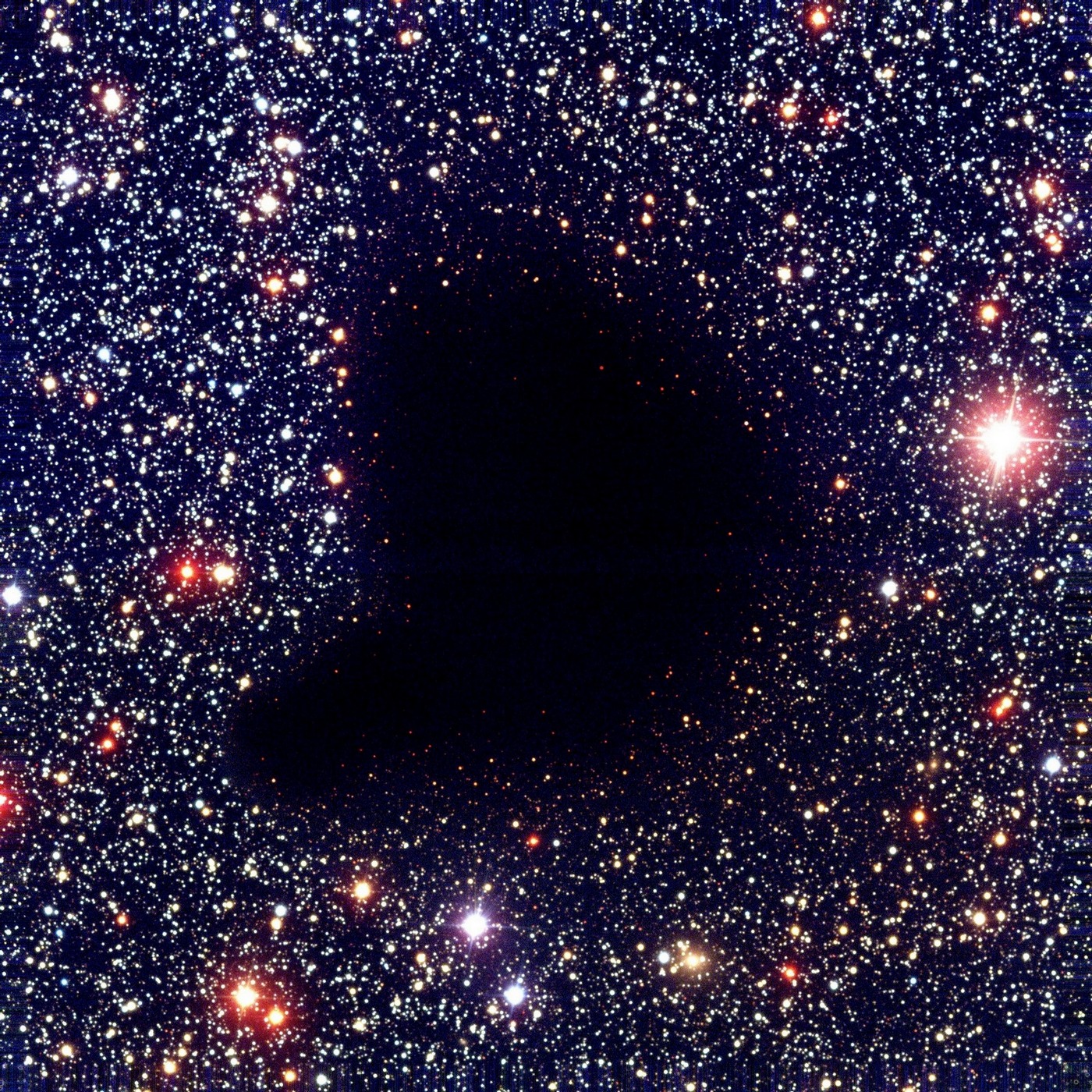
In reality, space is not completely black, but filled with light. Due to cosmic dust, which scatters light away from stars, most of the Universe is permeated with a faint background glow. If we look not only at the visible spectrum, but at all ranges—from gamma rays to radio waves—space turns out to be quite colorful and bright. Thus, darkness is a rather relative concept.
Record holders of darkness
When it comes to visible light, there are indeed dark objects in space. Their “blackness” is scientifically measured by albedo—the percentage of light reflected from the surface. For example, a perfect mirror has an albedo of 1 (100%), while coal has only 4%.
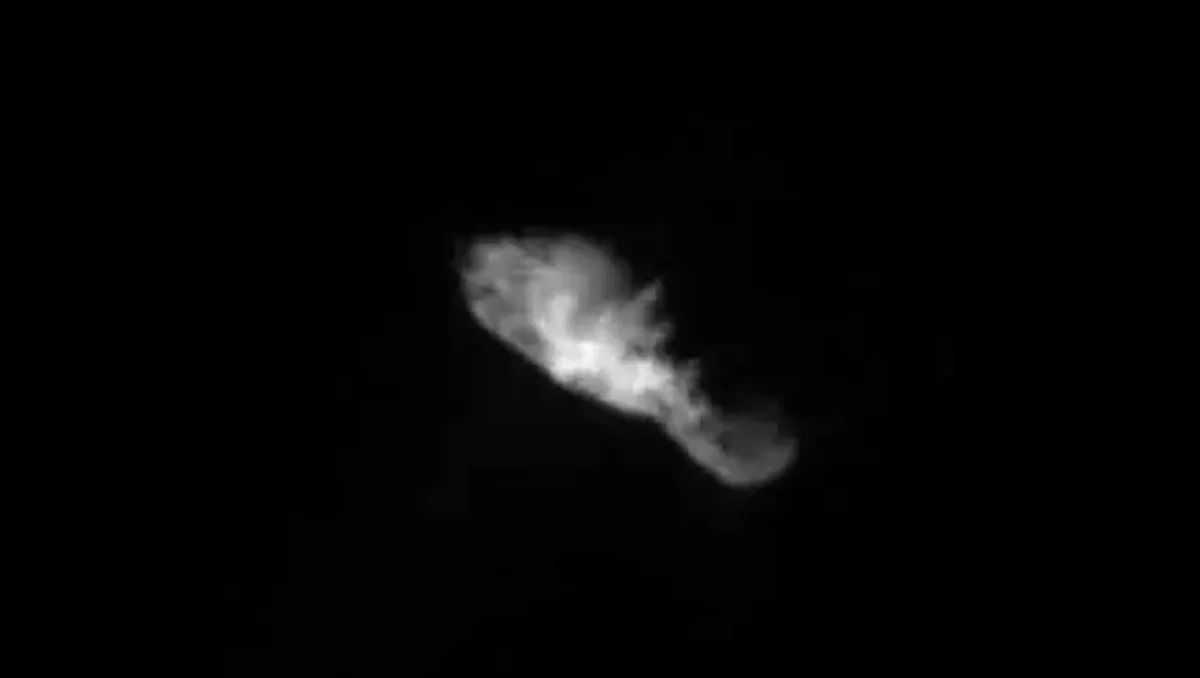
One of the darkest objects in the Solar System is the nucleus of Comet Borrelly. According to the Guinness Book of Records, this 8-kilometer ice mountain reflects less than 3% of sunlight. The exoplanet TrES-2b is even darker, reflecting less than 1% of its star’s light due to an atmosphere filled with sodium and titanium oxide vapors. For comparison, our Earth “reflects” 30% of sunlight.
Light traps and eternal shadow
Another type of darkness is created by objects that absorb or block light. A classic example is black holes. They do not emit light and capture it beyond the event horizon. Interestingly, according to scientists, it could even be very bright inside a black hole, but this light is forever lost to an outside observer.
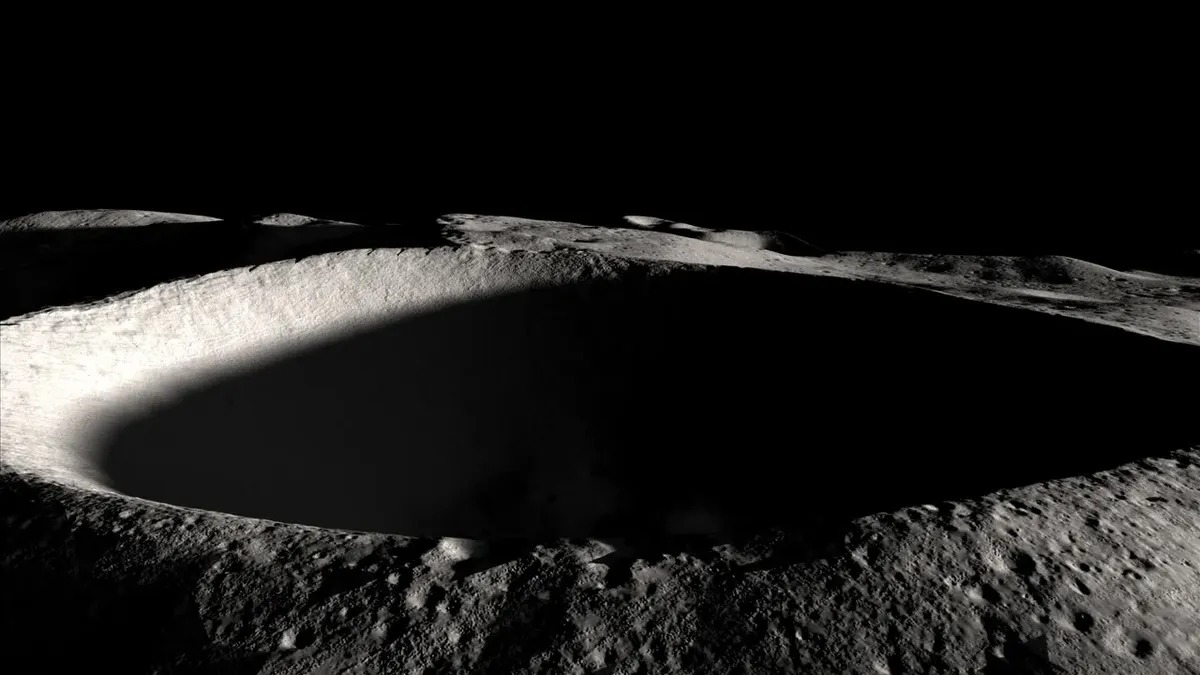
There are also areas of eternal shadow. For example, craters at the poles of the Moon or Pluto, where sunlight never reaches. They are extremely dark due to the absence of any light for billions of years.
Bok globules
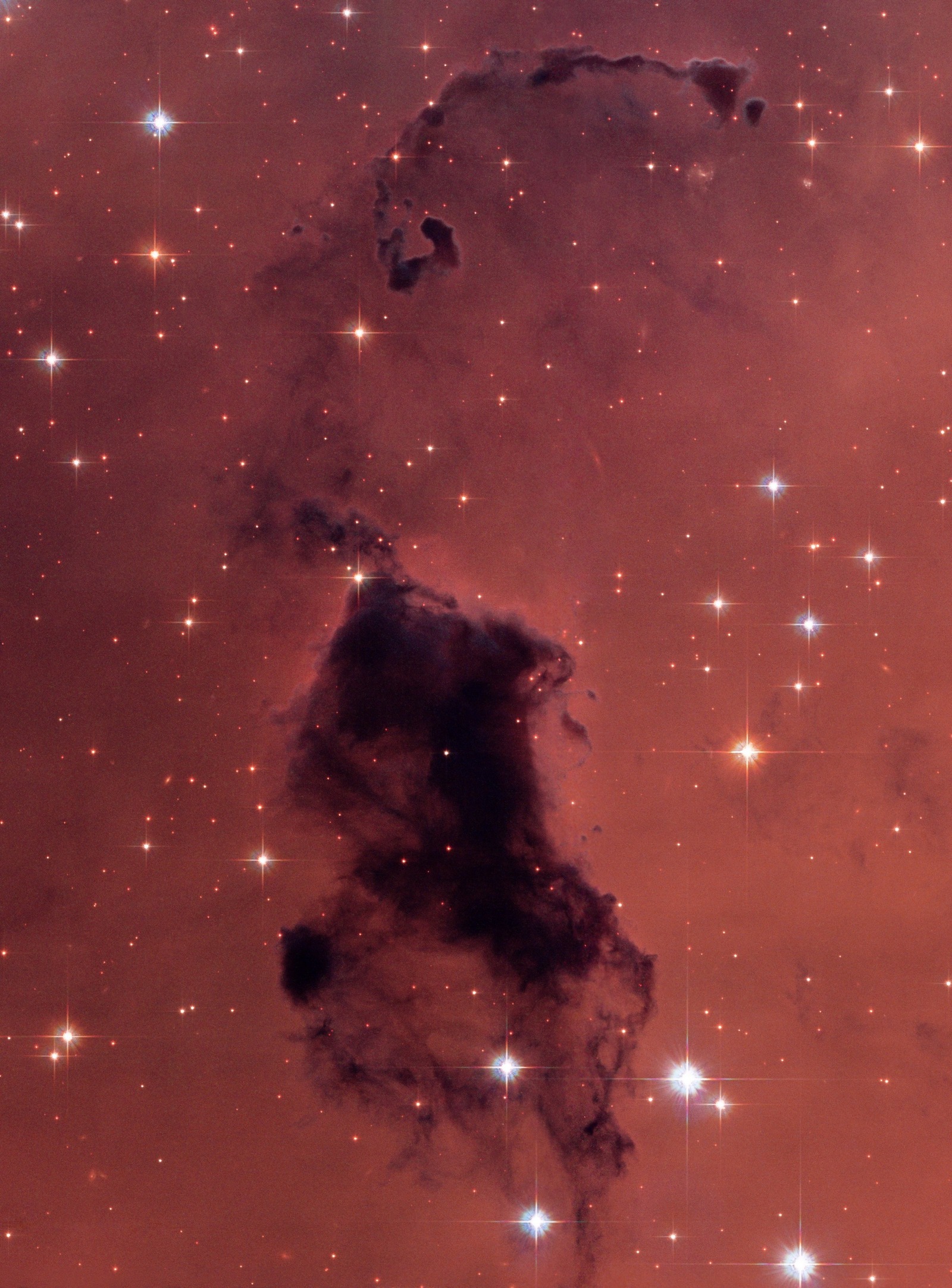
Another impressive example is Bok globules—dense, cold clouds of dust and gas. To our eyes, they look like actual “holes in the sky.” Objects such as the famous Barnard 68 globule, located 500 light-years away, almost completely block the visible light of the stars behind them. However, in the infrared range, they become “more transparent.”
Deep corners of space
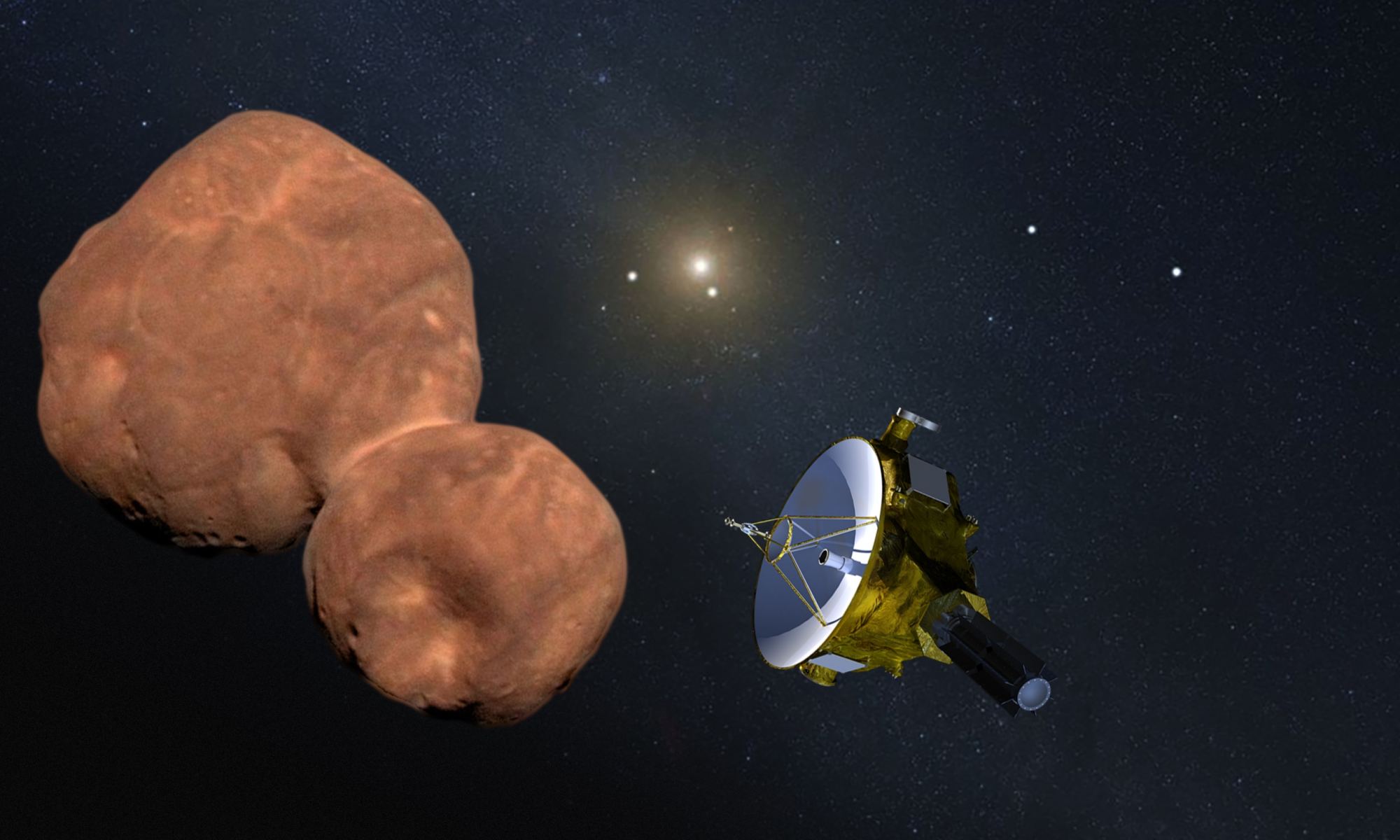
Humanity has come closest to true darkness thanks to NASA’s New Horizons spacecraft, which is currently exploring the outer reaches of the Solar System. From there, the surrounding sky appears ten times darker than from Earth’s orbit. But even there, the background glow of the Universe is still visible. It seems that there is no such thing as a completely dark place.
Interestingly, it is precisely our location in a relatively dark region of the Milky Way that allows us to have an excellent view of distant galaxies. As scientists note, if we were in a brighter region, we might never have been able to see the Universe, and astronomy as a science might never have emerged. Therefore, darkness is not only an interesting phenomenon, but also the key to our understanding of space.
We previously reported that the Milky Way was on the edge of a supervoid.
According to Live Science

