

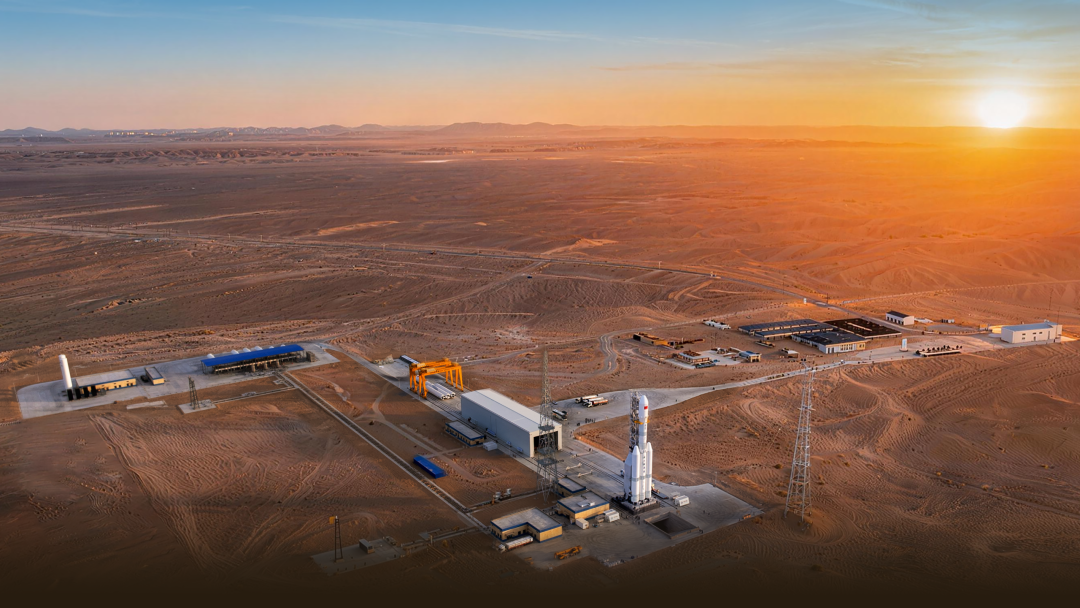
In today’s space race, it is not only reaching orbit that is becoming increasingly important, but also the cost per kilogram of payload. That is precisely why the first flight of China’s Kinetica-2 commercial rocket attracted particular attention: on March 30, 2026, CAS Space’s launch vehicle successfully lifted off from the Dongfeng launch pad at the Jiuquan Satellite Launch Center and placed three spacecraft into orbit—New March-01, New March-02, and the TS-01 educational satellite.
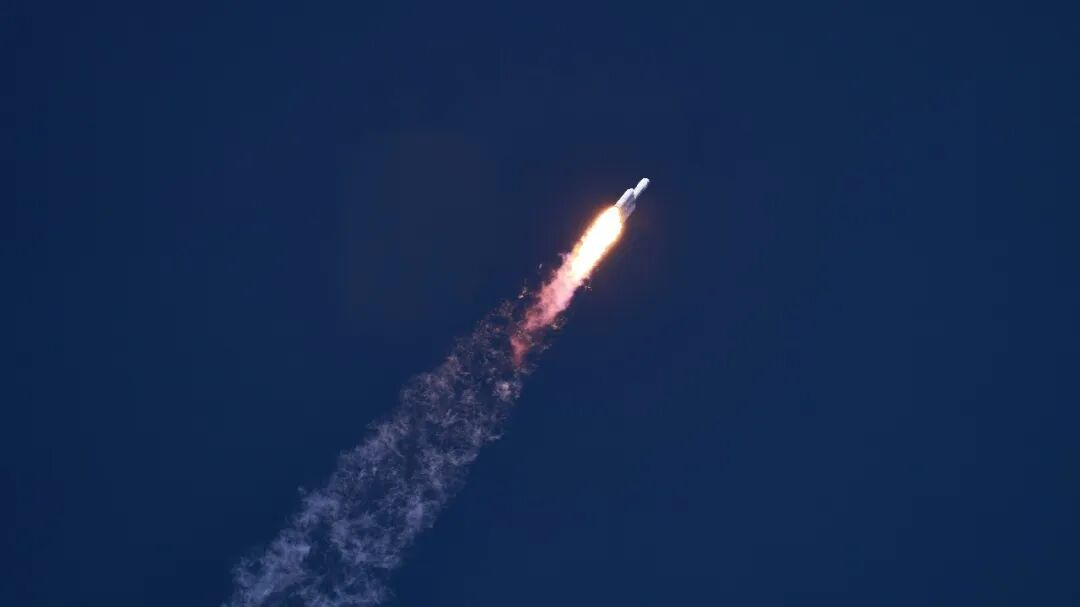
Kinetica-2 is a two-stage liquid-fueled rocket standing 53 meters tall, with a launch mass of 625 tons and a payload capacity of up to 12 tons to low Earth orbit or up to 8 tons to a 500-kilometer sun-synchronous orbit. CAS Space positions it as a platform for the mass deployment of satellite constellations, low-cost cargo missions, and promising orbital services. The company is also relying on the Common Booster Core modular architecture, in which the central module and side boosters are standardized as much as possible.
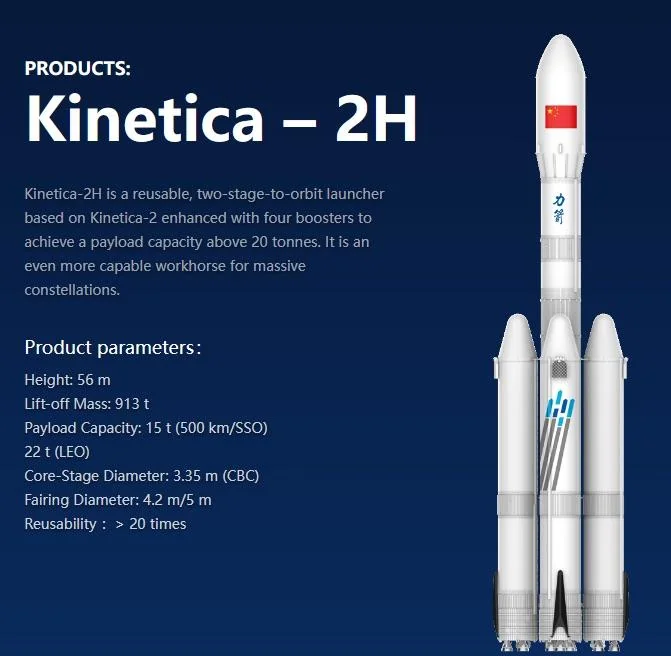
The most striking part of the announcement concerns the price. According to CAS Space Vice President Yang Hao Liang, the current cost of launching Kinetica-2 in a single-use configuration is approximately 30,000 yuan per kilogram, or about $4,350 per kg. Once reusable technology is fully implemented, the company expects to reduce costs by roughly half again. At the same time, a direct comparison with SpaceX remains somewhat speculative: The Falcon 9 is already a proven reusable system, and its official standard launch price through the end of 2026 is set at $74 million for a maximum payload of up to 22 tons to low Earth orbit (LEO). Therefore, at this point, it would be more accurate to speak not of China’s potential advantage, but of a serious challenge to price competition in the medium-to-heavy-duty vehicle segment.
How does it work? Kinetica-2 is a large liquid-fueled rocket composed of standard modules. Instead of manufacturing a wide variety of parts each time, the company standardizes its core modules, engines, and systems. This simplifies production, speeds up assembly, and lowers the price. The next step is to make the first stage reusable. As SpaceX’s experience has shown, reusability is the key to making space access more affordable.
Why is this important? It is important for science because more affordable launches expand access to orbit for small and medium-sized scientific instruments, technology demonstrators, orbital laboratories, and Earth observation satellites. This is particularly evident in the case of Kinetica-2, as its very first flight carried the New March-01 mini-space laboratory and the New March-02 experimental spacecraft. If CAS Space truly reduces the cost of launches, this could lead to more frequent launches of astronomical instruments, atmospheric monitoring devices, and platforms for testing new space technologies.

