

Leo is the zodiacal constellation where the Sun is located in the second half of summer. It is home to many interesting stars and other objects that deserve your attention.

Leo (constellation)
On July 23, the Sun will enter the constellation Leo. At least that is what astrologers say. Astronomers, on the other hand, know that this will happen only on August 10. The reasons for this are the shift of the vernal equinox and several other factors. You can read more about it here.
However, such a discrepancy between astrologers’ predictions and the actual state of affairs is not necessarily a bad thing. If the coincidence were accurate, then we would not be able to observe this constellation at all. And so, at least in the evening, right after sunset, it is visible above the horizon.
But the best time to observe the constellation of Leo is in the second half of winter, when it rises high above the horizon in the middle of the night. Then, use the Ursa Major to locate it. You need to draw a line through the two extreme stars of its “bucket” – Dubhe and Merak, but not to the zenith and the North Star, but in the opposite direction. There you will find a characteristic asterism, similar to a sickle or question mark. This is Leo.
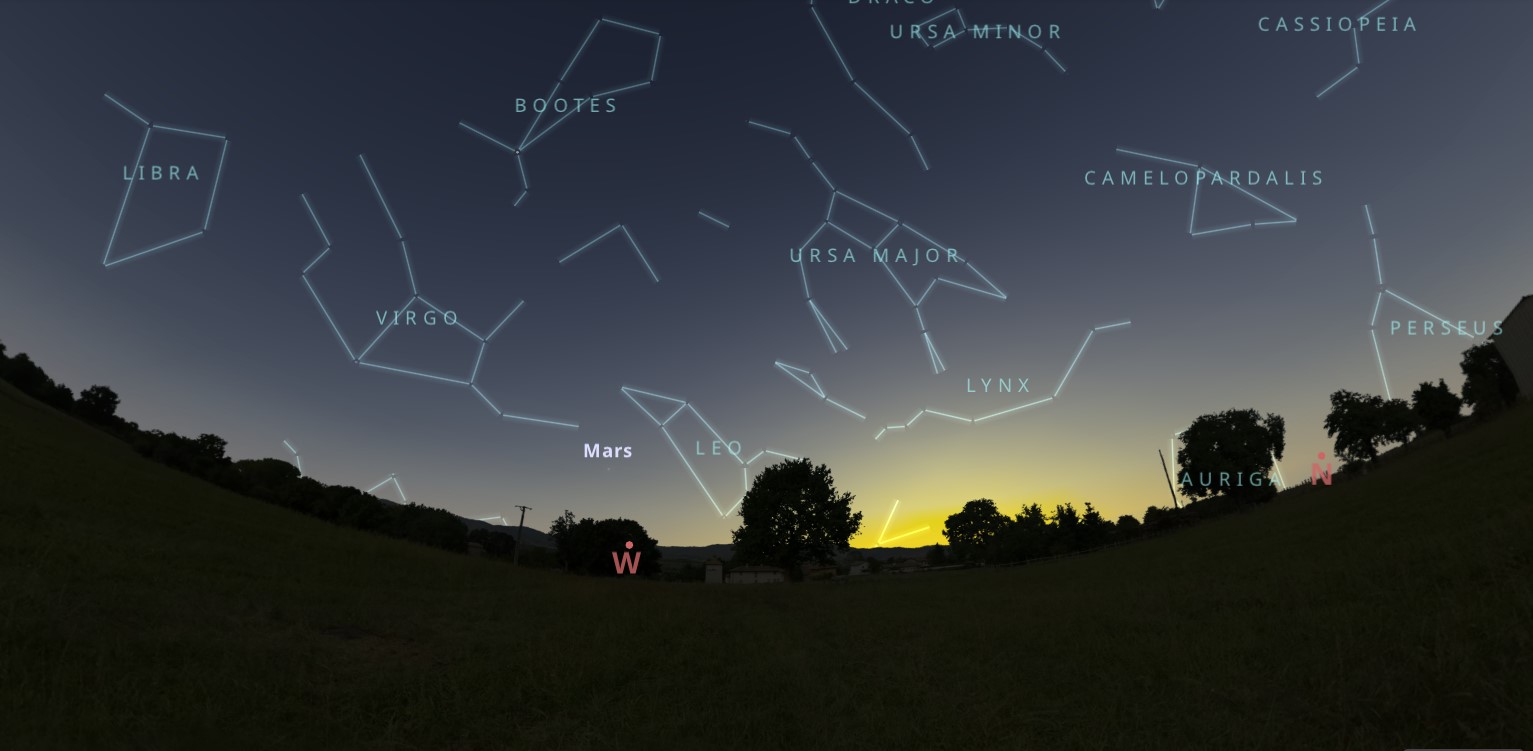
The constellation Leo has been known since ancient times. The ancient Greeks associated it with the same beast that Hercules defeated during one of his exploits. However, it is an indisputable fact that the Greeks did not originate this name, as different peoples had called the same group of stars by various names for the same predator centuries before.
Nevertheless, the constellation of Leo had to shrink in size already in historical times. In the third century BCE, Asterismus, previously thought to be a tassel on the lion’s tail, was associated with the wife of the Egyptian king Ptolemy III, Veronica or Berenice. However, for almost 2,000 years after that, it was not recognized as a separate constellation, and it was only in 1536 that it was considered so, making the celestial predator itself significantly smaller.

Regulus
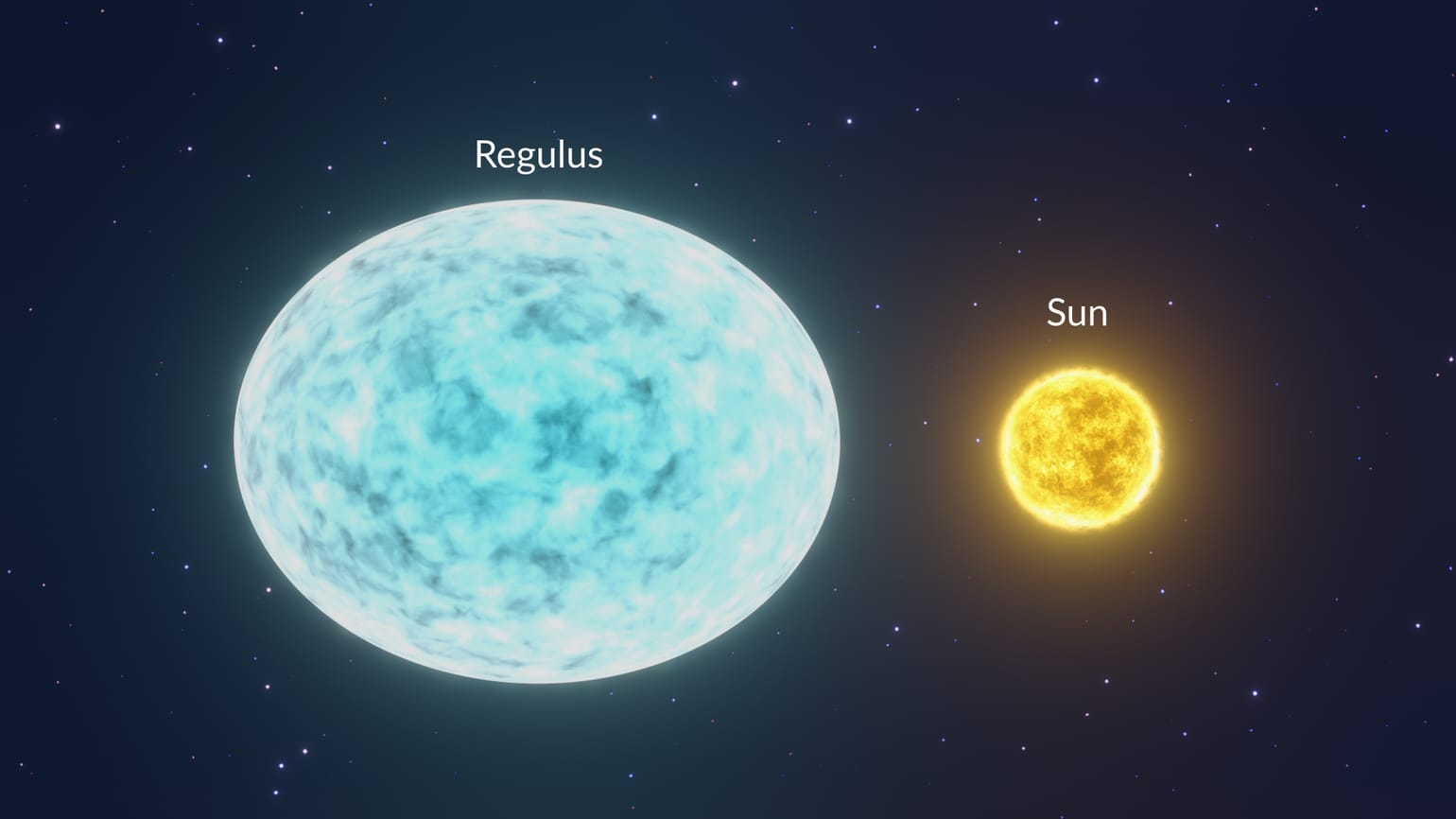
The constellation of Leo has several stars that are hard to miss in the sky. For example, its α Regulus is the 21st brightest star in the Earth’s sky, with a brilliance of 1.4m. At the same time, the distance to it is only 77.5 light-years, and it is a multi-component star system in itself.
The main thing in it is a giant blue star. Its mass is 4.15 times and radius is 4.21 times larger than that of the Sun, and its luminosity is 350 times higher than that of the Sun. In addition, due to its rapid rotation, the star is strongly deformed, and we see it as if from the edge. A white dwarf with a mass of 31% of the Sun’s mass. It makes one revolution in just 40 days.
There is a certain mystery associated with this pair. The fact is that the larger of the two stars looks like it is 50-100 million years old, while the white dwarf took at least a billion years to evolve from a gas and dust nebula to its current state. The first of these stars was rejuvenated at some stage of its existence by merging or absorbing a large amount of mass.
But all this is only part of the Regulus system. Around the first pair of stars at a distance of 4200 AU and with a period of about 130 thousand years, the second pair circles. It is represented by orange and red dwarfs, which are separated by a distance of about 60 AU, i.e., about 1.5 times more than the distance from the Sun to Neptune. These two luminaries make one revolution in 400 Earth years. Finally, a brown dwarf is circling extremely slowly around all of the above. However, the latter’s belonging to the system has not been definitively proven.
Other notable stars
The next brightest star in the constellation of Leo after Regulus is Denebola, the β star. It is located at a distance of only 36 light-years from us and is a white star, very similar to Sirius, except that it does not have a white dwarf companion. This luminary is 78% larger than the Sun by mass and 75% larger by radius.
γ Leo, or Algieba, is a binary system consisting of two orange giants, one of which is slightly hotter than the other. It is located at a distance of 130 light-years from us. The first star is 66% and the second is 55% more massive than the Sun, although they are older and much larger than it.
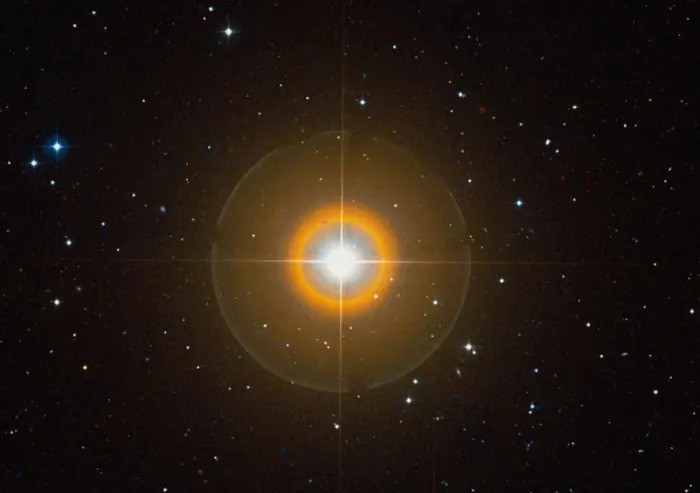
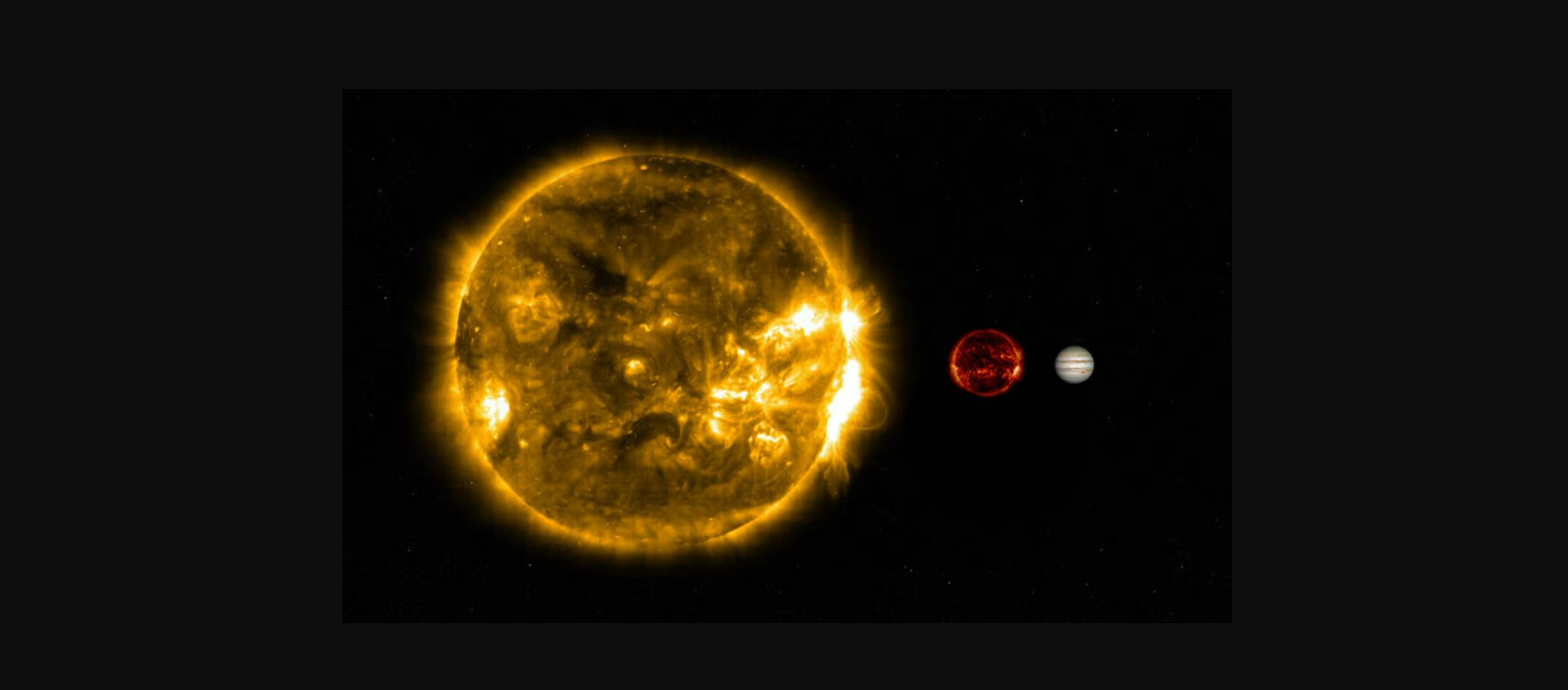
The components of the Algieba system make one revolution around a common center of mass in 554 years. At the same time, a planet revolves around the largest of them at a distance of 1.2 AU. According to the latest data, it is a gas giant that is 10.7 times larger than Jupiter. In addition, it is quite possible that there are other large bodies in the system.
However, the constellation of Leo is interesting not only for the brightness of its stars, but also for their proximity to the Earth. Wolf 359 is located here, and the distance to it is only 7.8 light-years. However, it will not be possible to see it with the naked eye, as it is a red dwarf with an apparent magnitude of 13.54, meaning that it is not accessible to observation with small amateur telescopes. The mass of the star is only 9% of the solar mass. It is a radiation peak in the infrared part of the spectrum.
In total, there are six stars in the constellation of Leo, with a distance of no more than 40 AU. And at least one of them has a confirmed planet. It is therefore quite possible that the first interstellar expeditions will be carried out in this direction.
Another interesting luminary in the constellation of Leo is CW Leonis. It is an example of a so-called carbon star. About a billion years ago, it exhausted its hydrogen fuel and switched to helium, but this was not its limit. Now it shines by converting oxygen into carbon, and has swollen to a radius that is three times the distance from the Earth to the Sun.
At the same time, CW Leonis is visible only with very powerful telescopes in the visible range. But if you look at the sky at a wavelength of 10 micrometers, this particular star would be the brightest source of radiation there.
It is expected that this luminary will soon shed its outer shells and turn into an oxygen-carbon white dwarf.
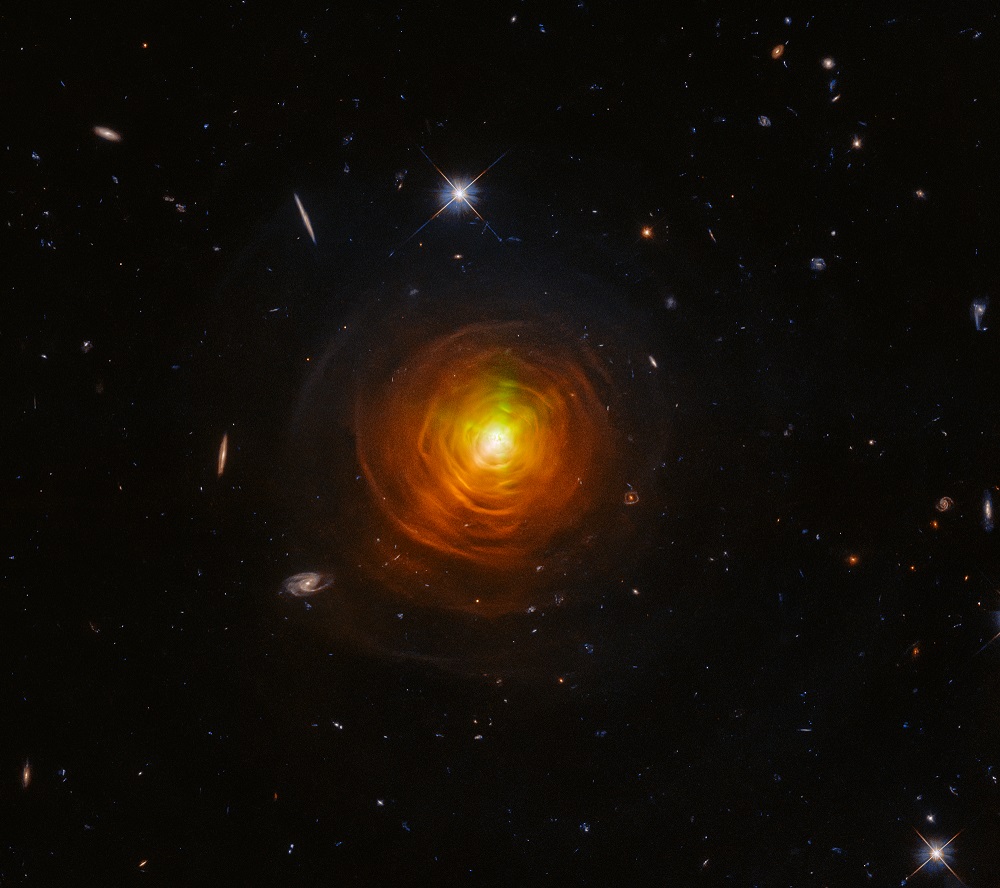
The star R Leonis also deserves to be mentioned. It is a very unusual red giant that undergoes catastrophic contractions and expansions with a period of 310 Earth days. During this period, its apparent stellar magnitude increases from 11.3 to 4.4 and then returns. At the same time, it is quite possible that a planet with a mass twice as large as Jupiter is also orbiting it. It may experience intense evaporation.
Deep space objects
There are also many interesting deep space objects in the constellation of Leo. For example, it is here that the Leo Triplet, a group of galaxies located 35 million light-years away, is located.
The three-star systems, viz, M65, M66, and NGC 3628, are interesting because they are large spiral galaxies similar to the Milky Way, which are located very close to each other. At the same time, M66 is also considered the record holder for the number of supernovae. Since 1989, it has already had three outbursts, while we have not seen a single one in the Milky Way over the past 400 years.
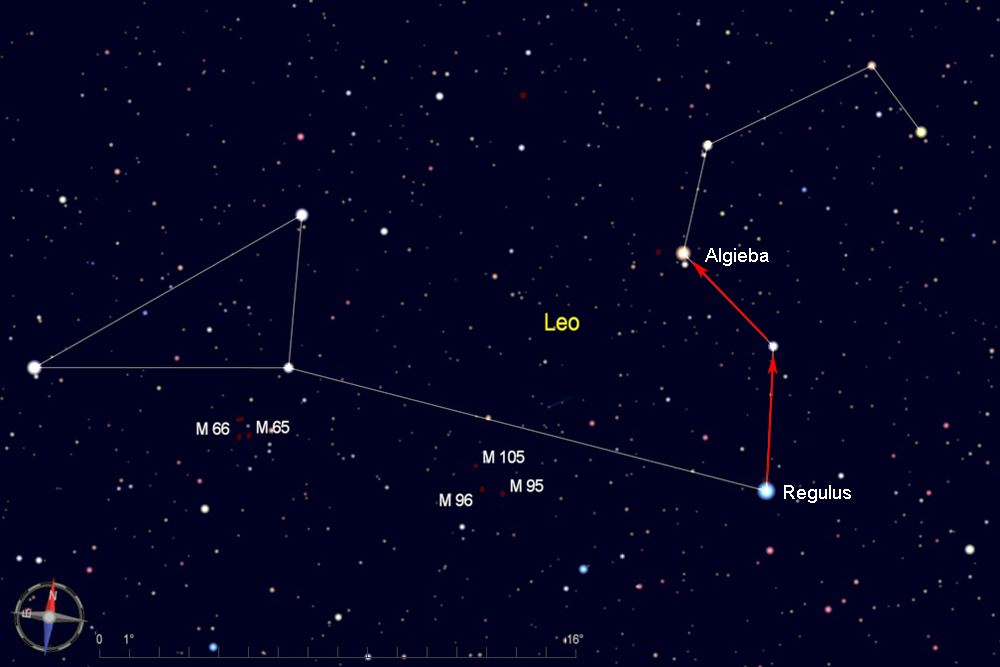
The Leo Triplet may be only part of a much larger cluster, which includes the galaxies M95 and M96, which are also located in this constellation. In addition, it is in Leo that there are such colossal structures as the Huge LQG.
Leonids
Another thing that cannot be ignored when mentioning the constellation Leo is the Leonid meteor shower. Its peak occurs on November 14-15, and the radiant is located near the already mentioned star Algieba.
Now it is quite invisible. No more than 10 meteors can be seen per hour, even during the peak of activity. But in 1833, it became one of the most significant astronomical events. Back then, 240 thousand meteors were observed in the sky in 9 hours.
After that, the Leonids showed themselves several times, although most of the time the flux remains quite weak. It is associated with the comet Tempel-Tuttle. Its rotation period is 33 years, and its passage is usually accompanied by an intensified meteor shower. It is expected to happen next time in 2032-2033.

