
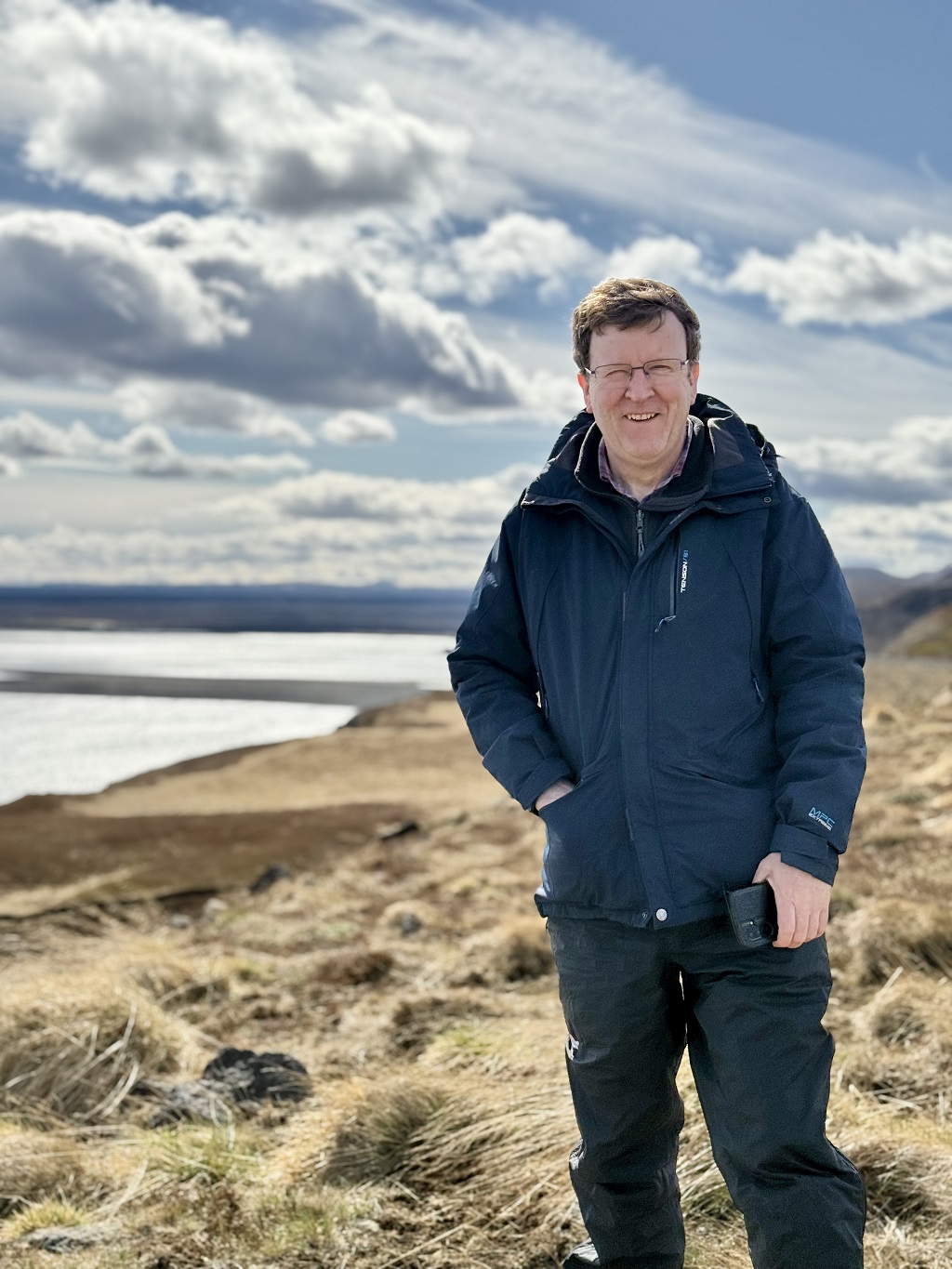
This summer, at the School of Astrophysics and Cosmology “Through the Milky Way into the Universe”, held at the Main Astronomical Observatory of Ukraine, our team and students had a unique opportunity to listen to a lecture and chat with Charles Cockell, a prominent British professor of astrobiology at the University of Edinburgh. Professor Cockell is known for his research on microbes in extreme environments and for popularizing the science of life beyond Earth.
Exploring Extreme Worlds
“I’m a scientist who studies microbial life in extreme environments. I’m interested in how life can adapt to the most extreme conditions, such as salt and temperature,” explains Professor Cockell. «This helps us understand the limits of our biosphere, including how life has managed to survive for over 3 billion years and what risks human activity poses to that balance”.
“By studying life on Earth, we get ideas about where to search for life in space to answer that ancient question — is life on Earth the only instance of life, or is there life on other planets? To know where to look on other planets, we have to know the limits of life on Earth so that we can select places that we know are suitable for life (assuming that life elsewhere is similar to what we know about life on Earth, but we have to start somewhere),” he says.

Technologies for Searching for Extraterrestrial Life
One of the key questions in astrobiology is determining which conditions make an environment habitable. According to Professor Cockell, the basic criteria include the presence of liquid water, since it provides the medium for the chemical reactions essential to life. Equally important is the availability of certain elements — carbon, nitrogen, phosphorus, and oxygen — along with a source of energy, whether sunlight for photosynthesis or chemical compounds capable of sustaining biological processes. In addition, conditions must not be too extreme: temperatures of hundreds of degrees are incompatible with life as we know it. “However, it is worth remembering that these requirements are based on life as we understand it now, and we should always keep our minds open to the possibility that we might discover life with completely different requirements,” the scientist emphasizes.
According to the professor, in the Solar System, the main tool is robotic vehicles. Rovers equipped with sensors to search for organic molecules and traces of liquid water. And for distant worlds, telescopes that allow you to “peek” into the atmospheres of exoplanets are key. “For example, astronomers are very keen to look for the gas oxygen on distant planets, which on Earth is produced at high concentrations by plants and single-celled organisms in photosynthesis,” notes Professor Cockell.
Among the unusual approaches, he names so-called “agnostic” methods, those that do not require knowledge of how life itself is constructed.“For example, many of the molecules in our own bodies, such as proteins, are made up of long chains. That’s because long chains can contain a lot of information. So we could speculate that any complex biology in the universe would be made up of long-chain molecules. One way to search for life would be to look for long molecules that would not depend on any knowledge of how that biology was constructed. People are now working on building such instruments,” the scientist explains.
Discovery and a Lot of Surprises
In recent decades, the professor notes, there have been many surprising discoveries. “The most surprising discovery in the last two decades is the vast number of places in the universe that seemed to have liquid water, which is one of the basic requirements for life. Forty years ago, people were only interested in looking for life on Mars. Now we have discovered oceans under the icy crusts of moons orbiting Saturn and Jupiter, far out in the solar system. Astronomers have discovered a vast number of planets orbiting distant stars that are in the zone around the star where liquid water is stable. Of course, none of these places have yet been shown to have life, but what is surprising is the large number of places in the universe that may be suitable for it. We now have to go and look for life in these places”.
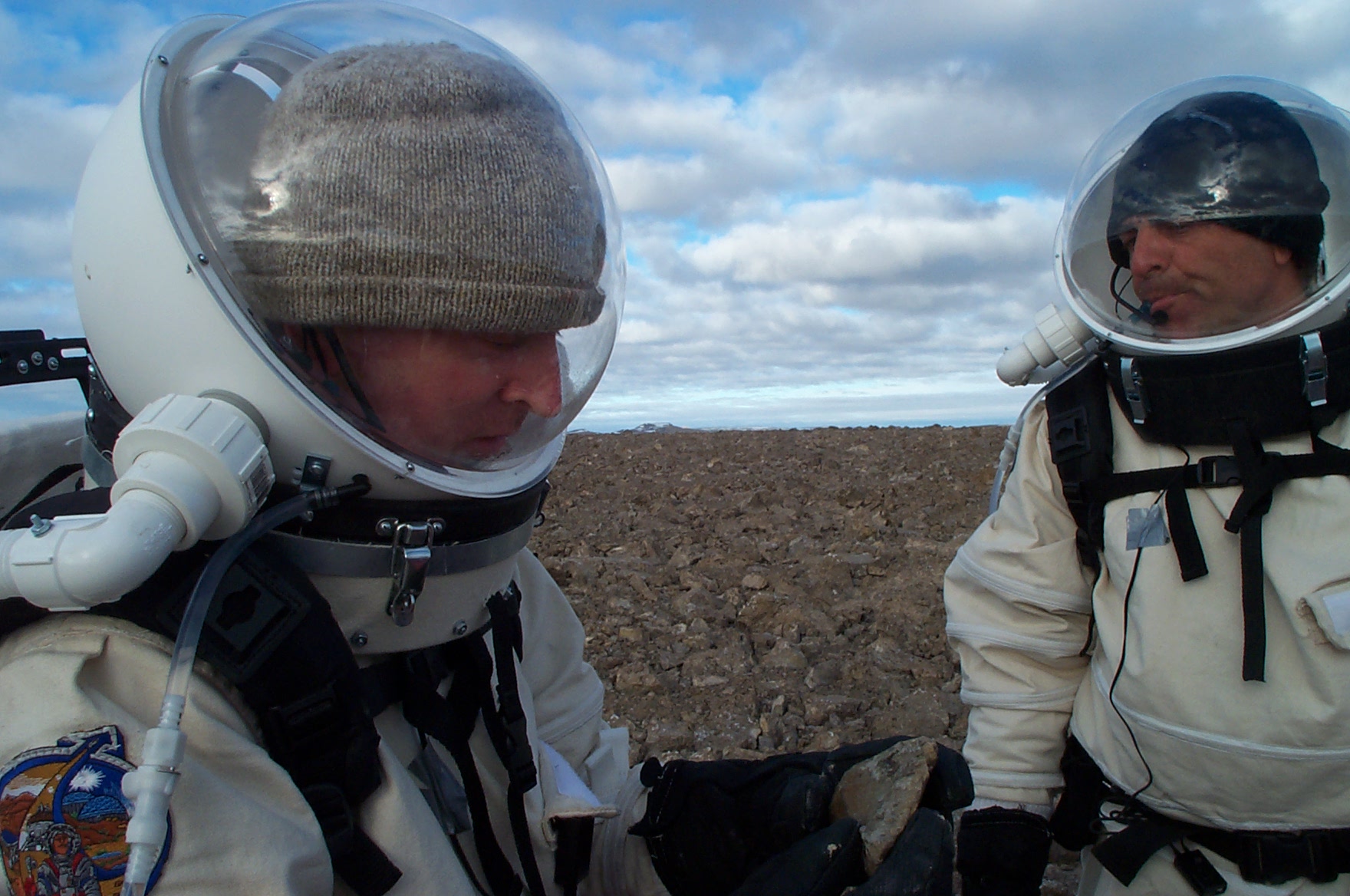
Professor Cockell also noted, “During my career, I have made some discoveries, such as discovering new microbes that can tolerate high levels of desiccation and discovering ways in which asteroid and comet impacts can create new habitats for life. I’ve also led new experiments to show how microbes can be used to mine resources in space“.
Ukraine, Science and Dumplings
A separate part of our conversation was devoted to Ukraine, its scientific heritage, and people: “Ukraine is a really beautiful country. As a scientist, I am also impressed by the quality and long heritage of science in Ukraine. Let’s not forget that the person who came up with the word ‘biosphere’ was Volodymyr Vernadsky, who was the first President of the Ukrainian Academy of Sciences. Ideas about how life influences planets are not new here. Needless to say, right now it is especially important to come to Ukraine to support science and young scientists, especially. The enthusiasm and dedication of young Ukrainian scientists are very inspirational, and I really enjoy coming here to talk to them. Of course, I also like the excuse to eat good vareniki with sour cream — my favourite Ukrainian food.
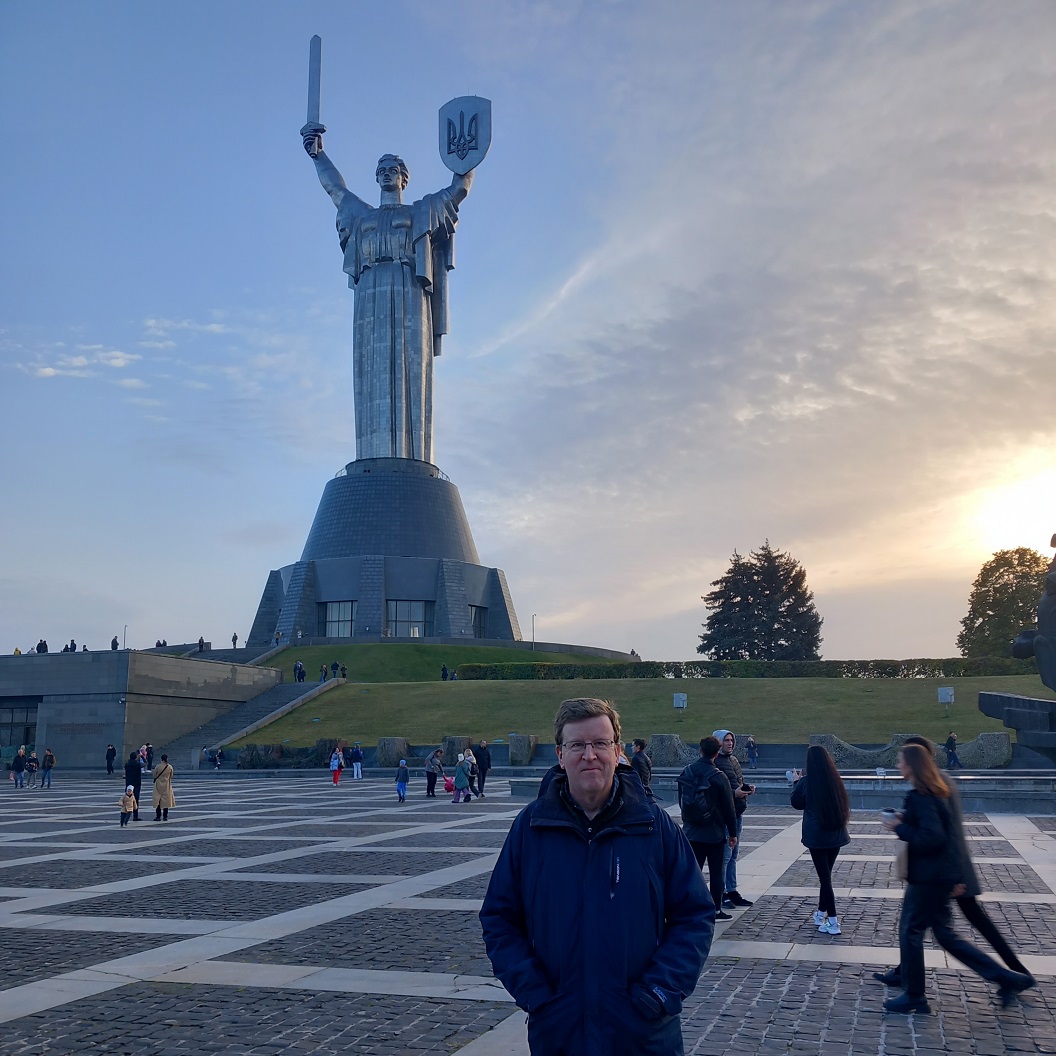
Additionally, the professor shared how international colleagues perceive his close ties with Ukraine: “My colleagues are very supportive. Right now, it is more difficult to come to Ukraine, but I have always found them helpful and enthusiastic. Science is borderless, and it is one way in which we can forge deeper links between countries that endure. I should say that in Edinburgh (which is twinned with Kyiv), we have a large Ukrainian community, so I live in a city with a deep and long-lasting friendship with Ukraine”.
A Message to Young Researchers
We also asked the professor to share some advice for young Ukrainian researchers: “I am always touched by the enthusiasm, generosity, and hospitality of Ukrainians in general. Over my career, I have been to many countries and also lived in one or two countries for extended periods. I have to say that Ukrainians are the most remarkable people I have met. It is not merely their friendliness and gentleness that stand out, but Ukrainians are also incredibly resourceful, ingenious, and original in the way in which they approach all manner of things, and this is especially true in science. I have always found enthusiasm for collaboration, and this is indeed the reason why I am helping to establish an astrobiology centre at Kyiv National University, which will allow for laboratory work and new educational opportunities in this area”.
And to conclude our interview question, “If you could ask just one question to extraterrestrial life, what would it be?”.
Professor Kokel’s answer sounds particularly humane: “Don’t you agree that we have huge potential? But please, any advice on how we can stop wars and focus on building a great and peaceful civilization that can look after its home world and explore the infinite realms of the universe?”.

